


Hanani
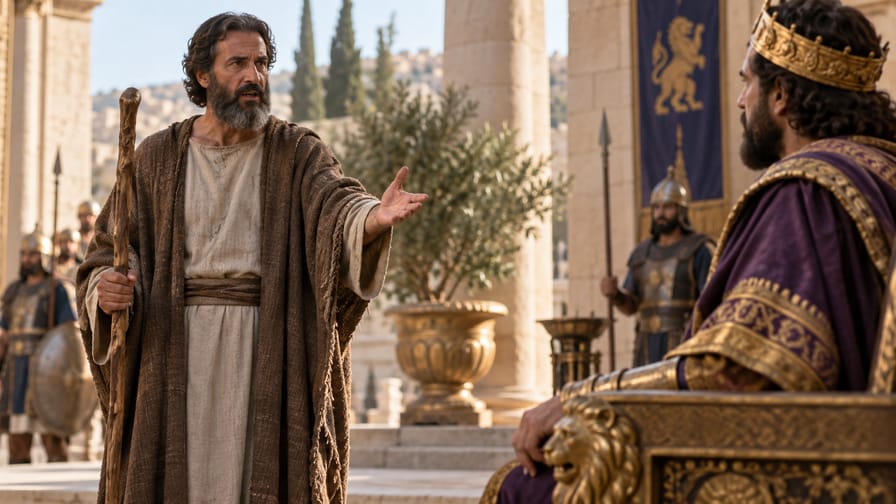
The figure of Hanani, though not central in biblical narratives, emerges as a significant name encompassing the lives of several individuals in the Old Testament. An analysis of each one reveals important aspects of Israel's history, from prophetic faithfulness to civic and religious dedication in the post-exilic period. This study aims to examine the name, context, character, and theological relevance of these figures from an evangelical Protestant perspective, emphasizing the authority of Scripture and divine sovereignty in guiding the history of salvation.
The presence of multiple figures with the same name in different eras and contexts underscores the importance of careful exegesis to distinguish their specific contributions. From the courageous prophet who confronted a king to the vigilant brother who inspired reconstruction, the biblical Hananis, in their diversity, offer lessons on obedience, zeal, discernment, and service to the community of faith. Their stories, though brief, are woven into the larger tapestry of God's redemptive history.
This article, structured for a biblical-theological dictionary, will delve into each aspect of the figure of Hanani, exploring the implications of their actions and the resonance of their lives for understanding the Christian faith. Linguistic nuances, historical contexts, and theological connections that enrich the understanding of these servants of God, as revealed in the inspired Word, will be considered.
1. Etymology and meaning of the name
The name Hanani (חֲנָנִי, Ḥănānî) is of Hebrew origin and is an abbreviated or diminutive form of names such as Hananiah (חֲנַנְיָה, Ḥănanyāh), which means "Yahweh has been gracious" or "Yahweh has shown favor". The etymological root is חנן (ḥānan), which denotes "to be gracious," "to show favor," or "to have compassion." This root is common in theophoric names, where a divine attribute is associated with the individual's name, expressing the parents' faith or a prayer for the child's life.
The ending -i, in this context, can serve as a first-person possessive suffix, resulting in "my grace" or "my favor," but it is more commonly interpreted as an abbreviated form of a larger theophoric name, indicating that the grace or favor of God is at the core of the name. Thus, Hanani intrinsically carries the idea of divine grace, a central theme throughout Scripture.
The literal and symbolic meaning of the name Hanani, therefore, is deeply theological, pointing to God's providence and goodness. Those who bore this name were, by inference, considered recipients or witnesses of Yahweh's grace, or perhaps their parents expressed the hope that God would grant them favor and compassion throughout life. This meaning resonates with the doctrine of grace, essential in evangelical theology.
There are no significant variations of the name Hanani in biblical languages that alter its fundamental meaning. Transliterations may vary slightly between versions and languages, but the Hebrew root and the sense of "grace" or "favor" remain consistent. This linguistic consistency reinforces the message underlying the name.
Several biblical figures bear the name Hanani, which requires attention to differentiate them and analyze their individual contributions. The most prominent include the prophet father of Jehu (1 Kings 16:1, 7 2 Chronicles 16:7-10), the brother of Nehemiah (Nehemiah 1:2 7:2), and a priest who married a foreign woman in the time of Ezra (Ezra 10:20). Others are mentioned in genealogical or service lists in the post-exilic period (Nehemiah 10:23 12:36).
The theological significance of the name Hanani in the biblical context is that of a constant reminder of God's grace, which not only chooses and enables individuals for His service but also sustains His people through their challenges. Each Hanani, in their own way, reflects divine grace, whether in the courage of a prophet, the compassion of a brother, or participation in the re-establishment of the covenant community, demonstrating that God works through men and women graced by Him.
2. Historical context and biblical narrative
The figure of Hanani does not refer to a single individual, but to several, each embedded in a distinct historical period and playing varied roles in the history of Israel. An analysis of each requires precise contextualization to understand their actions and relevance within the divine plan.
2.1. Hanani, the prophet
The prophet Hanani lived during the period of the Divided Kingdom, approximately in the 9th century BC, during the reign of King Asa of Judah (c. 911-870 BC). This was a time of great political and spiritual instability, with Judah and Israel frequently in conflict and under the threat of regional powers. The religious context was one of constant struggle against idolatry and the temptation to trust in human alliances instead of depending on God.
His main appearance occurs in 2 Chronicles 16:7-10, where he confronts King Asa for having relied on the king of Syria, Ben-Hadad, instead of the LORD, to fight Baasha, king of Israel. Asa had used treasures from the temple and the palace to bribe Ben-Hadad, deviating from the trust in God he had previously shown against the Ethiopians (2 Chronicles 14:9-15). Hanani's prophecy is a classic example of prophetic rebuke against the kings' lack of faith.
Hanani's words emphasize the importance of exclusive dependence on God and the futility of relying on human strength. He reminds Asa of Judah's deliverance from the much more numerous Ethiopian and Libyan army when the king sought the LORD. The relevant geography here is Jerusalem, the capital of Judah, where the confrontation occurred, and the borders of Judah and Israel, the scene of the conflicts.
Asa's reaction was one of fury: he had Hanani arrested and put in prison, and he also oppressed some of the people (2 Chronicles 16:10). This response reveals the king's arrogance and his inability to accept divine rebuke. The prophet Hanani is also known as the father of Jehu, another prophet who would later anoint Jehu, son of Nimshi, as king of Israel, and who would prophesy against the house of Baasha and Jehoshaphat (1 Kings 16:1, 7 2 Chronicles 19:2 20:34).
2.2. Hanani, Nehemiah's brother
This Hanani lived in the post-exilic period, in the 5th century BC, during the reign of Artaxerxes I of Persia (c. 465-424 BC). The historical context is that of the Jews' return from Babylonian exile and the slow and difficult reconstruction of Jerusalem and the temple. The people faced social, economic, and religious challenges, as well as opposition from neighboring peoples.
The main mention of this Hanani is in Nehemiah 1:2, where he arrives from Judah in Susa, the capital of the Persian empire, and reports to Nehemiah the desolate situation of Jerusalem: the walls torn down and the gates burned, and the people in great misery and reproach. This news is the catalyst for Nehemiah's prayer and his subsequent call to rebuild the city walls.
Later, Nehemiah appoints him, along with Hananiah, to govern Jerusalem (Nehemiah 7:2). Nehemiah's trust in his brother is evident, describing him as "a faithful man and one who feared God more than many." The key passages are Nehemiah 1:1-3 and Nehemiah 7:1-3, which outline his crucial role in motivating and administering the reconstruction.
The geography includes Susa, where Nehemiah served as the king's cupbearer, and Jerusalem, the ruined city whose condition mobilized Hanani and Nehemiah. His relationship with Nehemiah, his brother, is central to the narrative, showing a family collaboration in the divine work.
2.3. Other Hananis in the post-exilic period
The book of Ezra mentions a Hanani, one of the sons of Immer, who married a foreign woman in the time of Ezra and was exhorted to separate from her (Ezra 10:20). This event occurs in the context of Ezra's reform, which sought to purify the covenant community from idolatry and cultural assimilation through mixed marriages, a great challenge to Israel's identity after the exile.
In Nehemiah 10:23, a Hanani is listed among the chiefs of the people who sealed the covenant with Nehemiah and the other leaders, committing to follow the Law of God. In Nehemiah 12:36, another Hanani is mentioned as one of the Levites who participated in the dedication of the walls of Jerusalem, playing musical instruments and singing praises to God. These individuals, though with less prominent roles, demonstrate the active participation of many in the restoration of Jerusalem's religious and civic life.
3. Character and role in the biblical narrative
An analysis of the character of each Hanani reveals distinct qualities and functions that, together, enrich the understanding of the diversity of service within the covenant community. Although some are described concisely, their actions speak for themselves.
3.1. The character and role of Hanani, the prophet
The prophet Hanani demonstrates a character of remarkable courage and faithfulness to the Word of God. He does not hesitate to confront King Asa, a powerful figure, with a message of judgment and rebuke (2 Chronicles 16:7-9). This action reveals his prophetic integrity and his priority to obey God above men, even in the face of personal risk. His most prominent virtue is prophetic boldness, characteristic of many messengers of God in the Old Testament.
His role is that of a divine messenger, a spokesperson for Yahweh to the king of Judah. He not only rebukes but also offers a theological analysis of Asa's recent history, reminding him of God's faithfulness and the importance of exclusive trust in Him. Hanani's message is a warning against self-reliance and trust in worldly alliances, emphasizing that "the eyes of the LORD run to and fro throughout the whole earth, to give strong support to those whose heart is wholly devoted to him" (2 Chronicles 16:9).
Despite Asa's negative reaction, who imprisoned him (2 Chronicles 16:10), Hanani's attitude remains a testimony to his unwavering devotion. He fulfills his prophetic calling without being intimidated by royal authority, exemplifying the truth that prophets are primarily accountable to God. His action is a landmark in Asa's history, who from then on no longer sought the LORD wholeheartedly.
3.2. The character and role of Hanani, Nehemiah's brother
The Hanani who was Nehemiah's brother is presented with qualities of loyalty, compassion, and faithfulness. His journey from Judah to Susa to report the situation of Jerusalem to Nehemiah (Nehemiah 1:2) demonstrates his deep concern for the well-being of his people and the holy city. He was not content merely to observe the suffering but acted to inform those who could make a difference.
His description by Nehemiah as "a faithful man and one who feared God more than many" (Nehemiah 7:2) is a significant endorsement of his character. This faithfulness and fear of God qualified him for a position of great responsibility: to govern Jerusalem alongside Hananiah. His role was crucial both as an initial informant, igniting Nehemiah's passion, and as a trustworthy administrator in the phase of city reconstruction and organization.
The trust Nehemiah placed in his brother reveals a deep esteem and recognition of his moral and spiritual qualities. Hanani, in this context, is an example of selfless service and shared leadership, essential for the success of Jerusalem's restoration work. He was a pillar of support for Nehemiah, contributing significantly to the security and stability of the post-exilic community.
3.3. The character and role of the other Hananis
The Hanani mentioned in Ezra 10:20, who married a foreign woman, represents a challenge to the purity of the covenant community. His inclusion in the list of those who committed to separate from their foreign wives, after Ezra's exhortation, indicates an initial failure to adhere to the Law of God, but also a subsequent willingness to repent and obey. This illustrates the constant struggle of the people of Israel to maintain their identity and holiness amidst external influences.
The Hananis mentioned in Nehemiah 10:23 (a chief of the people) and Nehemiah 12:36 (a Levite musician) do not have their personalities detailed, but their mentions indicate their active participation in the religious and civic life of post-exilic Jerusalem. The former demonstrates commitment to the covenant and the Law, while the latter exemplifies service in worship and in the celebration of the dedication of the walls. They represent the collaboration of many individuals in the restoration of the nation.
4. Theological significance and typology
Despite their relatively brief mentions, the various individuals named Hanani play significant roles in redemptive history and in the progressive revelation of God. Their lives and actions, though not direct typologies of Christ in the strictest sense, exemplify theological principles that find their supreme fulfillment and deepest meaning in Jesus Christ.
4.1. The theological significance of Hanani, the prophet
The prophet Hanani serves as a powerful reminder of God's sovereignty over kings and kingdoms, and of the need for exclusive trust in Him. His confrontation with Asa highlights the principle of moral and spiritual accountability, even for those in positions of authority. Hanani's message emphasizes the importance of obedience to the prophetic voice and the consequences of unbelief and self-reliance, which result in wars and afflictions (2 Chronicles 16:9-10).
His courage in delivering the divine message, despite imprisonment and oppression, prefigures the faithfulness of all God's messengers, including the apostles and Jesus Himself, who faced persecution for proclaiming the truth. Hanani's message about God's vigilance that seeks "to strengthen those whose heart is wholly devoted to him" (2 Chronicles 16:9) points to the importance of genuine faith and total dependence on God, a central theme in the theology of salvation and sanctification.
Although Hanani is not a direct Christocentric figure, his life echoes the prophetic zeal of Christ, who confronted the religious hypocrisy and lack of faith of His time. Jesus also warned about the dangers of relying on human resources instead of depending on the Kingdom of God (Matthew 6:33). Hanani's suffering because of his faithfulness to God can also be seen as an echo of the sufferings of Christ and His followers (Matthew 5:10-12 1 Peter 4:12-19).
4.2. The theological significance of Hanani, Nehemiah's brother
The Hanani who was Nehemiah's brother exemplifies the virtue of compassion and action motivated by faith. His concern for the condition of Jerusalem and its people (Nehemiah 1:2-3) reflects a heart aligned with God's heart for the restoration of His people and His city. He acts as an agent of divine providence, providing the crucial information that triggers the great work of reconstruction under Nehemiah. This is an example of God's grace operating through individuals to accomplish His purposes.
His appointment as governor of Jerusalem, along with Hananiah, and his description as "a faithful man and one who feared God more than many" (Nehemiah 7:2) highlight the importance of integrity and piety in leadership. This type of leadership, based on faithfulness to God and selfless service, points to Christ's model of leadership, the Good Shepherd, who leads with love, service, and total obedience to the Father (John 10:11 Philippians 2:5-8).
The collaboration between Hanani and Nehemiah illustrates the biblical principle of unity and cooperation in the work of God (Ephesians 4:16). They worked together to restore not only the physical walls but also the hope and identity of God's people. This emphasis on community and mutual service is a fundamental theological theme that finds its fulfillment in the Church, the Body of Christ.
4.3. Broader theological connections
The other Hananis, though less detailed, contribute to important theological themes. The Hanani who married a foreign woman in Ezra 10:20 highlights the seriousness of sin and the need for repentance and obedience to the Law. His inclusion in the list of the repentant demonstrates God's grace that offers forgiveness and restoration to those who turn to Him, a fundamental principle of the doctrine of salvation.
The Hananis who signed the covenant (Nehemiah 10:23) and participated in the dedication of the walls (Nehemiah 12:36) symbolize the active participation of all God's people in the life of the covenant, in worship, and in the building of the Kingdom. They represent the grassroots of God's people, whose faithfulness and service are essential for the vitality of the community. Their presence in the canon reinforces the idea that God's history is built not only by great leaders but by the contribution of many faithful individuals (1 Peter 2:9-10 Romans 12:1).
In summary, the Hananis, in their various incarnations, illustrate God's grace that calls, empowers, and uses individuals for His purposes, whether to warn kings, inform leaders, administer cities, or participate in worship. Their stories are microcosms of the great narrative of God's faithfulness and human response, ultimately pointing to Christ as the perfect model of obedience, service, and divine dependence.
5. Biblical-theological legacy and canonical references
Despite not being figures of central prominence like Moses or David, the individuals named Hanani leave a significant biblical-theological legacy, especially concerning faithfulness, prophetic courage, and community service. Their canonical mentions are direct and important for the contexts in which they appear, offering insights into the life of faith in different eras of Israel's history.
The prophet Hanani is canonically referenced in 1 Kings 16:1, 7 and 2 Chronicles 16:7-10. His mention in 1 Kings 16:1, 7 as the father of Jehu, the prophet who prophesied against Baasha and his house, establishes a prophetic lineage. However, it is in 2 Chronicles 16 that he has his most prominent role, confronting King Asa. This passage is crucial for understanding the doctrine of divine sovereignty over kings and the responsibility of leadership to trust in God, not in human alliances.
The prophet Hanani's contribution to biblical theology is to reinforce the prophet's role as the moral and spiritual conscience of the nation, and the authority of the Word of God above royal authority. His story is an example of the courage required to proclaim the truth, even when unpopular, and of the consequences of disobedience. Reformed and evangelical theologians frequently cite this episode to illustrate the importance of prophetic preaching and ministerial integrity.
The Hanani, Nehemiah's brother, is canonically referenced in Nehemiah 1:2 and Nehemiah 7:2. His importance lies in being the catalyst for Nehemiah's mission and, subsequently, a co-leader in the administration of Jerusalem. His description as "a faithful man and one who feared God more than many" (Nehemiah 7:2) sets a standard for godly leadership and diligent service in the community of faith.
This Hanani's influence on post-exilic biblical theology is linked to the restoration of the community and the rebuilding of Jerusalem. He personifies zeal for God's people and a willingness to act for restoration, themes that resonate with the theology of renewal and active discipleship. Christian interpretive tradition often views him as an example of loyal service and integral leadership, essential for the health of the church.
The other Hananis, though less prominent, also contribute to the understanding of the canon. The priest in Ezra 10:20 who married a foreign woman serves as a reminder of the importance of covenant purity and the need for repentance, a central theme in the theology of holiness and saving grace. His inclusion in the list of those who repented and separated from their foreign wives demonstrates the seriousness of commitment to the Law of God and the possibility of restoration through obedience.
The Hananis mentioned in Nehemiah 10:23 and Nehemiah 12:36, as a covenant signatory and a Levite musician, respectively, illustrate collective participation in covenant renewal and worship. They represent the grassroots of God's people, whose faithfulness and service are essential for the vitality of the community. Their presence in the canon reinforces the idea that God's history is built not only by great leaders but by the contribution of many faithful individuals.
In Reformed and evangelical theology, the analysis of these characters, though secondary, is valued for their ability to illustrate universal biblical principles. They serve as examples of prophetic courage, faithfulness in leadership, the need for repentance, and the importance of community service. The life of each Hanani, whether a prophet, a loyal brother, or a participant in community life, points to God's grace that equips His servants and sustains His people through the vicissitudes of history.
In conclusion, the name Hanani, which means "Yahweh has been gracious," is a testament to divine providence that operates through individuals in different contexts and with different callings. Their stories, woven into the Old Testament, provide valuable lessons for Christian faith and practice, highlighting God's sovereignty, human responsibility, and the continuous manifestation of His redemptive grace throughout history.