


Asarela
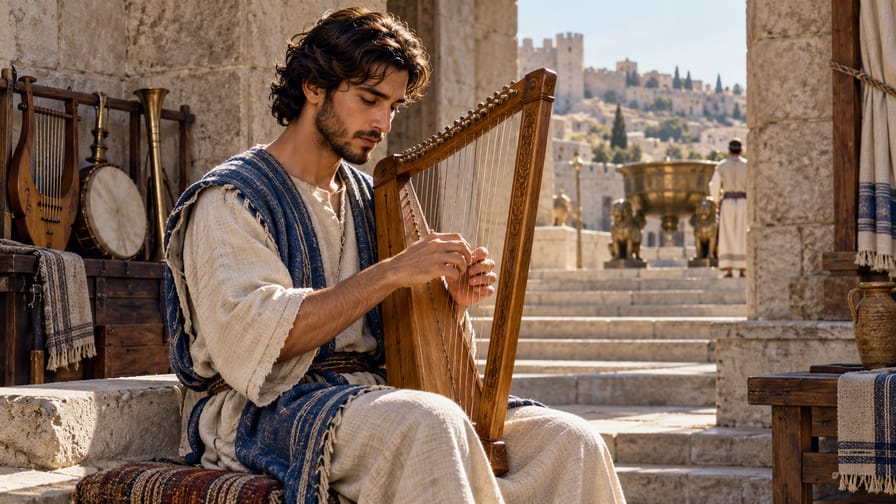
The figure of Asarelah, though briefly mentioned in the Scriptures, offers a window into the organization of Levitical worship in ancient Israel and into the profound significance of music and worship in the life of God's people. His inclusion in the genealogies and in the list of Temple servants under the leadership of David, as recorded in the book of 1 Chronicles, underscores the importance of each individual in the vast tapestry of redemptive history. This analysis will explore the etymology of his name, his historical and narrative context, the implications of his character and role, his theological and typological significance, and his legacy within the conservative evangelical Protestant perspective.
1. Etymology and meaning of the name
The name Asarelah (Hebrew: אֲשָׂרְאֵלָה, ’Aśar’ēlāh) appears in 1 Chronicles 25:2 as one of the sons of Asaph, one of the principal musical leaders appointed by King David. The spelling of the name presents a notable variation in the same chapter, being recorded as Jesharelah (יְשָׂרְאֵלָה, Yəśar’ēlāh) in 1 Chronicles 25:14. This variation is common in ancient texts and may indicate different copying or pronunciation traditions over time.
The etymology of the name Asarelah is the subject of some discussion among scholars. The form ’Aśar’ēlāh may be derived from the Hebrew root ’āsar (אָסַר), which means "to bind," "to tie," or "to imprison." In this case, the name could be interpreted as "God has bound" or "God has tied," possibly in the sense of dedicating or linking to God for service, or even as "God has imprisoned," perhaps referring to liberation from captivity or subjection to God.
Another possible derivation for ’Aśar’ēlāh, and more probable, is from the root ’āšar (אָשַׁר), meaning "to be blessed," "to be happy," or "to prosper." If so, the name would mean "God has blessed," "God is blessed," or "God is upright." This interpretation aligns well with the nature of theophoric names (names that incorporate the name of God) in the Old Testament, which often express blessing, gratitude, or divine attributes.
The variation Yəśar’ēlāh (Jesharelah) in 1 Chronicles 25:14 reinforces the interpretation of "upright" or "righteous." The root yāšar (יָשָׁר) means "to be upright," "to be righteous." Thus, Jesharelah could mean "God is upright" or "one whom God makes upright." Both forms of the name, therefore, carry profound theological significance, associating the person with the action or character of God, whether through blessing, uprightness, or dedication.
The theological significance of the name, regardless of the exact derivation, highlights the biblical perspective that a person's identity is intrinsically linked to God. For a Levitical musician, a name that evokes blessing, uprightness, or dedication to God would be particularly appropriate. It reflects the belief that their musical ministry was an expression of divine blessing and an act of uprightness before the Lord.
2. Historical context and biblical narrative
2.1. Historical period and context
Asarelah lived during the reign of King David, a crucial period in Israel's history, approximately in the late 11th and early 10th centuries B.C. David was responsible for consolidating the kingdom, establishing Jerusalem as its political and religious capital, and, significantly, organizing Levitical worship and adoration in the tabernacle, preparing the ground for the construction of the Temple by his son Solomon (1 Chronicles 22:1-5).
The political context of the time was one of transition from a tribal confederation to a centralized monarchy. Socially, Israel was establishing itself as a nation under a king who sought to align earthly governance with divine will. Religiously, David demonstrated incomparable fervor in establishing a system of worship that reflected the glory of God, bringing the Ark of the Covenant to Jerusalem and instituting an elaborate Levitical service (2 Samuel 6 1 Chronicles 15-16).
David not only conquered enemies and established borders but also dedicated himself to the meticulous organization of the Lord's service. He understood that worship was central to Israel's identity as God's people. The organization of the Levites into shifts for priestly service, gatekeeper service, and, notably, musical service, is a testament to his vision (1 Chronicles 23-26).
2.2. Genealogy and family origin
Asarelah is identified as one of the sons of Asaph (1 Chronicles 25:2). Asaph was a prominent figure among the Levites, being one of the three principal chiefs of the musicians, alongside Heman and Jeduthun (1 Chronicles 6:39 15:16-19 25:1). Asaph's family belonged to the lineage of the Gershonites, one of the three Levitical divisions (1 Chronicles 6:39-43).
Asaph's lineage was of great importance for the music and worship of Israel. The "sons of Asaph" are mentioned in several Psalms (such as Psalms 50, 73-83) as authors or choir leaders. Having Asarelah as a son of Asaph places him directly at the center of the Levitical musical tradition, suggesting that he grew up in an environment of deep dedication to sacred music and the service of the Lord.
2.3. Key events and biblical passages
The mention of Asarelah is restricted to 1 Chronicles 25. This chapter details the organization of the Levitical musicians by David and the army commanders for the service of the tabernacle (and future Temple). The purpose was to "prophesy with harps, with lyres, and with cymbals" (1 Chronicles 25:1).
Asarelah is listed in 1 Chronicles 25:2 as the fourth son of Asaph, along with Zaccur, Joseph, and Nethaniah. Subsequently, in the same chapter, the division of musicians into 24 shifts by lot is detailed. In 1 Chronicles 25:14, under the name Jesharelah, he is identified as the leader of the fourth division of musicians who served in the Temple, being chosen by lot.
The passage emphasizes divine order and providence in the selection of ministers. The fact that they were chosen "by lot" (1 Chronicles 25:8) suggests that the choice was not merely human, but divinely orchestrated, reflecting the belief that "the lot is cast into the lap, but its every decision is from the Lord" (Proverbs 16:33). His participation in the ministry of "prophesying with instruments" highlights the spiritual and inspired dimension of music in Israelite worship.
2.4. Geography and relationships
Asarelah's service was centered in Jerusalem, the city chosen by David to be the political and religious center of Israel. More specifically, his ministry took place in the tabernacle that David had erected for the Ark of the Covenant and, subsequently, in Solomon's Temple, for which David made extensive preparations (1 Chronicles 22:6-16).
His most important relationships were with his father, Asaph, and with the other musical leaders, Heman and Jeduthun, as well as with his brothers and the other Levitical musicians. All of them were under the authority of King David, who supervised the organization of worship. This network of relationships demonstrates the hierarchical structure and collaboration necessary for the maintenance of the elaborate system of worship.
3. Character and role in the biblical narrative
3.1. Analysis of character and virtues
Due to the brevity of his mention, the Scriptures do not provide explicit details about Asarelah's personal character. However, we can infer certain qualities from his role and the context of his service. Being a Levitical musician in the Temple required dedication, discipline, and, above all, piety.
His inclusion in the list of those chosen by David and by lot suggests that he possessed the necessary qualifications for such a ministry. Virtues such as obedience to authority (of David and his father Asaph), faithfulness in service, musical ability, and a spiritual sensitivity to "prophesy" through music would have been essential and, presumably, present in Asarelah.
His participation in such a specific and sacred ministry implies a commitment to God and to worship. Music in the Temple context was not mere entertainment but an act of praise, intercession, and teaching, requiring a pure heart and a spirit of service. He represents the figure of the faithful servant who, though not the main focus of the narrative, plays a vital role in the divine plan.
3.2. Vocation and specific function
Asarelah's role was that of a Levitical musician, specifically one of the leaders of the 24 divisions of musicians established by David (1 Chronicles 25:14). His function was to "prophesy with harps, with lyres, and with cymbals" (1 Chronicles 25:1). The Hebrew word for "prophesy" (נָבָא, nābā’) in this context does not necessarily refer to foretelling the future, but rather to speaking or singing under divine inspiration, proclaiming God's truth or expressing divine glory.
This concept of "prophesying with instruments" is crucial. It demonstrates that music was seen as a vehicle for divine revelation and for the expression of spiritual truth. The Temple musicians were not just artists they were spiritual ministers whose songs and melodies were infused with the Spirit of God, elevating worship and instructing the people.
As chief of one of the divisions, Asarelah would have had the responsibility of leading a group of musicians, ensuring that the musical service was performed with excellence and reverence. This implies leadership, organizational, and teaching skills, in addition to his own musical mastery. He was an integral part of the system of worship that David meticulously established for the Lord.
3.3. Significant actions and key decisions
The main "action" of Asarelah recorded is his participation in the lot that designated him as leader of the fourth division of musicians (1 Chronicles 25:14). Although the lot was a passive act for him, his acceptance and subsequent service are the implicit key decisions. He responded to the divine call to the ministry of music, dedicating himself to this sacred vocation.
His life was a testament to obedience to the divine arrangement for worship. He and his brothers represent the continuity of faith and service through the Levitical generations. Although there are no narratives of heroic deeds or grand speeches, his faithfulness in performing his responsibilities in the Temple is his most significant legacy.
4. Theological significance and typology
4.1. Role in redemptive history and progressive revelation
Asarelah, as part of the Levitical ministry of music, plays a role in redemptive history by contributing to the establishment of an ordered and glorious worship to God in Israel. This worship was an essential part of God's progressive revelation to His people, teaching them about divine holiness, the need for atonement, and the beauty of worship. The musical service was not only an expression of praise but also a means by which the people were instructed and their faith strengthened.
The organization of worship by David, which included Asarelah's ministry, foreshadowed the glory of Solomon's Temple and, ultimately, pointed to the reality of the new covenant in Christ. The Old Testament system of worship, with its rituals and ministries, was a shadow of the spiritual realities that would be fully revealed in Jesus Christ (Colossians 2:16-17 Hebrews 8:5 10:1).
4.2. Prefiguration or Christocentric typology
Although Asarelah is not a direct typological figure of Christ in the sense of a king, priest, or main prophet, the ministry he represents has profound typological and Christocentric implications. The Temple worship, in which he served, was a type of the worship that Christ would inaugurate and fulfill.
Musical worship, especially "prophesying with harps," prefigures the worship in Spirit and truth that Jesus taught (John 4:23-24). Christ is the high priest who offers himself as the perfect sacrifice, and through him, believers are enabled to offer "spiritual sacrifices" (1 Peter 2:5). Music and praise in the New Testament church, inspired by the Holy Spirit, are the fulfillment of the worship that Asarelah helped to establish in the Old Testament (Ephesians 5:19-20 Colossians 3:16).
The concept of "prophesying" with music can also be seen as a precursor to the Holy Spirit's role in inspiring hymns and spiritual songs in the church. The Levitical musicians, like Asarelah, were instruments of divine inspiration, and this function is now exercised by the community of believers, filled with the Spirit, who proclaim the glory of God through music.
4.3. Connection with central theological themes
Asarelah's ministry connects to several central theological themes in the evangelical Protestant perspective. Firstly, the sovereignty of God in choosing and empowering for ministry. The lot (1 Chronicles 25:8) points to divine providence in designating individuals for service, echoing the doctrine of divine calling.
Secondly, the importance of corporate worship. The organization of musicians into shifts and divisions underscores that worship of God is not merely an individual act, but a communal, ordered, and central one for the life of God's people. Worship is a response to God's grace and a means of glorifying Him.
Thirdly, the sanctity of service to God. The Levites were set apart for the service of the Lord, and this included the musicians. Their work was sacred, requiring purity and dedication. This highlights the importance of holiness and reverence in all Christian ministry.
Finally, the connection between music and spiritual inspiration. The idea of "prophesying" with instruments elevates music from a mere art to a means of divine communication and expression of spiritual truths. This connection is vital for understanding worship music in evangelical theology, which views hymns and songs as vehicles for the edification of the church and the proclamation of the Gospel.
5. Biblical-theological legacy and canonical references
5.1. Mentions and contributions
The figure of Asarelah is mentioned exclusively in 1 Chronicles 25:2 and 25:14. He is not the author of any biblical book or Psalm, nor is he referenced in other passages of the Old or New Testament. His literary contribution is indirect, through the role of his family (the sons of Asaph) in the authorship and performance of many Psalms (e.g., Psalms 73-83).
Although his mention is brief, Asarelah's importance lies in being a representative of the vast and well-organized Levitical workforce that served in the Temple. His life and ministry contributed to the maintenance of continuous and ordered worship to the Lord, which was fundamental to Israel's religious identity.
5.2. Influence on biblical theology and tradition
Asarelah's influence on biblical theology is not primary, but secondary, through the ministry he represented. He personifies the devotion and service of the Levitical musicians, who were essential for Old Testament worship. The theology of the book of Chronicles, in particular, emphasizes the importance of worship and obedience to divine commandments for Israel's prosperity.
In Jewish and Christian interpretive tradition, Asarelah is rarely the focus of specific commentaries. However, the ministry of the Levitical musicians in general is widely discussed. The Jewish tradition values music in the Temple as a central element of worship, and Christian tradition views music as an integral part of congregational praise, with roots in the Old Testament.
There are no known references to Asarelah in intertestamental literature, which focuses on more prominent figures or broader historical events.
5.3. Treatment in Reformed and Evangelical theology
In Reformed and evangelical theology, the treatment of figures like Asarelah generally fits into the broader discussion about the theology of worship, the priesthood of believers, and Old Testament typology. Evangelical commentators, when addressing 1 Chronicles 25, highlight divine providence in the organization of worship and the dedication required for the Lord's service.
Scholars like John H. Walton and Tremper Longman III, in their commentaries on Chronicles, emphasize how the detailed organization of worship reflects David's concern to honor God and establish a pattern for future worship. Asarelah, in this context, is an example of individual faithfulness within a divinely ordered system.
The character's importance for understanding the canon lies in his contribution to the narrative of the book of Chronicles, which serves to reaffirm the continuity of God's covenant with Israel and the centrality of worship. Chronicles, written after the exile, sought to encourage the Jews to rebuild their nation and their worship, and the genealogical and ministerial lists, like the one that includes Asarelah, served to legitimize and inspire that restoration.
In summary, Asarelah, though a minor character, is a vivid reminder of the vastness of God's work and the importance of every servant, even those whose names are only briefly recorded. He represents faithfulness in the ministry of music and worship, a vital service that prefigured the worship in Spirit and truth of the New Testament and that continues to be an essential part of the life of the church today.