


Ahab
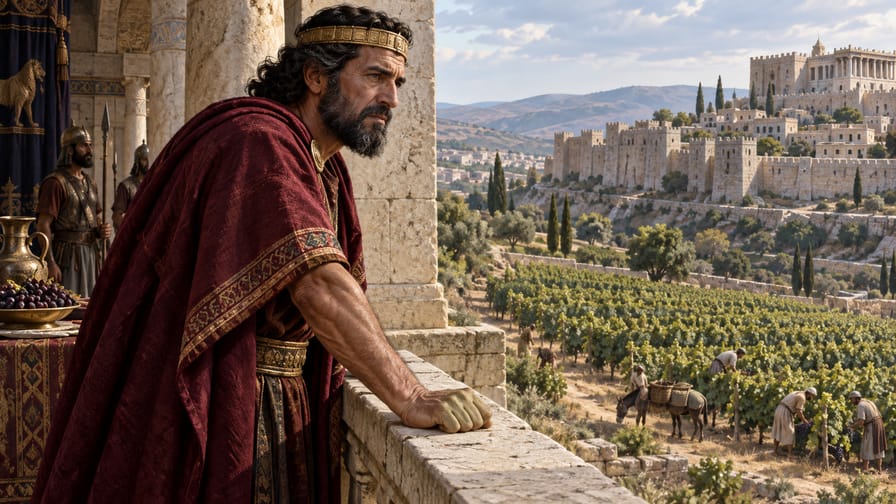
The figure of Ahab, king of Israel, emerges in the Hebrew Scriptures as one of the most infamous monarchs in the history of the Northern Kingdom. His reign, narrated primarily in the books of 1 and 2 Kings, is a period of intense apostasy and spiritual conflict, which left an indelible mark on the historical and theological memory of Israel. The analysis of his life and character offers crucial lessons on leadership, obedience, and the consequences of idolatry.
From an evangelical Protestant perspective, the story of Ahab is not merely a historical record, but a powerful warning and a vivid illustration of God's holiness and the seriousness of sin. His theological legacy lies in how he exemplifies rebellion against the Lord and the profound implications of this disobedience for the individual and for the nation. This in-depth study will explore his etymology, context, character, theological significance, and legacy.
1. Etymology and meaning of the name
1.1 Original name and linguistic derivation
The name Ahab, in Hebrew, is אֶחָב (’Aḥ’av). This name is composed of two common Semitic roots: אָח (’aḥ), which means "brother," and אָב (’av), which means "father." The combination of these roots suggests a meaning that can be interpreted in various ways, but always with a familial or relational connotation.
The structure of the name is typical of theophoric or relational names found in the Old Testament, although Ahab does not contain an explicit divine element. The transliteration into Greek in the Septuagint (LXX) is Αχααβ (Achaab), maintaining the original sound and familiarity with the Hebrew name. The consistency in transliteration indicates the stability of the name's form across languages.
1.2 Literal and symbolic meaning
Literally, ’Aḥ’av (Ahab) is often translated as "brother of the father" or "the father is brother." Some scholars suggest that the phrase "brother of the father" could denote a close kinship relationship or, metaphorically, someone who is like a father or a protector to their brother, or vice versa. However, for King Ahab, the meaning of the name acquires a tragic irony.
Symbolically, the name could have been conceived with the intention of honoring the father or the family lineage. However, Ahab's actions dishonored both his father Omri (who was already an ungodly king) and Israel's heritage as a covenant nation. His reign was marked by profound disloyalty to the celestial "Father," the Lord Yahweh, and a betrayal of his "brotherhood" with the people of God.
1.3 Other characters and theological significance
There is another mention of an Ahab in the Scriptures, in Jeremiah 29:21-22, where a false prophet named Ahab, son of Kolaiah, is condemned by God in the Babylonian exile. This fact, though not directly linked to the king of Israel, suggests that the name was not uncommon and that, in another context, it was also associated with impiety and false prophecy, reinforcing a negative connotation.
For King Ahab, the theological significance of the name, in light of his history, lies in its contrast with truth. Although his name could evoke family loyalty, his life demonstrated profound disloyalty to the Lord. The irony of a name suggesting familial closeness being borne by a king who led Israel into apostasy is a vivid reminder of the distance between a person's nominal identity and spiritual reality.
2. Historical context and biblical narrative
2.1 Historical period and context
Ahab reigned over Israel for 22 years, approximately between 874 and 853 BC, succeeding his father Omri. This period was a time of significant political and religious instability in the Near East. The Northern Kingdom (Israel) was in constant conflict with the Kingdom of Aram (Syria), and the growing shadow of the Assyrian Empire began to spread over the region, threatening the sovereignty of smaller nations.
Internally, Israel was in a state of profound apostasy. Since the division of the kingdom after Solomon's death, the kings of Israel had established a pattern of idolatry, beginning with Jeroboam I and his golden calves in Dan and Bethel (1 Kings 12:28-30). Ahab's reign, however, is described as the worst of all his predecessors, elevating idolatry to a new and dangerous level (1 Kings 16:30).
2.2 Genealogy and family origin
Ahab was the son of Omri, a general who usurped the throne and founded one of Israel's most powerful and, paradoxically, most ungodly dynasties. The Omride dynasty is notable for its military strength and architectural prowess, including the construction of the new capital, Samaria (1 Kings 16:24). However, Ahab's spiritual inheritance was from a father who "did evil in the eyes of the Lord, worse than all who preceded him" (1 Kings 16:25).
This inheritance of impiety was exacerbated by Ahab's marriage to Jezebel, daughter of Ethbaal, king of the Sidonians (1 Kings 16:31). This political alliance, though perhaps strategic from a secular standpoint, was a spiritual disaster for Israel. Jezebel brought with her the aggressive worship of Baal and Asherah, becoming the primary promoter of idolatry in the kingdom.
2.3 Main life events and relationships
Ahab's life is dominated by a series of dramatic events and confrontations. His marriage to Jezebel led to the construction of a temple and an altar for Baal in Samaria (1 Kings 16:32), and to the proliferation of prophets of Baal and Asherah, supported by the queen. This provoked the Lord's wrath and the prophetic intervention of Elijah.
The confrontations with the prophet Elijah are central to Ahab's narrative. The three-and-a-half-year drought, prophesied by Elijah (1 Kings 17:1), was a divine judgment on Israel's idolatry. The challenge on Mount Carmel, where Elijah confronted the 450 prophets of Baal and the 400 prophets of Asherah, demonstrated the Lord's power and sovereignty over false gods (1 Kings 18:19-40). Elijah's victory was a direct blow to the religious authority of Ahab and Jezebel.
Another striking episode is Ahab's coveting of Naboth's vineyard in Jezreel (1 Kings 21). Unable to persuade Naboth to sell his family inheritance, Ahab allowed Jezebel to orchestrate Naboth's murder through false accusations. This act of injustice and shedding of innocent blood sealed the fate of Ahab's house, provoking a severe prophecy of judgment from Elijah (1 Kings 21:19-24).
Despite his impiety, Ahab demonstrated some military capability, winning two battles against Ben-Hadad, king of Aram (1 Kings 20). However, his clemency towards Ben-Hadad after the victory was condemned by an anonymous prophet (1 Kings 20:42). Ahab's story culminates in his death at the Battle of Ramoth-Gilead, where, disguised, he was struck by an arrow "at random," fulfilling Micaiah's prophecy (1 Kings 22:34-38). His alliance with the righteous King Jehoshaphat of Judah in this battle is an example of bad association.
3. Character and role in the biblical narrative
3.1 Analysis of character and moral failings
Ahab's character, as revealed in the Scriptures, is complex and multifaceted, though predominantly negative. He is portrayed as a weak and indecisive king, easily influenced by his wife Jezebel. His moral cowardice is evident in his inability to confront Jezebel's aggressive idolatry and, later, in his passivity regarding her plan to acquire Naboth's vineyard (1 Kings 21:4-7).
His main failing was idolatry, described as the worst of all the kings of Israel (1 Kings 16:30). He not only tolerated the worship of Baal but actively promoted it, building altars and temples. This fundamental apostasy disqualified him as a leader of God's covenant people, demonstrating a profound lack of fear of the Lord and disrespect for the Mosaic Law (Deuteronomy 6:4-9).
Beyond idolatry, Ahab was marked by covetousness and injustice, as seen in the Naboth episode. His sadness and resentment over not acquiring the vineyard were exploited by Jezebel, leading to a judicial murder. Although Ahab did not directly order Naboth's death, he benefited from it and showed no remorse until confronted by Elijah.
A surprising quality in his character is his demonstration of temporary humility after Elijah's prophecy about the destruction of his house (1 Kings 21:27-29). He tore his clothes, fasted, and walked about in sorrow. This attitude led the Lord to postpone part of the judgment until the days of his son. However, this "humility" seems to have been superficial, as he soon after rejected Micaiah's prophecy and sought death in Ramoth-Gilead (1 Kings 22:28-30).
3.2 Role in the biblical narrative and significant actions
Ahab's role in the biblical narrative is that of a king who exemplifies the apostasy and moral decline of the Northern Kingdom. His story serves as a backdrop for the powerful ministry of the prophets Elijah and Elisha, who were raised by God to confront idolatry and call Israel to repentance. He is the central antagonist in the dramatic struggle between the Lord and Baal.
His actions, such as his marriage to Jezebel and the promotion of Baal worship, had devastating consequences for Israel's spirituality. He not only sinned personally but also led the entire nation to sin (1 Kings 16:33). His disobedience and that of his house resulted in divine judgments, such as the drought and the destruction of his dynasty, as prophesied by Elijah (1 Kings 21:21-24).
Ahab's story also highlights God's sovereignty over human history and divine faithfulness to His word. Even amidst the deepest apostasy, God raised up prophets to warn His people and, ultimately, executed His judgment upon iniquity. Ahab's death in battle, despite his efforts to avoid it, is proof of the infallibility of the Lord's prophetic Word (1 Kings 22:37-38).
4. Theological significance and typology
4.1 Role in redemptive history and progressive revelation
Ahab's story is a crucial landmark in redemptive history, as it illustrates the constant danger of apostasy and the persistence of idolatry in the human heart, even among the covenant people. His reign is a testament to the progressive revelation of God's holiness and His intolerance of sin, especially the worship of other gods.
It demonstrates the seriousness of the Mosaic covenant and the terrible consequences of violating its terms. The narrative of Ahab and Elijah is a microcosm of the larger spiritual struggle that permeates all of Israel's history, a struggle between faithfulness to Yahweh and the allure of pagan cults. This struggle prepares the ground for understanding the need for a new covenant and a deeper redemption.
4.2 Antitype and central theological themes
Ahab is not a positive typological figure of Christ on the contrary, he serves as a powerful antitype. He represents everything that a just king and servant of God should not be. While Christ is the perfect King who rules with justice and righteousness, Ahab is the ungodly king who rules with injustice and promotes idolatry. He is the antithesis of the promised Messiah.
His life highlights central theological themes from an evangelical Protestant perspective: the sovereignty of God over kings and nations, even in their rebellions the unquestionable authority of God's Word through His prophets the deceptive and destructive nature of sin and idolatry and divine justice which, though patient, eventually executes judgment upon impenitence.
Ahab's story also emphasizes the doctrine of man's total depravity, where even with God's clear revelation and Elijah's miracles, Ahab's heart remains inclined to evil, with only superficial and temporary repentance. This underscores the need for God's transforming grace and true regeneration.
4.3 Connection with the New Testament and prophetic fulfillment
Although Ahab is not directly quoted in the New Testament, the theological principles of his story are broadly applicable. The New Testament continues to warn against idolatry (1 Corinthians 10:14 Colossians 3:5), the importance of obedience to God's Word (John 14:15), and the consequences of divine judgment for the ungodly (Romans 1:18-32).
The mention of Elijah in the New Testament (James 5:17-18, Luke 4:25-26) often evokes the context of his ministry during Ahab's reign, recalling the prophet's courage and faith in times of great apostasy. The figure of Ahab serves as a somber backdrop that highlights the glory of prophetic ministry and God's faithfulness in preserving a faithful remnant.
The house of Ahab, destroyed by Jehu (2 Kings 10), is a fulfillment of the prophecies of Elijah and Micaiah, demonstrating that God's word is fulfilled, whether for blessing or for judgment. This reinforces the reliability of divine promises and warnings, a foundation of the Christian faith.
5. Biblical-theological legacy and canonical references
5.1 Mentions in other biblical books and influence
Ahab's story is predominantly found in 1 Kings 16-22. His name and the memory of his dynasty are also referenced in 2 Kings, particularly in chapters 1, 3, 9, and 10, which narrate the events subsequent to his reign, including the death of his sons and the eradication of his house by Jehu, in fulfillment of divine prophecies. The book of 2 Chronicles 18 also details Ahab's alliance with Jehoshaphat, king of Judah.
Ahab's influence on biblical theology is profound. He became the epitome of the ungodly king of Israel, a standard of wickedness against which other kings would be measured. The phrase "there was no one who sold himself to do what was evil in the eyes of the Lord as Ahab did" (1 Kings 21:25) is a testament to his legacy of impiety. His story is a perennial warning against idolatry and a lack of integrity in leadership.
5.2 Treatment in interpretive tradition and evangelical theology
In Jewish and Christian interpretive tradition, Ahab is universally seen as one of the worst kings of Israel. His figure is often used as an example of stubborn disobedience and the disastrous consequences of bad influence (Jezebel). Rabbis, for instance, considered him one of the few kings who would not have a share in the world to come due to his great wickedness.
Reformed and evangelical theology emphasizes Ahab's story to illustrate several doctrinal points. It underscores the gravity of sin, especially idolatry, which is not merely an error but a betrayal of the living God. The story of Ahab and Elijah is a case study on spiritual warfare and the need for unwavering faith in the face of cultural and political opposition.
Furthermore, Ahab's life serves as a reminder of the responsibility of leaders before God. His failure to lead Israel in true worship and his active promotion of idolatry resulted in judgment for him and his descendants. This resonates with the evangelical emphasis on accountability and holiness in leadership, both in the church and in society.
5.3 Importance for understanding the canon
Ahab's story is vital for understanding the biblical canon, as it provides a crucial context for later prophetic books. Prophets like Amos and Hosea, who denounced idolatry and injustice in Israel, find their roots in the seeds planted during the reign of Ahab and his successors. His story helps explain why the Northern Kingdom eventually fell to Assyria.
In summary, the figure of Ahab is a powerful reminder of the persistence of human sin, of God's faithfulness in warning and judging, and of the importance of radical obedience to the Lord. His life is an antitype of leadership, a negative example that, conversely, points to the perfection of Christ's leadership, the just and eternal King.