


Er
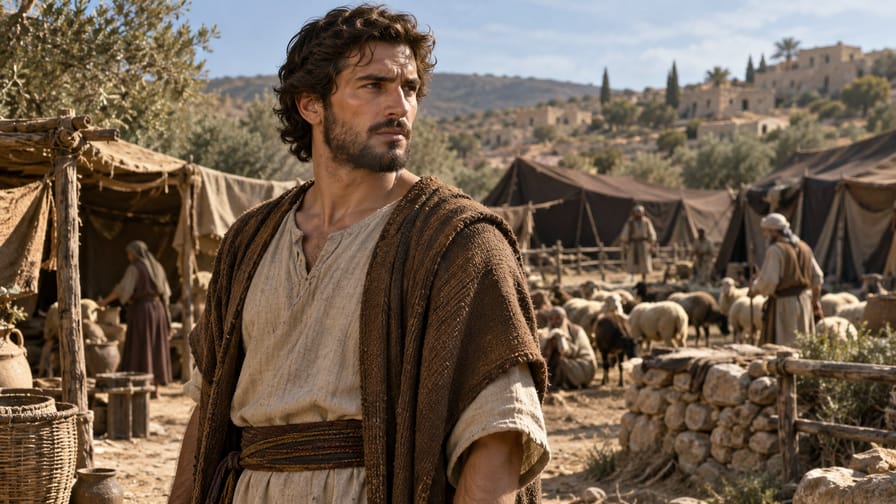
The figure of Er, Judah's firstborn, is brief, yet theologically significant, in the biblical narrative. Although his appearance is concise in the book of Genesis, his story serves as a powerful reminder of God's holiness and the seriousness of sin, even within the covenant lineage. His life, though short and marked by the tragedy of divine judgment, sheds light on God's ways in redemptive history and the need for a Savior.
This analysis will delve into the onomastic meaning of Er, his historical context, the implications of his character, and the theological role he plays from an evangelical Protestant perspective. We will explore the canonical passages that mention him, seeking to extract lessons about divine justice, human depravity, and God's sovereign plan for salvation, culminating in the Messiah.
1. Etymology and Meaning of the Name Er
The name Er, in Hebrew Ēr is linked to the Hebrew verb îr (עִיר), which means "city." However, the interpretation of "awake" or "watchful" is the most accepted among scholars of the Hebrew language.
There are no significant variations of the name Er in the biblical languages, and it is consistently transliterated as Er in various translations. Aside from the son of Judah, the Bible does not record another prominent character with the same name who has a distinct narrative role, which makes the analysis focused exclusively on this individual.
The theological significance of the name, at first glance, may seem ironic, given the fate of its bearer. If Er means "awake" or "watchful," his life was marked by deep spiritual blindness, culminating in his condemnation for being "wicked in the sight of the Lord" (Genesis 38:7). This may suggest a contrast between the literal meaning of the name and the character's spiritual reality.
It could be argued that, despite his name suggesting watchfulness, Er was spiritually asleep or, worse, actively "awake" to the practice of evil. In a broader sense, the name can serve as a reminder that true watchfulness is not merely physical, but primarily spiritual, discerning between good and evil according to God's will.
2. Historical Context and Biblical Narrative
The story of Er is situated in the patriarchal period of the Old Testament, specifically during the life of Judah, one of Jacob's sons. The main account is found in Genesis 38, a chapter that, though appearing to be a digression in the narrative of Joseph, is crucial for the messianic genealogy and understanding the character of Judah and his family.
Chronologically, the events of Genesis 38 occur after Joseph is sold into slavery by his brothers (Genesis 37) and before he is taken to Egypt. Judah, after Joseph's sale, withdraws from his brothers and settles among the Canaanites, a people whose cultural and religious practices were often in conflict with the principles of the divine covenant.
The political, social, and religious context of the time was one of semi-nomadic tribes and Canaanite city-states, where idolatry, sexual immorality, and injustice were common. Judah's decision to marry a Canaanite woman, the daughter of Shua (Genesis 38:2), and to allow his sons to follow the same pattern, exposed his family to the corrupting influences of that culture.
2.1 Family Origin and Genealogy
Er was the firstborn of Judah and his Canaanite wife, whose name is not explicitly mentioned in the text but is referred to as "the daughter of Shua" (Genesis 38:2). His younger brothers were Onan and Shelah (Genesis 38:4-5). He was, therefore, a grandson of Jacob and great-grandson of Isaac and Abraham, placed in the lineage of the promise but living in a morally compromised environment.
Er's genealogy is briefly mentioned in other biblical passages, confirming his position as Judah's son. In Genesis 46:12, he is listed among the sons of Judah who went down to Egypt with Jacob, though he was already dead (the list includes his children, which indicates that the lineage continued through his brothers and Tamar). Similarly, in Numbers 26:19 and 1 Chronicles 2:3, Er is cited as Judah's first son, with the mention of his death in Canaan.
2.2 Main Events of His Life
Er's life is narrated in just a few verses, yet with lasting impact. The main events can be summarized as follows:
- Birth: Er was born to Judah and his Canaanite wife (Genesis 38:3).
- Marriage: Judah provided a wife for Er, a woman named Tamar (Genesis 38:6), following the custom of the time.
- Death: The most significant and tragic event is his premature and divinely orchestrated death: "Er, Judah's firstborn, was wicked in the sight of the Lord, so the Lord put him to death" (Genesis 38:7). The text does not offer details about the specific nature of his wickedness, but God's direct intervention to take his life underscores the gravity of his sin.
The geography related to Er is centered in the land of Canaan, where Judah settled. Cities such as Adullam (Genesis 38:1), Timnah (Genesis 38:12), and Enaim (Genesis 38:14) are mentioned in the context of Judah's family. His relationships with other biblical characters include his father Judah, his wife Tamar, and his brothers Onan and Shelah, all playing crucial roles in the continuity of the lineage.
3. Character and Role in the Biblical Narrative
The analysis of Er's character is based on a single, yet devastating, biblical declaration: he "was wicked in the sight of the Lord" (Genesis 38:7). This is the only description the Scriptures offer about his personality or behavior. The lack of details about the specific actions that constituted his wickedness is notable, but the consequence—death directly inflicted by God—indicates that his sin was of grave proportions and intolerable to divine holiness.
Reformed and evangelical theology emphasizes the total depravity of man, meaning that sin affects all facets of human existence and that, without God's grace, all are "wicked in the sight of the Lord" (Romans 3:10-12). However, the Bible often highlights certain individuals as particularly "wicked" when their actions reach a level of rebellion or ungodliness that demands specific judgment.
Although the Scriptures do not detail Er's transgressions, biblical commentators have speculated about the nature of his wickedness. Some suggest it could have been some form of grave sexual immorality, perhaps involving Canaanite cultic practices or sexual perversions, given the cultural context and the subsequent actions of his brother Onan (who refused to perform his levirate duty, practicing coitus interruptus, an act also "wicked in the sight of the Lord," Genesis 38:9-10).
Others propose that his wickedness could have been a general ungodliness, a rejection of the moral and spiritual principles transmitted by his grandfather Jacob and his covenant lineage. John Calvin, in his commentaries on Genesis, suggests that Er's wickedness was an "impiety in his life, or perhaps some cruelty in his relations." Keil and Delitzsch, in turn, point to the possibility of "sinful conduct that violated the sanctity of marriage or the rights of one's neighbor."
Regardless of the exact specification of his sin, the message is clear: Er did not live according to divine standards. His calling, as Judah's firstborn, was to be a link in the lineage of the promise, but his flawed character disqualified him. He did not demonstrate virtues or spiritual qualities instead, his moral failings were so grave that they provoked direct divine intervention.
Er's role in the biblical narrative, therefore, is preeminently that of a negative example. His life and death serve as a solemn warning about God's justice and the consequences of sin. He is a catalyst for subsequent events, as his death triggers the necessity of the levirate marriage with Onan and, subsequently, Tamar's plot with Judah, which is crucial for the continuity of the messianic lineage. There is no character development his story is a flash that illuminates God's holiness and the seriousness of sin.
4. Theological Significance and Typology
The figure of Er, though secondary, plays a significant role in redemptive history and the progressive revelation of God. His story highlights God's impeccable justice and His intolerance of sin, even among those who are part of the covenant lineage. Er's death is a testimony to the truth that "the wages of sin is death" (Romans 6:23), a reality that permeates all of Scripture.
There is no direct Christocentric typology in Er he does not prefigure Christ in a positive way. On the contrary, Er serves as an anti-type, representing fallen humanity and the desperate need for a Redeemer. He personifies the human condition under divine judgment, contrasting sharply with the righteous and sacrificial life of Jesus Christ, who came to abolish the condemnation of sin.
Er's story is intrinsically linked to divine covenants and promises, especially the Abrahamic Covenant, which promised numerous offspring and a land. The death of Er, Judah's firstborn, threatened the continuity of this lineage, but God, in His sovereignty, ensured the preservation of the seed through Tamar and, subsequently, through the lineage of Judah, from which the Messiah would come (Genesis 49:10 Matthew 1:2-3).
The New Testament makes no direct reference to Er, but the theological principles illustrated by his life and death are extensively developed. God's holiness, His judgment on sin, and the need for repentance and faith are central themes in both the Old and New Testaments (Hebrews 12:29 John 3:18-19). Er's story is a vivid example of God's wrath against ungodliness.
Er's connection with central theological themes is profound. He is an example of the doctrine of divine judgment, which is a manifestation of God's justice and holiness. His death reminds us that God is not indifferent to sin and that He acts to vindicate His holiness. This points to the seriousness of sin and the need for a perfect sacrifice for propitiation, which is fully realized in Christ (1 John 2:2).
Er's story also underscores the doctrine of grace. Although Judah's lineage was marked by moral failures (Judah himself sinned with Tamar), God, in His sovereignty and grace, preserved the seed. This demonstrates that salvation and the continuity of the covenant do not depend on human righteousness, but on God's faithfulness and grace. Er's story, therefore, prepares the ground for understanding salvation by grace through faith, not by works (Ephesians 2:8-9).
5. Biblical-Theological Legacy and Canonical References
The mentions of Er in other biblical books are primarily genealogical, confirming his existence and his position in the lineage of Judah. He is listed in Genesis 46:12 as one of Judah's sons who "were born in Canaan," along with Onan and Shelah. This list is repeated in Numbers 26:19, in the census of the tribes of Israel, and in 1 Chronicles 2:3, in Judah's genealogy, where it is reiterated that Er "died in Canaan."
Despite his brief appearance, Er's influence on biblical theology is indirect, yet significant. His story serves as a microcosm of the human condition and the relationship between God and fallen humanity. He did not contribute literary works, but his life (and death) is a text in itself, a parable about divine holiness and the consequences of sin.
In the Jewish and Christian interpretive tradition, Er is generally treated as a cautionary example. The rabbis, though not specifying the nature of his sin, emphasize the severity of divine judgment. In the Christian tradition, especially in Reformed and evangelical theology, Er's story is often used to illustrate fundamental doctrines such as God's sovereignty, divine justice, human depravity, and the gravity of sin.
Reformed theology, with its emphasis on God's holiness and the total depravity of man, finds in Er's narrative a vivid demonstration of these principles. His death is not seen as an arbitrary act, but as a manifestation of the intrinsic justice of a holy God who cannot compromise with evil. This reinforces the necessity of atonement and Christ's redemptive work to reconcile sinful humanity with a just God.
Er's importance for understanding the canon lies in the fact that his death, though tragic, is a crucial link in the chain of events leading to the preservation of Judah's messianic lineage. If Er had not died, the necessity of the levirate marriage with Onan and, subsequently, God's providence through Tamar for Judah, would not have occurred in the same way. Thus, even through judgment on sin, God sovereignly advances His redemptive plan.
In summary, Er's story, though concise, is a powerful theological lesson. It reminds us of the seriousness of sin, God's unwavering justice, and His faithfulness in fulfilling His promises, even amidst human failings. He is a somber reminder of the need for a Savior, Jesus Christ, who, unlike Er, lived a perfect life and died to redeem those who are "wicked in the sight of the Lord" (2 Corinthians 5:21).