


Abiel
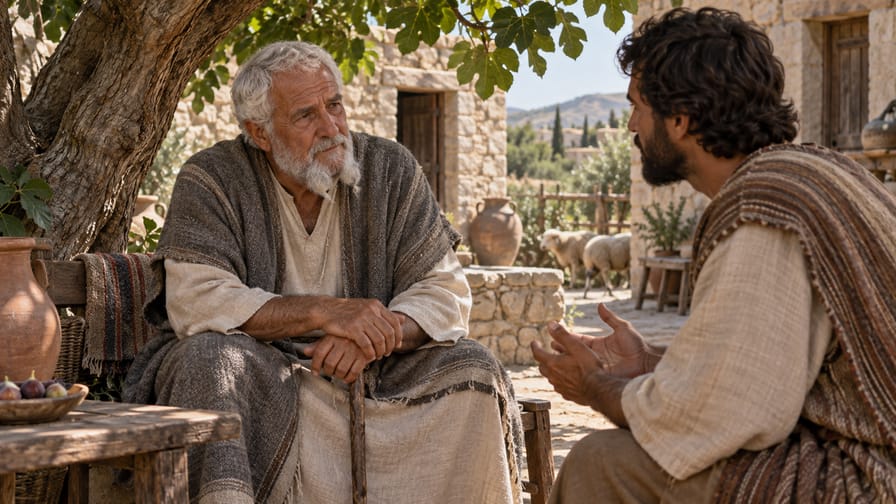
The figure of Abiel, though not central in biblical narratives, holds significant relevance within the genealogical and theological structure of the Old Testament. His name is associated with two distinct characters, but he is most prominently recognized as the grandfather of the first king of Israel, Saul. This analysis will explore the etymology, historical context, inferred character, theological significance, and legacy of Abiel from a Protestant evangelical perspective, emphasizing the authority of Scripture and divine sovereignty.
The mention of Abiel in Scripture, though brief, inserts him into the narrative of redemptive history, particularly in the establishment of the monarchy in Israel. His existence serves as a vital link in Saul's lineage, which, in turn, sets the stage for the ascent of David and the subsequent messianic promise. Therefore, even seemingly secondary characters like Abiel play a providential role in God's grand plan.
1. Etymology and Meaning of the Name
The name Abiel, in Hebrew ʼĂbîʼēl (אֲבִיאֵל), is a common theophoric name in ancient Israel. It is composed of two Hebrew elements: ʼāb (אב), which means "father," and ʼēl (אל), an abbreviated form of ʼĔlōhîm (אֱלֹהִים), referring to God. Thus, the literal meaning of Abiel is "My Father is God" or "God is my Father."
This etymology carries a deep theological significance. The name expresses a relationship of dependence and divine sonship, a declaration of faith in God's fatherhood. In a culture where names frequently reflected hopes, beliefs, or circumstances of birth, Abiel suggests a family with an awareness of God's sovereignty and care.
The presence of the element ʼēl in Hebrew names denotes a connection with the divine, often associated with strength, power, and sovereignty. Names like Israel ("he who struggles with God"), Samuel ("heard by God"), or Daniel ("God is my judge") share this root, underscoring the centrality of God in the Hebrew worldview.
There are no significant variations of the name Abiel in the biblical languages for the characters in question. However, it is crucial to note that there is a secondary figure with a slightly different name, Abi-Albon (אֲבִי עַלְבוֹן), who is identified as one of David's mighty men in 1 Chronicles 11:32. While some scholars suggest that this is the same Abiel mentioned in 2 Samuel 23:31, the etymological variation is worthy of note. Abi-Albon can mean "father of strength" or "father of understanding," slightly differentiating it from "God is my Father."
The theological significance of the name "God is my Father" is particularly resonant in the context of Saul's grandfather. Saul, the first king of Israel, was chosen by the people based on his external qualities (1 Samuel 9:2), and his monarchy was marked by disobedience and turning away from God. The name of his grandfather, Abiel, serves as an implicit reminder of the true source of authority and fatherhood, contrasting with Saul's failure to recognize God as his true Father and King.
The name anticipates the central truth of the gospel, where God is revealed as the Father who adopts believers into His family through Jesus Christ (John 1:12 Romans 8:15). Thus, the name Abiel, even in its biblical brevity, points to an eternal truth about the relationship between God and humanity, which finds its full fulfillment in the New Covenant.
2. Historical Context and Biblical Narrative
The most prominent figure of Abiel is presented in the period of transition between the era of the judges and the establishment of the monarchy in Israel, approximately in the 11th century BC. This was a time of great political and spiritual instability, characterized by the absence of a king and the repeated apostasy of the people, as described in the book of Judges (Judges 21:25).
The political context was one of tribal fragmentation and constant threats from neighboring peoples, such as the Philistines. Socially, Israel longed for a strong leader who could unify and defend them, similar to the surrounding nations. Religiously, the nation often deviated from the covenant with Yahweh, although there were periods of revival under the leadership of judges like Samuel.
2.1. Abiel, Grandfather of Saul
The main mention of Abiel occurs in 1 Samuel 9:1, which describes the genealogy of Saul: "There was a man of Benjamin, whose name was Kish, son of Abiel, son of Zeror, son of Becorath, son of Aphiah, son of a Benjamite, a powerful and valiant man." This passage establishes Abiel as the father of Kish and, therefore, the grandfather of Saul.
A second reference in 1 Samuel 14:51 complements this genealogy: "Saul's wife's name was Ahinoam, daughter of Ahimaaz and the name of the chief of his army was Abner, son of Ner, Saul's uncle. Kish was the father of Saul and Ner, Abner's father, was the son of Abiel." This passage clarifies that Abiel was the father of both Kish (Saul's father) and Ner (Abner's father), making Kish and Ner brothers, and Abiel the grandfather of Saul and Abner.
The genealogies in 1 Chronicles 8:29-33 and 1 Chronicles 9:35-39, which also list Saul's lineage, present a complexity. In these passages, a character named Jeiel (יְעִיאֵל, Yᵉʻîʼēl) is listed as the father of Ner, who in turn begot Kish, the father of Saul. The reconciliation of these accounts is a topic of academic debate. Some suggest that Jeiel may be an alternative name for Abiel, a common practice in ancient genealogies, or that the lists in Chronicles may be condensing or omitting generations, focusing on different aspects of the lineage.
The most accepted interpretation, and consistent with the narrative of Samuel, is that Abiel is the father of Kish and Ner, and, therefore, the grandfather of Saul. This connection firmly places him in the lineage of a prominent family from the tribe of Benjamin, known for its strength and valor (Judges 20:16).
The geography associated with this family is the region of Benjamin, particularly Gibeah, which became Saul's capital (1 Samuel 10:26). Abiel's family was, therefore, part of the tribal elite who lived in the central hills of Israel, a strategic and often disputed area.
2.2. Abiel, one of David's Mighty Men
A second mention of Abiel, or more precisely Abi-Albon, is found in the list of David's thirty mighty men. In 2 Samuel 23:31, he is listed as "Abiel the Arbathite". The parallel passage in 1 Chronicles 11:32 identifies him as "Abi-Albon the Arbathite".
This Abiel lived in a later period, during the reign of David (c. 10th century BC). He was a warrior, part of David's military elite, who demonstrated loyalty and bravery in the service of the king anointed by God. His origin, "the Arbathite," suggests he was from the city of Araba, possibly in the mountainous region of Judah.
It is important to clearly distinguish these two characters, as their lives and historical contexts are distinct. The Abiel grandfather of Saul is significant for his genealogical position, while the Abiel/Abi-Albon is notable for his military service to David. The main focus of this analysis, due to its greater theological and genealogical implication, falls upon Saul's grandfather.
3. Character and Role in the Biblical Narrative
The Bible offers no explicit details about the character of Abiel, the grandfather of Saul. He is not an active character in the narrative, neither uttering speeches nor performing recorded actions. His importance is primarily genealogical, serving as a vital link in the lineage leading to the first king of Israel.
However, we can infer certain characteristics from his position and family context. The mention of his family as "powerful and valiant" (1 Samuel 9:1) suggests that Abiel belonged to a respected and influential lineage in the tribe of Benjamin. Strength and courage were valued qualities, especially in a period of conflict and instability.
His main function in the narrative is that of an ancestor. In a culture where lineage was crucial for identity, inheritance, and status, Abiel's position as father of Kish and Ner, and grandfather of Saul, was of great relevance. He is part of the family foundation from which the first attempt at monarchy in Israel emerges.
Although there are no spiritual virtues or moral failures directly documented for Abiel, his name, "God is my Father," can be seen as a reflection of his family's faith or his parents' hope. This suggests an awareness of Israel's covenant relationship with Yahweh, even if the later narrative of Saul shows a disconnection from this truth.
Abiel's role is passive, yet fundamental. He is a piece in the puzzle of divine providence, a means by which God orchestrates events to fulfill His purposes. The absence of details about his personal life reminds us that not all biblical characters are highlighted for their individual actions, but some are important for their mere existence and position in salvation history.
In contrast, Abiel the Arbathite (or Abi-Albon), one of David's mighty men, is characterized by his loyalty and military courage. Although there are also no details about his personal character, his inclusion in the list of David's elite warriors (2 Samuel 23:31 1 Chronicles 11:32) attests to his skill in combat and his dedication to the king. He represents the type of man who faithfully served the king anointed by God, contributing to the security and success of the Davidic kingdom.
The existence of two Abiels, one in Saul's lineage and another among David's followers, is a notable irony. The name "God is my Father" is shared by an ancestor of the king who failed to recognize divine fatherhood, and by a warrior who loyally served the king who was "a man after God's own heart" (Acts 13:22). This illustrates the complexity of Israel's history and God's sovereignty in using different individuals for His purposes.
The lack of character development for Abiel does not diminish his importance. On the contrary, it invites us to look beyond the individual to God's greater plan, where each link in the genealogy and each loyal servant plays a role, consciously or unconsciously, in the preparation for the coming of the Messiah.
4. Theological Significance and Typology
The theological significance of Abiel resides primarily in his genealogical position as the grandfather of Saul, the first king of Israel. His name, "God is my Father," takes on a theological irony when considered in the context of Saul's monarchy. Saul, though anointed by God (1 Samuel 10:1), repeatedly failed to obey the voice of the Lord, acting on his own accord and seeking human glory (1 Samuel 15:23-24).
Abiel's name serves as a subtle reminder of the true source of authority and the nature of theocratic leadership in Israel. The king of Israel was to be a vice-regent of Yahweh, ruling under God's authority, recognizing Him as the true Father and King of the nation. Saul's failure to embody this truth highlights the importance of leadership that truly recognizes "God is my Father" in spirit and truth.
Abiel, therefore, is inserted into redemptive history as part of the backdrop for the establishment of the monarchy, an event that, although requested by the people in disobedience (1 Samuel 8:7), was permitted by God to advance His purposes. Abiel's lineage, by producing Saul, prepares the ground for the need of a better king, a king after God's own heart, who would be David.
The story of Saul, who deviates from the path of the Lord, prefigures the need for a Messiah who would not fail. Thus, indirectly, Abiel, as an ancestor of Saul, participates in the progressive revelation of the need for a perfect Redeemer. The failure of human monarchy points to the perfection of the divine monarchy of Christ.
There is no direct Christocentric typology associated with Abiel. He does not explicitly prefigure Christ. However, the meaning of his name, "God is my Father," resonates deeply with the person of Jesus Christ. Jesus is the eternal Son of God, who lived in perfect obedience to the Father (John 8:29), fulfilling divine sonship in a way no earthly king could. He is the true King who establishes the Kingdom of God, where God is truly the Father of His adopted children (Galatians 4:5-7).
Abiel's role in Saul's lineage also illustrates the theological theme of God's sovereignty over human history. Even the imperfect choices of men are used by God to fulfill His plans. The rise of Saul, with his family and ancestry, was part of the divine design to demonstrate the inadequacy of human leadership without full dependence on God, paving the way for the Davidic covenant and the promise of an eternal Messiah.
In the case of Abiel the Arbathite, his inclusion among David's mighty men can be seen as a prefiguration of the loyalty and service that believers should offer to Christ, the true King. David's "mighty men" were dedicated, courageous, and faithful men to their anointed king. Likewise, followers of Christ are called to be His "mighty ones," serving Him with all their strength and loyalty (Colossians 3:23-24).
In summary, Abiel, through his genealogy and name, contributes to the theological narrative of divine sovereignty, the need for a perfect king, and the true fatherhood of God, culminating in the person and work of Jesus Christ.
5. Biblical-Theological Legacy and Canonical References
The legacy of Abiel in biblical theology, though subtle, is undeniable. His main contribution is as a crucial genealogical link in the history of Israel's monarchy. He is one of the names that form the foundation of the lineage of the first king, Saul, and, by extension, indirectly influences the narrative leading to the ascent of David and the Davidic promise.
His mentions in 1 Samuel 9:1 and 1 Samuel 14:51, along with the parallel references in 1 Chronicles 8:29-33 and 1 Chronicles 9:35-39 (with the variation of Jeiel), ensure his presence in the biblical canon. These passages, though brief, are essential for understanding the family and tribal structure that characterized Israel before and during the establishment of the monarchy.
In Jewish and Christian interpretive tradition, Abiel is generally recognized as an ancestral figure, whose importance lies in his connection with Saul. He is not the subject of extensive exegesis or midrashim, but is accepted as an integral part of biblical genealogies, which are viewed as historically accurate and theologically significant.
Reformed and evangelical theology, with its emphasis on the authority and inerrancy of the Bible, values every mention in Scripture, however minor. Abiel, as part of a genealogy, is seen as evidence of the historical accuracy of the biblical narrative and of God's providence in every detail of salvation history.
The presence of Abiel in Scripture reinforces the doctrine of God's sovereignty. He is an example of how God uses individuals in specific positions to fulfill His purposes, even if these individuals are not prominent figures. The choice of Saul as king, with his Benjaminite ancestry, was part of the divine plan, and Abiel is a component of that choice.
The meaning of Abiel's name, "God is my Father," serves as a point of theological reflection. It reminds readers that true sonship to God and obedience to His will are essential for leadership and for the life of faith. The story of Saul, who deviated from this truth, contrasts sharply with his grandfather's name, offering a lesson on the importance of recognizing God as the supreme authority.
For Abiel/Abi-Albon the Arbathite, his legacy is one of an example of service and loyalty to the king anointed by God, David. He represents the dedication necessary to build and maintain the kingdom of God on earth. His inclusion in the list of David's mighty men inspires believers to be equally dedicated to the service of Christ, the King of kings.
In a broader sense, the existence of Abiel and other genealogical characters demonstrates the importance that the Bible attributes to lineage and history. Genealogies are not mere lists of names, but are concise narratives that connect the past to the present and point to the future, culminating in the messianic lineage of Jesus Christ (Matthew 1:1-17 Luke 3:23-38).
Thus, Abiel, in his modest biblical presence, contributes to the understanding of the canon by illustrating divine providence in the history of Israel, the complexity of the monarchy, and the continuous preparation for the coming of the Messiah. He is a silent testimony to God's faithfulness in fulfilling His promises through generations.