


Abiasaph
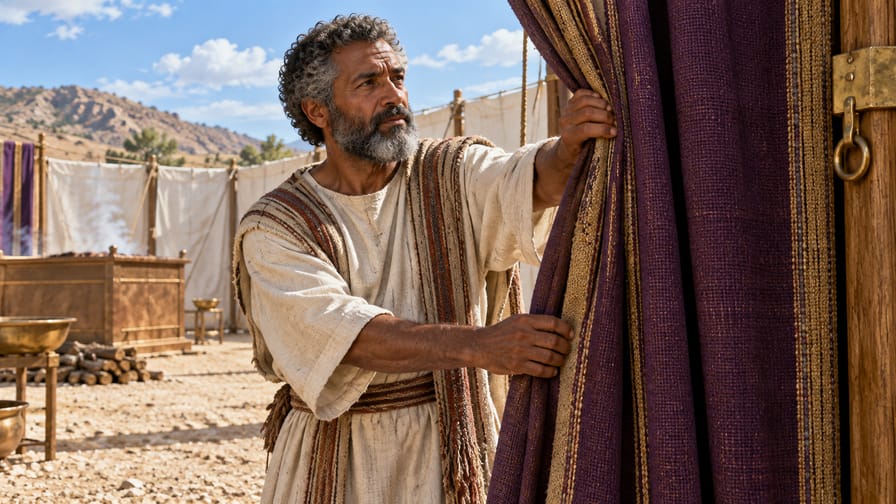
Abiasaph is a figure mentioned briefly in the Old Testament, primarily within the genealogical records of the Levites. His significance lies not in any dramatic personal narrative, but in his place within the priestly lineage, particularly as an ancestor of prominent temple musicians and gatekeepers. His life, though largely unrecorded in terms of specific deeds, represents the faithful, generational service of the Levites to God's sanctuary.
Living during the period of the Israelite monarchy, Abiasaph’s role would have been crucial in maintaining the order and sanctity of worship. His name appears in the context of those responsible for the Tabernacle and later the Temple, underscoring the importance of inherited duties within Israel's religious structure. He is a quiet testament to the enduring commitment required for the sacred service of God's people.
1. Name and origin
1.1 Etymology and meaning
The name Abiasaph (אֲבִיאָסָף) is Hebrew and means “my father has gathered” or “my father has added.” This name reflects a common pattern in ancient Hebrew nomenclature, where names often expressed a theological statement or a hope concerning God's provision or action through the father. It suggests a recognition of God's role in bringing together or increasing the family.
This meaning aligns with the broader biblical understanding of God as the one who gathers His people and provides for them. While we have no specific narrative to connect Abiasaph's name to a particular event in his life, the name itself speaks to a family's faith and their understanding of divine activity in their lives. It is a quiet declaration of dependence on God's sovereignty.
1.2 Family, era, and geography
Abiasaph is identified as a son of Korah and a grandson of Izhar, who was a son of Kohath. This places him firmly within the Kohathite clan, one of the three main divisions of the Levites, alongside Gershon and Merari (Exod 6:18, 21). The Kohathites were specifically tasked with carrying the most sacred objects of the Tabernacle, including the Ark of the Covenant, the table of showbread, the lampstand, and the altars (Num 3:31).
His lineage connects him directly to Moses and Aaron, as Kohath was their grandfather. This places Abiasaph in the early period of Israel's history, likely during the wilderness wanderings or shortly after the conquest of Canaan. His descendants, particularly the Korahites, later became renowned as gatekeepers and musicians in the Tabernacle and Temple, suggesting a continuous line of service that began with figures like Abiasaph (1 Chr 9:19).
2. Biblical narrative
2.1 Calling and key episodes
The biblical text does not record any specific calling or personal episodes for Abiasaph himself. He is primarily known through genealogical lists that establish the lineage of the Levites. His most significant mention is in Exodus 6:24, where he is listed as one of the three sons of Korah, alongside Assir and Elkanah. This verse is part of a broader genealogical account tracing the ancestry of Moses and Aaron.
Later, 1 Chronicles 6:37 (and 1 Chronicles 9:19) mentions Abiasaph as an ancestor of certain gatekeepers and singers in the Temple. While he himself is not depicted performing these roles, his inclusion in these lists underscores his foundational importance to the Levitical service. His legacy is found in the generations of faithful servants who descended from him, rather than in individual heroic acts.
2.2 Relationships and turning points
Abiasaph's most notable relationship is with his father, Korah. Korah is infamous for leading a rebellion against Moses and Aaron's authority, questioning their divine appointment (Num 16:1-3). This rebellion resulted in a dramatic divine judgment, where the earth swallowed Korah and his followers.
Crucially, the sons of Korah, including Abiasaph, were spared from this judgment (Num 26:11). This sparing is a significant turning point for the lineage, allowing the family line to continue and later serve faithfully in the Tabernacle and Temple. It highlights God's mercy and His ability to preserve a righteous remnant even amidst widespread disobedience. This act of divine preservation allowed the descendants of Abiasaph to contribute significantly to Israel's worship life for centuries.
3. Character and faith
3.1 Virtues and devotion
Although the Bible offers no direct narrative about Abiasaph's personal character, his inclusion in the preserved lineage of the Levites, especially after his father's rebellion, implies a measure of faithfulness. The fact that his sons were spared suggests they did not fully participate in Korah's sin, or at least repented of it. This points to a potential virtue of discernment and loyalty to God's chosen leaders, Moses and Aaron.
His descendants, the Korahites, later became celebrated for their devotion, particularly as temple musicians and gatekeepers. Many Psalms are attributed to the “sons of Korah,” expressing deep longing for God's presence and trust in His protection (e.g., Psalm 42, 44, 45, 46, 47, 48, 49, 84, 85, 87, 88). This enduring legacy of devotion, rooted in the family line, suggests that the seeds of faith and service were present in their ancestry, potentially through figures like Abiasaph.
3.2 Failures and lessons
The Scriptures do not record any personal failures for Abiasaph. His story is more about the consequences of his father's actions and the mercy shown to his family. The primary lesson from his lineage is the profound impact of parental choices and the possibility of redemption and continued service despite ancestral sin. The rebellion of Korah serves as a stark warning against challenging God-given authority and the dangers of envy and pride.
However, the survival of Abiasaph's line teaches us about God's grace. Even when a family is touched by severe sin, God can preserve a remnant for His purposes. This offers a powerful lesson in hope and the enduring nature of God's covenant promises, which extend beyond individual failures to encompass His broader redemptive plan. It reminds us that God's mercy can overcome even the most egregious human errors, opening paths for future faithfulness.
4. Theological significance and legacy
4.1 Christological foreshadowing or typology
While Abiasaph himself does not directly foreshadow Christ in a typological sense, his lineage and the role of the Korahites offer indirect connections to Christ's work. The Levites, including Abiasaph's descendants, served as mediators between God and His people, maintaining the sanctity of the Tabernacle and Temple. This Levitical service, with its emphasis on access to God and atonement, ultimately pointed to the perfect mediation of Jesus Christ.
Jesus is the ultimate gatekeeper, the