


Salah
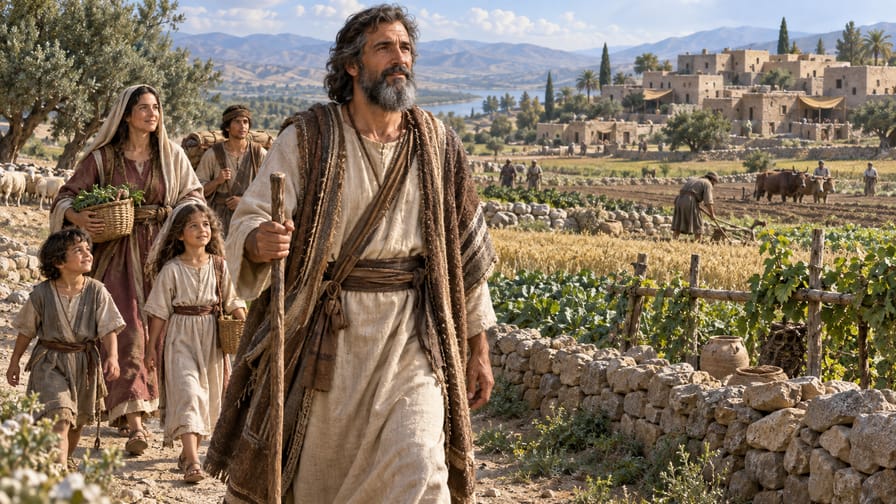
The figure of Shelah, though not one of the most prominent characters in the Scriptures, plays a crucial role in the biblical narrative, especially concerning the preservation of the messianic lineage. His mention, predominantly in genealogies, underscores divine precision and intentionality in salvation history. This biblical and theological analysis, from an evangelical Protestant perspective, seeks to explore the relevance of Shelah for understanding God's redemptive plan, focusing on his onomastic meaning, historical context, role in the narrative, theological implications, and canonical legacy.
The conservative evangelical approach values the authority and inerrancy of the Scriptures, considering every detail, including genealogical lists, as divinely inspired and significant. Thus, the life and position of Shelah in the genealogies are not mere historical notations, but essential elements that attest to God's faithfulness in fulfilling His promises, culminating in the incarnation of Jesus Christ.
1. Etymology and meaning of the name
The name Shelah (Shelah) derives from the Hebrew שֶׁלַח, which has roots in a word meaning "to send," "to dispatch," or "to extend." The associated verbal root, šālaḥ, is widely used in the Old Testament to describe actions of sending, whether of people, messages, or objects.
In the context of a proper name, Shelah can be interpreted as "one who was sent" or "dispatched." This etymology suggests a specific purpose or function, even if the biblical narrative does not detail direct actions of sending on Shelah's part.
The symbolic implication of the name, "sent one," can be theologically significant when considering Shelah's role as a link in the genealogical chain leading to the Messiah. He is, in a sense, a link "sent" by God to ensure the continuity of the promised lineage.
Variations of the name include Sala, as it appears in Jesus' genealogy in Luke 3:35, which is the Greek form (Σαλά) of the Hebrew name. This variation reflects the transliteration from Hebrew to Koine Greek in the New Testament.
There are no other prominent biblical characters with the same name that are easily confused with Shelah, the son of Arphaxad. This helps maintain his genealogical identity clear within the Scriptures.
The theological significance of the name lies in the idea of divine providence. God "sends" and "establishes" each link in the messianic lineage, ensuring that the redemptive plan unfolds according to His purpose. The existence of Shelah, with a name that evokes "sending," can be seen as a testimony to God's sovereignty over human history.
2. Historical context and biblical narrative
2.1 Family origin and genealogy
Shelah is a figure who lived in the early post-diluvian period, a time of repopulation of the earth and the establishment of nations. He is the son of Arphaxad (or Arpachshad) and grandson of Shem, one of Noah's sons (Genesis 10:24 Genesis 11:12-15).
His genealogy is crucial, as it positions him as one of the patriarchs linking Noah to Abraham, the father of faith. He is the father of Eber (or Heber), from whom the Hebrews are believed to have derived their name, according to Genesis 10:25 and 11:16.
The approximate dates for Shelah's life, based on biblical chronologies, place him in the first half of the third millennium BC, after the Flood. He was born 35 years after Arphaxad's birth (Genesis 11:12) and lived 433 years, begetting sons and daughters after Eber's birth.
2.2 Key events and biblical passages
The biblical narrative offers no details about Shelah's life, character, or specific actions. His existence is documented exclusively through genealogical lists. The key biblical passages where he appears are:
- Genesis 10:24: "Arphaxad begot Shelah and Shelah begot Eber."
- Genesis 11:12-15: Details his age at begetting Eber (30 years) and his longevity (403 years after Eber, totaling 433 years).
- 1 Chronicles 1:18, 24: "Arphaxad begot Shelah and Shelah begot Eber... Shem, Arphaxad, Shelah, Eber, Peleg, Reu..."
- Luke 3:35: In Jesus' genealogy, "the son of Sala, the son of Cainan, the son of Arphaxad, the son of Shem, the son of Noah, the son of Lamech..." (Note: The inclusion of Cainan in Luke is a point of textual discussion, absent in the Masoretic text of Genesis, but present in the Septuagint and some NT traditions).
The geography related to Shelah is the same as that of the post-diluvian patriarchs. The Bible indicates that Shem's family settled in the Mesopotamian region, with the center of their dispersion presumably around the plain of Shinar, where the Tower of Babel was built (Genesis 11:2). Shelah, therefore, lived during a period of great migration and the formation of peoples.
His relationships are strictly familial: son of Arphaxad, father of Eber. He is part of the lineage of the "sons of Shem," which, according to Genesis 10, includes the ancestors of many Middle Eastern nations, such as the Elamites, Assyrians, Arameans, and, crucially, the Hebrews.
3. Character and role in the biblical narrative
The Bible offers no direct information about Shelah's character, virtues, weaknesses, or specific actions. Unlike figures such as Abraham, Moses, or David, there are no narratives involving him in significant events, dialogues, or moral decisions. His presence is purely genealogical.
However, the absence of a narrative does not mean an absence of importance. His fundamental role is to be a biological and chronological link in the messianic lineage. From an evangelical perspective, every individual listed in the biblical genealogies is a testament to God's faithfulness in preserving the promised seed.
We can infer that Shelah, as part of Shem's godly lineage, maintained faith in the true God, transmitting this heritage to his son Eber. The continuity of Shem's lineage indicates that the worship of Yahweh was maintained and passed down from generation to generation, in contrast to the growing idolatry that characterized most of post-diluvian humanity.
His main "function" or "calling" was that of a progenitor. By begetting Eber, he ensured the perpetuation of the line that would lead to Abraham, to David, and finally, to Jesus Christ. This is a vital function in salvation history, demonstrating the importance of obedience to the divine command to "be fruitful and multiply" (Genesis 1:28).
Although there is no character development or significant actions documented, the mere existence of Shelah, his longevity, and his paternity are the most crucial "events" of his biblical "life." He fulfilled his role in God's plan simply by living, marrying, and having children, ensuring the succession of the promise.
The lack of narrative details about Shelah serves to emphasize a theological principle: even individuals who do not perform great deeds or are not protagonists of dramatic stories are essential for the fulfillment of divine purposes. God uses both the great heroes and the silent links of history to bring about His will.
4. Theological significance and typology
The theological significance of Shelah resides primarily in his position in Shem's lineage, which is the lineage chosen by God for progressive revelation and the fulfillment of the messianic promise. He is an indispensable link in redemptive history, connecting post-diluvian humanity to Abraham and, subsequently, to Christ.
The inclusion of Shelah in Genesis 11 and Luke 3 highlights the importance of genealogy as an instrument of divine providence. From an evangelical Protestant perspective, genealogies are not dry lists but condensed narratives of God's faithfulness in preserving the seed of the woman promised in Genesis 3:15.
Although Shelah is not an explicit typological figure who prefigures Christ in his actions or character (as no actions are recorded), his existence is a type of God's faithfulness in maintaining the line of promise. Each name in the genealogy is a reminder that God is actively working in history to bring His Messiah.
Shelah's lineage, through Eber, is the lineage of the Hebrews, the people through whom God would make His covenants and reveal His law. Shelah's existence, therefore, is intrinsically linked to the Abrahamic covenant and the promises of a seed who would bless all the families of the earth (Genesis 12:3).
In the New Testament, the mention of Sala in Jesus' genealogy in Luke 3:35 is of utmost importance. It establishes Jesus' connection to humanity from Shem and, by extension, from Adam, confirming His full humanity and His position as the promised Messiah, according to the Old Testament Scriptures.
The inclusion of Shelah in the genealogies emphasizes central theological themes such as God's sovereignty over history, divine faithfulness to His promises, and the predestination of events and people for the fulfillment of His plan. Shelah's life, though without dramatic details, is a silent testimony to God's grace working through generations.
The "prefiguration" of Shelah in Christ is seen not in terms of direct actions, but in his function in the lineage. Just as Shelah was a "sent one" (according to the etymology of his name) to maintain the lineage, Christ is the "Sent One" par excellence from the Father for the salvation of the world (John 3:16), the fulfillment of all promises.
5. Biblical-theological legacy and canonical references
Shelah's legacy in biblical theology is his contribution to the genealogical structure that underpins the narrative of redemption. He is a crucial reference point in the lists of Noah's descendants, which culminate in Abraham, the father of the nation of Israel and of monotheistic faith.
His mentions in Genesis and 1 Chronicles in the Old Testament, and in Luke in the New Testament, demonstrate the consistency and interconnectivity of the Scriptures. The repetition of his name across different canonical books reinforces the authenticity and importance of the lineage for understanding the redemptive plan.
In the Jewish interpretive tradition, genealogies were of great importance for establishing the purity of the priestly lineage and tribal identity. Shelah, as an ancestor of the Hebrews, would have been recognized as a fundamental link in the history of the people of Israel.
In the Christian tradition, especially in Reformed and evangelical theology, Shelah's importance is viewed through a Christocentric lens. Genealogies are considered historical proofs of Jesus' identity as the promised Messiah, the legitimate descendant of David, Abraham, and ultimately, of Shem and Adam.
Evangelical commentators such as John Gill and Matthew Henry, when addressing genealogies, highlight that the inclusion of each name, even of the lesser known, serves to demonstrate God's faithfulness and the truthfulness of His promises. Each individual is a testimony to divine sovereignty over history.
The presence of Shelah in the biblical canon, despite the absence of a personal narrative, underscores that salvation history is not just about the great heroes of faith, but also about God's patient and providential work through generations of individuals who fulfilled their role, often silently.
His relevance for understanding the canon lies in demonstrating the intricate web of references and connections that link the Old and New Testaments. Luke's genealogy, by tracing Jesus' lineage back to Sala and beyond, validates the continuity of the divine plan from creation, reinforcing the unity and coherence of biblical revelation.
In summary, Shelah is a testament to God's faithfulness in preserving the messianic lineage, a vital link in the chain of redemptive history. His life, though without narrated events, is a silent pillar that supports the genealogical structure unequivocally pointing to Jesus Christ, the fulfillment of all divine promises.