


Jambres
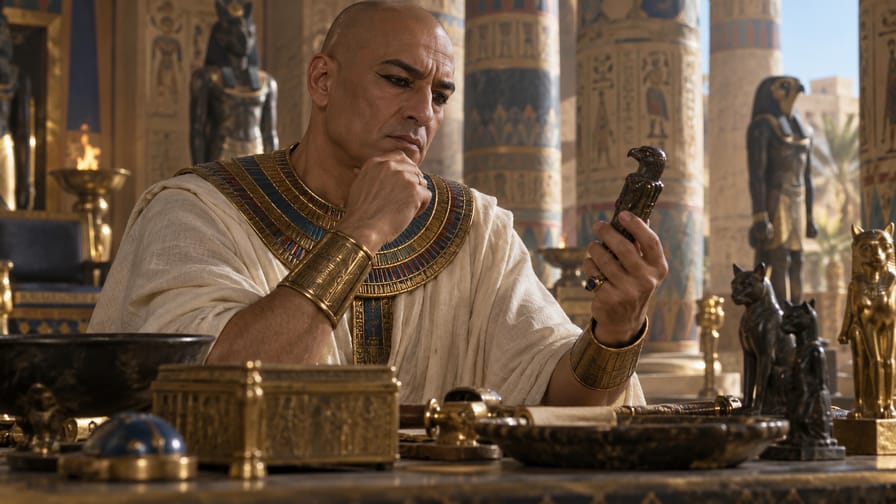
The figure of Jambres, though briefly mentioned in Scripture, holds profound theological and historical significance, especially from a Protestant evangelical perspective. His sole explicit appearance in the Bible occurs in 2 Timothy 3:8, where he is cited alongside Jannes as one of the Egyptian magicians who opposed Moses. This article will explore the etymology, historical context, character, theological meaning, and legacy of Jambres, highlighting his relevance for understanding resistance to divine truth and the nature of deception.
The mention of Jambres in the New Testament, in a context of warning against false teachers, underscores the importance of understanding the roots of spiritual opposition. He serves as an archetype of those who, with cunning and illusory power, attempt to lead God's people astray. An analysis of his figure allows us to delve deeper into divine sovereignty, the authority of the Word, and the need for spiritual discernment in all ages.
1. Etymology and meaning of the name
The name Jambres (in Greek, Mambrēs, Μαμβρῆς) does not appear in the Hebrew text of the Old Testament, where the Egyptian magicians are referred to generically (Exodus 7:11, 7:22, 8:7). His mention in the New Testament, in 2 Timothy 3:8, indicates that Paul was familiar with extra-biblical Jewish traditions that nominally identified these opponents of Moses.
The exact etymology of Mambrēs is uncertain and has been the subject of various speculations. Some scholars suggest an Egyptian origin, possibly related to terms meaning "magician," "enchanter," or "one who illuminates," although this connection is not conclusive. Other hypotheses point to a Semitic or Aramaic derivation, but without definitive academic consensus.
One of the most widespread interpretations in Jewish tradition, though not etymologically proven, associates Jambres and Jannes (Iannēs, Ἰάννης) with names bearing connotations of "rebel" or "seducer." However, it is crucial to note that these associations are more interpretive than strictly linguistic, reflecting the role these individuals played in the Exodus narrative.
The lack of a direct Hebrew or Aramaic etymology for Jambres in the Old Testament canon means that its onomastic meaning cannot be directly extracted from the Hebrew Scriptures. Nevertheless, the context in which Paul mentions him in the New Testament confers a clear symbolic meaning upon the name: it represents deliberate and magical opposition to divine truth.
There are no other biblical characters named Jambres. His uniqueness and the nature of his mention by Paul underscore that he is referenced specifically for his archetypal role. The theological significance of the name, therefore, lies more in its function as an example of resistance to truth than in any intrinsic meaning of his original syllables.
The name Jambres, thus, becomes a symbol of the cunning and illusion that oppose the genuine power of God. He represents the human capacity, perhaps aided by demonic forces, to imitate the divine in order to deceive, but which, in the end, is always overcome by the sovereignty and glory of the Most High, as revealed in Exodus 8:18-19.
2. Historical context and biblical narrative
The figure of Jambres is intrinsically linked to the events of the Exodus, specifically the confrontation between Moses and the magicians of Egypt, as narrated in Exodus 7 and 8. Although the names Jannes and Jambres do not appear in the Old Testament text, Jewish tradition identified them as the chief magicians who opposed Moses and Aaron before Pharaoh.
The historical period in question is that of the Exodus of Israel from Egypt, which the conservative evangelical perspective generally places in the 15th century BC (c. 1446 BC) or, alternatively, in the 13th century BC (c. 1290 BC). The setting is the Egyptian court, a powerful and sophisticated empire known for its advanced magic and esoteric wisdom, as per Acts 7:22.
The political context was that of a Pharaoh who dominated Israel as slaves and refused to free them, defying the authority of the Lord God of Israel. Socially, Egypt was a stratified society, with a caste of priests and magicians who held great influence and power, serving as advisors and executors of Pharaoh's will, as seen in Exodus 7:11.
Religiously, Egypt was polytheistic, with a vast pantheon of gods and goddesses, and magic was an integral part of its religious practice. The confrontation between Moses and the magicians was not merely a test of power, but a clash of worldviews: the monotheism of the God of Israel against Egyptian polytheism and magic, demonstrating the supremacy of the one true God.
The genealogy and family origin of Jambres are not provided in Scripture or in the Jewish traditions that mention his name. He and Jannes are presented as prominent figures among Pharaoh's magicians, indicating that they were part of the Egyptian religious and intellectual elite, with direct access to the court and state power, as per Exodus 7:10-12.
The main events in the life of Jambres, as inferred from the Exodus narrative and tradition, include his participation in the attempt to imitate Moses' first miracles. He and the other magicians were able to replicate the transformation of the staff into a serpent (Exodus 7:11-12) and the transformation of water into blood (Exodus 7:22).
They also managed to bring frogs upon the land of Egypt (Exodus 8:7). However, their magical ability met its limits when they tried to replicate the plague of gnats. They failed and were forced to recognize: "This is the finger of God" (Exodus 8:18-19), a confession of their own powerlessness before divine power.
The geography related to Jambres is ancient Egypt, especially the capital of that era, where Pharaoh resided and where the confrontation with Moses took place. His relationship with other important biblical characters is primarily with Moses and Aaron, as his direct antagonists, and with Pharaoh, whom they served and advised in resisting the will of God.
The mention of Jambres in 2 Timothy 3:8 by the apostle Paul is crucial. Paul uses the example of these magicians to illustrate the opposition that Timothy and the church would face from false teachers who resisted the truth. The reference serves as a historical analogy for Timothy's contemporary situation, comparing the magicians' resistance to that of men corrupted in mind and disqualified regarding the faith.
3. Character and role in the biblical narrative
The character of Jambres, though not detailed in Scripture through psychological descriptions, is revealed through his actions and the context of his mention. He is portrayed as an adversary of divine truth, an instrument of deception, and a symbol of human resistance to the will of God. His intelligence and magical abilities, though remarkable, were employed in opposition to the Lord.
No virtues or positive spiritual qualities are attributed to Jambres in the biblical narrative. On the contrary, his figure embodies the arrogance and obstinacy that characterized Pharaoh and his kingdom. His persistence in imitating Moses' miracles, even in the face of increasing evidence of God's superior power, demonstrates spiritual blindness and hardness of heart.
The sins and moral failures of Jambres are evident in his attempt to usurp the glory of God and to deceive the people, both Egyptian and Israelite, about the true source of power. He and his fellow magicians represented the "wisdom" and power of the world, which oppose the "foolishness" of gospel preaching and the power of God, as per 1 Corinthians 1:18-25.
His specific vocation was that of a magician or sorcerer, a common role in ancient Egypt, where such practices were considered legitimate and powerful. Jambres exercised his function in the service of Pharaoh, using his knowledge and abilities to reinforce the ruler's authority and Egyptian idolatry, as per Exodus 7:11.
The role played by Jambres in the Exodus narrative was that of a direct antagonist to Moses and Aaron. He and the other magicians were the first to attempt to discredit the manifestations of God's power by replicating the initial miracles. They acted as a human and demonic counterpoint to the divine work, seeking to undermine the faith and hope of the people of Israel.
The significant actions of Jambres include the transformation of their staffs into serpents (Exodus 7:11-12), which initially gave Pharaoh a justification for hardening his heart. He and Jannes also replicated the plague of water turned into blood (Exodus 7:22) and the plague of frogs (Exodus 8:7), demonstrating a limited capacity to perform wonders.
However, the key decision that marked the limit of their power was their inability to reproduce the plague of gnats. The confession that "This is the finger of God" (Exodus 8:19) on the part of the magicians represents a turning point, where the superiority of divine power became undeniable, even for its greatest opponents.
The development of Jambres' character, though subtle, shows a progression from limited success to defeat and humiliation. Initially capable of imitating, they eventually fail and are even afflicted by the plagues, such as boils (Exodus 9:11), indicating the complete supremacy of God over all forces that oppose Him.
The figure of Jambres thus serves as a powerful example of the futility of opposing God. His story underscores that, although deception and resistance may have temporary success, they are, in the ultimate analysis, doomed to failure before the truth and power of the Lord, a lesson that Paul reiterates to Timothy in 2 Timothy 3:9.
4. Theological significance and typology
The theological significance of Jambres resides primarily in his role as an archetypal example of opposition to divine truth and to the servants of God. In redemptive history, he and Jannes are figures that contextualize Israel's deliverance, demonstrating the absolute sovereignty of God over all earthly and spiritual powers, including Egyptian magic.
The confrontation with Jambres and the magicians in the Exodus is a crucial part of the progressive revelation of God's character as the one true Lord. He reveals a God who not only delivers His people but also humbles the gods and powers of Egypt, proving that there is no other God besides Him, as per Exodus 9:14 and 1 Samuel 2:2.
In the New Testament, Paul uses Jambres and Jannes as a prefiguration or negative typology. They do not point to Christ directly, but rather to the opponents of Christ and His gospel. Paul compares them to the false teachers who will arise in the last days, resisting the truth and corrupting the faith, as in 2 Timothy 3:8.
The mention of Jambres in 2 Timothy 3:8-9 is the only explicit canonical reference to his name in the Bible. Paul writes: "Just as Jannes and Jambres opposed Moses, so also these men oppose the truth—men corrupted in mind and disqualified regarding the faith. But they will not get very far, for their folly will be plain to everyone, as was that of those two."
This passage is central to understanding the theological significance of Jambres. He and Jannes serve as a historical example for Timothy, illustrating that spiritual opposition is not new. Resistance to the truth, driven by corruption of understanding and disqualification from the faith, is a recurrent pattern in the history of salvation and the church.
The connection with central theological themes is profound. The story of Jambres highlights the nature of divine truth versus human/demonic illusion, the reality of spiritual battle (Ephesians 6:12), the need for discernment, and the certainty of divine judgment upon those who oppose God. Genuine faith must resist deceptions, trusting in the authority of God.
The inability of the magicians to replicate the plague of gnats and their subsequent affliction by boils (Exodus 8:18-19 9:11) serve as a demonstration of the limit of demonic and human power in the face of divine sovereignty. The folly of their opposition was made manifest, prefiguring the final exposure of the folly of the false teachers about whom Paul warns.
The doctrine associated with Jambres and Jannes is that of biblical authority and the need to protect the church from heresies. Paul's warning emphasizes that truth is immutable and that those who resist it will have their folly exposed. This encourages believers to stand firm in sound doctrine and to exercise spiritual discernment, as per 1 Timothy 4:1 and 2 Timothy 4:3-4.
In summary, Jambres is a vivid reminder that opposition to the truth of God is a constant throughout history. His story in the Exodus and his mention by Paul in the New Testament reinforce the message that, although deception may appear powerful for a time, the power and truth of God will always prevail, and the folly of opponents will finally be revealed.
5. Biblical-theological legacy and canonical references
The legacy of Jambres in biblical theology is paradoxically significant, despite his sole explicit canonical mention in 2 Timothy 3:8. His importance lies not in literary contributions or an extensive genealogy, but rather in his archetypal role as an adversary of divine truth and a prefigurer of false teachers.
The absence of the name Jambres (and Jannes) in the Hebrew text of the Old Testament, in contrast to its presence in the New Testament, reveals the dynamic of Jewish oral and written tradition. These names were preserved and transmitted through midrashim, targumim, and other intertestamental Jewish literatures, such as Targum Jonathan on Exodus 7:11 and the Babylonian Talmud (Menachot 85a).
This inclusion by Paul in a canonical epistle like 2 Timothy validates the authenticity and relevance of the tradition for understanding salvation history. It demonstrates that Paul, under divine inspiration, used extra-biblical knowledge widely accepted in his time to illustrate a perennial theological truth about the nature of spiritual opposition.
The figure of Jambres had a considerable presence in early Jewish and Christian interpretive tradition. In addition to Jewish sources, the Church Fathers, such as Origen, Tertullian, and Augustine, also mention Jannes and Jambres, recognizing them as Pharaoh's magicians and using them as examples of demonic opposition and the futility of magic before the power of God.
Intertestamental literature also refers to them, notably the apocryphal "Book of Jannes and Jambres," which, though non-canonical, attests to the popularity and recognition of these figures in antiquity. This work expands on their activities and eventual fate, solidifying their image as powerful, yet defeated, opponents of Moses.
In Reformed and evangelical theology, Jambres is often invoked as a symbol of resistance to the authority of the Word of God and the presence of deception in the world. His story serves as a constant warning about the need for spiritual discernment and vigilance against those who seek to subvert genuine faith, whether through false teachings or illusory powers.
The importance of Jambres for understanding the canon lies in how his mention by Paul reinforces the unity of Scripture and the continuity of the spiritual battle. He illustrates that the challenges faced by the servants of God in different eras, from Moses to Timothy and beyond, share a common pattern of opposition to divine truth.
His story highlights the doctrine of God's sovereignty, who ultimately controls all things, including the actions of His adversaries. The defeat of Jambres and the Egyptian magicians is a prefiguration of the final defeat of Satan and all who oppose the Messiah, as revealed in Revelation 20:10.
Thus, Jambres, though a secondary character in terms of biblical space, possesses a robust theological legacy. He reminds us of the persistence of evil, the cunning of deception, but, above all, of the invincibility of God's truth and the certainty that "they will not get very far, for their folly will be plain to everyone" (2 Timothy 3:9).
His figure encourages believers to stand firm in the faith, to seek divine wisdom, and to trust that the light of truth will always dispel the darkness of deception, even when it presents itself with great power and persuasion, as per John 8:32 and John 14:6.