


Ari
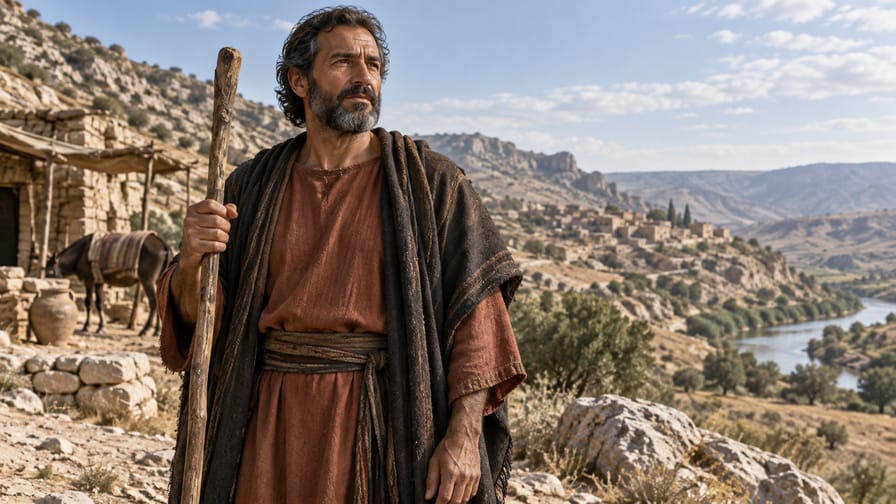
The figure of Ari in the Bible is somewhat elusive, appearing in passages that require careful analysis of the original languages to discern his identity and meaning. Although the term 'ariy (אֲרִי) is a common noun for "lion" in Hebrew, its appearance as a possible proper name for an individual is rarer and often subject to interpretive debate. The most prominent mention that suggests a character named Ari, or related to him, is found in the narratives of David's mighty men, specifically in reference to Benaiah, son of Jehoiada.
This study will delve into understanding Ari, not only as a potential name but also by exploring the etymological nuances and the symbolism of the "lion" in the biblical context, which is intrinsically linked to the identity and reputation of such a figure. The perspective adopted will be conservative evangelical Protestant, which values the authority of Scripture, exegetical precision, and theological relevance to redemptive history, culminating in Christ.
1. Etymology and meaning of the name
The name Ari derives from the Hebrew word 'ariy (אֲרִי), which means "lion." This is a common Semitic root found in various ancient Near Eastern languages to designate this majestic and feared animal. The choice of this name, when applied to a person, invariably connotes characteristics associated with the lion: strength, courage, ferocity, royalty, and at times, danger or destruction.
In the biblical context, the lion is a powerful and multifaceted symbol. It represents the tribe of Judah (Genesis 49:9), from which the Messiah would come, the "Lion of the tribe of Judah" (Revelation 5:5). However, the lion is also associated with ferocity and threat, like the "roaring lion" seeking to devour (1 Peter 5:8).
The crucial mention for the figure of Ari is found in 2 Samuel 23:20 and 1 Chronicles 11:22. The Hebrew text in 2 Samuel 23:20 refers to Benaiah, son of Jehoiada, who "struck down the two sons of 'ariy 'el of Moab" (וְהוּא הִכָּה אֶת שְׁנֵי אֲרִיאֵל מוֹאָב). The interpretation of 'ariy 'el is debated. Some translate it as "two valiant men of Moab" or "two champions of Moab," understanding 'ariy 'el as an idiomatic expression for "lion-men" or "heroes."
Other translations, such as the Almeida Revista e Atualizada (ARA) and the New American Standard Bible (NASB), interpret 'ariy 'el as a proper name: "the two sons of Ariel of Moab." In this case, Ariel (אֲרִיאֵל) means "lion of God" or "lion of El." If Ariel is the father, then Ari would be an abbreviated form or a direct reference to the "lion" element in the name, or even a distinct name, depending on the textual or interpretive tradition.
For the purposes of this analysis, we consider the possibility of Ari being the central element of the name of the father of these Moabite warriors, or his father's actual name, with 'el being a suffix that adds a divine or royal component. Thus, Ari represents the leonine strength of a Moabite lineage. There are no other significant biblical characters explicitly named just Ari with a developed narrative.
The theological significance of the name, in this context, lies in the personification of the strength and threat that foreign nations like Moab represented for Israel. The name "lion" evokes the image of a formidable enemy, whose defeat by a servant of David, like Benaiah, demonstrates the superiority of God's power operating through His chosen ones, even against earthly "lions."
2. Historical context and biblical narrative
The mention of Ari (or Ariel) is set within the period of David's reign, approximately between 1010 BC and 970 BC. This was a time of consolidation for the kingdom of Israel, marked by intense military activities and the formation of a professional and elite army, known as "David's mighty men" or "David's powerful ones." Benaiah, son of Jehoiada, was one of these notable warriors.
The political and social context of the era was one of constant conflict between Israel and its neighbors. Moab, a nation east of the Dead Sea, frequently opposed Israel. The relationship between David and Moab was complex initially, David sought refuge for his parents in Moab (1 Samuel 22:3-4), but later there were significant confrontations in which David subjugated Moab (2 Samuel 8:2).
The genealogy and family origin of Ari are scarce. We know only that he was a Moabite and the father of two "valiant men" or "champions" who were defeated by Benaiah. Ari's identity as a Moabite is crucial, as Moab was a people who, although related to Israel through Lot (Genesis 19:37), were frequently seen as adversaries and, in certain periods, idolatrous and oppressive.
The main events of Ari's life are not directly described. His existence is inferred through the actions of his sons, who were such notable warriors that their defeat was worthy of record among the deeds of David's mighty men. The key biblical passages are 2 Samuel 23:20 and 1 Chronicles 11:22. Both passages recount Benaiah's prowess, who "struck down the two sons of Ari/Ariel of Moab."
The geography related to Ari is Moab, the land east of the Jordan River and the Dead Sea. This region, with its plains and mountains, was strategic and frequently disputed. The mention of his sons as "of Moab" underscores their foreign identity and the nature of the threat they posed to Israel.
Ari's relationships with other biblical characters are indirect, primarily through the opposition between his sons and Benaiah, one of David's most prominent warriors. Benaiah was a man of great valor, who became commander of David's personal guard and, later, chief of Solomon's army (1 Kings 2:35). The defeat of Ari's sons by Benaiah highlights the magnitude of the Israelite victory.
3. Character and role in the biblical narrative
The analysis of Ari's character is largely inferential, based on the meaning of his name and the description of his sons. The name "lion" (Ari) suggests a reputation for strength, bravery, and ferocity. It is reasonable to assume that Ari, as the father of "valiant men" or "champions" of Moab, himself possessed qualities of leadership and military prowess. He would, therefore, be a figure of respect and dread in his own nation.
Ari's virtues and spiritual qualities are not directly addressed in the Scriptures, as he is not a character from Israel and his faith is not the focus. However, the inferred qualities of strength and courage would have been valued in any military context of the time. The narrative highlights the strength of his sons, who were formidable adversaries, which indirectly elevates Ari's stature as their progenitor.
There are no documented mentions of sins, weaknesses, or moral failures for Ari. The Bible presents him only in the context of his sons and their defeat. As a Moabite, he would have been outside Israel's covenant with God, but the text does not make an explicit moral judgment about his person, focusing more on the strength of his descendants as a challenge to be overcome by David's men.
Ari's specific vocation or function is not detailed. It is likely that he was a tribal leader, a military chief, or a prominent figure in Moab, given the notoriety of his sons. His role in the biblical narrative is, in essence, to represent the strength of the foreign opposition that Israel, under David's leadership and with God's power, was able to overcome.
Ari's significant actions and key decisions are not recorded. His relevance lies in the fact that he fathered sons who were considered "lions" of Moab, challenging Israel's supremacy. The defeat of these sons by Benaiah serves to illustrate the magnitude of the deeds of David's mighty men and, by extension, the glory of David and the God of Israel.
There is no character development for Ari throughout the narrative, as his mentions are brief and incidental. He is a static figure whose importance is contextual, serving as a backdrop for the exaltation of Israel's heroes. His presence, though limited, contributes to the richness of the historical record of David's kingdom.
4. Theological significance and typology
Ari's role in redemptive history is indirect but significant. He represents the strength of the pagan nations that opposed God's people and His redemptive plan. The existence of "lions" like Ari's sons demonstrates the reality of the challenges Israel faced, and their defeat by Benaiah points to God's sovereignty in empowering His servants to fulfill His purposes, even against formidable adversaries.
Although Ari is not a typological figure of Christ, the narrative in which he appears can be viewed from a broader Christocentric perspective. Benaiah's triumph over the "lions" of Moab prefigures Christ's final victory over all forces that oppose the Kingdom of God. Christ, the true "Lion of the tribe of Judah" (Revelation 5:5), is the supreme victor over every evil power and authority, including spiritual "beasts" (Ephesians 6:12).
Covenants, promises, and prophecies are not directly related to Ari. However, the victory over the Moabites and their champions aligns with God's promise to David that he would have a stable kingdom and that his enemies would be subdued (2 Samuel 7:9-11). The defeat of Ari's sons is an example of the fulfillment of these promises through the deeds of His servants.
The connection to central theological themes is evident. The episode involving Ari and his sons highlights the sovereignty of God over nations and earthly powers. He allows powerful enemies to arise, but also provides the strength for His people to triumph. The faithfulness of God is seen in His protection of Israel and in His empowerment of warriors like Benaiah, who act on behalf of God's anointed king.
The narrative also illustrates the doctrine of divine grace and power, for it is not by merely human strength that Israel prevails, but by the empowerment that comes from God. Benaiah, in defeating Ari's sons, does so not for his own glory, but as an instrument in God's greater plan to establish and protect His earthly kingdom. The "leonine" strength of the enemies is overcome by divine strength manifested in a faithful servant.
In summary, the figure of Ari, though obscure, serves as a vivid reminder of the reality of the conflict between the people of God and the forces of the world. His defeat, through David's mighty men, points to the Messiah's final victory, who would subdue all enemies and establish His eternal kingdom with unquestionable power and authority. The "lion's strength" of the world is always inferior to the strength of the "Lion of the tribe of Judah."
5. Biblical-theological legacy and canonical references
Ari's legacy in the biblical canon is limited to the two passages already mentioned: 2 Samuel 23:20 and 1 Chronicles 11:22. He is not the author of any biblical book, nor are there direct mentions of his literary contributions. His influence on biblical theology is, therefore, indirect, linked to the theme of Israel's victory over its enemies and the exaltation of David's mighty men.
Ari's presence in Jewish and Christian interpretive tradition is generally modest. Rabbinic commentators may have explored the symbolism of the "lion" in relation to Moab, but the primary focus falls on Benaiah and the deeds of David's heroes. In the Christian tradition, the episode is often cited as an example of the courage and strength of Benaiah, one of David's most notable servants.
The interpretation of 'ariy 'el as "lions of God" or "champions" instead of a proper name has been prevalent in many translations and commentaries, which naturally diminishes Ari's prominence as an individual. However, translations that opt for "Ariel" as a proper name maintain the figure of a Moabite father who fathered warriors of great valor, even if his personal history remains in the shadows.
There are no known references to Ari in intertestamental literature or other significant extrabiblical texts. His importance for Reformed and evangelical theology lies in the demonstration of God's power through His human instruments. The episode serves to illustrate the truth that, even against adversaries who possess the strength of "lions," the people of God, empowered by the Lord, can achieve victory.
The analysis of the figure of Ari, or his "leonine" sons, contributes to the understanding of the canon by contextualizing David's kingdom and the challenges faced by Israel. It reminds us that salvation history is a story of conflict and triumph, where God uses men and women to accomplish His sovereign purposes. The narrative of Benaiah and Ari's sons is a small but potent testimony to divine providence and human courage in service to God.
Ultimately, Ari, as a biblical figure, serves as a link in the grand tapestry of redemptive history. He represents worldly strength that is overcome by divine strength, a recurring theme throughout Scripture. His mention, though brief, highlights the magnitude of God's victory and the glory He receives through the deeds of His faithful servants, setting the stage for the arrival of the true Lion of the tribe of Judah, Jesus Christ.