


Can Christians eat pork? Do Christians have to follow the Old Testament law?
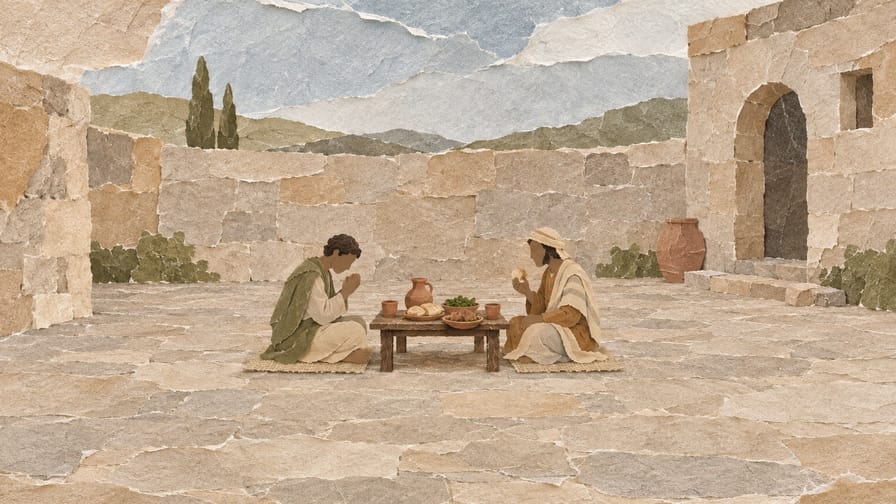
Christians can eat pork, because the food laws of Leviticus 11 belonged to the covenant given to Israel, and the New Testament declares that in Christ no food is unclean. That does not mean God's law no longer matters: it means the law has been fulfilled in Jesus, and we now read every commandment in light of him.
What Leviticus 11 taught Israel
In Leviticus 11:7, the pig appears on the list of unclean animals that Israel was not to eat. These rules came within the Sinai covenant, made with Israel, and they marked the people off from the nations around them. Leviticus 20:25-26 links the distinction between clean and unclean animals to Israel's calling to be a holy, set-apart people.
It is worth noticing that the restriction was not universal from the beginning. In Genesis 9:3, after the flood, God told Noah that everything that lives and moves would be food for him, with no list like the one in Leviticus. The prohibition belongs to a specific covenant, with a specific people, at a specific point in the story of salvation.
What Jesus and the apostles said about food
In Mark 7:14-19, Jesus teaches that what goes into a person does not make them unclean, because it goes into the stomach and not the heart. The Gospel writer adds that by saying this Jesus declared all foods clean (Mark 7:19). Translations differ on how to render that comment, but the sense is the same: the uncleanness that matters is in the heart.
In Acts 10:9-16, Peter sees a sheet full of animals of every kind and hears a command to kill and eat. He resists, and the voice answers that he must not call common what God has made clean. The scene reaches beyond the table: in Acts 10:28 Peter himself explains that God showed him not to call any person unclean or common. The vision opens the door for Gentiles to enter the church without passing through the law of Moses, and, read together with Mark 7 and Romans 14, the vision points to the line between clean and unclean foods no longer binding God's people. The conclusion about food comes from those texts, not from Peter's explanation, which in verse 28 concerns people.
Paul says the same. In Romans 14:14, he states that he is convinced, in the Lord Jesus, that nothing is unclean in itself. In Romans 14:17, he reminds us that the kingdom of God is not a matter of eating and drinking but of righteousness, peace and joy in the Holy Spirit. And in 1 Timothy 4:3-5, speaking of those who forbid certain foods, he declares that everything God created is good and nothing is to be rejected when received with thanksgiving, since it is made holy by the word of God and prayer.
Was the law abolished or fulfilled?
Jesus said in Matthew 5:17-18 that he did not come to abolish the Law or the Prophets but to fulfill them. To fulfill is not to throw away: it is to bring to its goal what the law pointed toward. Colossians 2:16-17 says that festivals, new moons and questions of food and drink are a shadow of things to come, and that the reality belongs to Christ. When the shadow meets the substance, the one who has the substance no longer has to depend on the shadow.
Galatians treats the same subject more forcefully. In Galatians 3:24-25, Paul describes the law as a guardian that led us to Christ, and says that now that faith has come we are no longer under that guardian. And in Galatians 5:3, he warns that anyone who accepts circumcision as a path to righteousness is obligated to keep the whole law. The law is not a menu from which we pick the easier parts, nor a path to salvation: we are saved by grace, through faith in Christ, not by works (Ephesians 2:8-9).
Moral, ceremonial and civil law: a useful tool, not a dogma
Since the Middle Ages, many theologians have divided the law of Moses into three groups: the moral law (such as the Ten Commandments), the ceremonial law (sacrifices, priesthood, festivals, purity and food rules) and the civil law (norms for Israel's life as a nation). The division helps explain why we read Leviticus 11 one way and Exodus 20 another. But it is a study tool, not an explicit teaching of Scripture: the Old Testament itself presents the law as a whole, and some commandments mix all three aspects. Faithful Christians use the division with different degrees of strictness.
The main point does not depend on it. The New Testament does not leave us without a moral law: it repeats and deepens commandments such as worshiping God alone, honoring parents, and not murdering, committing adultery, stealing or coveting. Jesus sums up the law as love for God and neighbor (Matthew 22:37-40), and Paul says that whoever loves has fulfilled the law (Romans 13:8-10). Galatians 6:2 speaks of fulfilling the law of Christ. Obedience continues, but now it flows from the Spirit rather than from an external code that holds us bound.
What Acts 15 and Romans 14 ask of us
In Acts 15, the apostles and elders met in Jerusalem to decide whether Gentile believers had to be circumcised and keep the law of Moses. The answer was no. The letter they sent asked only that Gentiles abstain from food offered to idols, from blood, from the meat of strangled animals and from sexual immorality (Acts 15:19-20). Scholars discuss the exact reason for these requests, but the context is fellowship between Jews and Gentiles in one church, not a return to the system of Leviticus.
Romans 14 deals with a situation that still exists: believers with different consciences. Some, out of conviction, avoid certain foods or keep special days; others eat everything. Paul tells the one who eats not to despise the one who abstains, and the one who abstains not to judge the one who eats (Romans 14:3). Each must be fully convinced in his own mind (Romans 14:5), and love limits freedom when it would hurt a brother (Romans 14:15).
This applies as well to Christians, such as Seventh-day Adventists and others, who keep dietary restrictions out of biblical conviction or concern for health. They are brothers and sisters in Christ, and the matter is no reason for contempt or division. The debate about the Sabbath is a different question: it has its own answer on this site, and here the focus is food.
Common mistakes and what changes in daily life
- Mistake: “If the law was fulfilled, nothing in it matters anymore.” God's moral law is still reflected in the New Testament, and believers are called to holiness.
- Mistake: “Eating anything is disobeying God.” The New Testament says all foods were declared clean and may be received with gratitude.
- Mistake: “Freedom in food lets me do whatever I like.” Freedom comes with love for the brother whose conscience is more sensitive (1 Corinthians 8:9) and with the aim of glorifying God in all things, including eating and drinking (1 Corinthians 10:31).
In daily life, this means you can eat pork with thanksgiving, without guilt before God. It also means the table is a place for love: respect the friend or brother who avoids certain foods, do not turn your freedom into pride, and remember that the righteousness that gets us accepted before God comes from Christ, not from the menu.
Key Bible references
Lev 11:7 · Mark 7:19 · Acts 10:15 · Acts 15:19 · Rom 14:14 · Col 2:16 · 1 Tim 4:4 · Gal 3:24