


Josiah
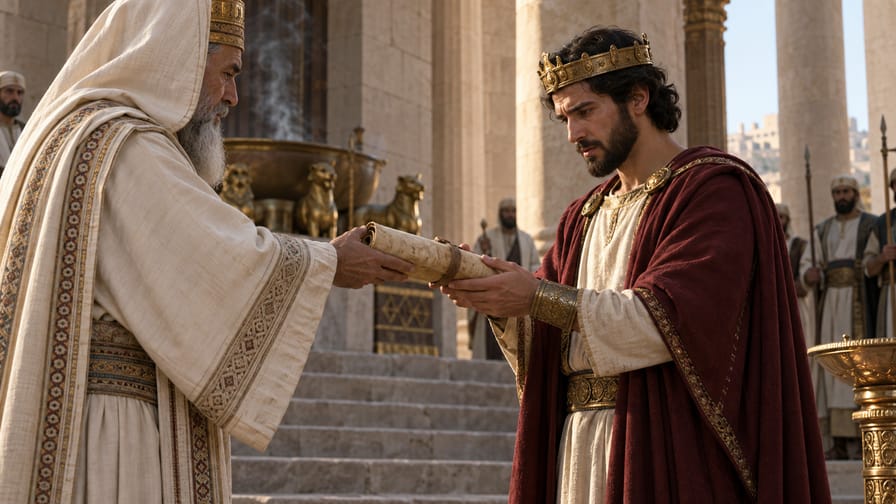
The figure of Josiah emerges in the pages of the Old Testament as one of the most notable and pious kings of Judah, whose reign was marked by a profound religious reform and a zealous return to the Law of God. His story, narrated primarily in the books of 2 Kings and 2 Chronicles, offers a powerful testimony to divine sovereignty, the transforming authority of Scripture, and the pursuit of covenantal obedience.
From a conservative evangelical Protestant perspective, Josiah is not merely a historical figure, but a vivid example of spiritual leadership and dedication to YHWH. His life and work are rich in theological significance, pointing to eternal principles of faith, redemption, and divine justice. This entry will explore the etymology, historical context, character, theological significance, and legacy of this extraordinary king, as revealed in Holy Scripture.
1. Etymology and Meaning of the Name
1.1 Original Name and Linguistic Derivation
The name Josiah derives from the Hebrew יֹאשִׁיָּהוּ (Yoʾšiyyāhû) or its abbreviated form יֹאשִׁיָּה (Yoʾšiyyāh). The Greek transliteration in the Septuagint is Iosias, and in the Latin Vulgate, Josias. The structure of the name suggests a theophoric composition, incorporating the tetragrammaton YHWH.
The etymological root is generally associated with the Hebrew verb יָשָׁה (yāšāh), which can mean "to support," "to sustain," "to heal," or "to found." Combined with the divine element Yahû (an abbreviated form of YHWH), the name Josiah can be interpreted as "YHWH sustains," "YHWH heals," "YHWH has founded," or "YHWH supports."
1.2 Literal and Symbolic Meaning
The most accepted interpretation is "YHWH sustains" or "YHWH heals," which acquires profound symbolic meaning in the context of his reign. Josiah ascended to the throne in a period of profound spiritual decline in Judah, and his name can be seen as a premonition of the restoration and healing that God would bring through him.
The name reflects divine providence and God's active role in the history of His people, even amidst widespread apostasy. It indicates that the work of restoration was not merely a human effort, but a divinely sustained and enabled act, echoing the belief that it is God who "raises up" and "sustains" His chosen ones for specific purposes.
1.3 Variations and Theological Significance
Although there are no other prominent biblical figures with the exact name of Josiah, the theophoric structure is common in Hebrew onomastics, evidencing the centrality of YHWH in the identity and destiny of the people of Israel. The choice of names with divine meaning was a practice that reinforced God's covenant and sovereignty.
The theological significance of Josiah's name lies in its connection to God's faithfulness. He not only sustained the young king in his mission but also sought to heal the nation of its spiritual wounds. The name serves as a reminder that, even in the darkest times, YHWH remains active, sustaining His purposes and those who seek Him wholeheartedly.
2. Historical Context and Biblical Narrative
2.1 Historical Period and Political-Religious Setting
Josiah reigned in Judah from approximately 640 to 609 BC, a crucial period in the history of the Ancient Near East. His ascent to the throne occurred at a time of decline for the Assyrian Empire, which had dominated the region for centuries. This power vacuum allowed Judah a brief window of political and religious autonomy.
However, the religious landscape of Judah was desolate. His grandfather, Manasseh, and his father, Amon, had promoted large-scale idolatry, erecting altars to Baal, worshipping the "queen of heaven," cult of the heavenly hosts, and even child sacrifices in Jerusalem (2 Kings 21:3-7 2 Chronicles 33:3-7). The nation was deeply immersed in syncretism and apostasy.
2.2 Genealogy and Ascent to the Throne
Josiah was the son of Amon and Jedidah, daughter of Adaiah of Bozkath (2 Kings 22:1). He was of the direct lineage of David, the eighth king of Judah after the division of the kingdom. He assumed the throne at only eight years old, after the assassination of his father Amon by his own servants (2 Kings 21:23-24). Josiah's youth highlights divine providence in his life and reign.
The beginning of his reign was marked by the influence of godly counselors, who likely guided him in the early years of his minority. The biblical narrative emphasizes that he "did what was right in the eyes of the Lord and walked in all the ways of David his father he did not turn aside to the right or to the left" (2 Kings 22:2).
2.3 Key Events and the Discovery of the Law
The chronology of Josiah's reign is detailed in 2 Kings 22-23 and 2 Chronicles 34-35. At sixteen years old, he began to seek the God of David (2 Chronicles 34:3). At twenty years old, he began the religious reforms, purifying Judah and Jerusalem from idolatry (2 Chronicles 34:3-7), destroying altars, idols, and Asherah poles (asherim).
The central landmark of his reign occurred in the eighteenth year, when he was twenty-six years old. While the Temple was being repaired, the high priest Hilkiah found the "Book of the Law" (sēfer hattôrâ) in the Temple (2 Kings 22:8 2 Chronicles 34:14-15). This event is one of the most significant in the history of Israel, unleashing an unprecedented spiritual renewal.
2.4 Josiah's Reform and His Death
Upon hearing the words of the Law, Josiah tore his robes as a sign of repentance and humility (2 Kings 22:11). He consulted the prophetess Huldah, who confirmed the authenticity of the book and the inevitability of divine judgment upon Judah, but promised that the calamity would not come during Josiah's lifetime because of his humility and repentance (2 Kings 22:14-20).
Josiah then gathered all the people and read the Book of the Law, renewing the covenant with YHWH (2 Kings 23:1-3 2 Chronicles 34:29-32). A radical purification followed, with the removal of all traces of idolatry, including the destruction of pagan altars, the desecration of worship sites, and the elimination of idolatrous priests, extending his actions to the cities of Samaria (2 Kings 23:4-20 2 Chronicles 34:6-7, 33).
The climax of the reform was the celebration of a Passover such as had never been seen in Israel since the days of the Judges (2 Kings 23:21-23 2 Chronicles 35:1-19). However, Josiah's reign ended tragically in 609 BC. He died in battle against Pharaoh Neco II of Egypt at Megiddo, while attempting to intercept the Egyptian troops who were on their way to assist the Assyrians against the Babylonians (2 Kings 23:29-30 2 Chronicles 35:20-24). His death was deeply mourned by all the people of Judah, including the prophet Jeremiah (2 Chronicles 35:25).
3. Character and Role in the Biblical Narrative
3.1 Exemplary Character and Spiritual Virtues
Josiah's character is presented in Scripture as exemplary, distinguished by his unwavering piety and dedication to YHWH. The Bible describes him as a king who "did what was right in the eyes of the Lord" (2 Kings 22:2) and who "did not turn aside to the right or to the left." His search for God began at an early age (2 Chronicles 34:3), demonstrating genuine personal devotion.
His humility is one of his most striking virtues. Upon hearing the words of the Law, he did not react with arrogance or disdain, but with profound repentance, tearing his robes (2 Kings 22:11). This response of brokenness before the Word of God was the catalyst for the divine promise that judgment would not come in his days, underscoring the importance of humility and contrition.
3.2 Zeal for the Law and Radical Obedience
Josiah demonstrated extraordinary zeal for the Law of God and the purity of worship. His reform was not superficial, but comprehensive and radical, aiming to eradicate every form of idolatry and syncretism that had infested Judah for generations. He did not hesitate to destroy altars, burn idols, and desecrate pagan places of worship, in accordance with the Law of Moses (Deuteronomy 7:5, 25).
Scripture affirms that "neither before him was there any king like him, who turned to the Lord with all his heart, with all his soul, and with all his might, according to all the Law of Moses, nor after him did any rise like him" (2 Kings 23:25). This is one of the highest evaluations of a king of Judah, placing him on a unique level of obedience and devotion in monarchical history.
3.3 Role as Reformer and Restorer
Josiah's main role in the biblical narrative is that of a reformer and restorer of the Mosaic covenant. He was the divine instrument for a last attempt to bring Judah back to faithfulness to YHWH before the Babylonian exile. His discovery and proclamation of the Law were the central point of his mission, reorienting the nation to the requirements of the covenant.
The celebration of Passover under Josiah (2 Chronicles 35:1-19) is described as the greatest since the time of the prophet Samuel, indicating the depth of his dedication to restoring proper worship and the feasts prescribed by God. He acted as a faithful shepherd, guiding his flock back to the fold of YHWH's Law, purifying both worship and the land.
3.4 The Tragedy at Megiddo and Its Implications
Josiah's death at Megiddo (2 Kings 23:29-30 2 Chronicles 35:20-24) is a complex point in his biography. Although the Bible does not explicitly condemn his decision to confront Neco, 2 Chronicles 35:21-22 suggests that Pharaoh Neco claimed to have been sent by God. Josiah's refusal to heed the warning can be seen as a moment of failure in his wisdom or discernment, or perhaps a presumption in his own strength.
However, the narrative of 2 Kings 23:26-27 makes it clear that, despite Josiah's righteousness, God's judgment on Judah because of Manasseh's sins was irreversible. Josiah's death, therefore, can be interpreted as an act of divine mercy, sparing him from witnessing the destruction of Jerusalem and the exile, as prophesied by Huldah (2 Kings 22:20). His death, though tragic, does not diminish his extraordinary piety and the impact of his reform.
4. Theological Significance and Typology
4.1 Role in Redemptive History and Progressive Revelation
Josiah occupies a significant place in redemptive history as Judah's last great reformer before the exile. His reign represents a peak of covenantal faithfulness in a period of terminal decline. He is a testament to God's patience in calling His people to repentance, even as the nation persistently strayed from His ways.
Josiah's reform demonstrates the progressive revelation of God's will through the Law. The rediscovery of the Book of the Law was not merely an archaeological find, but a rediscovery of God's voice to His people, reaffirming the terms of the covenant and the divine requirements for a life of holiness and obedience. This rediscovery is a high point in the history of the authority of Scripture.
4.2 Prefiguration and Christocentric Typology
Although the New Testament does not directly cite Josiah as a type of Christ, his life and actions contain elements that prefigure the work of the Messiah. The evangelical Protestant perspective often seeks typological connections that point to Jesus Christ, the fulfillment of all the Law and the Prophets.
- Righteous and Zealous King: Josiah was a king who "did what was right in the eyes of the Lord" (2 Kings 22:2), zealous for God's glory and the purity of His worship. He prefigures Christ, the perfect and righteous King, whose kingdom is of righteousness and peace (Isaiah 9:6-7 Jeremiah 23:5-6). Jesus, in His earthly ministry, demonstrated a similar zeal for His Father's house, purifying the Temple (John 2:13-17).
- Restorer of the Covenant: The renewal of the covenant under Josiah points to the New Covenant established by Christ (Jeremiah 31:31-34 Luke 22:20). Just as Josiah brought the people back to the written Law, Christ, through His sacrifice, writes the Law on our hearts, inaugurating a superior covenant based on grace and the forgiveness of sins.
- Light Amidst Darkness: Josiah's reign was a bright light amidst Judah's spiritual darkness. He is a type of Christ, the "light of the world" (John 8:12), who came to dispel the darkness of sin and idolatry and bring true worship to God.
4.3 Connection to Central Theological Themes
The story of Josiah resonates with several fundamental theological themes:
- Authority of Scripture: The discovery of the Book of the Law was the catalyst for the entire reform, demonstrating the transforming power of God's Word when it is heard, read, and obeyed. Evangelical faith emphasizes Sola Scriptura, and Josiah is a historical example of its radical application.
- Repentance and Humility: Josiah's response to the Law — tearing his robes and seeking God — illustrates the essence of true repentance. His humility before the Word of God is a model for all believers.
- Obedience and Holiness: Josiah's dedication to following the Law of Moses with all his heart, soul, and strength highlights the importance of obedience as a fruit of faith. His life is a call to holiness and separation from idolatry.
- Divine Sovereignty and Judgment: Huldah's prophecy and the outcome of Josiah's reign underscore God's sovereignty and the inevitability of His judgment upon national sin, even as He demonstrates individual mercy. Josiah's righteousness could not annul the divine decree over Judah, showing that grace does not override justice for the nation as a whole.
- Preventive Grace: The fact that Josiah died before the exile (2 Kings 22:20) is an act of divine grace, sparing him from witnessing the destruction that was to come. This demonstrates God's mercy towards those who sincerely seek Him.
5. Biblical-Theological Legacy and Canonical References
5.1 Mentions in Other Biblical Books and Influence
The figure of Josiah is central to the books of 2 Kings and 2 Chronicles. He is briefly mentioned in Jeremiah 1:2-3, which places the prophet's ministry "in the days of Josiah, son of Amon, king of Judah." This mention reinforces the connection between Josiah's reform and Jeremiah's call to warn Judah, although the biblical narrative does not detail direct interactions between the two.
His influence on biblical theology is profound, especially in the understanding of Deuteronomistic history (the books of Deuteronomy, Joshua, Judges, Samuel, and Kings). The evaluation of his reign as the most righteous since David (2 Kings 23:25) sets a standard for covenant faithfulness and the authority of the Law. He serves as the last great example of a king who attempted to follow the precepts of Deuteronomy.
5.2 Presence in Interpretive Tradition
In Jewish and Christian interpretive tradition, Josiah is consistently praised for his piety and reform. He is seen as a model of a righteous and God-fearing king. The discovery of the Book of the Law in his reign is a pivotal event, often compared to other moments of spiritual renewal in Israel's history.
Intertestamental literature, such as the book of 1 Esdras (apocryphal), also refers to Josiah, praising his observance of Passover and his work of restoration. His memory endures as that of a leader who strove to guide his people back to true worship, even though the final judgment upon Judah was inevitable.
5.3 Treatment in Reformed and Evangelical Theology
In Reformed and evangelical theology, Josiah is often invoked as an example of "reform" and "revival" based on the Word of God. His story highlights the doctrine of Sola Scriptura, emphasizing that the rediscovery of and obedience to Scripture are essential for individual and collective spiritual health.
Theologians like John Calvin and other reformers saw in Josiah a prototype of leaders who, driven by the Word of God, seek to purify the church from idolatry and corruption. The tragedy of his death, despite his righteousness, is interpreted as a demonstration that not even the greatest human efforts can annul divine judgment upon a nation's persistent sin, underscoring the necessity of Christ's perfect work for salvation.
Josiah's life inspires the contemporary church to an unwavering commitment to biblical authority, a sincere pursuit of repentance, and a continuous zeal for the purity of worship. He remains a beacon of righteousness and a reminder of the transforming power of God's Word in all generations.