


Adriel
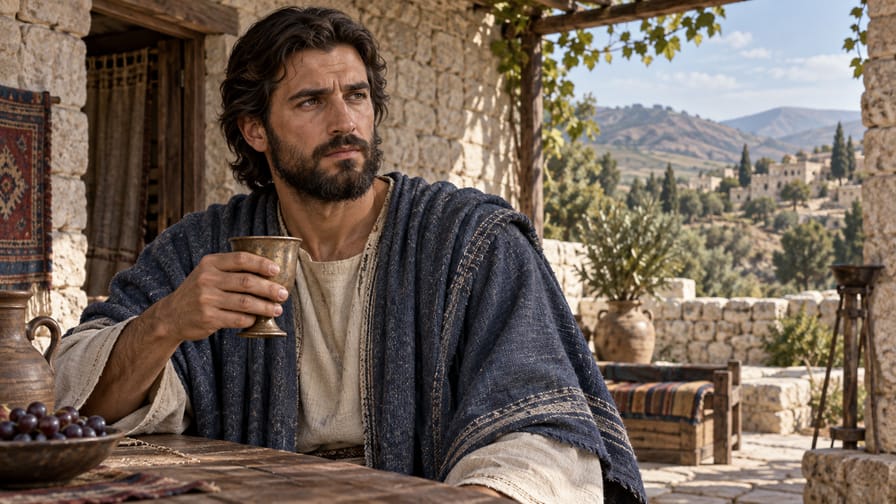
The figure of Adriel in the Bible, though briefly mentioned, offers a rich tapestry for biblical and theological analysis. His story is intrinsically linked to King Saul and King David, placing him in a crucial period of Israel's history. From a Protestant evangelical perspective, the analysis of Adriel transcends his mere mention, revealing profound theological principles about divine justice, covenant faithfulness, and the consequences of sin.
This study will delve into the onomastic meaning of Adriel, his historical and narrative context, the implications of his role in the biblical plot, and the theological reverberations of his story, with a particular focus on the sovereignty of God and the necessity of atonement, which finds its ultimate fulfillment in Christ.
We will examine the passages in which Adriel appears, seeking to extract lessons about the nature of God and the history of redemption. The approach will be exegetical, valuing the authority of the Scriptures and historical accuracy, characteristic of a biblical-theological dictionary.
1. Etymology and Meaning of the Name
The name Adriel is of Hebrew origin, spelled as אַדְרִיאֵל (ʾAdriel). It is a theophoric name, common in Semitic culture, which incorporates one of the names of God, in this case, אֵל (ʾEl).
The first part of the name, אַדְרִי (ʾadri), can be derived from two main Hebrew roots, each conferring a distinct nuance to the meaning. One possibility is the root אֶדֶר (ʾeder), which means "flock," "multitude," or "herd."
If derived from ʾeder, the name Adriel would mean "Flock of God" or "Multitude of God." This interpretation suggests a connection to the idea of God as shepherd and His people as His flock, a prevalent theme in the Scriptures (cf. Psalm 23 John 10:11).
Another possible derivation for אַדְרִי (ʾadri) is from the root אָדַר (ʾadar), which means "to be majestic," "to be glorious," or "to be powerful." In this case, the name Adriel could be interpreted as "Majesty of God," "Glory of God," or "Power of God."
This second interpretation highlights divine greatness and sovereignty, attributes frequently praised in biblical theology. Both derivations are plausible and carry a profound theological meaning, pointing to God's relationship with His people and His own exalted nature.
Although there are no other biblical figures with the exact name of Adriel, the theophoric structure with ʾEl is common, present in names such as Samuel, Daniel, Ezekiel, and Gabriel, all underscoring the presence and action of God in the lives of individuals and in the history of Israel.
The theological significance of the name, whether "Flock of God" or "Majesty of God," is pertinent to the context in which Adriel appears. Even amidst tragic events and judgment, the name can serve as a reminder of God's sovereignty over all circumstances, and of His care, even in ways that defy immediate human comprehension.
The choice or meaning of a name in the Old Testament often reflected the parents' hope, the circumstances of birth, or even a premonition of the individual's destiny. In Adriel's case, the name itself does not give us direct information about his character, but it reminds us of God's presence in his life and in the greater history of redemption.
2. Historical Context and Biblical Narrative
The figure of Adriel is embedded in a period of transition and turbulence in the history of Israel, specifically during the reigns of King Saul and King David. This period spans the late 11th and early 10th centuries B.C., marked by the consolidation of the monarchy and by internal and external conflicts.
The political context was that of a nation in formation, fighting against enemies such as the Philistines and facing internal challenges related to leadership and faithfulness to the covenant with Yahweh. Saul, the first king of Israel, was chosen by God, but subsequently rejected due to his disobedience (1 Samuel 15:23).
The first mention of Adriel occurs in 1 Samuel 18:19. At this point in the narrative, David had already demonstrated great military prowess and popularity, especially after his victory over Goliath (1 Samuel 17). Saul, in turn, was increasingly tormented by envy and jealousy of David.
Saul had promised his older daughter, Merab, to David as a reward for heroic deeds, specifically for fighting the Lord's battles (1 Samuel 18:17). However, Saul broke his promise, and Merab was given in marriage to Adriel, the Meholathite.
The passage states: "But it came to pass at the time when Merab, Saul's daughter, should have been given to David, that she was given as a wife to Adriel the Meholathite" (1 Samuel 18:19). This act of Saul demonstrates his duplicity and his growing antagonism toward David, using his daughters as pawns in his machinations.
The designation "the Meholathite" indicates Adriel's geographical origin, from the city of Abel-Meholah. This city, located in the Jordan Valley, would later become known as the hometown of the prophet Elisha (1 Kings 19:16). Merab's union with a man from Abel-Meholah may have been a political alliance for Saul, seeking to strengthen his kingdom through ties with important clans or regions.
The second and more significant mention of Adriel occurs in 2 Samuel 21:8. This passage narrates an event that takes place years later, already during David's reign, when a great famine strikes Israel for three consecutive years (2 Samuel 21:1).
David consults the Lord, who reveals that the famine was a divine judgment because of the bloodshed by Saul and his house against the Gibeonites (2 Samuel 21:1). Saul had violated the oath made by Joshua and the leaders of Israel to the Gibeonites, guaranteeing their lives and protection (Joshua 9:3-27).
To atone for Saul's sin, the Gibeonites demand the surrender of seven of Saul's descendants to be executed. David, in his pursuit of justice and to appease God's wrath, agrees. The key passage for Adriel is: "But the king took the two sons of Rizpah the daughter of Aiah, Armoni and Mephibosheth, whom she bore to Saul and the five sons of Merab the daughter of Saul, whom she bore to Adriel the Meholathite" (2 Samuel 21:8).
These seven men, including the five sons of Merab and Adriel, were handed over to the Gibeonites and executed, being hung before the Lord in Gibeah, the former center of Saul's kingdom (2 Samuel 21:9). This brutal event, yet biblically justified as an act of atonement, marked the end of the famine and the restoration of divine blessing upon the land.
The narrative of Adriel and his sons, therefore, is deeply rooted in the themes of covenant, divine justice, and the consequences of leaders' sin. He is a peripheral character, yet crucial for understanding a moment of divine retribution and David's faithfulness to covenants.
3. Character and Role in the Biblical Narrative
The Bible offers very few details about Adriel's personal character. He is presented primarily through his relationship with Merab, Saul's daughter, and as the father of the five sons who were handed over to the Gibeonites. There are no records of his words, independent actions, or decisions that reveal his personality or faith.
His role in the narrative is largely passive. He is the recipient of Merab's hand, given by Saul, and the father of sons who, innocently, paid the price for their grandfather's transgression. This passivity, however, does not diminish the significance of his figure in the biblical plot.
As "the Meholathite," Adriel represents a link of Saul with a region outside his immediate sphere of influence. This may indicate that he was a man of some standing or influence in his own land, worthy of being the king's son-in-law.
The lack of information about his character can be interpreted in several ways. It may mean that he was a figure of little prominence beyond his family connection, or that the narrative's focus was not on his individual qualities, but rather on the role he and his family played in the story of judgment and atonement.
Adriel's main function in the narrative is to be the progenitor of the sons who became instruments of divine justice. His sons are explicitly mentioned as "the five sons of Merab the daughter of Saul, whom she bore to Adriel the Meholathite" (2 Samuel 21:8), distinguishing them from Saul's other two sons with Rizpah.
The tragedy of his sons highlights the seriousness of Saul's sin against the Gibeonites and the nature of God's justice. Even if Adriel did not participate in Saul's offense, his sons, as part of "Saul's house," were implicated in the corporate consequences of sin.
This event underscores an important biblical principle: the consequences of leaders' sin can affect generations. While the Bible teaches that each person is responsible for their own sins for salvation (Ezekiel 18:20), corporate responsibility and the social and national consequences of sin are a reality in the Old Testament.
Adriel's role is, therefore, that of an essential genealogical link for the execution of divine justice. He is a vivid reminder of the ramifications of sin and God's unwavering faithfulness to His covenants, even if it involves severe actions to purify the land.
His existence in the narrative serves to demonstrate the depth of the issue afflicting Israel (the famine) and the severity of the solution demanded by God. Through Adriel and his sons, the biblical narrative illustrates the complexity of divine justice and the interconnectedness of human actions with God's sovereign plan.
4. Theological Significance and Typology
The theological significance of the figure of Adriel lies not in his individual character, but in his instrumental role within the history of redemption, particularly in the context of divine justice and atonement. Although Adriel is not a direct typological figure of Christ, the event in which he and his family are involved is deeply charged with themes that point to the redemptive work.
The story of the sons of Adriel and Merab being handed over to the Gibeonites for atonement (2 Samuel 21:1-14) is a vivid example of the seriousness of sin and the necessity of justice. The three-year famine is interpreted as a divine judgment for Saul's bloodshed against the Gibeonites, violating a solemn covenant made centuries earlier (Joshua 9:15).
This event highlights the sanctity of covenants made in God's name. The covenant with the Gibeonites, though made by mistake, was sworn by Joshua and the princes of Israel "by the Lord, the God of Israel" (Joshua 9:18). Saul's violation of that covenant was not merely a breach of human promise, but an offense against God's honor and faithfulness.
The Gibeonites' demand for a blood atonement ("seven men of his sons," 2 Samuel 21:6) and the subsequent execution of the sons of Saul and Adriel, though shocking to modern sensibilities, is presented in the Scriptures as an act of divinely sanctioned justice to remove guilt from the land (Numbers 35:33). The shedding of innocent blood requires atonement for the land to be purified and God's blessing restored.
This theological principle points to the doctrine of vicarious atonement. The sons of Saul and Adriel, though not personally guilty of Saul's sin against the Gibeonites, were members of his "house" and, therefore, represented the lineage that had to pay the debt. Their death served as a sacrifice of retribution that removed national guilt and restored divine favor.
The severity of this judgment demonstrates God's absolute holiness and the intolerability of sin in His presence. The necessity of a sacrificial atonement to appease divine wrath and restore the relationship is a central theme throughout the Bible, culminating in the work of Christ.
Christ, the true Lamb of God, "our Passover, was sacrificed for us" (1 Corinthians 5:7), offering Himself as the perfect and definitive sacrifice. He is the only one who could truly atone for the sin of humanity, not through inherited corporate guilt, but through the personal guilt of each individual who believes in Him (Romans 3:25 Hebrews 9:14).
Thus, while the story of Adriel and his sons is not a direct typology of Christ, it illustrates the reality of God's wrath against sin, the necessity of a blood sacrifice for atonement, and God's faithfulness to His covenants. These themes are fundamental to understanding the magnificence and necessity of Christ's work on the cross.
The narrative also underscores God's sovereignty over human history and the history of redemption. Even in severe acts of judgment, God is working to fulfill His purposes, uphold His justice, and prepare the way for the full manifestation of His grace in Jesus Christ.
5. Biblical-Theological Legacy and Canonical References
Adriel, as a biblical figure, is not mentioned outside the books of 1 and 2 Samuel. He is not the author of any book, Psalm, or epistle, nor is he quoted in the New Testament. His direct literary or doctrinal contribution is nonexistent.
Nevertheless, his biblical-theological legacy is significant for being a supporting character in an event that illustrates fundamental principles of Old Testament theology and that reverberate throughout the biblical narrative. The story of the sons of Adriel and Merab serves as a powerful illustration of several themes.
Firstly, it reinforces the sanctity of covenants. The oath made to the Gibeonites by Joshua (Joshua 9) was a sacred covenant before God. Saul's violation demonstrates the seriousness with which God treats covenant faithfulness, a central theme in biblical theology, from the covenant with Noah to the New Covenant in Christ (Genesis 9 Jeremiah 31:31-34 Hebrews 8:6-13).
Secondly, the narrative of Adriel and his sons is a testament to God's retributive justice. The famine was a direct divine judgment, and the demand for blood atonement underscores that sin has serious consequences and that justice needs to be satisfied. This truth is a pillar of Reformed and evangelical theology, which emphasizes God's justice as an essential attribute.
Theologians such as John Calvin and Matthew Henry, in their commentaries, frequently highlight the severity of divine judgment in this passage as a reminder of God's holiness. The idea that a leader's sin can bring consequences upon his offspring and upon the nation is a complex biblical concept, which must be understood in light of corporate responsibility in ancient Israel, without confusing it with the doctrine of inherited guilt for individual salvation, which is refuted in passages like Ezekiel 18.
The story also demonstrates David's leadership, who seeks the Lord's face to understand the cause of the famine and acts to rectify the injustice. David submits to God's will and the Gibeonites' demand, showing his faithfulness to the covenant and his commitment to divine justice, even if it involved difficult and painful decisions.
Jewish and Christian interpretive tradition has debated the ethics of executing innocent children. However, the conservative evangelical perspective generally accepts the narrative as a historical record of God's action, who, in His sovereignty, permitted and required such atonement in the context of Old Testament law to purify the land and restore order.
Adriel's relevance for understanding the canon lies in how his brief mention contributes to the grand narrative of redemption. He is a vivid reminder of the universal need for atonement for sin, a theme that finds its definitive answer in the cross of Christ. The justice that was demanded in the Old Testament is perfectly fulfilled by Jesus, who "once for all has appeared to put away sin by the sacrifice of Himself" (Hebrews 9:26).
Thus, although Adriel is a minor figure, his story is a crucial link in the chain of events that reveal the nature of God, the depth of sin, and the necessity of atonement, preparing the ground for understanding the New Covenant and the redemptive work of Jesus Christ.