


Abimael
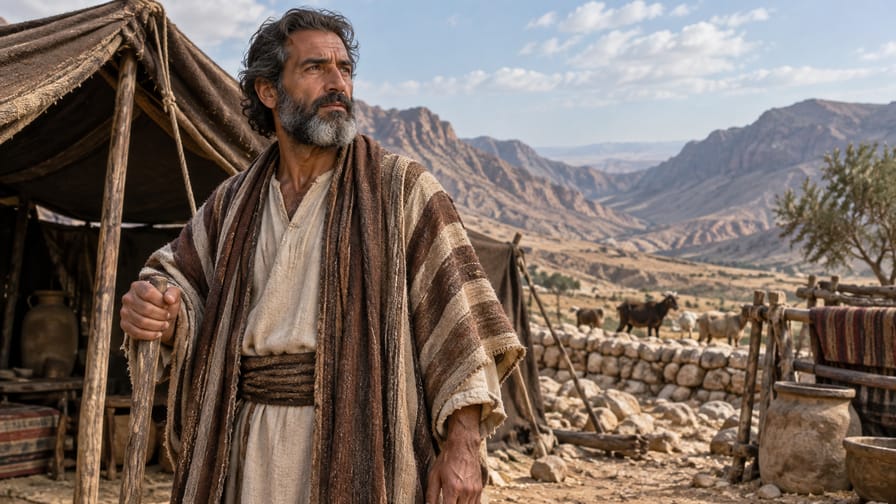
The figure of Abimael, though sparsely detailed in the Scriptures, holds significant theological and historical relevance, especially when understood within the context of biblical genealogies. He is one of the sons of Joktan, a descendant of Shem, and his mention occurs exclusively in the genealogical lists of the Old Testament. His inclusion in these genealogies is not merely a historical record but an integral part of divine revelation concerning the origin and dispersion of humanity.
The analysis of Abimael, therefore, transcends the absence of a personal narrative, focusing on his onomastic significance, his position in the "Table of Nations," and the theological implications of his lineage. From a Protestant evangelical perspective, every detail of the Scriptures is considered divinely inspired and purposeful, serving God's grand redemptive plan. Thus, even a seemingly secondary character like Abimael contributes to understanding divine sovereignty over human history and the preparation for the coming of the Messiah.
This in-depth study will seek to extract the maximum possible meaning from his brief mention, contextualizing him within biblical history and highlighting his importance for a comprehensive theology. We will address the etymology of his name, his location in the genealogies, the implicit role of his offspring, and the broader theological connections his figure may evoke, always based on the inerrancy and authority of the Word of God.
1. Etymology and Meaning of the Name
The name Abimael, in Hebrew אֲבִימָאֵל (ʾĂḇîmāʾēl), is a theophoric name, common in Semitic antiquity. Its structure is composed of two main elements: אָב (ʾāḇ), which means "father," and מָאֵל (māʾēl), an abbreviated form or variant of אֵל (ʾēl), which means "God" or "mighty one." The combination of these elements results in the meaning "My father is God" or "Father is God."
This nominal construction reflects a deep conviction or religious aspiration of parents when naming their child. Theophoric names were frequently used to express faith in divinity, attribute divine characteristics to the paternal figure, or invoke God's protection and favor upon the newborn. In the case of Abimael, the name suggests a dependence on or recognition of divine fatherhood.
There are no significant variations of the name Abimael in biblical languages. It appears consistently as אֲבִימָאֵל in the Hebrew Old Testament. It is crucial not to confuse Abimael with Abimelech (אֲבִימֶלֶךְ, ʾĂḇîmeleḵ), a different name meaning "My father is king" and referring to several biblical characters, including Philistine kings in Gerar (Genesis 20:2 26:1).
The theological significance of the name Abimael, even for such a peripheral character, lies in its affirmation of divine sovereignty. "My father is God" is a declaration that points to the ultimate source of all fatherhood and authority. Even among nations that had not yet received the covenantal revelation of Yahweh, there was an innate recognition of a superior deity, often expressed in their names.
This practice of naming children with divine elements serves as a reminder that humanity, from its earliest beginnings, carried a consciousness of God, albeit obscured by sin. The name of Abimael, therefore, is woven into the broad tapestry of biblical names that testify to the presence and action of God in human history, long before the election of Abraham and the formation of the people of Israel.
2. Historical Context and Biblical Narrative
Abimael is mentioned in the Holy Scriptures in only two passages: Genesis 10:28 and 1 Chronicles 1:22. Both references firmly place him in the post-diluvian genealogies, more specifically in the "Table of Nations" found in Genesis 10. This chapter is fundamental for understanding the origin and dispersion of peoples after the universal Flood, serving as a bridge between primordial history and patriarchal history.
The historical period of Abimael dates back to the initial era after the Flood, long before the emergence of known great civilizations and empires. He lived in a time of repopulation of the earth, the formation of clans and tribes, and the eventual linguistic and geographical differentiation that would culminate in the dispersion at Babel (Genesis 11). Although exact dates are difficult to determine, he chronologically precedes the period of Abraham by several generations.
His political, social, and religious context is that of humanity in a phase of expansion, with social structures still forming. Religion was likely more tribal or familial in nature, with the memory of the God of the Flood still present, but already subject to the corruption and incipient idolatry that the Bible describes. The "Table of Nations" serves to demonstrate God's sovereignty over all families of the earth (Genesis 10:32).
2.1 Family Origin and Genealogy
Abimael is identified as one of the thirteen sons of Joktan (Genesis 10:28 1 Chronicles 1:22). Joktan, in turn, was the son of Eber, who was a descendant of Shem, one of the three sons of Noah (Genesis 10:24-25). This lineage is crucial because it places Abimael in the Semitic line, from which Abraham and, ultimately, the Messiah Jesus Christ would come.
Abimael's brothers are Almodad, Sheleph, Hazarmaveth, Jerah, Hadoram, Uzal, Diklah, Obal, Sheba, Ophir, Havilah, and Jobab (Genesis 10:26-29). The geographical location associated with Joktan's descendants is the Arabian Peninsula, as per Genesis 10:30: "Their dwelling place extended from Mesha in the direction of Sephar, the hill country of the east." This indicates that Abimael and his brothers were the progenitors of various peoples and tribes who settled in the southern and southwestern regions of Arabia.
The inclusion of Abimael in these genealogical lists offers no details about his life, actions, or personal relationships beyond his parentage. His existence is solely verified through his role as a link in the genealogical chain of humanity. He is an ancestor whose descendants contributed to the formation of one of the many nations that populated the earth after the Flood.
The brevity of his mention does not diminish his importance for the historical and theological accuracy of the Bible. Genealogies are a testament to the historicity of biblical events and characters, connecting humanity to its origin in Adam and Noah. Abimael, as part of the Semitic lineage, contributes to the vast network of peoples who, although not directly involved in the Abrahamic covenant, are part of the divine plan for humanity.
3. Character and Role in the Biblical Narrative
The analysis of Abimael's character and role in the biblical narrative is intrinsically limited by the nature of his mention. Unlike figures such as Abraham, Moses, or David, Abimael has no narrated story, recorded dialogues, or described actions. His existence is purely genealogical, meaning there are no explicit data in the Scriptures to discern virtues, moral flaws, specific callings, or character development.
In this sense, the Bible does not reveal individual character traits for Abimael. We cannot attribute piety or impiety, wisdom or foolishness, obedience or disobedience to him. To attempt to do so would be extra-biblical speculation, which goes against the methodology of a Protestant evangelical theological analysis that relies strictly on the sacred text. His importance lies in his genealogical function, not in his personal behavior.
Abimael's primary role in the biblical narrative is that of an ancestor, a link in the chain of human descent from Noah and, more specifically, from Shem. He is one of the founders of one of the many tribes or clans that originated from Joktan's family. His inclusion in the genealogies of Genesis 10 and 1 Chronicles 1 serves to complete the "Table of Nations," demonstrating the common origin of all peoples and their geographical dispersion.
The absence of a personal narrative for Abimael underscores the selectivity and purpose of the Scriptures. The Bible is not an exhaustive encyclopedia of all individuals who have lived, but a record of the history of redemption and God's revelation. Figures like Abimael are included to provide the historical and genealogical context necessary for understanding the divine plan, even if they are not protagonists of dramatic events.
His function is, therefore, one of support: he contributes to the historical credibility of the biblical narrative by detailing the formation of nations. He represents one of the many branches of humanity that, although not directly connected to Abraham's messianic lineage, are part of the larger picture of creation and God's providence. Significant actions and key decisions are not documented for Abimael, as his role is fulfilled by his very existence and offspring.
4. Theological Significance and Typology
Despite the scarcity of narrative information about Abimael, his presence in the biblical genealogies confers upon him a particular theological significance within the Protestant evangelical perspective. He is an integral part of redemptive history and God's progressive revelation, especially through his inclusion in the "Table of Nations" (Genesis 10).
Abimael's role in redemptive history is indirect but fundamental. He is part of the Semitic lineage, which is divinely chosen to be the source of the messianic blessing (Genesis 9:26-27). Although Abimael is not in the direct line leading to Abraham, he is in the broader lineage of Shem, which demonstrates God's sovereignty in choosing and separating a family for His redemptive purposes within a vast field of nations.
It is important to emphasize that there is no direct Christocentric prefiguration or typology for Abimael. Biblical typology generally applies to people, events, or institutions that have clear and intentional parallels with Christ or with the work of redemption. Abimael does not fit into this category, given the absence of any narrative or action that could point to the Messiah.
Nevertheless, the inclusion of Abimael in the genealogies has a connection to central theological themes. The "Table of Nations" in Genesis 10, where he is listed, serves to establish the unity of the human race, the dispersion of peoples, and God's sovereignty over all nations. Abimael, as the progenitor of one of the Joktanite nations, illustrates divine providence in the formation and location of peoples.
The name of Abimael, "My father is God," also resonates with the doctrine of God's fatherhood, albeit in a general sense. It reminds us that even among non-covenantal nations, there is an innate awareness of a Creator and Sustainer. This awareness, though often distorted, points to the universal truth that God is the Father of all humanity by creation, preparing the ground for the more specific revelation of His spiritual fatherhood through Christ.
Thus, while Abimael is not a type of Christ, he is a testament to the comprehensiveness of the divine plan that, from the earliest beginnings of humanity, orchestrates the history and geography of peoples in preparation for the fullness of time, when Christ would come to redeem people from every tribe, language, people, and nation (Revelation 5:9). His existence underlines the doctrine of election and God's common grace over all creation.
5. Biblical-Theological Legacy and Canonical References
Abimael's legacy in biblical theology is subtle yet significant, derived exclusively from his mention in the canonical genealogies. He is not cited in other biblical books outside of Genesis 10:28 and 1 Chronicles 1:22, and there are no literary contributions attributed to him, such as Psalms or epistles. His importance lies in his function as a link in the history of humanity and in the progressive revelation of God's plan.
His presence in the Scriptures reinforces the accuracy and historicity of biblical genealogies. These lists are not mere appendices but essential elements that connect humanity to Adam and Noah, establishing the basis for the history of redemption. Abimael, as part of the "Table of Nations," contributes to understanding the origin and dispersion of peoples, providing a historical framework for future interactions between Israel and neighboring nations.
In Jewish and Christian interpretive tradition, Abimael is not a prominent figure. Rabbinic and patristic commentaries generally mention him only in the context of Genesis genealogies, identifying him as an ancestor of Arab tribes. He is not the subject of extensive midrashim or in-depth theological debates, owing to the absence of narrative data about his life.
In Reformed and evangelical theology, the inclusion of Abimael and other minor genealogical figures is seen as evidence of the inspiration and inerrancy of the Scriptures. Every name, even the most briefly mentioned, is part of the divinely revealed record. The "Table of Nations" as a whole is valued for its contribution to the doctrine of creation, providence, and the unity of the human race, of which Abimael is a component.
The importance of Abimael for understanding the canon lies in how he, along with the other sons of Joktan, illustrates the formation of the nations that surrounded Israel. Although not directly involved in the Abrahamic covenant, these peoples, originating from the same source, were under God's sovereignty and would be part of Israel's historical and prophetic landscape. The existence of these peoples, such as the descendants of Abimael, is a testament to God's faithfulness in populating the earth and fulfilling His command to "be fruitful and multiply" (Genesis 9:1).
In summary, the biblical-theological legacy of Abimael is that of being a silent but essential link in God's grand narrative. His mention serves to reinforce the historical veracity of the Bible, divine sovereignty over the formation of nations, and the comprehensiveness of the plan of redemption which, though focused on Israel, extends to all families of the earth. He is a reminder that every part of Scripture, however small, has its place and purpose in the unfolding history of salvation.