


Mahalalel
1. Etymology and Meaning of the Name
The name Malaleel (מַהֲלַלְאֵל, Mahalal'el in Hebrew) is one of the most significant names in the antediluvian genealogies, carrying a profound theological meaning. Its transliteration into Greek in the Septuagint is Μαλελεήλ (Maleleēl), preserving the essence of the original Hebrew meaning. Etymological analysis reveals the composition of two distinct Hebrew roots.
The first part of the name, מַהֲלַל (mahalal), derives from the verb הָלַל (halal), which means "to praise," "to exalt," "to glorify," or "to celebrate." This verb is widely used in the Scriptures to describe the worship and recognition of God's greatness, as seen in many Psalms. The nominal form mahalal can be translated as "praise" or "commendation."
The second part of the name is אֵל ('El), a common Hebrew term for "God" or "mighty," often used to refer to the God of Israel. The combination of these two roots results in the literal meaning of "Praise of God," "One who praises God," or "God is praised."
This onomastic meaning is particularly relevant in the context of Seth's lineage, which is contrasted with Cain's lineage. While Cain's lineage is characterized by the building of cities and human inventions (Genesis 4:17-22), Seth's lineage is marked by names that invoke God and express faith and hope, such as Enoch ("dedicated") and Noah ("rest").
The name Malaleel, "Praise of God," suggests a disposition of worship and recognition of divine sovereignty in an increasingly corrupt era. It may indicate the calling of the godly lineage to continue praising God, even amidst widespread moral decay, keeping alive the flame of faith and true worship.
There are no other prominent biblical figures with the exact name Malaleel. Its uniqueness in the Hebrew Scriptures reinforces the focus on its intrinsic meaning within the messianic genealogy. The name serves as a reminder that, despite the Fall and the proliferation of sin, God always preserved a remnant that would praise and honor Him.
2. Historical Context and Biblical Narrative
Malaleel is a biblical figure who fits into the context of the antediluvian patriarchal genealogies, as recorded in Genesis 5:12-17. He represents the fifth link in the lineage of Seth, which is the line of humanity God chose to preserve the promised seed in Genesis 3:15, ultimately leading to the Messiah.
The historical period of Malaleel predates the universal Flood, a time characterized by remarkable human longevity and rapid moral degeneration of humanity. According to the traditional chronology based on Ussher, Malaleel was born approximately 395 years after creation (AM - Anno Mundi) and lived for 895 years, dying in 1290 AM.
He was the son of Kenan and the father of Jared. The biblical narrative is concise, focusing on genealogical milestones: "When Kenan had lived seventy years, he fathered Malaleel. Kenan lived after he fathered Malaleel eight hundred and forty years and had other sons and daughters. Thus all the days of Kenan were nine hundred and ten years, and he died" (Genesis 5:12-14).
The same structure is repeated for Malaleel: "When Malaleel had lived sixty-five years, he fathered Jared. Malaleel lived after he fathered Jared eight hundred and thirty years and had other sons and daughters. Thus all the days of Malaleel were eight hundred and ninety-five years, and he died" (Genesis 5:15-17).
These passages, though brief, are crucial for establishing the continuity of redemption history. They demonstrate God's faithfulness in maintaining the promised lineage, even as surrounding society turned away from Him. The inclusion of Malaleel in 1 Chronicles 1:2 and in the genealogy of Jesus in Luke 3:37 reiterates his importance as a vital historical and theological link.
The social and religious context of Malaleel's era is inferred from Genesis chapters 4 and 6. While Cain's lineage built cities and developed material culture, Seth's lineage "began to call upon the name of the Lord" (Genesis 4:26), indicating a contrast in spiritual orientation and worship.
Malaleel's life, though devoid of recorded dramatic events, is significant for its very existence. He lived during a period when human wickedness multiplied, culminating in the divine declaration of Genesis 6:5: "The Lord saw that the wickedness of man was great in the earth, and that every intention of the thoughts of his heart was only evil continually."
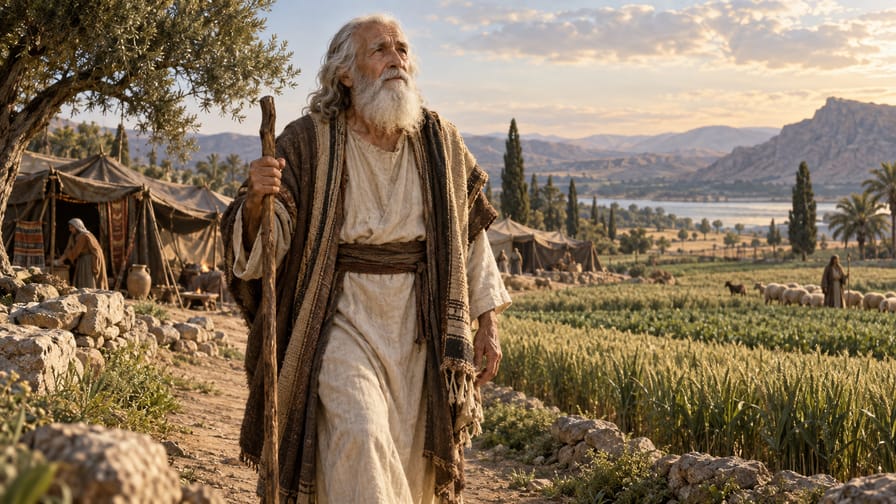
The geography related to Malaleel and his ancestors is Eden and the adjacent lands, although there is no mention of specific cities or regions of residence for the antediluvian patriarchs, except the "land of Nod" for Cain (Genesis 4:16). They were nomads or semi-nomads, and their existence focused on the preservation of the lineage.
His relationships with other biblical figures are strictly genealogical: son of Kenan, father of Jared, grandfather of Enoch, great-grandfather of Methuselah, and great-great-grandfather of Lamech, culminating in Noah. This sequence is not merely a list of names, but the backbone of pre-Flood redemption history, showing divine providence in the selection and preservation of a faithful seed.
3. Character and Role in the Biblical Narrative
The Bible offers very few direct details about Malaleel's individual character, as is common for most figures in the antediluvian genealogies. There are no records of his specific actions, words, or decisions beyond the fact that he lived, begot sons and daughters, and died (Genesis 5:15-17). However, his inclusion in Seth's lineage allows for the inference of certain qualities and a foundational role.
Firstly, Malaleel's very name, "Praise of God," can be seen as a reflection of his character or his family's spiritual environment. In an era of increasing godlessness (Genesis 6:5), the act of praising God was a direct contrast to the prevailing rebellion. This suggests that Malaleel, as part of the godly lineage, maintained faith and devotion to the Lord.
Reformed and evangelical theology emphasizes the importance of faith for salvation and righteousness. Although there is no explicit declaration like that of Enoch (Genesis 5:24, Hebrews 11:5), Malaleel's inclusion in the lineage that "began to call upon the name of the Lord" (Genesis 4:26) and which was preserved by God, implies a life of faith and obedience, unlike Cain's lineage.
Malaleel's primary role in the biblical narrative is not that of a protagonist of great deeds, but that of a vital and reliable link in the genealogical chain leading to Noah and, ultimately, to Jesus Christ. His existence is proof of God's faithfulness in upholding the promise of the seed who would crush the serpent's head (Genesis 3:15).
He did not play a prophetic, priestly, or kingly role in the institutionalized sense that we would see later in the history of Israel. His role was one of biological and spiritual continuity, ensuring that the chosen lineage, bearer of divine promises, would not be interrupted by widespread corruption or death.
The absence of mention of documented sins or moral failures for Malaleel, as with most antediluvian patriarchs (except Adam), does not mean they were without sin, but that the narrative focuses on their genealogical function and the preservation of the lineage. The Bible is selective in its details, and the omission here serves to highlight God's faithfulness.
In a broader sense, Malaleel's life, like that of his ancestors and direct descendants in Seth's lineage, served to bear witness to the truth of life and death after the Fall. Every "and he died" (Genesis 5:5, 8, 11, 14, 17, 20, 27, 31) in the genealogy is a vivid reminder of the penalty of sin and the universality of death, even for those who maintained a relationship with God.
Therefore, Malaleel's inferred character is that of someone who, by God's grace, remained in the lineage of faith, praising God in a declining world and fulfilling his crucial role in divine providence for the salvation of humanity. His development in the narrative is static, but his existence is dynamically significant for biblical theology.
4. Theological Significance and Typology
Malaleel's theological significance lies not in his individual acts, but in his strategic position within God's redemptive history. He is an irreplaceable link in the genealogy that connects Adam to Noah, and which, through Abraham, David, and Mary, culminates in Jesus Christ, the Messiah (Lucas 3:37-38).
Malaleel's inclusion in the Scriptures attests to God's faithfulness in preserving the "seed of the woman" (Genesis 3:15) who would one day crush the serpent's head. This promise, the protoevangelium, is the first indication of God's saving grace after the Fall, and Malaleel's lineage is the vehicle through which this promise is kept alive.
Malaleel's life, as part of Seth's lineage, contrasts with Cain's lineage, which was characterized by violence and estrangement from God (Genesis 4:8-24). Seth's lineage, which includes Malaleel, is the line of messianic hope, demonstrating divine sovereignty in the choice and preservation of a godly remnant amidst increasing depravity.
Although Malaleel is not a direct typological figure of Christ in the sense that his actions prefigure those of Jesus, his existence is crucial for genealogical typology. The very continuity of the lineage is a type of God's unbreakable faithfulness in fulfilling His promises, even through eras of great sin and corruption.
The longevity of Malaleel and the other antediluvian patriarchs (Genesis 5) serves as a reminder of God's original plan for eternal life and of the drastic consequence of sin that would eventually lead to the reduction of life expectancy (Genesis 6:3) and the Flood. Malaleel's death, like that of all others, is a testament to the universality of sin and death (Romans 5:12).
Malaleel's name, "Praise of God," also carries theological significance. In a world that was forgetting God, Malaleel's name and his family's life were a testimony that God still deserved praise. This connects Malaleel to the central theme of worship and the glory of God, which is the ultimate purpose of creation and redemption.
Malaleel's presence in the genealogy of Jesus in Luke 3:37 is the strongest connection to the New Testament. This genealogy is not merely a list of names, but a theological declaration that Jesus is the fulfillment of God's promises from the beginning of humanity. Malaleel is a link in this chain of divine grace.
For evangelical Protestant theology, the figure of Malaleel reinforces the doctrine of God's sovereignty in salvation history. God does not abandon humanity to its own devices after the Fall, but provides a path of redemption through a specific lineage, sustained by His providence. Malaleel's life is a silent testimony to God's grace and redemptive plan.
5. Biblical-Theological Legacy and Canonical References
Malaleel's legacy in biblical theology is predominantly structural and genealogical, solidifying the continuity of redemption history. His canonical mentions are direct and concise, found in two of the most important biblical genealogies.
The primary reference to Malaleel is in Genesis 5:12-17, where he is listed as the fifth patriarch in Seth's lineage. This passage is fundamental for establishing the antediluvian chronology and the progression of humanity from Adam, through the godly lineage that would lead to Noah and, subsequently, to the nation of Israel and the Messiah.
The second crucial mention is found in 1 Chronicles 1:2, within the genealogy that traces Israel's ancestry from Adam. Malaleel's inclusion here underscores the historicity and importance of these ancestral links for understanding the identity and calling of God's people in the Old Testament.
In the New Testament, Malaleel is explicitly cited in the genealogy of Jesus Christ recorded in Luke 3:37. This genealogy is unique in tracing Jesus' lineage retroactively to Adam, emphasizing the universality of His redemptive mission. Malaleel's presence here is vital for connecting Jesus not only to the promise made to David and Abraham, but to the original promise of Genesis 3:15.
Malaleel's influence on biblical theology, although indirect, is profound. He represents God's faithfulness in preserving a lineage of faith amidst widespread apostasy. His existence validates the biblical narrative as a linear and coherent history of salvation, planned and executed by God from the beginning.
In Jewish interpretive tradition, the genealogies of Genesis 5 were seen as a historical record and proof of humanity's descent from Adam. Although there are no extensive Midrashic commentaries on Malaleel individually, his presence is recognized as part of the unbroken chain of history.
In Christian theology, especially Reformed and evangelical, the importance of Malaleel and the other antediluvian patriarchs lies in their contribution to the doctrine of redemptive history (Heilsgeschichte). They are the vehicles of God's progressive revelation, each one a step towards the fulfillment of the messianic promise.
Theologians like John Calvin and Matthew Henry, in their commentaries on Genesis, emphasize the historical and theological nature of these genealogies, viewing them as the "line of grace" or the "seed of the woman" that God preserved. They highlight divine providence that ensured the continuity of this lineage, despite the brevity of life and the proliferation of sin.
The absence of direct literary contributions or dramatic events for Malaleel does not diminish his relevance. His importance lies in his function as a silent yet essential link that upholds the structure of the biblical narrative and the validity of God's promise. He is a testimony to the truth that God always has a plan and always fulfills it.
Understanding the biblical canon is enriched by recognizing that every name, even the less detailed ones, serves a divine purpose. Malaleel, with his name "Praise of God," is a reminder that, from the dawn of humanity, God's purpose for man is to glorify Him and enjoy Him forever, a purpose that finds its climax in the person and work of Jesus Christ.