


Jehoiakim
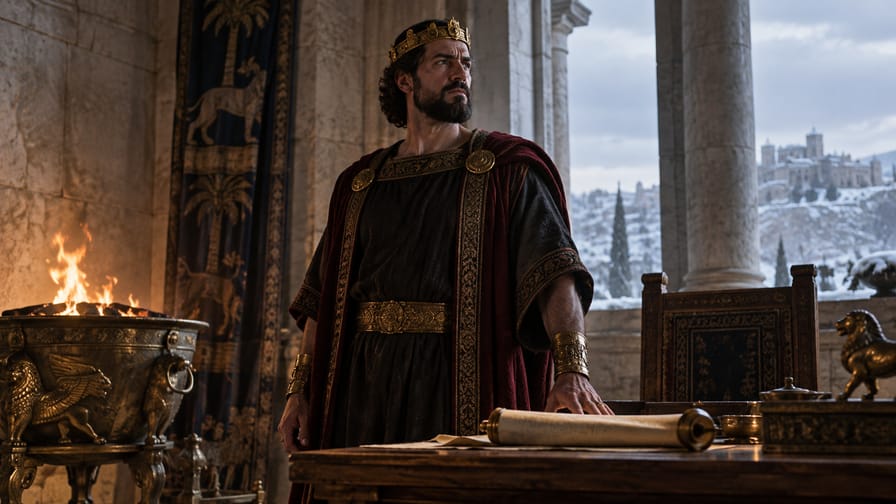
The figure of Jehoiakim (also known as Eliakim), king of Judah, emerges in the Hebrew Scriptures as one of the most infamous monarchs of the late period of the Judean monarchy, directly preceding the Babylonian exile. His reign is marked by apostasy, cruelty, and an obstinate resistance to the prophetic word of God, characteristics that make him a somber case study in salvation history and biblical theology.
The analysis of his life and reign offers valuable lessons about divine sovereignty, human responsibility, and the consequences of disobedience. From an evangelical Protestant perspective, Jehoiakim serves as a stark counterpoint to the ideal of the Davidic king, underscoring the urgency of the coming of a just and faithful Messiah.
This study will delve into the onomastic significance, historical context, character, theological role, and canonical legacy of Jehoiakim, as revealed in the pages of the Holy Scriptures.
1. Etymology and meaning of the name
The name Jehoiakim, in Hebrew Yehôyaqîm (יְהוֹיָקִים), is a theophoric name composed of two parts. The first part, Yehô (יְהוֹ), is an abbreviation of the name of God, Yahweh (YHWH).
The second part derives from the verbal root qûm (קוּם), which means "to raise," "to establish," or "to confirm." Thus, the name Jehoiakim can be translated as "Yahweh raises" or "Yahweh establishes."
Interestingly, Jehoiakim was not born with this name. His original name was Eliakim (ʾElyāqîm, אֶלְיָקִים), which means "God raises" or "God establishes."
The change of name was imposed by Pharaoh Neco II of Egypt when he enthroned him in place of his brother Jehoahaz (2 Kings 23:34). Although the change from Eliakim to Jehoiakim might seem a mere substitution of the divine component (El for Yehô), it is significant.
It reflects the sovereignty of Egyptian power over Judah and Neco's attempt to assert his authority, even over the king's identity. Paradoxically, however, the name "Yahweh raises" carried a theological irony, given Jehoiakim's character and destiny.
Yahweh did indeed raise him to the throne, but would also cast him down in judgment (Jeremiah 22:18-19), demonstrating that the meaning of a name does not always align with the character or destiny of the individual.
There are no other prominent biblical figures named Jehoiakim, which makes the analysis of this king particularly focused on his own history and theological significance.
The theological significance of the name resides in the tension between the divine act of "raising up" and human failure to correspond to that elevation with faithfulness. Although Yahweh established him, Jehoiakim dishonored the name of God through his impiety and disobedience.
His name serves as a reminder of God's sovereignty over the kings of the earth, even when they act in rebellion against Him. God permits ascent, but also orchestrates downfall, all in conformity with His redemptive and righteous purposes.
2. Historical context and biblical narrative
The reign of Jehoiakim (c. 609-598 BC) occurred during a period of intense geopolitical turbulence and profound religious crisis for the Kingdom of Judah. He ascended to the throne after the death of his father, the pious King Josiah, in the Battle of Megiddo against the Egyptians in 609 BC (2 Kings 23:29).
His brother, Jehoahaz (also known as Shallum), had been proclaimed king by the people, but reigned for only three months before being deposed and taken captive to Egypt by Pharaoh Neco II (2 Kings 23:30-34).
Neco then installed Eliakim, Josiah's son, as king of Judah, changing his name to Jehoiakim (2 Kings 23:34-35). Judah became a vassal state of Egypt, forced to pay heavy tribute, which Jehoiakim extorted from the people through taxes (2 Kings 23:35).
This period was marked by the rise of the Neo-Babylonian Empire under Nebuchadnezzar II, who quickly supplanted Assyrian and Egyptian power. The Battle of Carchemish in 605 BC sealed Egypt's fate and established Babylon as the dominant power in the region (Jeremiah 46:2).
As a result, Jehoiakim and Judah passed from Egyptian to Babylonian vassalage. Nebuchadnezzar invaded Judah, and Jehoiakim was forced to submit, serving Babylon for three years (2 Kings 24:1).
However, in an act of reckless rebellion, Jehoiakim revolted against Nebuchadnezzar. This decision provoked the invasion of Judah by Chaldean, Syrian, Moabite, and Ammonite armies, sent by the king of Babylon (2 Kings 24:2).
The main events of Jehoiakim's life are recorded in 2 Kings 23:34-24:6, 2 Chronicles 36:4-8, and, more extensively, in the prophets Jeremiah and Ezekiel, who were his contemporaries and fierce critics.
Jeremiah, in particular, confronted Jehoiakim repeatedly, delivering oracles of judgment against him and the people of Judah (Jeremiah 22:13-19 Jeremiah 26 Jeremiah 36). The geography related to Jehoiakim is primarily Jerusalem, the capital of Judah, where he ruled and where much of the narrated events occurred.
His relationships with other biblical figures were tense. With his father Josiah, he represented a striking contrast with Pharaoh Neco, he was a submissive vassal, then a rebel against Nebuchadnezzar.
His most significant and conflicted relationship was with the prophet Jeremiah, whom he persecuted and whose message he openly rejected, even to the point of burning the scroll of the word of God (Jeremiah 36:23).
This symbolic action of burning the prophetic word of God is one of the most shocking and revealing acts of his reign, demonstrating his contempt for divine authority and his obstinacy in following his own path.
3. Character and role in the biblical narrative
Jehoiakim's character is consistently portrayed negatively in the Scriptures. He is presented as a wicked and perverse king, whose actions contrasted drastically with the pious reforms of his father, Josiah (2 Kings 23:37).
The Scriptures categorically state that he "did what was evil in the eyes of the Lord, according to all that his fathers had done" (2 Kings 23:37). His wickedness was not passive, but active and aggressive.
Among his moral failures and sins, idolatry, oppression, and the rejection of God's word stand out. He not only allowed the reintroduction of idolatrous practices in Judah but also devoted himself to luxurious building projects in Jerusalem, funded by exploitation and social injustice (Jeremiah 22:13-17).
Jeremiah severely reprimands him for building his house "with unrighteousness and his upper rooms with injustice," forcing his people to work without pay (Jeremiah 22:13). This exploitation of the weakest reveals a profound lack of justice and compassion, central principles of Mosaic law and prophetic ethics.
The most notorious of Jehoiakim's actions was his reaction to the scroll of Jeremiah's prophecies, which contained God's words of judgment against Judah. When the scroll was read before him, Jehoiakim showed no repentance, but rather contempt and fury.
He ordered the scroll to be burned piece by piece in the fire, an act of direct and blasphemous defiance against God Himself (Jeremiah 36:23-24). This action sealed his fate and demonstrated the hardness of his heart, refusing to heed the divine warning.
His role in the biblical narrative is that of a king who personifies Judah's apostasy and rebellion in its final days. He is an agent who precipitates divine judgment, serving as a wicked example of leadership that leads his people to ruin.
Despite being raised to the throne by the hand of a foreign monarch, his reign is an illustration of God's permissive sovereignty which, even through wicked leaders, advances His purposes. Jehoiakim fails in his royal vocation to rule with justice and faithfulness to Yahweh, contrasting with the Davidic ideal.
His life shows no positive development on the contrary, he delves deeper into his impiety and rebellion. He is a static character in his wickedness, resisting all opportunities for repentance offered by God through His prophets.
Jehoiakim's death is shrouded in some uncertainty. While 2 Kings 24:6 states that he "slept with his fathers," implying a natural death, Jeremiah prophesies that he would not have a dignified burial, but would be dragged off and cast out beyond the gates of Jerusalem (Jeremiah 22:18-19).
Some commentators suggest that he may have been assassinated or died during a Babylonian siege and, therefore, did not receive a royal burial. Jeremiah's prophecy about his ignominious burial is a powerful testament to divine disapproval of his reign.
4. Theological significance and typology
The theological significance of Jehoiakim lies primarily in his function as a catalyst and exemplar of divine judgment upon Judah. His reign marks the point of no return in the kingdom's apostasy, making the long-prophesied Babylonian exile inevitable.
He does not prefigure Christ in a positive way on the contrary, he is a negative type, an antitype of the promised Messiah. The contrast between Jehoiakim's oppressive and unjust rule and the just and peaceful rule of the future Davidic King (Christ) is striking.
Jehoiakim's unfaithfulness highlights the need for a King who is truly "Yahweh raises," not only in name but in character and action, who will rule with justice and righteousness, and who will not reject the Word of God (Isaiah 9:6-7 Jeremiah 23:5-6).
His reign is a fulfillment of the curses of the Mosaic covenant (Deuteronomy 28), which promised judgment and exile for disobedience. He lives in a time where the promises of the Davidic covenant (2 Samuel 7) are challenged by the unfaithfulness of kings, but not annulled, for the Messianic promise remains.
The story of Jehoiakim is a powerful demonstration of God's sovereignty over history and rulers. Even a wicked king like him involuntarily serves divine purposes, whether to bring the people to judgment or to prepare the way for future redemption.
His stubborn rejection of Jeremiah's word (Jeremiah 36) underscores the gravity of despising divine revelation. The burning of the scroll is an act of rebellion that echoes Israel's attitude throughout its history, culminating in the ultimate rejection of the Messiah himself by many.
This refusal to hear the voice of God is a central theme in biblical theology and serves as a perennial warning. The story of Jehoiakim illustrates the doctrine of human depravity, showing the depth of the corruption of the human heart that refuses to submit to God's will.
It also highlights the certainty of divine judgment. Jeremiah's prophecies against Jehoiakim were fulfilled, demonstrating that the word of God is infallible and that He will not leave sin unpunished, especially among those who hold positions of authority.
The absence of direct mentions of Jehoiakim in the New Testament does not diminish his theological relevance. His actions and the judgment that followed reinforce themes such as God's faithfulness to His promises (even in judgment), the unquestionable authority of the prophetic Word, and the necessity of a just king.
He sets the backdrop for Messianic expectation, for the failure of kings like Jehoiakim intensifies the longing for the One who will finally fulfill all the Davidic promises and rule with perfect justice and righteousness (Matthew 1:1-17).
5. Biblical-theological legacy and canonical references
The presence of Jehoiakim in the biblical canon is essential for understanding the final decline of Judah and the advent of the exile. He is mentioned in several books, primarily in 2 Kings, 2 Chronicles, and the book of the prophet Jeremiah.
In 2 Kings 23:34-24:6, we have the historical record of his ascension, reign, and death. 2 Chronicles 36:4-8 offers a parallel and concise account. The book of Daniel also references Jehoiakim, mentioning that Nebuchadnezzar took him captive, along with some of the articles from the house of God, in the third year of his reign (Daniel 1:1-2).
This mention in Daniel is crucial, as it situates the beginning of the exile and the presence of Daniel and his friends in Babylon, setting the stage for the entire prophetic book.
Jehoiakim contributed no canonical literature his "contribution" is negative, serving as an admonitory example. His influence on biblical theology lies in his personification of apostasy and resistance to the divine will, which solidifies the justification for God's judgment and the exile.
He demonstrates that not even the Davidic line was immune to judgment when unfaithfulness was persistent. His story underscores the seriousness of obedience to the covenant and the unquestionable authority of the prophetic word.
In the Jewish interpretive tradition, Jehoiakim is generally seen as one of the worst kings of Judah, a symbol of impiety and arrogance. His burning of Jeremiah's scroll is a particularly condemned act, representing the rejection of the Torah and prophecy.
In Christian theology, especially in Reformed and evangelical theology, Jehoiakim is often used to illustrate the doctrine of God's sovereignty over human history, even in the face of rebellion. He is a testament to the truthfulness of prophecies and the inevitability of divine judgment upon sin.
Commentators such as John Calvin, in his expositions on Jeremiah, often highlight Jehoiakim's spiritual blindness and his refusal to repent, using him as an example of a heart hardened against God.
The story of Jehoiakim is vital for understanding the canon, as it contextualizes the prophetic books of Jeremiah, Ezekiel, and Daniel. Without the backdrop of his impiety and the subsequent Babylonian invasion, the message of hope and restoration from these prophets would lose much of its impact.
He is a link in the chain of events that led to the exile, a formative period that deeply shaped Jewish faith and prepared the way for the expectation of the Messiah, who would come to establish a kingdom of justice and peace, in contrast to the failures of kings like Jehoiakim.
In summary, Jehoiakim, despite his wickedness, serves as an instrument in the divine plan, a somber but necessary reminder of the consequences of unfaithfulness and the unshakeable justice of God, pointing, by contrast, to the glory of the coming King, Jesus Christ.