


Peleg
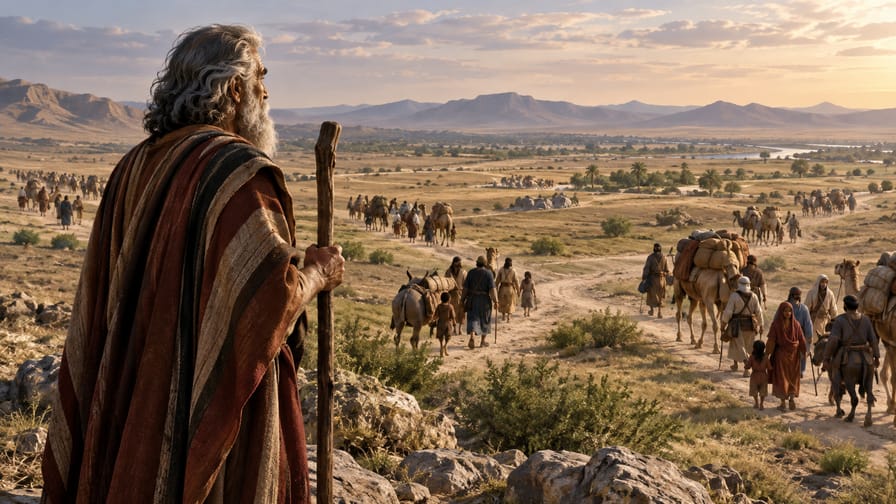
The figure of Peleg, though briefly mentioned in the Scriptures, possesses an onomastic significance and a genealogical placement of profound theological relevance in the biblical narrative. His name is intrinsically linked to one of the most crucial and controversial events in post-diluvian history, the "division of the earth," as recorded in the book of Genesis.
From an evangelical Protestant perspective, the analysis of Peleg transcends his scarce personal biography, focusing on divine sovereignty over humanity and the unfolding of God's redemptive plan. He serves as a chronological and conceptual marker for understanding the origin of nations and linguistic diversity, setting the stage for the Abrahamic covenant and the eventual gathering of all peoples in Christ.
1. Etymology and meaning of the name
The name Peleg (Hebrew: פֶּלֶג, Peleg) is of Hebrew origin and appears in the Old Testament as the son of Eber and father of Reu. Its etymology is directly derived from the Hebrew verbal root פָּלַג (palag), which means "to divide," "to separate," or "to split."
This root is used in various contexts in biblical Hebrew to describe the action of dividing waters, rivers, or even the human body into parts. The name Peleg, therefore, carries the literal meaning of "division" or "separation."
The theological significance of Peleg's name is explicitly declared in Genesis 10:25 and 1 Chronicles 1:19: "To Eber were born two sons: the name of one was Peleg, for in his days the earth was divided and his brother's name was Joktan."
This verse establishes a direct and undeniable connection between the birth of Peleg and an event of great magnitude in human history, the "division of the earth." Although there are no other prominent biblical characters with the same name, the uniqueness of Peleg lies precisely in the profound implication of his name.
The symbolic meaning of the name Peleg is, therefore, that of a historical and prophetic marker. He is not merely a name, but a divinely inspired declaration about a pivotal event that shaped the geography, demography, and linguistics of humanity.
The divine choice of this name for the son of Eber, a descendant of Shem, underscores God's sovereignty over history and God's ability to use even names to convey deep truths and future events.
2. Historical context and biblical narrative
2.1 Family origin and genealogy
Peleg is an antediluvian figure who is part of the Shemite lineage, a descendant of Noah through his son Shem. His genealogy is clearly traced in Genesis 10:25 and reiterated in 1 Chronicles 1:19, where he is identified as the son of Eber and father of Reu.
Peleg's lineage is of utmost importance, as he is in the direct line that leads to Abraham, the father of faith. The genealogical sequence is: Shem, Arphaxad, Shelah, Eber, Peleg, Reu, Serug, Nahor, Terah, and Abraham (Genesis 11:10-26).
He represents the fifth generation after the Flood, a crucial transitional period in human history, marked by the repopulation of the earth and the emergence of new civilizations. The mention of his longevity in Genesis 11:18-19 (he lived 209 years) underlines the gradual decline in post-diluvian life expectancy.
2.2 Main events and biblical passages
The life of Peleg is presented in an extremely concise manner in the Bible, with his main mention occurring in two genealogical passages: Genesis 10:25 and 1 Chronicles 1:19. Both passages state that the earth was "divided" in his days.
The most widely accepted interpretation within evangelical Protestant theology for the "division of the earth" in Peleg's days is the dispersion of humanity and the confusion of languages at the Tower of Babel, as narrated in Genesis 11:1-9.
Although the Babel narrative does not mention Peleg directly, the chronological and thematic proximity between the events suggests a strong correlation. The confusion of languages and the consequent dispersion of peoples from a single location (Babel, in the land of Shinar) resulted in the formation of different nations and cultures, an act of divine division.
The geography associated with this period is, therefore, Mesopotamia, specifically the plain of Shinar, where the Tower of Babel was built (Genesis 11:2). Peleg's relations are with his Shemite ancestors and his descendants, who would form the foundations of future nations.
It is important to note that some commentators suggest that the "division" could have a geological sense, referring to a separation of continents. However, contextual exegesis and the narrative sequence of Genesis strongly favor the interpretation of linguistic and ethnic division as a result of the rebellion at Babel.
3. Character and role in the biblical narrative
The Bible offers no details about Peleg's personal character, his virtues, weaknesses, or significant actions. Unlike figures such as Abraham, Moses, or David, there are no narratives describing his choices, his faith, or his moral challenges.
The absence of information about his personal character does not, however, diminish his importance. Peleg's role in the biblical narrative is primarily genealogical and symbolic, serving as a chronological marker for a crucial event in salvation history.
His main function is to be the "namer" or the "marker" of the division of the earth. He is not a prophet, priest, king, or warrior, but his existence and the meaning of his name point to God's sovereignty over human history and divine judgment upon human arrogance.
Peleg's life, though without notable recorded deeds, is a testament to God's faithfulness in preserving the messianic lineage through Shem, even amidst the dispersion and confusion that followed the rebellion of Babel.
His inclusion in the genealogies of Genesis and Chronicles highlights the importance of each link in the chain of redemptive history. Every name in the genealogy of Christ, however obscure it may seem, has a purpose in God's great plan.
Thus, Peleg's role is that of a silent witness to a divine act of judgment and ordering, which, ironically, would prepare the ground for the future diversity of nations to whom the gospel would be preached.
4. Theological significance and typology
The theological significance of Peleg is intrinsically linked to the event of the Tower of Babel (Genesis 11:1-9) and its ramifications for redemptive history. The "division of the earth" in his days represents a divine judgment upon humanity united in its rebellion against God.
Instead of spreading out and filling the earth according to the divine command (Genesis 9:1), Noah's descendants sought to centralize themselves and build a tower that reached the heavens, in an act of self-sufficiency and defiance of God's authority.
The confusion of languages and the subsequent dispersion of peoples were God's sovereign response to frustrate the human plan and force the fulfillment of His purpose to fill the earth. This event marked the origin of different nations and languages, establishing the ethnic and cultural diversity we know.
Although Peleg is not a direct typological figure of Christ in the classical sense, the event associated with him points to Christ in a significant way. The "division" at Babel is a symbol of the fragmentation caused by sin, of the separation between men and from God.
God's response to this division is the covenant with Abraham (Genesis 12:1-3), through whom all the families of the earth would be blessed. Christ, as the promised Messiah, is the ultimate fulfillment of this promise, the only one capable of gathering what was divided.
The New Testament presents the Holy Spirit at Pentecost (Acts 2:1-11) as the reverse of Babel. Where Babel divided languages and peoples, Pentecost united people from all nations, allowing them to hear the gospel in their own tongues, restoring communication and unity in Christ.
Thus, Peleg's "division" foreshadows the need for a redemptive work that would overcome the fragmentation of sin. Christ is the great reconciler, who breaks down the dividing wall of hostility (Ephesians 2:14) and gathers together in Himself all things, both in heaven and on earth (Ephesians 1:10).
The story of Peleg and the division of the earth also highlights the doctrine of divine sovereignty over history and judgment. God is the one who sets the boundaries of nations (Acts 17:26) and who intervenes in history to accomplish His redemptive purposes, even through acts of judgment.
5. Biblical-theological legacy and canonical references
Peleg's legacy in biblical theology lies primarily in his function as a crucial genealogical link and a chronological marker. His mention in Genesis 10:25 and 1 Chronicles 1:19 establishes his unquestionable position within the biblical canon as part of the Shemite lineage that culminates in Jesus Christ.
Although Peleg did not contribute literary works or direct prophecies, his existence serves to authenticate the narrative of the origin of nations. He is a testament to the historical veracity of the events described in Genesis, which are fundamental to understanding the human condition and God's plan.
In Reformed and evangelical theology, the figure of Peleg and the event of the "division of the earth" are frequently cited to affirm the historicity of the Babel account and the divine origin of linguistic and ethnic diversity. This perspective rejects evolutionary explanations for the formation of languages and cultures.
Commentators such as John Calvin and Matthew Henry, while not dedicating extensive sections to Peleg, recognize the importance of his name as an indicator of the Babel event. They emphasize God's sovereignty in the dispersion of peoples and the subsequent election of Israel as a peculiar people.
Biblical theology views the division in Peleg's days not as an end, but as a prelude to the great work of gathering in Christ. From an elect nation (Israel), God planned to reach all the nations that were divided.
The promise made to Abraham, that through him "all the families of the earth would be blessed" (Genesis 12:3), is the divine answer to the dispersion of Babel. The gospel, preached in diverse languages, is the instrument to gather the descendants of the divided nations into one body in Christ (Galatians 3:8).
Peleg's importance for understanding the canon lies in his contribution to the narrative of God's plan for humanity. He helps to contextualize the need for Israel's election and the universality of salvation in Christ, which transcends all ethnic and linguistic divisions (Colossians 3:11).
In summary, Peleg, with his name meaning "division," is a vivid reminder of divine intervention in human history, of judgment upon rebellion, and of the beginning of the process that would culminate in the glorious gathering of all nations and tongues before God's throne, through the redemptive work of Jesus Christ (Revelation 7:9-10).