


John
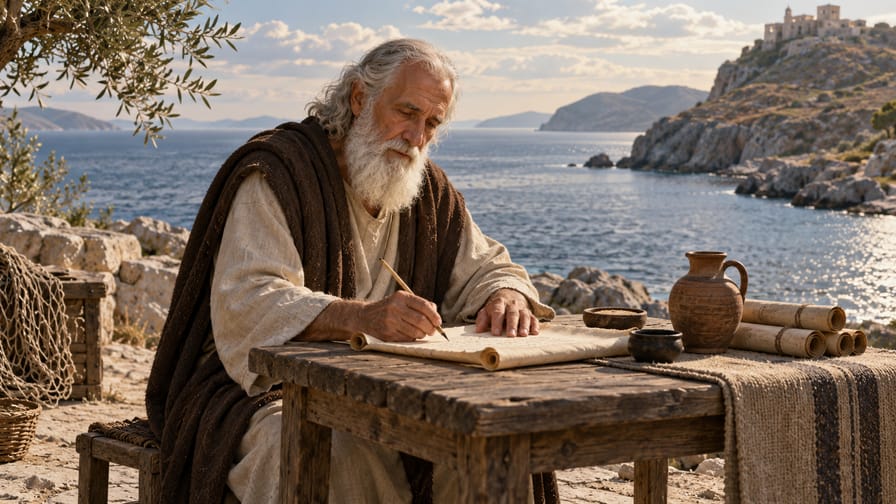
The figure of John, the apostle, occupies a place of singular prominence in biblical narrative and Christian theology. Known as "the disciple whom Jesus loved" (John 21:20), his life and writings offer a profound understanding of the person and work of Christ, as well as the nature of faith, love, and eternal life.
This analysis will delve into the onomastic meaning of John, his historical context, the nuances of his character, his crucial role in the history of redemption, and the lasting theological legacy he left for the Church. From a Protestant evangelical perspective, we will examine the Scriptures as the ultimate authority for understanding this important apostle and evangelist.
1. Etymology and meaning of the name
The name John, in English, derives from the Greek Ioannes (Ἰωάννης), which in turn is a transliteration of the Hebrew Yehohanan (יְהוֹחָנָן). This compound name is a theophory, meaning it contains a divine element.
The etymological root of Yehohanan is formed by two parts: Yeho (יהו), an abbreviated form of the Tetragrammaton YHWH, the personal name of God (Lord), and hanan (חָנַן), which means "to be gracious," "to show favor," or "to have mercy."
Thus, the literal and symbolic meaning of the name John is "Yahweh is gracious" or "God has shown favor." This meaning resonates deeply with the life and ministry of John, who was graced with an intimate relationship with Jesus and with the revelation of divine truths.
Variations of the name appear in different biblical languages and cultures. In the Old Testament, similar names like Hananiah (חֲנַנְיָה) share the same semantic root of divine grace. In the New Testament Greek, Ioannes is the standard form for both John the Baptist and the apostle.
In addition to John the Baptist and John, the apostle, the Bible mentions other characters with this name or variations. For example, John Mark (Acts 12:12), a companion of Paul and Peter and traditionally considered the author of the Gospel of Mark.
The theological significance of the name "God is gracious" is manifested in the life of John. He was chosen by grace to be one of the twelve apostles, witnessed the saving grace of Christ, and, in his writings, emphasized the grace and love of God manifested in Jesus Christ (John 1:16-17 1 John 4:9-10).
2. Historical context and biblical narrative
2.1 Family origin and apostolic call
John was the son of Zebedee and Salome, and brother of James, also one of the twelve apostles. His family had a considerable fishing business on the Sea of Galilee, which suggests a relatively comfortable social status (Mark 1:20). John's mother, Salome, is mentioned among the women who served Jesus and were present at the crucifixion (Mark 15:40).
John's call to follow Jesus is recorded in the Synoptic Gospels. He and his brother James were mending their nets with their father when Jesus called them (Matthew 4:21-22 Mark 1:19-20). This call marked the beginning of a profound and transformative relationship with the Master.
2.2 Key events and relationships
John, along with Peter and James, formed Jesus' inner circle of disciples. They were witnesses to crucial events that other disciples did not observe, such as the resurrection of Jairus's daughter (Mark 5:37), the Transfiguration of Jesus on the mountain (Matthew 17:1-8 Mark 9:2-8 Luke 9:28-36), and Jesus' agony in Gethsemane (Matthew 26:36-46 Mark 14:32-42).
John's relationship with Jesus was particularly intimate. He is frequently identified as "the disciple whom Jesus loved" (John 13:23 19:26 20:2 21:7 21:20). At the Last Supper, John reclined on Jesus' breast (John 13:23). He was the only apostle present at the foot of the cross, where Jesus entrusted him with the care of his mother, Mary (John 19:26-27).
After the resurrection, John and Peter were the first to run to the empty tomb (John 20:3-10). They also played prominent roles in the early church, as evidenced in the book of Acts, where they are seen preaching, healing, and facing persecution together (Acts 3:1-10 4:1-22 8:14-25).
The geography of his life spans Galilee, where he was called Jerusalem, where he witnessed the passion, death, and resurrection of Jesus and Pentecost and Ephesus, where tradition places him as a leader of the church in the late first century. The island of Patmos is the location of his exile and the apocalyptic revelation (Revelation 1:9).
3. Character and role in the biblical narrative
3.1 Transformations in John's character
John's character, as revealed in the Scriptures, demonstrates a remarkable transformation. Initially, he and his brother James were nicknamed by Jesus Boanerges (Βοανεργές), which means "Sons of Thunder" (Mark 3:17). This nickname reflected their impetuous and, at times, intolerant nature.
Evidence of this impetuosity includes the episode where they wished to call down fire from heaven on a Samaritan village that did not welcome Jesus (Luke 9:54). They also manifested ambition when their mother asked Jesus for her sons to sit at His right and left in His kingdom (Matthew 20:20-24 Mark 10:35-41).
Despite these initial traits, his time with Jesus and the action of the Holy Spirit profoundly shaped John. He became the apostle of love, truth, and light, as evidenced in his writings. His loyalty to Jesus is undeniable, being the only apostle to remain with Jesus at the cross (John 19:26).
3.2 Vocation and apostolic role
John's vocation was that of an apostle, one "sent" with authority from Christ to witness His life, death, and resurrection. He was one of the "pillars" of the early church in Jerusalem, alongside Peter and James (Galatians 2:9). His role was fundamental in the founding and expansion of Christianity.
His significant actions include bold preaching after Pentecost (Acts 4:1-22), the healing of the lame man at the Temple gate (Acts 3:1-10), and his mission to Samaria to pray for new converts to receive the Holy Spirit (Acts 8:14-17). He was a spiritual leader and a guardian of sound doctrine.
At the end of his life, John was exiled to the island of Patmos because of the Word of God and the testimony of Jesus (Revelation 1:9). There, he received and recorded the visions that comprise the book of Revelation, revealing the future and the consummation of God's plan.
4. Theological significance and typology
4.1 Role in redemptive history and progressive revelation
John plays a central role in redemptive history, especially through his writings, which offer a unique perspective on the person of Jesus Christ. His Gospel, in particular, is a profound theological meditation on the incarnation of the Logos (Λόγος), the eternal Word of God (John 1:1-14).
Progressive revelation is clearly seen in the way John presents Jesus. He focuses not so much on miracles as proof of divinity, but on "signs" (John 2:11) that reveal the glory of Christ and invite faith. He emphasizes Jesus' discourses on His divine identity ("I Am") and His relationship with the Father.
4.2 Christocentric typology and theological themes
Although John is not a typological figure in the sense of directly prefiguring Christ like some Old Testament characters, his writings are intensely Christocentric and reveal the fullness of typology found in Jesus. He shows us how Christ is the fulfillment of all divine hopes and promises.
The central theological themes in John's writings are vast and profound. He emphasizes the divinity of Jesus, His preexistence, and His unity with the Father (John 10:30 14:9). Salvation is presented as eternal life, accessible by faith in Christ (John 3:16 5:24).
The doctrine of the new birth, the necessity of being born of the Spirit, is articulated in John 3:3-8. Love (agape, ἀγάπη) is a dominant theme, not only God's love for humanity, but also the mutual love that should characterize Jesus' disciples (John 13:34-35 1 John 4:7-21).
Other themes include truth, light versus darkness, fellowship with God, and the importance of abiding in Christ (John 15:1-11). The Holy Spirit is presented as the Parakletos (Παράκλητος), the Comforter and Teacher who guides believers into all truth (John 14:16-17 16:13).
The book of Revelation, authored by John, is the pinnacle of prophetic revelation, culminating in the glorious coming of Christ, the final judgment, and the establishment of the new heavens and new earth (Revelation 21-22). It connects the Old Testament promises with their final fulfillment in Christ, revealing God's sovereignty over history.
5. Biblical-theological legacy and canonical references
5.1 Literary contributions and influence on biblical theology
John's legacy is inseparable from his canonical literary contributions. He is traditionally credited as the author of the fourth Gospel, the three Epistles of John (1 John, 2 John, 3 John), and the book of Revelation. These five books comprise a significant and theologically rich portion of the New Testament.
His Gospel is unique in its style and content, complementing the Synoptics and offering a more developed theological perspective on Jesus' identity. The epistles deepen themes such as the assurance of salvation, the importance of brotherly love, and the warning against false teachings.
Revelation, in turn, is the only prophetic book of the New Testament and the climax of biblical revelation, providing an eschatological vision of Christ's ultimate victory over evil and the establishment of His eternal kingdom. John's influence on biblical theology is therefore immense, especially in Christology, soteriology, and eschatology.
5.2 Presence in interpretive tradition and Reformed theology
The figure of John and his writings have been the subject of intense study and veneration in both Jewish and Christian interpretive tradition. Although not mentioned in intertestamental literature, his presence is felt in the continuity of messianic revelation.
In Reformed and evangelical theology, John is revered as a profound theologian and a faithful witness of Christ. His Gospel is often studied for its clarity in presenting the divinity of Jesus and the necessity of faith for salvation, aligning with the Reformed emphasis on God's sovereignty and grace.
The doctrine of election and the perseverance of the saints finds an echo in Johannine passages that speak of the security of those who are in Christ (John 10:27-29). The centrality of Christ as the only way to the Father (John 14:6) is a pillar of evangelical theology.
The Reformers, such as Calvin, valued John's theological depth and his emphasis on the glory of God. The interpretation of Revelation, though varied, is generally seen as a testimony to divine sovereignty and Christ's ultimate triumph, encouraging the perseverance of believers in the midst of persecution.
John's importance for understanding the canon is undeniable. His writings not only complement and deepen the narrative of the other Gospels and Acts but also provide the consummation of prophetic revelation and the final vision of God's redemptive plan, uniting the beginning and the end of salvation history in Christ Jesus.