


Gideon
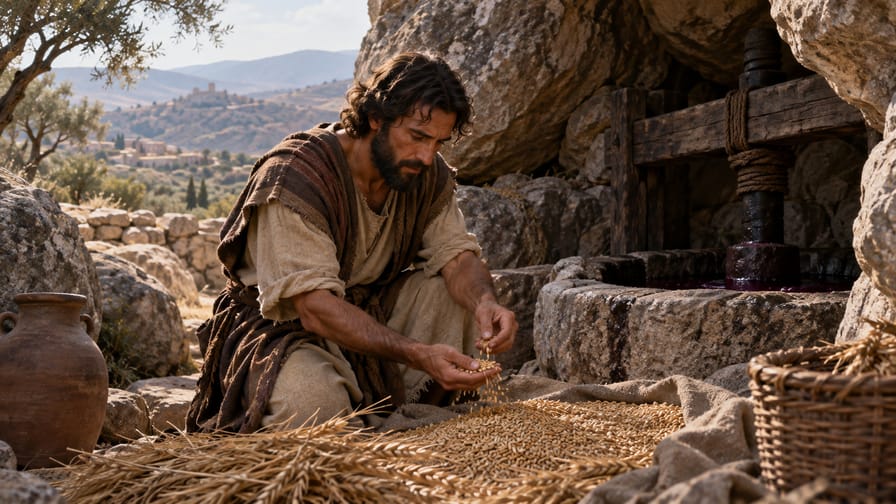
The figure of Gideon emerges as one of the most prominent judges of Israel's pre-monarchic period, as recorded in the book of Judges, chapters 6 to 8. His narrative is a vivid testimony to the cycle of apostasy, oppression, crying out to God, and deliverance that characterized the era of the judges. The story of Gideon is not merely a historical account of a military leader, but a profound study of character, faith, weakness, and divine sovereignty, offering rich theological lessons for the evangelical Protestant faith.
From a Reformed perspective, Gideon's life illustrates God's grace in using imperfect instruments to fulfill His redemptive purposes, emphasizing that salvation and victory belong to the Lord. His story is fertile ground for exegesis, revealing crucial themes such as the divine call, spiritual warfare, the importance of obedience, and the consequences of idolatry, all viewed through the lens of the inerrant authority of the Holy Scriptures.
1. Etymology and Meaning of the Name
The name Gideon, in Hebrew, is גִּדְעוֹן (Gid'on). This name derives from the Hebrew verbal root גדע (gāḏaʿ), which means "to cut down," "to fell," "to hew down," or "to destroy." Thus, the literal meaning of the name Gideon is often interpreted as "cutter," "hewer," "one who cuts," or "destroyer."
This onomastic meaning is deeply resonant with the role Gideon would play in the history of Israel. His first significant action, even before leading the army, was to tear down the altar of Baal and the Asherah pole that belonged to his own father, Joash (Judges 6:25-27). This action of "cutting down" and "destroying" idolatry set the tone for his calling as Israel's deliverer from Midianite oppression, which involved the destruction of their enemies.
Furthermore, the name Gideon is also associated with the name Jerubbaal (Yerubba'al), which means "let Baal contend with him" or "Baal contends." This name was given to him by the inhabitants of Ophrah after he destroyed the altar of Baal, in recognition of his direct challenge to the Canaanite god (Judges 6:32). Although Gideon is his birth name, Jerubbaal becomes an epithet that encapsulates his function of confronting and overcoming idolatry.
There are no other prominent biblical characters with the name Gideon. The uniqueness of the name and its prophetic significance underscore the importance and specificity of the mission God entrusted to this judge. Evangelical theology sees in the meaning of the name a prefiguration of the character and work God would accomplish through him, demonstrating divine sovereignty in the choosing and enabling of His servants.
2. Historical Context and Biblical Narrative
2.1. The Time of the Judges and Midianite Oppression
Gideon's narrative is set within the period of the judges, a turbulent era in Israel's history that spanned approximately the twelfth to eleventh centuries B.C., after the conquest of Canaan and before the establishment of the monarchy. This period is characterized by a cyclical pattern of apostasy, foreign oppression, the people's cry to God, and subsequent deliverance through a judge raised up by the Lord.
The Midianite oppression, detailed in Judges 6:1-6, was particularly severe. For seven years, the Midianites, Amalekites, and other peoples from the East invaded Israel after the harvest, devastating the lands and stealing livestock and agricultural produce, leaving the Israelites impoverished and forced to hide in caves and strongholds. This desperate situation was the catalyst for Israel's cry to the Lord, who then raised up Gideon.
2.2. The Divine Call and the Destruction of Idolatry
Gideon was the son of Joash, from the family of Abiezer, of the tribe of Manasseh, and resided in Ophrah (Judges 6:11). His divine call occurred while he was secretly threshing wheat in a winepress to hide it from the Midianites, an act that reveals the fear and insecurity that permeated the lives of the Israelites. The Angel of the Lord (often interpreted as a theophany or pre-incarnate christophany) greeted him as a "mighty warrior" (Judges 6:12), a designation that contrasted with his initial self-assessment of weakness and insignificance (Judges 6:15).
Despite his hesitation and the demand for multiple signs – the fire consuming the offering (Judges 6:17-21) and the two tests with the fleece of wool (Judges 6:36-40) – Gideon obeyed God's initial command. He destroyed the altar of Baal and his father's Asherah pole during the night, fearing the reaction of the men of his city (Judges 6:25-27). This courageous action, though carried out cautiously, marked the beginning of his leadership and earned him the name Jerubbaal.
2.3. The Victory Over Midian and Its Consequences
The Lord demonstrated His sovereignty remarkably by reducing Gideon's army from 32,000 to just 300 men (Judges 7:2-8). God did this so that Israel could not boast in their own strength, but would recognize that victory came from the Lord. The divine military strategy, involving trumpets, empty jars, and torches, resulted in panic and confusion among the Midianites, who turned against one another (Judges 7:16-22).
After the initial victory, Gideon pursued the Midianite kings, Zebah and Zalmunna, beyond the Jordan. During the pursuit, he faced refusal of help from the Israelite cities of Succoth and Penuel, promising vengeance (Judges 8:4-9). After capturing the kings, Gideon executed them in retribution for the death of his brothers on Mount Tabor (Judges 8:10-21). The geography of the narrative covers the Jezreel Valley, the Jordan, and regions east of the river, showing the extent of the campaign.
The men of Israel, impressed with his leadership, offered Gideon kingship, so that he and his descendants would rule over them. Gideon, however, refused, correctly stating: "The Lord will rule over you" (Judges 8:22-23). Despite this apparent refusal of power, he requested a portion of the gold spoils, with which he made an ephod, which became a spiritual snare for Israel, leading them back into idolatry (Judges 8:24-27). Gideon had many sons and died at an old age, and the land had peace for forty years (Judges 8:28, 32).
3. Character and Role in the Biblical Narrative
3.1. Virtues and Weaknesses of a Leader
Gideon's character is complex and multifaceted, revealing a mixture of faith, courage, and notable human weaknesses. Initially, he is presented as a timid and insecure man, hiding from the Midianites and questioning God's presence amidst Israel's affliction (Judges 6:11-13). His reluctance to accept the divine call and his insistence on signs (the fleece of wool) demonstrate a faith that, though present, was wavering and required constant divine reassurance (Judges 6:36-40).
However, once Gideon was convinced of God's will, he demonstrated courage and obedience. His action of destroying the altar of Baal and Asherah, even under the cloak of night and fearing the reaction of his city, was an act of faith and defiance against idolatry (Judges 6:27). His military leadership, though peculiar in the divine strategy of reducing the army, revealed prudence and a growing trust in God's power to bring about victory (Judges 7:15-22).
Despite his virtues, Gideon was not immune to flaws. His vengeance against the cities of Succoth and Penuel, which refused to help his exhausted army, was an act of cruelty that exceeded divine justice (Judges 8:14-17). He killed the elders of Succoth and tore down the tower of Penuel, demonstrating a ruthless side and perhaps motivated by wounded pride or a distorted sense of justice.
3.2. The Snare of the Ephod
Gideon's most significant failure, with lasting consequences for Israel, was the creation of the golden ephod (Judges 8:24-27). Although he refused the crown, stating that "the Lord will rule over you," his action of creating an object of worship from the gold spoils became a "snare" (moqesh) and an object of idolatry for Israel. Instead of being a memorial of the Lord's victory, the ephod diverted the people's worship to itself, a sad example of how good human intentions can lead to apostasy.
This action demonstrates the fragility of human nature, even in those whom God uses powerfully. Gideon's refusal of kingship was commendable, but his error with the ephod subverted the principle he had articulated. His life, therefore, serves as a powerful reminder that faith must be constantly nourished by God's Word and by exclusive worship of Him, lest one fall into spiritual deviations.
3.3. Gideon's Role as Judge
Gideon's role in the biblical narrative was that of a judge and military deliverer, raised up by God to rescue Israel from foreign oppression. He was not a prophet in the traditional sense, nor a priest, but a charismatic leader gifted by God for a specific purpose. His story highlights God's sovereignty in choosing and empowering ordinary people to accomplish His extraordinary plans, revealing His strength in human weakness (cf. 1 Corinthians 1:27-29).
His character development, from a fearful man to a courageous and victorious leader, illustrates the transformative power of divine intervention. However, his subsequent failures demonstrate that even heroes of faith are sinners and require grace and continuous vigilance against temptation and pride.
4. Theological Significance and Typology
4.1. Gideon in Redemptive History
Gideon's story plays a significant role in Israel's redemptive history and in the progressive revelation of God's plan. It fits the theological pattern of the book of Judges, which demonstrates God's faithfulness in rescuing His people despite their continuous unfaithfulness. Gideon is an example of God's grace who, in response to Israel's cry, raises up a deliverer to restore order and proper worship.
The narrative emphasizes divine sovereignty in the choosing and empowering of Gideon. God did not choose the strongest or the most courageous, but a man who saw himself as the least in his family and tribe (Judges 6:15). This reinforces the biblical theme that God's strength is made perfect in human weakness, glorifying Him and not man (cf. 2 Corinthians 12:9). The victory over Midian, with only 300 men, is irrefutable testimony that "salvation belongs to the Lord" (Psalm 3:8).
4.2. Christocentric Typology and Theological Themes
Although Gideon is not a direct and perfect typological figure of Christ, his story contains elements that prefigure aspects of Christ's work. As a deliverer of his people from oppression, Gideon points to Christ as the supreme Deliverer who rescues His people from sin and death. The way God uses the weak and unlikely to accomplish great deeds through Gideon can be seen as a foreshadowing of the "foolishness" of the preaching of the cross, by which God saves those who believe, contrary to human wisdom (1 Corinthians 1:18-25).
Gideon's obedience to divine commands, even when they seemed illogical (such as the reduction of the army and the battle strategy), highlights the theme of faith and obedience as essential for spiritual victory. However, Gideon's failures, especially the creation of the idolatrous ephod, highlight the need for a perfect and sinless deliverer, who is Jesus Christ. Christ not only delivers but also is the exclusive object of worship, without deviations or snares.
Gideon's story also connects to central theological themes such as God's providence, election, grace, judgment on idolatry, and the persistence of sin even among God's people. Gideon's insistence on signs, though revealing his weakness of faith, also demonstrates God's patience in dealing with His imperfect servants, reaffirming His calling and promises.
4.3. Mention in the New Testament
Gideon's theological relevance is confirmed in the New Testament, where he is listed among the heroes of faith in Hebrews 11:32. This mention is crucial, as it validates his faith despite his hesitations and failures. The author of Hebrews includes him in the gallery of those who, "by faith," "conquered kingdoms, administered justice, obtained promises, shut the mouths of lions."
This New Testament reference offers a redemptive perspective on Gideon. It is not his perfections that are celebrated, but his faith in God that enabled him to fulfill divine purpose, despite his flawed humanity. This resonates with evangelical theology which emphasizes salvation by grace through faith, and not by works or human perfection (Ephesians 2:8-9).
5. Biblical-Theological Legacy and Canonical References
5.1. Influence on Biblical Theology
Gideon's legacy in biblical theology is multifaceted. His story is a primary example of how God uses the unlikely and the weak to manifest His glory and power. This truth is recurrent throughout Scripture and is a foundation for understanding election and divine calling. The reduction of the army is an enduring symbol of total dependence on God for victory, a vital lesson for the community of faith in all ages.
Gideon's narrative also serves as a warning against idolatry and the temptation to create forms of worship or objects that divert attention from the Lord. Gideon's ephod is a somber reminder of how even pious leaders can inadvertently introduce practices that lead the people into sin. This aspect is particularly relevant for Reformed theology, which emphasizes the purity of worship and the exclusivity of God's glory (soli Deo gloria).
5.2. Presence in Interpretive Tradition
In the Jewish and Christian interpretive tradition, Gideon is generally seen as one of Israel's great deliverers, a man of faith, but also an example of the complexity of human nature. Evangelical commentators, such as John Gill and Matthew Henry, often highlight God's patience with Gideon's hesitation and divine providence in victory, while simultaneously criticizing his failures, such as his vengeance and the ephod.
Reformed theology, in particular, uses Gideon's story to illustrate the doctrine of God's sovereignty in salvation and in history. Calvinists and other Reformed theologians see in the choice of Gideon and the victory of the 300 men a clear demonstration that God does not depend on human strength or wisdom, but acts according to His own purposes and power. Gideon's faith, though imperfect, is a testimony to the work of the Holy Spirit in empowering believers.
5.3. Importance for Understanding the Canon
Gideon's story is indispensable for understanding the biblical canon, especially with regard to the book of Judges and the transition to the monarchy. His initial refusal of kingship, though followed by a deviation with the ephod, underscores Israel's theocratic vision, where God is the true King. This prepares the ground for the subsequent institution of the monarchy, which would be a concession to the people's demand, but still under God's sovereignty.
Gideon's narrative, with its victories and failures, contributes to a realistic understanding of faith and the Christian life. It shows that God uses real people, with their fears and imperfections, to accomplish His plans, but also that spiritual vigilance and continuous obedience are crucial to avoid deviations. The inclusion of Gideon in Hebrews 11 solidifies his place as an example of faith that inspires and warns the church in all generations.