


Ezer
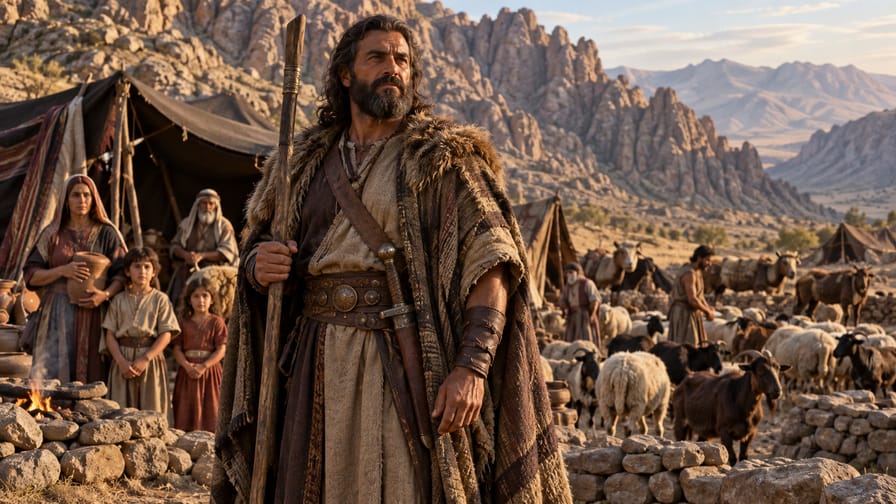
Ezer is one of the least known names in the book of Genesis. He was a son of Seir the Horite and one of the chiefs of the Horite clans who lived in the land of Seir, the mountainous region later known as Edom, before the descendants of Esau took possession of it. His name appears only in two genealogical lists: Genesis 36:21, 27, 30 and the parallel passage in 1 Chronicles 1:38, 42.
The Bible records no words, deeds or personal story of Ezer. What Scripture preserves is his place in a family tree: his father, his brothers, his sons and his title of chief. Even so, his name stands inside a chapter that shows how God fulfilled his word to Esau and how the history of the nations around Israel was also under the hand of the Lord.
This article reads these few verses carefully, without adding facts the text does not give, and asks what an obscure Horite chief can teach the reader of the Bible today.
1. Etymology and meaning of the name
In Hebrew the name is written אֵצֶר (ʼEṣer), with the letters aleph, tsade and resh. Many lexicons connect it with the root ʼāṣar, “to store up, to lay up in store”, the same root behind the noun ʼôṣār, “treasure, storehouse”. For this reason the name is usually explained as “treasure” or “store”. Since Ezer was a Horite and not an Israelite, however, his name may come from a non-Hebrew language, so this meaning should be held with some caution.
This name must not be confused with another one that looks identical in many translations: ʻĒzer (עֵזֶר), written with ayin and zayin, which means “help”. That second name belongs to several Israelites (1 Chronicles 4:4; 7:21; 12:9; Nehemiah 3:19; 12:42). They are different men, from a different people and from other periods, and in Hebrew even their names are spelled differently. The Horite chief of Genesis 36 has nothing to do with them.
2. Historical context and biblical narrative
2.1 Family origin and genealogy
Genesis 36 is the chapter of the generations of Esau. After listing the wives, sons and chiefs of Esau, the text turns in verse 20 to “the sons of Seir the Horite, the inhabitants of the land”. Seir here is the ancestor of the Horite population of the region that bears the same name. His sons are listed as Lotan, Shobal, Zibeon, Anah, Dishon, Ezer and Dishan (Genesis 36:20-21; 1 Chronicles 1:38). Ezer is thus the sixth of the seven sons named.
Verse 27 names the sons of Ezer: Bilhan, Zaavan and Akan. The parallel in 1 Chronicles 1:42 gives the third name as Jaakan, a small spelling variant that is common in ancient genealogies. Nothing is said about the wife or the daughters of Ezer.
The Horites are mentioned elsewhere as the early inhabitants of Mount Seir. In the days of Abraham, Chedorlaomer and his allies defeated them “in their hill country of Seir” (Genesis 14:6). Deuteronomy explains that the sons of Esau dispossessed them and settled in their place (Deuteronomy 2:12, 22). The identity of the Horites is debated. Some scholars link them to the Hurrians known from ancient Near Eastern texts; others connect the name with the Hebrew ḥôr, “cave”, and think of cave dwellers in the rocky land of Seir. Neither view is certain, and Scripture itself simply presents them as the people who lived in Seir before Edom.
2.2 Main events
The Bible narrates no event in the life of Ezer. We know only three things: he was a son of Seir, he had three sons, and he was one of the chiefs of the Horites. Verses 29 and 30 list these chiefs “according to their chiefs in the land of Seir”: Lotan, Shobal, Zibeon, Anah, Dishon, Ezer and Dishan. The Hebrew word translated “chief” is ʼallûp, a clan leader, the same title the chapter uses for the chiefs of the line of Esau (Genesis 36:15-19, 40-43).
The chapter does show that Horite and Edomite families were joined by marriage. Timna, the sister of Lotan and therefore a daughter of Seir, became the concubine of Eliphaz, son of Esau, and bore Amalek (Genesis 36:12, 22). Esau married Oholibamah, daughter of Anah (Genesis 36:2, 14, 25). Ezer therefore belonged to a family that became tied to the house of Esau, although the text says nothing about any personal role he played in these alliances.
Some have suggested that the place called Beeroth Bene-jaakan, “the wells of the sons of Jaakan”, where Israel camped in the wilderness (Numbers 33:31-32; Deuteronomy 10:6), took its name from Jaakan, the son of Ezer. This is only a hypothesis: the Bible does not make the connection.
3. Character and role in the biblical narrative
Because no deed or saying of Ezer is recorded, we cannot describe his character, his faith or his feelings. Any portrait beyond the genealogical facts would be invention. What can be said is that he held authority among his people as a clan chief and that his line was important enough to be remembered by the historians of Israel.
His role in the narrative is structural. Genesis 36 closes the account of Esau before the book turns to Jacob and Joseph (Genesis 37:1-2). The Horite list shows who lived in Seir before the descendants of Esau came to dominate the land. In that sense Ezer belongs to the background against which the blessing spoken over Esau (Genesis 27:39-40) and the gift of Mount Seir to Esau (Deuteronomy 2:5) were worked out in history.
4. Theological significance
4.1 God rules the history of the nations
Deuteronomy states that it was the Lord who destroyed the Horites before the sons of Esau (Deuteronomy 2:22) and that he gave Mount Seir to Esau as a possession (Deuteronomy 2:5). The names of Ezer and his brothers remind us that the God of Israel is not a tribal deity. He governs the rise and fall of peoples far outside the covenant line and determines their times and boundaries (Acts 17:26).
4.2 The value of genealogies
Lists like Genesis 36 are often skipped, yet they are part of inspired Scripture (2 Timothy 3:16). They anchor the biblical story in real families and real places. Centuries later the Chronicler repeated this Horite list (1 Chronicles 1:38-42) inside the great genealogy that runs from Adam to the people of God. Nothing in the text makes Ezer a type of Christ, and it would be forced to read one into him. The point is simpler: the story of redemption unfolds in real human history, among real clans and chiefs, until the promised son of Abraham appears (Matthew 1:1).
5. Legacy and canonical references
Ezer the Horite appears in five verses. In Genesis 36:21 he is named among the sons of Seir the Horite. In Genesis 36:27 his sons Bilhan, Zaavan and Akan are listed. In Genesis 36:30 he is counted among the Horite chiefs in the land of Seir. 1 Chronicles 1:38 repeats his place among the sons of Seir, and 1 Chronicles 1:42 lists his sons Bilhan, Zaavan and Jaakan. He is not mentioned in the New Testament.
His legacy is modest: a name in a list, a clan among the Horites, a family that eventually disappeared as a distinct people when Edom took the land. The Bible does not tell us what became of his descendants.
6. Application for today
The name Ezer probably means “treasure”, yet nothing of his wealth or power has survived. Only his name remains, preserved because it was woven into the record of the dealings of God with Esau and Israel. That is a sober reminder of the words of Jesus: treasures stored up on earth do not last, while treasures stored up in heaven do (Matthew 6:19-21).
Ezer also teaches us patience with the “dry” pages of the Bible. When we read a list of names, we are reading about real people whom God saw and whose history he governed. The same God knows our names, even when the world forgets them. The name that finally matters is not written in a clan list of Seir but in the book of life of the Lamb (Revelation 21:27; Luke 10:20).
Finally, the chapter where Ezer appears shows that God keeps his word, even to Esau, who was not the heir of the promise. If the Lord was faithful to that word, how much more will he be faithful to the promises that find their yes in Christ for all who trust in him (2 Corinthians 1:20).