


Anak
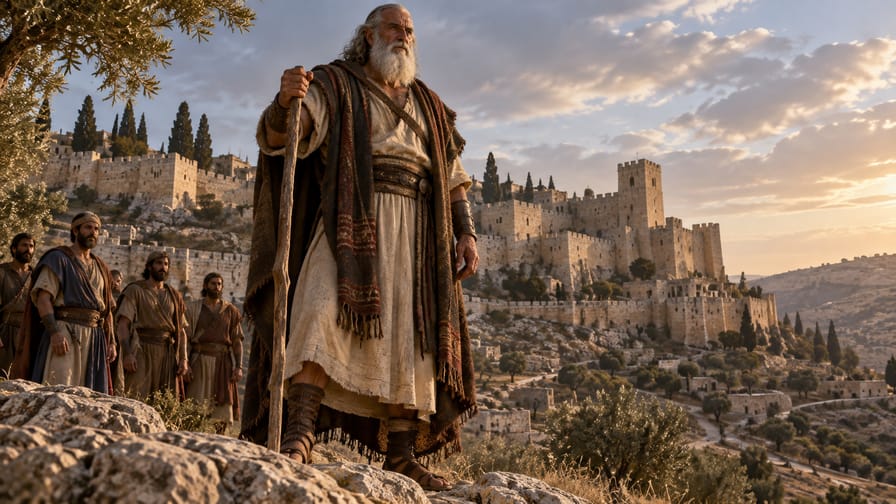
The figure of Anak (Hebrew: עֲנָק, ʿĂnāq) and his descendants, the Anakim (בְּנֵי הָעֲנָק, Benei HāʿĂnāq), occupies a peculiar and significant place in the biblical narrative of the Old Testament. Although not an individual character with a detailed biography, Anak represents a clan or a people of great stature and strength, whose characteristics and presence in the land of Canaan became a formidable obstacle for Israel. The analysis of Anak, therefore, focuses more on his collective role and the theological impact that his existence and eventual defeat had on the faith and history of God's people.
From an evangelical Protestant perspective, the history of the Anakim, led by figures such as Arba and his sons (Ahiman, Sheshai, and Talmai), is a powerful illustration of God's sovereignty, the importance of faith in His promises, and the reality of spiritual battle. They serve as a vivid reminder that the most intimidating challenges can be overcome by trust in divine power, in contrast to human unbelief that leads to failure.
This analysis will seek to explore the etymology of the name, the historical and narrative context, the collective "character," the theological significance and associated typology, as well as the biblical-theological legacy of Anak and his descendants, as revealed in the Holy Scriptures.
1. Etymology and meaning of the name
The name Anak, in Hebrew עֲנָק (ʿĂnāq), is of uncertain etymology, but generally associated with concepts of "neck" or "necklace." Some scholars suggest a derivation from the root meaning "necklace" or "neck ornament," perhaps indicating a prominent figure or authority. However, the most common and widely accepted interpretation, especially in the biblical context, is that of "long-necked man" or "giant."
This interpretation aligns perfectly with the description of the descendants of Anak, the Anakim, as people of great stature and strength. The Israelites described them as "giants" (נְפִלִים, Nephilim) or "sons of Anak" (בְּנֵי הָעֲנָק, Benei HāʿĂnāq), a formidable race that instilled great fear in the hearts of the spies, as narrated in Numbers 13:33.
The literal meaning of "neck" or "necklace" can also, more figuratively, evoke the idea of something prominent, elevated, or even a yoke or burden. In the biblical context, however, the connotation of stature and physical strength is the one that prevails, making the name Anak synonymous with "giant" for the ancient Israelites.
There are no other biblical characters with the exact name Anak he seems to function more as an eponymous ancestor or the name of a prominent clan, from which the "sons of Anak" derived their identity. This is similar to how the term "sons of Israel" refers to an entire people.
The theological significance of the name lies in its ability to evoke an image of power and intimidation. The mere mention of Anak or the Anakim was enough to terrify the Israelites, testing their faith in God's promise to give them the land, despite its formidable inhabitants. The name, therefore, personifies the challenge of unbelief and the need to trust in the superiority of divine power over human strength.
2. Historical context and biblical narrative
The figure of Anak and his descendants is placed in the historical period of Israel's conquest of Canaan, approximately between the 15th and 13th centuries B.C., according to traditional biblical chronology. This era was marked by a complex tapestry of Canaanite city-states, each with its own kings and deities, and the presence of various ethnic groups, including the Rephaim (רְפָאִים, Rephaim), a people known for their tall stature, from which the Anakim seem to be an offshoot or distinct clan.
The Anakim were notorious for their stature and physical strength, being described as a lineage of giants. Deuteronomy 2:10-11 and 2:20-21 connect them to the Emim and Zamzumim, peoples who were also considered giants and were dispossessed by other nations. The presence of these gigantic peoples was a reality in the ancient Levant, as indicated by archaeological finds and extrabiblical records that mention large-bodied groups.
2.1 Family origin and genealogy
The Bible does not provide a detailed genealogy for Anak as an individual, but rather for his descendants. The most prominent ancestor of the Anakim is Arba (אַרְבַּע, ʾArbaʿ), who is called "the greatest man among the Anakim" (Joshua 14:15). He is the founder of Kiriath-Arba (קִרְיַת־אַרְבַּע, Qiryat-ʾArbaʿ), which later became Hebron, one of the most important cities in the history of Israel.
The main sons of Anak mentioned are Ahiman (אֲחִימָן, ʾĂḥîmān), Sheshai (שֵׁשַׁי, Šēšay), and Talmai (תַּלְמַי, Tālmāy), who were chiefs of the Anakim clans and resided in Hebron (Numbers 13:22). These three names are also mentioned in Joshua 15:14 and Judges 1:10 as those who were driven out by Caleb.
2.2 Main events and biblical passages
The first and most impactful mention of the Anakim occurs during the account of the twelve spies sent by Moses to scout the land of Canaan (Numbers 13). Ten of the spies returned with a disheartening report, highlighting the strength of the land's inhabitants, particularly the Anakim.
They said: "The land, through which we have gone to spy it out, is a land that devours its inhabitants and all the people whom we saw in it are men of great stature. And there we saw the Nephilim (the sons of Anak, who come from the Nephilim), and we seemed to ourselves like grasshoppers, and so we seemed to them." (Numbers 13:32-33). This report of fear and unbelief led to Israel's rebellion and the condemnation of forty years of wandering in the wilderness.
Despite the initial fear, God reiterated His promise to Israel. In Deuteronomy 1:28 and 9:2, Moses reminds the people of the threat of the Anakim and encourages them not to fear, for the Lord their God would go before them. The defeat of the Anakim became a symbol of God's faithfulness and the effectiveness of faith.
During the conquest of the land under Joshua, the destruction of the Anakim was a crucial point. Joshua 11:21-22 reports that Joshua "cut off the Anakim from the hill country—from Hebron, from Debir, from Anab, and from all the hill country of Judah, and from all the hill country of Israel. Joshua devoted them to destruction with their cities. There was none of the Anakim left in the land of the people of Israel, except only in Gaza, in Gath, and in Ashdod."
The glory of the victory over the Anakim is particularly attributed to Caleb, the faithful spy. As a reward for his unwavering faith, Caleb asked for Hebron, the stronghold of the Anakim, as his inheritance (Joshua 14:12). Joshua 14:15 records that the former name of Hebron was Kiriath-Arba, referring to Arba, the "greatest man among the Anakim."
Caleb, with God's help, fulfilled his promise and drove out the three sons of Anak — Ahiman, Sheshai, and Talmai — from Hebron (Joshua 15:13-14 Judges 1:10). This event sealed the defeat of the Anakim in the heart of Judah, demonstrating that faith and obedience overcome any human obstacle.
3. Character and role in the biblical narrative
The "character" of Anak and the Anakim, as presented in the Bible, is essentially that of a formidable enemy and a physical representation of strength and intimidation. They are not characters with moral dilemmas or psychological development instead, their function in the narrative is that of a colossal obstacle that God had promised to overcome for His people.
The Scriptures portray them as the epitome of what Israel feared in the promised land. Their great stature and strength, the experience of the spies in Numbers 13:33, and their reputation as descendants of giants, contributed to their image of invincibility in human eyes. They were living proof of the "impossibility" of conquest, from the perspective of unbelief.
The biblical narrative does not attribute specific sins or moral failings to the Anakim, beyond being part of the Canaanite peoples who had filled the measure of their iniquity (Genesis 15:16). Their primary role is to serve as a test for Israel's faith and a means for God to demonstrate His power and faithfulness. They represent the barrier that faith must cross and unbelief cannot.
The calling or function of the Anakim in redemptive history is, paradoxically, that of catalysts for faith. By presenting such an imposing challenge, they forced Israel to make a decision: to rely on their own strength and perish, or to trust in the power of Yahweh and inherit the promise. The failure of the first generation at Kadesh-Barnea (Numbers 14) is a tragic testimony to the power of fear over faith.
In contrast, the story of Caleb (Joshua 14) illustrates the triumph of faith over fear. Caleb, a man of eighty-five years, asked for the hill country where the Anakim dwelt, saying: "Perhaps the Lord will be with me, and I shall drive them out just as the Lord said." (Joshua 14:12). His action was a key decision that demonstrated obedience and trust in divine promises, even in the face of a seemingly insurmountable enemy.
In sum, the "character" of Anak and his descendants is that of a symbol: a symbol of the intimidation that the fallen world presents to the people of God, but also a symbol of the victory that is possible through faith. They are a vivid reminder that "Not by might, nor by power, but by my Spirit, says the Lord of hosts." (Zechariah 4:6).
4. Theological significance and typology
The theological significance of Anak and the Anakim is profound and multifaceted, serving as a landmark in Israel's redemptive history and offering eternal principles for evangelical faith. They represent a concrete example of the opposition that God's people face when seeking to fulfill the divine will and inherit the promises of the Lord.
The presence of the Anakim in Canaan highlighted the supernatural nature of the conquest of the Promised Land. It was not merely a military campaign, but a holy war where God fought for His people. The defeat of the Anakim was not primarily a military victory for Israel, but a demonstration of God's sovereignty over all forces, human or superhuman (Deuteronomy 9:3).
The Anakim function as a prefiguration or typology of broader spiritual obstacles. They symbolize the "giants" of unbelief, fear, sin, and demonic forces that oppose the advancement of the Kingdom of God and the spiritual inheritance of believers. Just as the Anakim were a physical barrier to the inheritance of Canaan, these spiritual "giants" are barriers to the full life in Christ.
Israel's response to the Anakim in Numbers 13-14 illustrates the importance of faith and the consequences of unbelief. The generation that perished in the wilderness failed to trust in God's promise, seeing the Anakim as invincible. In contrast, Caleb and Joshua demonstrated robust faith, believing that God was greater than any giant (Numbers 14:6-9).
This narrative points to Christ in a typological manner. The victory over the Anakim, achieved by faith and the power of God, prefigures the definitive victory of Jesus Christ over all our spiritual enemies. Christ, as the true Joshua, leads His people in the battle against sin, death, and Satan, who are much more formidable enemies than any physical giant. He has already gained the victory on the cross and in the resurrection (Colossians 2:15 Hebrews 2:14-15).
Evangelical theology draws vital lessons from the Anakim. The Christian life is a journey of faith and obedience, where the believer is called to "take possession" of their inheritance in Christ. This inheritance, though spiritual, often requires overcoming obstacles that seem insurmountable. The history of the Anakim teaches us that victory comes not from our strength, but from faith in God's power.
The central theological themes associated with the Anakim include God's faithfulness to His promises, the power of faith over fear, the reality of spiritual warfare, and the certainty of ultimate victory for those who trust in the Lord. The defeat of the Anakim is a testimony to God's grace that enables His people to overcome what is humanly impossible. It is a fulfillment of the promise that "all things are possible for one who believes" (Mark 9:23).
5. Biblical-theological legacy and canonical references
The legacy of Anak and his descendants is primarily canonical, found in the books of Numbers, Deuteronomy, and Joshua. These references are crucial for understanding the transition from the wilderness generation to the conquest generation and the importance of faith in God's sovereignty. Their history is not just an account of an ancient people, but an enduring lesson on the life of faith.
After the conquest by Joshua and Caleb, the Anakim were practically eradicated from the land of Israel, with only a few remnants in Philistine cities such as Gaza, Gath, and Ashdod (Joshua 11:22). This mention is significant, as Gath is the hometown of Goliath, the Philistine giant (1 Samuel 17:4). This suggests a possible link between the remaining Anakim and the lineage of giants that continued to challenge Israel, albeit on a smaller scale.
The influence of Anak in biblical theology lies in his function as a test of faith and a symbol of opposition. The history of the Anakim reinforces the doctrine of God's authority and power over all created things and over all enemies of His people. They are a testimony to the need for a robust faith, one that is not shaken in the face of adverse circumstances.
In the Jewish interpretive tradition, the Anakim are often cited as an example of the strength of Israel's enemies and the wonder of divine deliverance. They are seen as part of the greater narrative of redemption, where God demonstrates His power on behalf of His chosen people. Their defeat underscores Israel's divine election and protection.
In Reformed and evangelical theology, the history of Anak and the Anakim is often used to illustrate principles such as God's sovereignty in history, the importance of faith and radical obedience, and the nature of spiritual warfare. They serve as a reminder that, although challenges may seem insurmountable from a human perspective, God is able to accomplish the impossible for those who trust in Him.
The importance of Anak for understanding the canon lies in his contribution to the theme of the promised land and God's faithfulness. The conquest of the land, with the eradication of the Anakim, is a tangible fulfillment of the divine promises to Abraham (Genesis 12:7). This establishes a pattern of God fulfilling His promises, even in the face of great obstacles, which is fundamental to covenant theology.
In summary, Anak and his descendants, although not main characters, play a crucial role in the biblical narrative as symbols of challenge and victory through faith. Their history is a pillar for the doctrine of trust in God, who enables His people to overcome the "giants" of life, ultimately pointing to Christ's victory over all enemies.