


Abihud
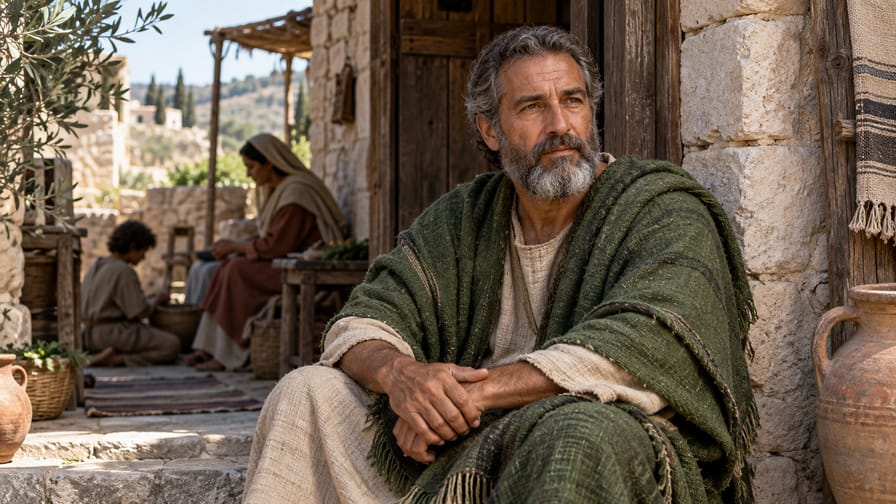
Abihud is a name that appears in the biblical genealogies, specifically within the tribe of Benjamin. While not a central figure in any dramatic narrative, his inclusion in these sacred records underscores the meticulous attention to lineage and the importance of tribal identity within ancient Israel. His life, though unrecorded in detail, represents a thread in the larger tapestry of God's covenant people.
His significance lies not in his actions, but in his position within a divinely preserved family tree, connecting generations and fulfilling the promise of a people set apart. Understanding Abihud requires appreciating the biblical emphasis on heritage and the continuity of God's work through successive generations.
1. Name and origin
1.1 Etymology and meaning
The name Abihud (אֲבִיהוּד) is Hebrew, meaning “my father is majesty” or “my father is glory.” This name reflects a common pattern in ancient Israelite nomenclature, where names often incorporated a reference to God or a divine attribute. The component “Abi” (father) frequently appears in biblical names, signifying a relationship or characteristic attributed to the divine. The “hud” element, related to majesty or glory, points to a recognition of God's sovereign splendor.
Such a name would have served as a constant reminder of God's character to Abihud himself and to those around him. It speaks to a culture where personal identity was deeply intertwined with theological understanding, often expressing a hope, a prayer, or a declaration about God's nature.
1.2 Family, era, and geography
Abihud is primarily mentioned in 1 Chronicles 8:3, where he is listed as a son of Bela and a grandson of Benjamin. This places him firmly within the tribal lineage of Benjamin, one of the twelve sons of Jacob. The tribe of Benjamin was historically situated between Judah and Ephraim, occupying a strategically important region that included cities like Jerusalem (partially) and Gibeah.
His era would likely correspond to the period after the settlement in Canaan, during the time of the Judges or early monarchy, though precise dating is not provided. As a descendant of Benjamin, Abihud belonged to a tribe known for its fierce warriors and, later, for producing Israel's first king, Saul (1 Sam 9:1-2). His geographical context would have been the tribal lands of Benjamin, a region often at the center of inter-tribal conflicts and national events.
2. Biblical narrative
2.1 Calling and key episodes
The biblical text does not recount any specific calling or key episodes for Abihud. Unlike figures such as Moses or David, whose lives are detailed with dramatic events and divine encounters, Abihud's role is purely genealogical. His appearance in 1 Chronicles 8:3 serves to establish the lineage of Benjamin, connecting generations and demonstrating the fulfillment of God's promise to multiply Abraham's descendants.
This lack of narrative detail is not a sign of unimportance but rather highlights the different ways individuals contribute to God's overarching plan. Some are called to lead and act, while others, like Abihud, play a vital role simply by existing and maintaining the continuity of the covenant line. Their lives, though quiet, are essential for the larger story of redemption.
2.2 Relationships and turning points
Given the absence of narrative, we have no information about Abihud's personal relationships or any specific turning points in his life. His primary relationship, as presented in Scripture, is his familial connection to Bela, his father, and Benjamin, his grandfather. These genealogical links were crucial in ancient Israel for establishing tribal identity, land rights, and eligibility for various roles within the community.
The emphasis on lineage in Chronicles, where Abihud is mentioned, often served to legitimate the post-exilic community's claim to their ancestral lands and their place in God's covenant. Thus, while we know nothing of his personal journey, his very existence as recorded in the sacred text was a turning point for the generations that followed, affirming their heritage.
3. Character and faith
3.1 Virtues and devotion
Without specific narratives, it is impossible to directly assess Abihud's personal virtues or devotion. However, his inclusion in the genealogies suggests that he was part of a lineage that continued to worship the God of Israel. In a culture where family lines were meticulously preserved, particularly for tribes like Benjamin, it implies a general adherence to the covenant and its stipulations.
The very act of being named “my father is majesty” could reflect a family's devotion and their desire to honor God through their children's names. While we cannot speak of Abihud's individual faith journey, his place in the lineage points to a broader context of faithfulness within his family and tribe, maintaining the spiritual heritage passed down through generations.
3.2 Failures and lessons
The Bible does not record any failures or specific lessons from Abihud's life. His story is one of quiet presence within the larger narrative of Israel. The absence of negative accounts is not necessarily an endorsement of perfect character, but rather an indication that his life was not marked by events deemed significant enough for detailed historical or moral commentary.
Perhaps a lesson to be drawn from figures like Abihud is that not every life needs to be filled with dramatic triumphs or failures to be significant in God's plan. Faithfulness in simply living out one's days within the covenant community, contributing to the continuity of generations, holds its own quiet dignity and importance. His life reminds us that God uses all kinds of people in His grand design.
4. Theological significance and legacy
4.1 Christological foreshadowing or typology
Abihud, as a genealogical link, does not offer direct Christological foreshadowing or typology in the same way that figures like David or Moses do. However, his presence in the lineage contributes to the broader biblical theme of God's faithfulness in preserving a chosen people through whom the Messiah would eventually come. Every name in the genealogies, no matter how obscure, is a testament to God's meticulous care in tracing the line that would ultimately lead to Jesus Christ.
The very existence of these detailed genealogies, including individuals like Abihud, underscores the historical reality of the covenant promises and their eventual fulfillment in Christ. He is a silent witness to the unbroken chain of humanity through whom God worked His redemptive plan (Matt 1:1-17; Luke 3:23-38).
4.2 Witness in later Scripture and church memory
Abihud is not mentioned in later Scripture outside of 1 Chronicles 8:3, nor does he feature prominently in church memory or tradition. His legacy is primarily contained within the genealogical records themselves. This highlights a crucial aspect of biblical theology: not all individuals are remembered for their deeds, but all who are part of God's covenant people contribute to His story.
His witness, though silent, is one of continuity and presence. He represents the countless individuals whose lives, though not celebrated in grand narratives, were nonetheless integral to the unfolding of God's plan. The church remembers him as part of the faithful lineage, a testament to God's enduring covenant with Israel.
5. Conclusion
Abihud's life, though briefly noted in the biblical record, serves as a quiet but firm reminder of God's faithfulness across generations. He is a link in the chain, a testament to the meticulous care with which God preserved a people through whom His redemptive purposes would be realized. His story, though lacking dramatic events, points to the profound truth that every life, however seemingly ordinary, plays a part in God's grand narrative, ultimately leading to the coming of Christ, the culmination of all history.