


Zedekiah
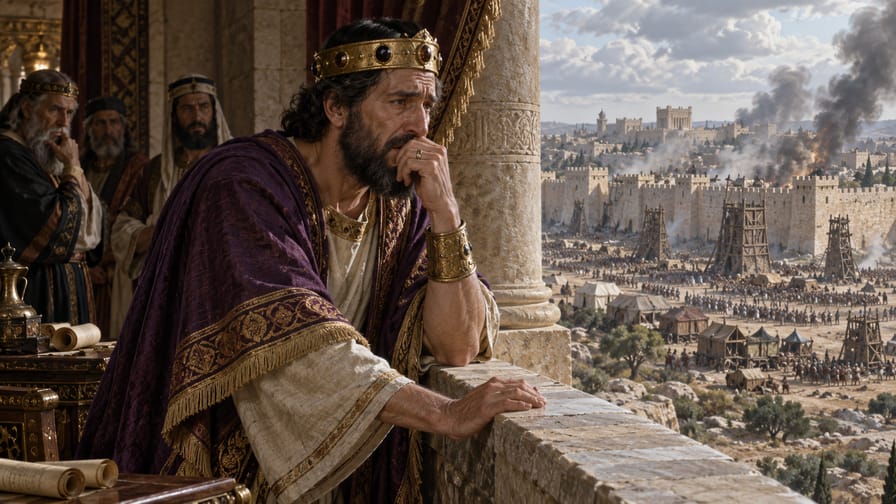
The figure of Zedekiah, the last king of Judah before the fall of Jerusalem to the Babylonians, is of utmost importance for understanding the final period of the Southern Kingdom and the beginning of the exile. His story, detailed primarily in the books of Kings, Chronicles, and Jeremiah, is a vivid testimony to divine sovereignty, judgment upon disobedience, and the complex interaction between human will and God's plan. From an evangelical Protestant perspective, Zedekiah represents a critical point in salvation history, marking the end of an era and the harbinger of a new messianic hope.
His life and reign are a case study on human failure to obey the covenant, the consequences of unbelief, and the irony of a name that proclaimed God's justice, yet whose bearer personified injustice and weakness. This analysis will explore the etymology of his name, the historical context of his reign, his character and role in the biblical narrative, his theological and typological significance, and his enduring legacy in biblical and Reformed theology.
Through an exegetical and theological approach, we will seek to extract pertinent lessons about the nature of God, the human condition, and divine faithfulness, even in the midst of judgment. The story of Zedekiah is not merely a record of past events, but a mirror that reflects eternal truths about the justice and mercy of God, and the urgency of obedience to His Word.
1. Etymology and Meaning of the Name
The name Zedekiah, in Hebrew Tzidkiyahu (צִדְקִיָּהוּ) or the shortened form Tzidkiyah (צִדְקִיָּה), is composed of two significant parts. The first part, tzedek (צֶדֶק), means "justice" or "righteousness". The second part is a shortened form of the tetragrammaton YHWH, Yah (יָהּ), which represents the name of the God of Israel.
Therefore, the name Zedekiah can be translated as "My Lord is justice," "YHWH is justice," or "Justice of YHWH." This meaning is profoundly ironic and theologically charged, considering the character and destiny of the last king of Judah. His name proclaimed a truth about God that his life and reign flagrantly contradicted.
Originally, Zedekiah was called Mattaniah (מַתַּנְיָהוּ, Mattanyah), which means "Gift of YHWH" or "Gift of God." He was renamed by Nebuchadnezzar, king of Babylon, when the latter established him as king of Judah, after deposing Jehoiakim (2 Kings 24:17). The change of name was a common practice in antiquity to signify vassalage and the imposition of a new authority.
Nebuchadnezzar's choice of "Zedekiah" may have been an attempt to impose a name that suggested loyalty or, perhaps, a perverse irony. However, from a divine perspective, the name became a constant reminder of God's justice that would be exercised upon a king and a people who refused to live in righteousness. The justice of YHWH, which Zedekiah's name proclaimed, manifested itself in the judgment upon Judah.
Other biblical characters with the name Zedekiah include a false prophet under Ahab, son of Chenaanah (1 Kings 22:11, 24), and a prince of Judah during the reign of Jehoiakim (Jeremiah 36:12). However, the most prominent and theologically significant is the king of Judah, whose story is intrinsically linked to the fall of Jerusalem and the Babylonian exile.
The name of Zedekiah, in its meaning, becomes a self-fulfilling prophecy of divine justice. He was the instrument by which YHWH's justice was demonstrated upon an unfaithful kingdom, a reminder that God is just in His ways, both in blessing and in judgment. The etymology of the name serves as a tragic prelude to the story that would unfold under his reign.
2. Historical Context and Biblical Narrative
The reign of Zedekiah (597-586 BC) marked the twilight of the Kingdom of Judah, a period of intense political and spiritual turbulence. He ascended to the throne as a vassal king, imposed by Nebuchadnezzar II of Babylon, after the first deportation from Jerusalem, which included King Jehoiakim and the Jewish elite (2 Kings 24:10-17). This event marked the beginning of a new phase of submission to a dominant foreign power.
The political context was one of constant Babylonian pressure, with Egypt seeking to reverse its influence in the region, encouraging Judah and other nations to rebel. Socially, the people of Judah were divided between those who advocated submission to Babylon (as per the message of the prophet Jeremiah) and those who longed for an alliance with Egypt and the restoration of independence. Religiously, apostasy was widespread, with idolatrous practices and a growing neglect of God's Law.
2.1 Family Origin and Genealogy
Zedekiah, whose birth name was Mattaniah, was the son of King Josiah and Hamutal, daughter of Jeremiah of Libnah (2 Kings 24:18). This made him the brother of Jehoahaz (Shallum) and uncle of Jehoiakim. His royal lineage connected him directly to the house of David, but his ascension to the throne did not follow the traditional line of succession, being a foreign imposition. He was, therefore, the last descendant of Josiah to reign in Jerusalem.
His connection to the Davidic lineage is crucial for biblical theology, as the promise of an eternal king from the house of David (2 Samuel 7:12-16) loomed over his failed reign. The ruin under Zedekiah seemed to contradict this promise, but in reality, it prepared the ground for the coming of the true Davidic King.
2.2 Main Events of His Reign
The reign of Zedekiah is characterized by a series of tragic events and disastrous decisions. At the beginning of his rule, he made a solemn oath to Nebuchadnezzar, in the name of God, that he would be loyal to Babylon (Ezekiel 17:13-14). However, moved by the pressure of his princes and by false prophets, and perhaps by a genuine desire for liberation, Zedekiah broke this alliance.
The biblical narrative highlights his weakness and indecision. He sought counsel from the prophet Jeremiah on several occasions (Jeremiah 21:1-2 37:3 38:14-26), but never had the courage to follow his divine warnings to submit to Babylon. Jeremiah consistently prophesied that resistance would lead to the destruction of Jerusalem and the exile (Jeremiah 27:8-11 34:1-7).
Around the ninth year of his reign, Zedekiah openly rebelled against Babylon, seeking a military alliance with Egypt (2 Kings 24:20 Ezekiel 17:15). This provoked Nebuchadnezzar's retaliation, who initiated the final siege of Jerusalem in Zedekiah's tenth year (2 Kings 25:1 Jeremiah 39:1).
The siege lasted about two years, causing severe famine in the city (2 Kings 25:3). Finally, in Zedekiah's eleventh year, the walls of Jerusalem were breached. Zedekiah and his soldiers tried to flee at night, but were captured on the plains of Jericho (2 Kings 25:4-5 Jeremiah 39:4-5).
He was taken to Riblah, where Nebuchadnezzar judged him. In a scene of extreme cruelty and humiliation, Zedekiah's sons were executed before his eyes, and then Zedekiah was blinded, chained, and taken as a prisoner to Babylon, where he remained until his death (2 Kings 25:6-7 Jeremiah 39:6-7). Jerusalem was plundered and the Temple destroyed, marking the end of the Kingdom of Judah.
These biblical passages, found in 2 Kings 24:18-25:7, 2 Chronicles 36:11-21, and Jeremiah 21-44, are the primary sources for understanding his reign and the consequences of his choices. The central geography is Jerusalem, the stage of resistance and fall, and Riblah, the site of his judgment and final disgrace.
3. Character and Role in the Biblical Narrative
The character of Zedekiah is portrayed in Scripture in a consistently negative light, marked by weakness, indecision, and lack of faith. Although he "did what was evil in the eyes of the Lord" (2 Kings 24:19 2 Chronicles 36:12), his evil was not that of a ruthless tyrant like some of his predecessors, but that of a pusillanimous leader who failed to exercise moral and spiritual authority.
His main weakness lay in his inability to resist the pressure of his officials and princes, who often influenced him to act against God's will revealed by the prophet Jeremiah. He feared men more than God (Jeremiah 38:5). This lack of conviction led him to make contradictory decisions, seeking Jeremiah's counsel in secret, but publicly yielding to the demands of those who opposed the prophet.
A clear example of his cowardice is seen when the princes threw Jeremiah into a cistern, and Zedekiah, though reluctant, did not immediately prevent them (Jeremiah 38:4-6). Only later, through the intercession of Ebed-Melech, an Ethiopian eunuch, Zedekiah allowed Jeremiah to be rescued (Jeremiah 38:7-13), demonstrating a hesitation that characterized his entire reign.
Despite having access to the Word of God through Jeremiah, Zedekiah repeatedly ignored divine warnings to submit to Babylon. He sought false assurances of victory and deliverance, preferring to listen to the false prophets who promised peace (Jeremiah 28:1-4). This refusal to believe and obey the prophetic message was the central point of his spiritual failure.
His vocation as king of the house of David implied the responsibility to guide the people in righteousness and faithfulness to the covenant. Nevertheless, Zedekiah miserably failed in this role, contributing to the dissolution of the nation and the destruction of the Temple.
His reign is the climax of Judah's apostasy, culminating in the long-prophesied divine judgment. The role of Zedekiah in the biblical narrative is, therefore, that of a king who sealed Judah's fate. His breaking of the oath made to Nebuchadnezzar in the name of YHWH was not only a political betrayal, but a serious religious offense, an act of disloyalty to God (Ezekiel 17:15-19). This breaking of the oath demonstrated the depth of Judah's infidelity, leading God to remove His protection.
The actions of Zedekiah are a tragic example of the consequences of disobedience and lack of faith. His story serves as a powerful reminder that leadership, especially in the spiritual sphere, requires courage, integrity, and an unshakeable dependence on the Word of God, even in the face of adversity and unpopularity.
The development of Zedekiah's character throughout the narrative is a constant decline. From a potential king with a promising name, he became a blind prisoner, a symbol of his kingdom's ruin. His trajectory is a testimony to the seriousness of sin and God's faithfulness in fulfilling His warnings.
4. Theological Significance and Typology
The theological significance of Zedekiah is multifaceted and profound, especially from an evangelical Protestant perspective, which emphasizes God's sovereignty, covenant faithfulness, and the need for a Savior. The story of Zedekiah is not merely a historical record, but a narrative laden with eternal truths about the nature of God and the human condition.
Firstly, Zedekiah personifies Judah's apostasy and infidelity. His reign is the zenith of the covenant people's disobedience, who repeatedly ignored the prophets and broke God's commandments. His failure to listen to Jeremiah and to keep his oath to Nebuchadnezzar symbolizes the failure of the entire kingdom to keep its covenant with YHWH (Jeremiah 34:8-22).
His story dramatically illustrates divine judgment upon sin. The fall of Jerusalem, the destruction of the Temple, and the exile were not mere historical accidents, but the fulfillment of the prophecies of judgment found in the Law (Deuteronomy 28:49-57) and in the prophets. The blinding of Zedekiah before being taken into captivity is a vivid symbol of Judah's spiritual blindness that led to its own destruction (Ezekiel 12:12-16).
The irony of the name "YHWH is justice" for a king who ruled with injustice and weakness is a powerful theological statement. It underscores that God's justice does not depend on the righteousness of His human rulers, but manifests itself both in blessing righteousness and in judging iniquity. The judgment upon Zedekiah and Judah was, therefore, a demonstration of YHWH's justice.
Although Zedekiah is not a direct typological figure of Christ in the redemptive sense, his failure as a Davidic king points to the need for a perfect King. The Davidic promise of an eternal throne (2 Samuel 7:16) seemed threatened by Zedekiah's fall and the end of the monarchy in Jerusalem. However, this apparent human failure serves to highlight the glory of the future Messiah, the true Son of David, whose kingdom would be eternal and just.
The story of Zedekiah, by revealing the depth of human sin and the inevitability of divine judgment, prepares the ground for the revelation of grace and the new covenant. The destruction of the Temple and the exile, though painful, purified the people and made them long for a new covenant and a new leader. He is, therefore, a "negative type," whose failures magnify the perfection of the coming Messiah.
There are no direct mentions of Zedekiah in the New Testament. However, his story resonates with New Testament themes such as the sovereignty of God over history, the seriousness of sin, and the need for repentance. Jesus' warning about the destruction of Jerusalem in Luke 19:41-44 echoes the judgment that befell the city in Zedekiah's days, reinforcing the idea that disobedience brings consequences.
Evangelical theology emphasizes that Zedekiah's story is a lesson on the unquestionable authority of God's Word. The king's refusal to listen to Jeremiah cost him his throne, his sight, and the lives of his sons. This underscores the importance of obedience to divine revelation as the path to blessing and life, and disobedience as the path to ruin.
5. Biblical-Theological Legacy and Canonical References
The legacy of Zedekiah in biblical theology is paradoxically significant for his failure. He represents the final point of the Davidic monarchy in Judah before the exile, a landmark of judgment and a catalyst for messianic hope. His story is told in detail in 2 Kings 24:18-25:7, 2 Chronicles 36:11-21, and Jeremiah 21-44, the latter being the prophet who most interacted with him and recorded his vacillation.
The figure of Zedekiah is crucial for understanding the context of the Babylonian exile and its theological ramifications. The destruction of Jerusalem and the Temple under his reign was not the end of salvation history, but a painful transition that prepared the way for restoration and the coming of Christ. His story, therefore, contributes to the progressive revelation of God's plan.
In Lamentations, though Zedekiah is not explicitly named, the suffering of the king and the people described in the book directly reflects the consequences of his choices and the divine judgment that befell him (Lamentations 1:3-5 4:19-20). The book of Ezekiel also makes veiled references to him, such as in the riddle of the eagle and the vine, which represents Zedekiah's breaking of his oath to Nebuchadnezzar (Ezekiel 17:1-21).
In the Jewish interpretative tradition, Zedekiah is seen as a tragic king, whose weakness led to national catastrophe, but who is also remembered for his attempt to protect Jeremiah at certain times. The Christian tradition, especially the Reformed and evangelical, frequently uses the story of Zedekiah as a case study on God's sovereignty in judgment and human responsibility in disobedience.
Evangelical commentators like J. A. Thompson (in the Book of Jeremiah, NICOT) and Walter C. Kaiser Jr. (in A History of Israel: From the Bronze Age to the Old Testament Era) highlight Zedekiah as an example of man's failure to keep the covenant, contrasting him with God's unshakeable faithfulness to His promises, even when these are manifested through judgment.
The importance of Zedekiah for understanding the canon lies in how his story concludes a crucial chapter in Israel's history and opens the door to messianic hope. The end of the monarchy in Judah and the exile forced God's people to look beyond human kings and to the coming King, the Messiah, who would establish an eternal and perfect kingdom, fulfilling the promise to David.
His figure, therefore, is not merely a historical character, but a theological element that reinforces central doctrines such as the holiness of God, the gravity of sin, covenant faithfulness, and the need for a Redeemer. He is a forceful reminder that disobedience to God's Word leads to ruin, but that even in judgment, the hope of redemption remains.
The story of Zedekiah, in summary, serves as a powerful warning and, paradoxically, as a point of reference for the future glory of Christ. He is a testimony to the truth that YHWH's justice will prevail, whether in the punishment of sin or in the provision of a Savior.