


Parmenas
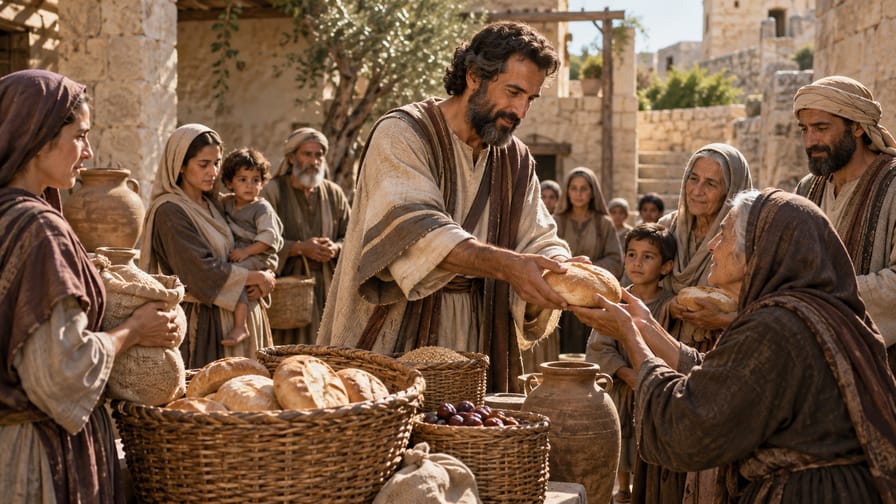
The figure of Parmenas emerges in the pages of the New Testament as one of the seven men chosen for a crucial role at the beginning of the Christian Church. Although his mention is brief, his inclusion in the list of the first deacons in Jerusalem, as recorded in the book of Acts of the Apostles, confers upon him a lasting significance. The analysis of his persona, even if limited by direct biblical information, allows for the exploration of themes of service, leadership, and the organization of the early Church under the guidance of the Holy Spirit.
This study will delve into the onomastic implications, the historical context, the inferred characteristics, the theological significance, and the legacy of Parmenas. The perspective adopted will be Protestant Evangelical, emphasizing the authority of Scripture, exegetical precision, and Christ-centered relevance. Understanding figures like Parmenas, even if secondary in the biblical narrative, enriches our perception of the formation of the Church and the divine principles for ecclesiastical life and Christian service.
1. Etymology and meaning of the name
The name Parmenas (in Greek, Παρμενᾶς) is of Greek origin and does not possess direct Hebrew or Aramaic roots. Its etymological structure is derived from the Greek verb παραμένω (paramenō), which means "to remain alongside," "to stand firm," "to persevere," or "to refrain from departing." This root suggests the idea of constancy, stability, and faithfulness.
Literally, the name Parmenas can be interpreted as "one who remains," "the constant one," or "the steadfast one." This connotation is particularly significant in the context in which he is introduced in the Scriptures. Being chosen for a position of service in the early Church required qualities of perseverance and dedication, especially in the face of the initial challenges and persecutions encountered by Christians.
There are no known variations of the name Parmenas in other biblical languages, nor other biblical characters who share this name. His uniqueness in the Bible highlights the specific individual mentioned in Acts 6:5. The choice of a Greek name for Parmenas is consistent with the context of the seven men selected, all of whom had Greek names, indicating that they were Hellenistic Jews, meaning Jews of Greek culture.
The theological significance of the name Parmenas, although not explicitly declared in the Bible as prophetic symbolism, can be inferred. The idea of "remaining" or "being constant" resonates with fundamental principles of the Christian faith, such as perseverance in faith (Hebrews 10:36), constancy in service (1 Corinthians 15:58), and faithfulness to God's commandments (John 15:10). For a leader in the Church, steadfastness of character and perseverance in ministry are inestimable virtues.
In the context of diaconal service, Parmenas's ability "to remain" firm in his responsibilities, even in the face of difficulties, would have been an essential attribute. The nascent Church needed individuals who were not only full of the Spirit and wisdom but who also demonstrated unshakeable dedication to the cause of the Gospel. Thus, his name may have been a reflection or a foreshadowing of his commitment and stability in serving the Lord.
2. Historical context and biblical narrative
Parmenas is introduced in the biblical narrative during a crucial period in the history of the early Church, approximately between the years 30 and 40 A.D., shortly after the ascension of Jesus Christ and the outpouring of the Holy Spirit at Pentecost. The Church in Jerusalem was experiencing exponential growth, as reported in Acts 2:41 and Acts 4:4, with thousands of people converting to the Christian faith.
The political and social context of the time was complex. Jerusalem was under Roman rule, but Jewish society maintained its religious and cultural structures. The Christian community was composed of native Jews from Israel (Hebrews) and Diaspora Jews who spoke Greek (Hellenists). This diversity, though enriching, generated tensions, especially in the daily distribution of food and aid to widows, as recorded in Acts 6:1.
The complaint of the Hellenists that their widows were being neglected in the daily distribution of food led the apostles to seek a solution. They recognized that they could not deviate from their primary vocation — prayer and the ministry of the Word (Acts 6:4) — to dedicate themselves to administrative tasks. It was in this scenario of need and the search for a more efficient organizational structure that Parmenas was chosen.
The Bible does not offer information about the genealogy or family origin of Parmenas, which is common for many secondary characters in the Scriptures. However, the fact that he had a Greek name strongly suggests that he was a Hellenistic Jew, which made him an ideal choice to mediate and serve the Greek-speaking community, which felt disadvantaged. This choice demonstrates the wisdom of the apostles in selecting leaders who could culturally relate to the group in question.
The main and only key biblical passage where Parmenas appears is in Acts 6:5: "And what they said pleased the whole gathering, and they chose Stephen, a man full of faith and of the Holy Spirit, and Philip, and Prochorus, and Nicanor, and Timon, and Parmenas, and Nicolaus, a proselyte of Antioch". He is listed as the sixth of the seven men chosen to serve tables, a role that would later be known as the diaconate.
The geography related to Parmenas is exclusively Jerusalem, the birthplace of the Christian Church. There are no mentions of his activity in other cities or regions. His relationship with other important biblical characters is due to his association with the apostles who elected him and with the other six men who were chosen along with him, notably Stephen and Philip, who became prominent figures in the preaching of the Gospel and service to the Church, as narrated in the subsequent chapters of Acts.
3. Character and role in the biblical narrative
Although the Bible does not provide a detailed description of Parmenas's character, we can infer his qualities from the criteria established by the apostles for the selection of the seven men. In Acts 6:3, the apostles instructed the community to choose "seven men of good repute, full of the Holy Spirit and of wisdom". The inclusion of Parmenas in this list signifies that he possessed these essential virtues.
His "good repute" (in Greek, μαρτυρουμένους, martyroumenous) indicates that Parmenas was a man of integrity, respected by the Christian community and, possibly, also by the broader Jewish community. This quality was fundamental to ensure trust and unity at a time of internal tension in the Church. His life exemplified Christian values, making him a model of conduct.
Being "full of the Holy Spirit" (in Greek, πλήρεις Πνεύματος Ἁγίου, plēreis Pneumatos Hagiou) is one of the most important qualifications. This means that Parmenas had not only received the Holy Spirit, like every believer, but that his life was characterized by a deep dependence on and empowerment by the Spirit. This fullness of the Spirit was essential for exercising service with discernment, power, and love, divine attributes for ministry.
"Wisdom" (in Greek, σοφίας, sophias) was another indispensable virtue. In the context of administration and service, wisdom refers not only to intellectual knowledge but to the practical ability to apply divine truth to solve problems, make just decisions, and manage resources effectively. Parmenas's wisdom would have been crucial for dealing with the complexities of food distribution and mediating conflicts.
There is no mention of sins, weaknesses, or moral failures documented for Parmenas in the Scriptures. His brief appearance portrays him exclusively as a positive example of service and faith. The absence of negative details reinforces the idea that he was a man of integral character, fulfilling the rigorous requirements established by the apostles for the diaconate.
Parmenas's specific vocation or role was that of a deacon, although the formal term "deacon" is not used in Acts 6 to describe the seven. They were chosen to "serve tables" (in Greek, διακονεῖν τραπέζαις, diakonein trapezais), which is the root of the word diakonia, meaning "service." This role involved the administration of the Church's resources, especially for aid to the needy, and the resolution of disputes related to that distribution.
The role played by Parmenas and the other six was fundamental for the unity and growth of the Church. By assuming administrative and social responsibilities, they allowed the apostles to dedicate themselves to the preaching of the Gospel and to prayer, as per Acts 6:4. This division of labor was a key decision that allowed the Church to expand without neglecting its social or spiritual responsibilities.
Parmenas's significant actions are not detailed individually, but his election and subsequent service were crucial for the resolution of the conflict between the Hebrew and Hellenistic Jews. His participation in the group of seven ensured that the Church continued to grow in grace and number, as per Acts 6:7. The development of Parmenas's character is not traced, as he is mentioned only once, but his inclusion in the list is a testament to his exemplary character and service.
4. Theological significance and typology
The figure of Parmenas, though secondary, holds a relevant theological significance for redemptive history and the progressive revelation of the Church. His election, along with the other six, marks a seminal moment in the organization of the early Church, establishing a precedent for the structuring of ministries and the division of labor within the body of Christ. This event is fundamental for understanding New Testament ecclesiology.
Regarding Christ-centered typology, Parmenas, as an individual, does not directly prefigure Christ. However, the office of the diaconate, of which he was one of the first representatives, reflects and points to Christ's own nature as the servant par excellence. Jesus came not to be served, but to serve (Mark 10:45) and gave his life as a ransom for many. The diaconal service, exemplified by Parmenas, is, therefore, a manifestation of Christ's diakonia in the Church.
The qualities required for Parmenas and his colleagues – being full of the Holy Spirit and of wisdom – are gifts and virtues that Christ manifested in fullness and that He grants to His Church for the fulfillment of His mission. The ability to serve with discernment and love is a reflection of Christ's character and the empowerment of the Holy Spirit, who indwells believers to empower them for service (John 14:12).
There are no biblical covenants, promises, or prophecies directly related to Parmenas. His importance lies more in the establishment of a functional model for the Church. His story connects with central theological themes such as Christian service (diakonia), the unity of the Church, the importance of practical and spiritual wisdom, the manifestation of the Holy Spirit in the lives of believers, and the need for order and good administration in the body of Christ.
The election of Parmenas and the other deacons demonstrates that Christian faith is not merely a matter of individual belief, but also of communal and social responsibility. The Church, as the body of Christ, is called to care for the needy among its members, a principle that Parmenas helped to institutionalize. This care is a practical expression of God's love and divine justice (James 1:27).
Although Parmenas is not cited or referenced in the New Testament outside of Acts 6:5, the event of his election has a broader theological fulfillment. He established the foundation for the office of deacon, which Paul would later delineate in 1 Timothy 3:8-13, with qualifications that echo those of Acts 6. Thus, Parmenas's service contributed to the doctrine and teachings associated with the structure and ministry of the Church.
The episode in which Parmenas is chosen illustrates God's providence in the organization of the Church and in the equipping of leaders to meet the community's needs. It shows that practical service, even if not the ministry of the Word, is vital for the well-being and advancement of the Kingdom of God. Parmenas's diakonia, therefore, is a testimony to the manifold grace of God and the diversity of gifts and ministries in the Church (1 Corinthians 12:4-6).
5. Biblical-theological legacy and canonical references
The only mention of Parmenas in the biblical canon is in Acts 6:5, where he is listed among the seven men chosen for diaconal service in the Church of Jerusalem. He is not the author of any biblical book, nor are his words recorded. His contribution, therefore, is not literary, but resides in the example of his service and the role he played in the formation of the early Church's structure.
Parmenas's influence on biblical theology, though indirect, is significant. The event of his election and the institution of the diaconate in Acts 6 are considered the foundation for the office of deacon, one of the two permanent offices in the Church, along with that of elder/bishop, as developed by Paul in his pastoral epistles (1 Timothy 3:1-13 Titus 1:5-9). This event demonstrates the importance of organization and the delegation of tasks in the Church.
In Christian interpretive tradition, Parmenas is often remembered as one of the first deacons and, by extension, a model of selfless service. Extra-biblical tradition, though not canonical and lacking reliable historical evidence, sometimes associates him with martyrdom. For example, some early Church sources, such as Hippolytus of Rome (3rd century) and Eusebius of Caesarea (4th century), mention him as having preached in various places and suffered martyrdom, but this information is not corroborated by Scripture.
In Reformed and Evangelical theology, Parmenas's role is seen as an example of the importance of diaconal ministry. This ministry is valued for its function of serving the practical needs of the congregation, promoting unity, internal social justice, and the Church's testimony of love. Reformed theology, in particular, emphasizes the distinction between the offices of elder (focused on the Word and doctrine) and deacon (focused on mercy and service), both essential for the health of the Church.
Conservative Evangelical theologians frequently point to Acts 6 as the biblical basis for the Church's leadership structure, where gifts and callings are diverse yet complementary. The service of Parmenas and the other deacons allowed the Church to grow not only in number but also in organizational maturity, demonstrating that effective administration and social care are an integral part of the spiritual mission.
Parmenas's importance for understanding the canon lies in how his story, though brief, illustrates fundamental principles of Church life. He represents the truth that all service, done with integrity and under the empowerment of the Holy Spirit, is valuable in God's eyes and essential for the advancement of His Kingdom. His life reminds us that faithfulness in seemingly smaller tasks contributes greatly to God's greater purpose in redemptive history.
In summary, Parmenas, whose name suggests "steadfastness" and "perseverance," is a silent testimony to God's grace and the importance of dedicated service. His inclusion in the list of the seven demonstrates that God uses men and women of character and faith to fulfill His purposes, even if their contributions are not extensively detailed in Scripture. He remains as a reminder of the value of the ministry of mercy and service in the Church of Christ.