


Stephen
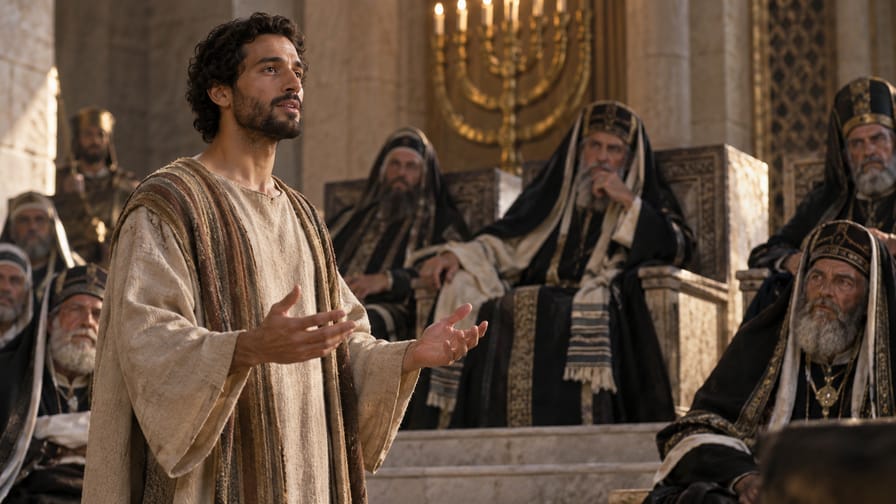
The figure of Stephen emerges in the New Testament as one of the most luminous and, paradoxically, tragic characters of the Early Church. He is recognized as the first Christian martyr, whose testimony and violent death left an indelible mark on the history of faith.
His life, though briefly narrated in the book of Acts of the Apostles, is rich in theological significance, demonstrating the courage of faith, the power of the Holy Spirit, and the prophetic nature of Christian discipleship in the face of persecution.
From an evangelical Protestant perspective, the analysis of Stephen highlights the authority of the Scriptures, the centrality of Christ, and the empowerment of the believer by the Spirit for service and witness, even in the face of death.
1. Etymology and meaning of the name
The name Stephen has its roots in ancient Greek, Stephanos (Στέφανος), which literally means "crown", "wreath", or "diadem". This word was commonly used to describe the laurel crown granted to winners of athletic competitions or an insignia of honor and distinction.
There is no direct equivalent or derivation in Hebrew or Aramaic for the name Stephen, which is consistent with his identity as a Hellenistic Jew, meaning a Jew of Greek culture and language, born outside Palestine or strongly influenced by Greek culture.
The meaning of the name, "crown", acquires a deep symbolic resonance in the context of Stephen's life and death. He not only received a "crown" of honor for his service and faith, but also the "crown of life" promised to those who persevere in faith and endure trials, as per James 1:12 and Revelation 2:10.
This celestial "crown", a symbol of victory and eternal glory, contrasts vividly with Christ's crown of thorns and points to the final reward of the faithful. His death as a martyr sealed this meaning, making him an icon of faithfulness to the end.
There are no other prominent biblical characters with the name Stephen. The uniqueness of the name in such a striking biblical context accentuates the individuality of his legacy and witness in the history of salvation.
Theologically, the name Stephen prefigures his vocation and destiny. He was crowned with the Holy Spirit for service and, finally, crowned with martyrdom, which for Christian faith is the supreme expression of faithfulness and love for Christ.
2. Historical context and biblical narrative
Stephen's life unfolds in the early period of the Christian Church, soon after the ascension of Jesus Christ and the outpouring of the Holy Spirit at Pentecost, as narrated in Acts 2. The approximate dates for the events of his life are between 30 and 35 AD, a time of rapid expansion and organization of the faith community in Jerusalem.
The political context was one of Roman domination over Judea, with Jewish authorities, such as the Sanhedrin, maintaining a degree of religious and judicial autonomy. Socially, Jerusalem was a melting pot of cultures, with Jews of various origins (Hebrew and Hellenistic) coexisting and, at times, clashing.
Religiously, first-century Judaism was complex, with various sects such as Pharisees, Sadducees, and Essenes, and a strong messianic expectation. The rise of Christianity, with its proclamation of Jesus as the crucified and resurrected Messiah, represented a direct challenge to established religious structures.
The biblical narrative about Stephen begins in Acts 6:1, where he is introduced as one of seven men chosen by the community to administer the distribution of food to Hellenistic widows, who were being neglected. This function, though practical, required great spirituality, as those chosen were to be "full of the Spirit and of wisdom".
Stephen is explicitly described as a man "full of faith and of the Holy Spirit" (Acts 6:5). His vocation was not limited to social assistance he also performed "great wonders and signs among the people" and preached with wisdom and power, driven by the Spirit (Acts 6:8, 10).
The main geography of his ministry was Jerusalem, the center of Jewish faith and the birthplace of the Church. It was there that he ministered and where he faced opposition from various synagogues of Hellenists, including those of the Freedmen, Cyrenians, Alexandrians, and those from Cilicia and Asia (Acts 6:9).
His relationships with other biblical characters are crucial. He was a contemporary of the apostles, though not one of them, and his appointment as one of the seven established a precedent for diaconal service in the church. The moment of his martyrdom is notable for the presence of Saul, who later became the apostle Paul, approving his death (Acts 7:58 8:1).
The main events of his life include his selection for diaconal service, his powerful ministry of preaching and miracles, his arrest under false accusations of blasphemy against Moses and God, his apologetic speech before the Sanhedrin, and his martyrdom by stoning outside the city of Jerusalem (Acts 6:11-15 7:1-60).
3. Character and role in the biblical narrative
Stephen's character, as revealed in the Scriptures, is a model of virtue and devotion. From the beginning, he is described as a man "full of faith and of the Holy Spirit" (Acts 6:5), essential qualities for any leader in the Early Church.
He demonstrated exceptional wisdom, to the extent that his opponents "could not resist the wisdom and the Spirit by which he spoke" (Acts 6:10). This wisdom was not merely intellectual, but divinely inspired, enabling him to defend the faith with clarity and authority.
His courage is undeniable. Even in the face of false accusations and a hostile trial before the Sanhedrin, Stephen remained intrepid. He did not shrink from his faith, but seized the opportunity to preach the gospel and rebuke his accusers (Acts 7:51-53).
God's grace was manifest in his life, for he performed "great wonders and signs among the people" (Acts 6:8), indicating that divine power operated through him. This demonstrated that his faith was not merely theoretical, but living and dynamic.
Stephen's vocation was multifaceted. Initially, he was chosen to serve in the administration of the community's daily needs, exercising a diaconal role. However, his ministry quickly expanded to preaching and apologetics, making him an evangelist and a defender of the faith.
He played a crucial role as the first Christian martyr, setting a standard for faithful witness in the face of persecution. His death was not an end, but a catalyst for the spread of the gospel, as the resulting persecution scattered believers, carrying the message of Christ beyond Jerusalem (Acts 8:1-4).
Stephen's significant actions include his powerful speech before the Sanhedrin (Acts 7:1-53), a recapitulation of Israel's history that culminates in the rejection of Christ. He confronts the hypocrisy and resistance of the people to God's will, culminating in a heavenly vision of Jesus at the right hand of God (Acts 7:55-56).
His last words, "Lord Jesus, receive my spirit" and "Lord, do not hold this sin against them" (Acts 7:59-60), echo those of Jesus on the cross, revealing a profound identification with his Master and a character marked by forgiveness and unwavering devotion.
There is no record of moral failures or documented sins in Stephen's life, which reinforces his image as a man of integrity and holiness, filled and guided by the Holy Spirit in all his actions.
4. Theological significance and typology
The theological significance of Stephen is multifaceted and profound, impacting the understanding of redemptive history and progressive revelation. His life and, especially, his speech and martyrdom in Acts 7, are crucial for the theology of the Early Church.
His speech is an exegesis of Israel's history, arguing that God is not confined to temples made by human hands, and that the rejection of Jesus by Jewish leaders is the climax of a historical pattern of resistance to the Holy Spirit and persecution of the prophets (Acts 7:48-53).
This preaching marks a significant theological transition, moving Christian faith away from an exclusive dependence on the Temple of Jerusalem and pointing to the universality of worship and the presence of God in Christ. He highlights Israel's persistent disobedience, which culminated in the crucifixion of the Righteous One.
The Christocentric prefiguration or typology in Stephen is notable. His experience echoes that of Christ in several ways: he was falsely accused, suffered an unjust trial, was led outside the city to be executed, and forgave his aggressors as he died, commending his spirit to Jesus (Acts 6:11-14 7:57-60).
These parallels underscore the idea that the disciple of Christ must be prepared to follow in the footsteps of his Master, even in suffering and death, becoming an imitator of Christ in his sacrifice and sacrificial love.
Stephen's connection with central theological themes is evident. His unwavering faith in the face of death demonstrates God's sovereignty and the sufficiency of grace amidst persecution. His testimony highlights the importance of obedience to the gospel and the inevitability of judgment for those who resist the truth.
Stephen's speech also establishes a bridge between the Old and New Covenants, showing how the promises and prophecies of the Old Testament are fulfilled in Jesus Christ, the Messiah. He argues that the Law, given through angels, was not kept by Israel, and that the figure of Moses, the deliverer, was repeatedly rejected, just as Christ was.
Although there are no direct quotes from Stephen in other books of the New Testament, his story is fundamental to understanding the development of Pauline thought. Saul's presence at his martyrdom is a turning point in the narrative of Acts, linking the initial persecution to the later conversion of the apostle Paul (Acts 8:1 9:1-19).
The doctrine of Christian martyrdom, faithful witness, and God's sovereignty over persecution are strongly associated with Stephen. He personifies the cost of discipleship and the glory of faithfulness that leads to the crown of life, a recurrent theme in evangelical theology.
5. Biblical-theological legacy and canonical references
Stephen's legacy, though restricted to a brief account in the book of Acts of the Apostles (chapters 6 and 7), is immense and enduring in biblical theology and Christian tradition. He is the prototype of the Christian martyr, a model of faith and witness for all generations.
His story is canonical and essential for understanding the expansion of the gospel. The persecution that followed his death, with the dispersion of believers from Jerusalem, was the means by which the message of Christ was carried to Judea, Samaria, and eventually, "to the ends of the earth" (Acts 8:1, 4 1:8).
In Christian interpretive tradition, Stephen is revered as the "Protomartyr". His courage, his heavenly vision of Christ, and his final words of forgiveness are often cited as supreme examples of piety and identification with Jesus.
Stephen's influence on New Testament theology, especially Pauline theology, is indirect, yet profound. Saul of Tarsus, who witnessed and approved his stoning, was confronted with the truth of Christianity a short time later. The resonance of Stephen's testimony may have been a factor in the conversion of Saul, who became the Apostle Paul.
Stephen's speech in Acts 7 is a masterpiece of Christian apologetics. It demonstrates a profound understanding of salvation history, arguing for the continuity between the Old and New Testaments, and the superiority of Christ over the Law and the Temple. This speech is a primary source for understanding the theology of the Early Church regarding the relationship between Judaism and Christianity.
In Reformed and evangelical theology, Stephen is frequently studied as an example of diaconal service, powerful preaching, and faithful witness. He embodies the principles of a life filled with the Holy Spirit, dedicated to the service of God and neighbor, even if it means facing opposition and martyrdom.
His life reinforces the doctrine of God's sovereignty, who uses even persecution for His redemptive purposes. Stephen's death was not a defeat, but a triumph of faith that propelled the gospel forward, demonstrating that the blood of the martyrs is the seed of the Church.
The importance of Stephen for understanding the canon lies in his contribution to the narrative of Acts, which serves as a bridge between the Gospels and the Epistles. His story illustrates the transition from the Jewish Church to a more universal Church, and the inherent tension between Jewish tradition and the new faith in Christ.
In summary, Stephen remains a central figure in the canon, a vibrant witness to faith, grace, and the power of the Holy Spirit, whose legacy continues to inspire believers to live and die in faithfulness to Jesus Christ.