


Jamai
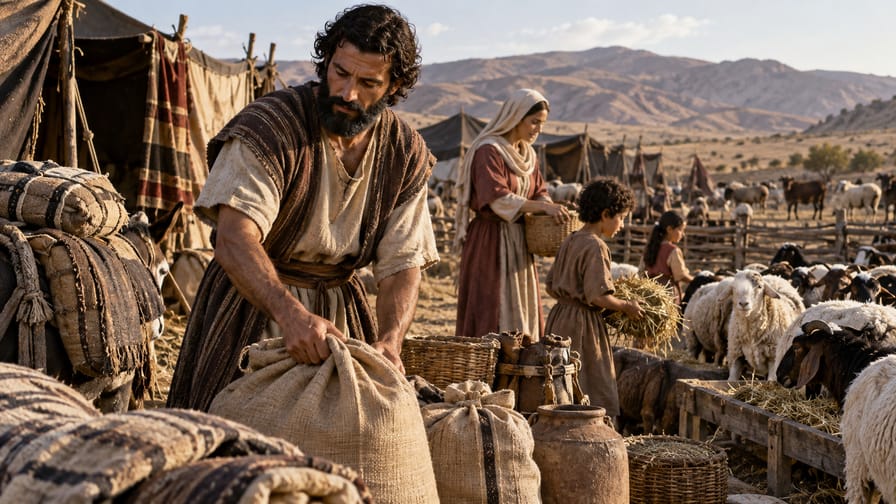
The figure of Jahmai, though briefly mentioned in the Scriptures, offers a rich opportunity for deep biblical and theological analysis. His solitary appearance in the genealogy of the book of *1 Chronicles*, a foundational text for understanding the history of Israel from a theological perspective, invites reflection on the importance of each individual in the tapestry of salvation history. From an evangelical Protestant perspective, the inclusion of Jahmai in the sacred canon underscores the sovereignty of God and the meticulousness of His redemptive plan.
This analysis will address the etymology of the name, the historical and narrative context, inferences about his character and role, the theological significance and typology, as well as his legacy within the biblical and theological tradition. Although the scarcity of direct information about Jahmai requires an inferential and contextual approach, every detail present in the Scriptures is divinely inspired and laden with purpose (*2 Timothy 3:16-17*).
The evangelical Protestant perspective emphasizes the authority and inerrancy of the Bible, seeking to extract meaning not only from the narrated events but also from the structure, lists, and genealogies. The inclusion of names like Jahmai serves to reinforce the continuity of God's covenant with Israel and the preparation for the coming of the Messiah, Jesus Christ, the apex of divine revelation (*Hebrews 1:1-3*).
1. Etymology and meaning of the name Jahmai
The name Jahmai appears in Hebrew as *Ya'amay* (יַעְמַי), a form found only once in the Holy Scriptures, specifically in *1 Chronicles 7:2*. The precise etymological root and linguistic derivation of this name are subject to some discussion among Hebraists, given its uniqueness and the absence of a broader narrative context to aid in interpretation.
One interpretation suggests that *Ya'amay* may derive from the Hebrew root *עָמַם* (*'amam*), meaning "to darken," "to be obscure," or "to gather," "to collect." If so, the name could carry the meaning of "obscure" or "one who gathers." However, this connection is not universally accepted and remains in the realm of speculation, given the rarity of the name and the difficulty in tracing a clear etymological line.
Another possibility for the etymology of *Ya'amay* is the derivation from *עָמַי* (*'amay*), which can be interpreted as "my people" (from *'am*, "people," with the first-person possessive suffix) or, in a less common reading, related to "to oppress." However, the interpretation "my people" would be more consistent with the nature of theophoric names or those that express collective identity in Israel.
Despite the etymological uncertainty, the mere existence of the name Jahmai in a genealogy has an intrinsic theological significance. He represents a link in the chain of salvation history, an individual who, though without notable recorded deeds, was recognized and named by God within the lineage of His people. This demonstrates divine attention to every member of the covenant, regardless of their prominence.
There are no other biblical characters with the exact name of Jahmai, which makes it a singular name in Scripture. This uniqueness, paradoxically, reinforces the individuality of each person in the mind of God and in the history of Israel. The theological significance, therefore, transcends literal etymology, focusing on the divine providence that preserves each name in the messianic lineage.
The inclusion of Jahmai in the genealogies of *1 Chronicles* reflects the importance of each link in preserving tribal identity and ensuring the continuity of the divine promise. Even if the literal meaning of the name is uncertain, its theological value lies in its function as a testimony to God's faithfulness to His people and His covenant (*Deuteronomy 7:9*).
2. Historical context and biblical narrative
The mention of Jahmai occurs in *1 Chronicles 7:2*, within the extensive genealogies compiled by the Chronicler. This book was written in a post-exilic period, probably between 450 and 400 B.C., with the purpose of reorienting the Jewish community that had returned from the Babylonian exile. The genealogies served to reaffirm Israel's identity, its tribal heritage, and the continuity of God's covenant.
Jahmai is listed as one of the sons of Tola, who in turn was a son of Issachar, one of the twelve sons of Jacob (*Genesis 46:13*). The specific passage states: "The sons of Tola: Uzzi, Rephaiah, Jeriel, Jahmai, Ibsam, and Samuel, heads of their fathers' houses, mighty men of valor, according to their generations their number in the days of David was twenty-two thousand six hundred."
The temporal context of Jahmai, therefore, is "in the days of David," which places him in the period of the united monarchy of Israel, approximately between 1000 and 960 B.C. This indicates that Jahmai lived centuries before the compilation of *Chronicles*, being part of the ancestral history that the Chronicler was retrieving for the new generation. His lifespan likely occurred during the era of the judges or at the beginning of the monarchy.
Geographically, as a descendant of Issachar, Jahmai would have been associated with the tribe that inhabited a strategic region in northern Canaan, encompassing parts of the Jezreel Valley and adjacent areas (*Joshua 19:17-23*). This was a fertile area of great agricultural importance, but also vulnerable to invasions, which may explain the mention of "mighty men of valor" in the genealogy of Issachar.
The genealogy of *1 Chronicles 7* offers no details about the main events in Jahmai's life, nor about his direct relationships with other biblical characters beyond his immediate family. He is a name in a list, a link in the chain of descent. His inclusion, however, is crucial to the Chronicler's purpose: to demonstrate the organization and strength of the tribes, even those that did not have prominent kings or priests.
The absence of a personal narrative for Jahmai is, in itself, a point of theological reflection. It reminds us that God's history with His people is composed of both prominent figures and ordinary individuals, whose lives, though not detailed, are equally important for the fulfillment of the divine plan. Jahmai represents the vastness and inclusivity of Israel's genealogy (*Isaiah 43:1*).
3. Character and role in the biblical narrative
The Bible offers no direct information about Jahmai's character, his virtues, weaknesses, or specific actions. His only mention in *1 Chronicles 7:2* places him in a genealogical list, without any biographical details. Therefore, any analysis of his character and role must be inferential, based on the broader context of the genealogy and the Chronicler's intent.
The passage describes the sons of Tola (including Jahmai) as "heads of their fathers' houses, mighty men of valor, according to their generations." Although Jahmai is not individually named as a "mighty man of valor," he is part of a family group that received this collective designation. This suggests that he belonged to a lineage known for its strength, courage, and tribal leadership capacity.
Jahmai's primary role in the biblical narrative, therefore, is that of a genealogical link. He is a name that attests to the continuity of the lineage of Issachar, one of the twelve tribes of Israel. In a context where the preservation of tribal identity was vital, especially for the post-exilic people, the inclusion of names like Jahmai's was fundamental for establishing the legitimacy and heritage of each family.
Jahmai's specific vocation or function is not revealed. He is not described as a prophet, priest, king, or judge. His importance lies in his existence as part of the "house of his fathers," contributing to the maintenance of the social and military structure of the tribe of Issachar. He was, presumably, a family leader, as indicated by the phrase "heads of their fathers' houses."
His inclusion in the list of "mighty men of valor" (*gibborê hayil*, גִּבּוֹרֵי חַיִל) suggests that he, or at least his lineage, played a significant role in the defense and organization of the tribe. This valor was not merely physical, but also moral and leadership-oriented, essential for the survival and prosperity of a tribe in an often turbulent period of Israel's history.
The development of Jahmai's character throughout the narrative is, by necessity, non-existent. He remains a static figure, a name that fulfills its purpose by being recorded. However, this apparent lack of development highlights a theological truth: God's faithfulness does not depend on the prominence or great actions of an individual, but on His own sovereignty in preserving His covenant through generations (*Psalm 89:3-4*).
4. Theological significance and typology
The figure of Jahmai, despite his brief mention, holds a profound theological significance within God's redemptive history. His inclusion in the genealogies of *1 Chronicles* is not merely a historical record but an affirmation of divine faithfulness in maintaining and developing the lineage of His people, Israel. Each name in the genealogy, however obscure, is a piece in the mosaic of the progressive revelation of the plan of salvation.
Jahmai's primary theological contribution lies in his function as a link in the messianic chain. Biblical genealogies, especially those of the Old Testament, serve to trace the descent that would culminate in Jesus Christ. Although Jahmai is not directly in the lineage of David or Judah, he is part of the greater Israel, the nation chosen by God to bring the Messiah into the world (*Genesis 12:3*).
There is no direct Christocentric typology in Jahmai, as he does not present characteristics or events that explicitly prefigure Christ. However, his presence in the genealogy points to the meticulous providence of God, who cares for each individual and every generation to fulfill His redemptive purposes. God's faithfulness in preserving the "seed" is a central theme, and Jahmai is a silent witness to that faithfulness (*Genesis 3:15*).
The inclusion of Jahmai connects to central theological themes such as the sovereignty of God, His faithfulness to covenants, and the importance of Israel's election. God chose a people and promised through them to bless all nations (*Genesis 22:18*). The existence of Jahmai is proof that God was working through each generation to fulfill that promise, even in the lives of those who did not have grand narratives.
The New Testament emphasizes the importance of genealogies for establishing Jesus' identity as the promised Messiah (*Matthew 1:1-17* *Luke 3:23-38*). Although Jahmai is not mentioned in these New Testament genealogies, his existence in an Old Testament genealogy reinforces the divine pattern of tracing and preserving the lineage. He is a reminder that God acts through many for a final and grand purpose.
Therefore, Jahmai symbolizes the certainty of prophetic fulfillment. His existence is evidence that the history of Israel is not random, but divinely orchestrated. He is one of the "mighty men of valor" of Issachar, representing the strength and permanence of the tribe, which contributed to the continuity of God's people until the arrival of Christ. His life, though obscure to us, was fully in God's sight (*Romans 8:28*).
5. Biblical-theological legacy and canonical references
Jahmai's legacy in the biblical-theological tradition is paradoxically significant for his apparent narrative insignificance. His sole canonical mention in *1 Chronicles 7:2* establishes him as a biblical fact, a real individual in the history of Israel. Although he did not contribute literary works or directly influence specific doctrines, his presence is a testament to the value that Scripture attributes to each life within the divine plan.
Jahmai's influence in biblical theology does not lie in his actions, but in his being. He represents the "foundation" of the nation, the individuals who, without prominence, maintained the continuity of God's people. Reformed and evangelical theology values God's sovereignty over history and the life of each believer, and the inclusion of Jahmai illustrates this truth: God uses all His servants, even the most anonymous, for His purposes (*1 Corinthians 12:22-24*).
In the Jewish and Christian interpretative tradition, figures like Jahmai are often studied in the context of genealogies to understand Israel's social structure and lineage. While commentators do not dedicate extensive sections to Jahmai individually, they recognize the broader purpose of the genealogies in *Chronicles*: to reaffirm post-exilic identity, the legitimacy of the priesthood, and messianic hope.
The absence of Jahmai in other biblical books beyond *1 Chronicles* and the lack of references in intertestamental or patristic literature underscores the analysis's focus on his direct canonical context. This forces us to extract the maximum theological meaning from the only passage in which he appears, without resorting to extrabiblical sources that could be speculative.
For Reformed and evangelical theology, Jahmai serves as a reminder of the comprehensiveness of God's grace and His meticulous providence. Each name in the genealogy is a sign of God's faithfulness in preserving the remnant and the lineage of the promise. He demonstrates that salvation history is not just the story of great heroes of faith, but also of all who, in some way, participated in the divine covenant (*Hebrews 11:39-40*).
Jahmai's importance for understanding the canon lies in the valuing of every inspired word. His existence as a "mighty man of valor" from the tribe of Issachar, a head of a household in his days, shows that the Bible records the lives of individuals who contributed to the strength and continuity of Israel, even if their stories are not detailed. He is a symbol of the truth that every life has value and purpose in the divine economy of salvation (*Ephesians 2:10*).