


Hananel
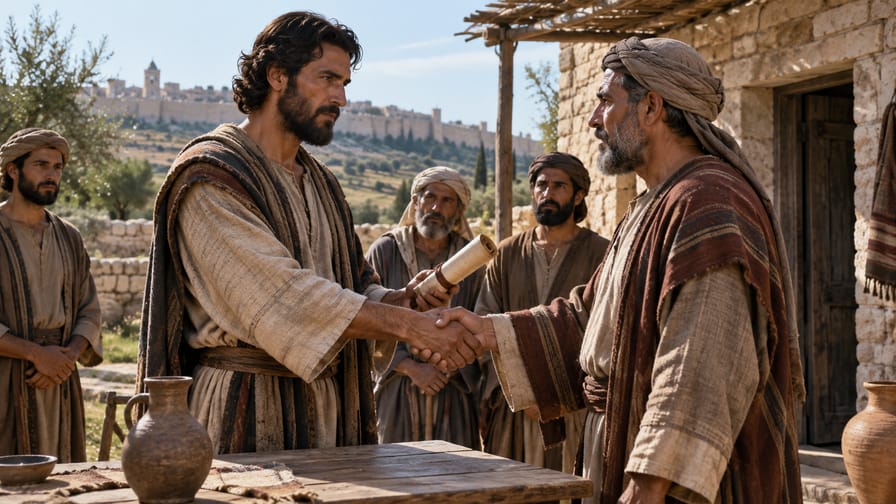
The figure of Hananel, though not a biblical character in the sense of an individual with a detailed biographical narrative, plays a significant role as a place name in the Old Testament, designating a tower in Jerusalem. The analysis of Hananel, therefore, focuses on its onomastic meaning, its strategic location, and its profound theological symbolism, especially in the context of post-exilic restoration and eschatological prophecies. From an evangelical Protestant perspective, the Tower of Hananel serves as a point of reference for God's faithfulness, His grace, and the security He provides to His people, both in a historical and prophetic sense. The scarcity of details about a "character" allows for a deeper exploration of the inherent meaning of the name and the symbolic function of the structure that bore it, revealing perennial truths about the divine character and His redemptive plans.
This study seeks to unravel the layers of meaning associated with the Tower of Hananel, examining its Hebrew etymology, its role in the narratives of Nehemiah and in the prophetic visions of Zechariah. The approach will be exegetical and theological, emphasizing the authority of Scripture and the centrality of divine grace, which is expressed in the name itself. The tower's location on the wall of Jerusalem is not merely geographical but carries implications of defense, vigilance, and the promise of a complete and glorious restoration for God's people. Thus, Hananel transcends the mere designation of a physical structure to become a vivid reminder of God's gracious intervention in the history of Israel and, ultimately, a pointer to the finished work of Christ.
1. Etymology and meaning of the name
The name Hananel (Hebrew: חֲנַנְאֵל, Ḥănanʼēl) is a theophoric name, a compound name that incorporates the name of God. It is formed by two main Hebrew roots: ḥānan (חָנַן), which means "to show favor," "to have grace," "to be merciful," and ʾēl (אֵל), which is the generic term for "God."
The combination of these roots results in the literal meaning of "God has been gracious," "Grace of God," or "God is favorable." This onomastic meaning is deeply resonant with the historical context in which the Tower of Hananel is mentioned, especially in the post-exilic period, when God's grace and favor were manifested in the permission for the return and reconstruction of Jerusalem.
The root ḥānan is fundamental in biblical theology, appearing in numerous passages to describe the gracious nature of God (Exodus 33:19 Psalm 77:9 Micah 7:18). It encapsulates the idea of unmerited favor, a divine goodness that extends to the needy and sinners. The suffix ʾēl is one of the oldest and most common names for God in the ancient Near East, and its use here reinforces the sovereignty and divinity of the one who grants this grace.
It is important to note that, in Scripture, Hananel does not refer to a person with a developed biography, but rather to a specific tower in Jerusalem. There are no variations of the name for other biblical characters, which makes the tower the only significant reference with this name. The choice of this name for a defensive structure is not accidental but carries considerable theological weight.
The theological significance of the name "God has been gracious" for a tower is multifaceted. First, it serves as a memorial of God's grace that allowed the reconstruction of the walls of Jerusalem after the Babylonian exile (Nehemiah 1:10-11). The very existence of the tower and the wall was a visible testimony to divine favor upon a people who had been disciplined for their sins.
Second, the tower, as a strategic point of defense and observation, symbolizes the divine protection that emanates from God's grace. In a broader sense, God's grace not only restores but also guards and protects His people. The mention of the Tower of Hananel in eschatological prophecies (Zechariah 14:10) underscores that God's grace is continuous and will culminate in the final restoration of Jerusalem, where His presence and favor will be fully manifested.
2. Historical context and biblical narrative
The Tower of Hananel is mentioned in two books of the Old Testament: Nehemiah and Zechariah. Both references place it as a prominent and strategic structure in the walls of Jerusalem, playing a role in both post-exilic restoration and prophetic visions about the city's future.
2.1. The post-exilic period and the reconstruction of the walls
The precise historical period of the Tower of Hananel's reconstruction is the post-Babylonian exile, specifically during Nehemiah's governorship, around 445 BC. The book of Nehemiah describes the efforts to rebuild the walls of Jerusalem, which had been in ruins since the city's destruction by Nebuchadnezzar in 586 BC (Nehemiah 1:3).
The political and social context of the time was challenging. Although the Jews had permission from the Persian Empire to return and rebuild, they faced constant opposition from neighboring enemies such as Sanballat, Tobiah, and Geshem (Nehemiah 4:7-8). The reconstruction of the walls was vital not only for the physical security of the city but also for the restoration of the national and religious identity of the people of Israel.
Nehemiah 3:1 is the first mention of the Tower of Hananel: "Then Eliashib the high priest and his brothers the priests arose and rebuilt the Sheep Gate they consecrated it and set its doors. They rebuilt the wall as far as the Tower of the Hundred and as far as the Tower of Hananel." This passage indicates that the tower was located on the northern part of the wall, near the Sheep Gate, which was where sacrificial animals entered the Temple. Its position was, therefore, of great defensive and symbolic importance, guarding one of the city's crucial entrances.
The Tower of Hananel, along with the Tower of the Hundred (also known as the Tower of Meah), marked the northeast corner of the city, a vulnerable point and therefore of great strategic importance. The reconstruction of this section, led by the high priest Eliashib, demonstrates the priority given to the city's security and sanctity. The participation of the priests in the reconstruction of the wall, starting with the Sheep Gate, emphasizes the sacred character of the work and the intimate connection between the city's physical security and its function as a center of worship for God.
Later, Nehemiah 12:39 describes the dedication of the walls, where two great thanksgiving processions walked along the top of the wall. One of them "passed over the Gate of Ephraim, by the Old Gate, by the Fish Gate, by the Tower of Hananel, by the Tower of Meah, as far as the Sheep Gate." This description again confirms the prominent location of the Tower of Hananel in the northern circuit of the wall, serving as a recognizable landmark during the restoration celebrations.
2.2. The Tower of Hananel in eschatological prophecy
The second and equally significant mention of the Tower of Hananel occurs in the prophecy of Zechariah, in chapter 14, verse 10: "The whole land shall be turned into a plain from Geba to Rimmon, south of Jerusalem. But Jerusalem shall be raised up and inhabited in its place, from the Benjamin Gate to the place of the First Gate, and from the Corner Gate to the Tower of Hananel, and from the towers of Hananel to the king's winepresses."
This passage inserts the Tower of Hananel into an eschatological context, describing the future exaltation and security of Jerusalem during the Messianic reign. Zechariah 14 paints a vivid picture of the Day of the Lord, when God will intervene to save His people and establish His kingdom over all the earth. The mention of specific landmarks like the Tower of Hananel serves to root the prophecy in the known geography of the city, giving it a concrete and literal character, despite its spiritual and future meaning.
The prophecy of Zechariah 14:10 suggests that Jerusalem will be completely restored and exalted, and that its limits will be clearly defined. The Tower of Hananel is presented as one of the extreme points of this restored and secure Jerusalem, indicating that the city will not only be rebuilt but glorified and definitively protected by God. This reinforces the meaning of the tower's name – "God has been gracious" – projecting this grace into a glorious and unshakable future.
3. Character and role in the biblical narrative
As Hananel is a tower and not a person, we cannot analyze its "character" in the sense of moral or spiritual qualities of an individual. Instead, we focus on its symbolic character and functional role that it played in the biblical narrative, both historically and prophetically.
3.1. Symbol of security and restoration
The primary role of the Tower of Hananel in the narrative of Nehemiah is as a crucial element of Jerusalem's defense. Its strategic location at the northeast corner of the wall made it a vital observation point and fortress. The reconstruction of the tower, mentioned alongside the Sheep Gate, which was a main entrance, demonstrates its importance for the city's physical security (Nehemiah 3:1).
In this sense, the tower symbolizes the restoration of Israel's security and sovereignty after the exile. The ability to rebuild and fortify the city was a tangible sign of God's hand upon His people, allowing them to reestablish their identity and protection. The tower was a concrete manifestation of God's grace, which had permitted the return and rebuilding.
The mention of the tower in the dedication processions of the wall (Nehemiah 12:39) reinforces its role as a landmark of celebration and gratitude. It was an integral part of the perimeter that transformed Jerusalem from a ruined city into a habitable and secure fortress again, a testament to God's power and faithfulness to fulfill His promises of restoration.
3.2. Prophetic and eschatological reference point
In the prophecy of Zechariah 14:10, the Tower of Hananel takes on an even more significant role as a geographical reference point for the Jerusalem of the future. Here, the tower is not merely a physical structure of the past, but a demarcation point for the glorified city in the last days.
This prophetic role elevates the tower from a mere construction to a symbol of the extent and security of the eschatological Jerusalem. The prophecy indicates that the city will be "exalted and inhabited in its place," with the Tower of Hananel marking one of its limits. This suggests that the grace and favor of God, which were manifested in the post-exilic reconstruction, will reach their full fulfillment in the Messianic age, where Jerusalem will be unshakable and permanently secure under the rule of Christ.
The development of the "character" of the Tower of Hananel, therefore, is not of an individual, but of a symbol that evolves from a historical defensive structure to a landmark in the prophetic vision of the city of God. It represents the continuity of divine grace, which permeates both the history of salvation and the consummation of God's purposes for His people and His earthly capital.
4. Theological significance and typology
The theological significance of the Tower of Hananel is profound, extending from the context of its reconstruction to eschatological prophecies, and can be interpreted from a Christocentric perspective, especially through the meaning of its name: "God has been gracious."
4.1. God's sovereign grace in restoration
The main theological contribution of Hananel lies in its name and the context of its reconstruction. The phrase "God has been gracious" resonates with the doctrine of God's sovereign grace, which is central to evangelical Protestant theology. The permission for the return from exile, the provision of resources, and protection against enemies were acts of unmerited divine grace (Ezra 1:1-4 Nehemiah 2:8, 20).
The Tower of Hananel, as an integral part of Jerusalem's wall, is a physical testimony to this grace. It represents God's faithfulness in restoring His people and His city, even after the severe discipline of the Babylonian exile. This restoration was not due to Israel's merits, but to God's goodness and promises (Deuteronomy 30:1-5 Jeremiah 29:10-14).
The construction of the tower and the wall under Nehemiah demonstrates divine providence acting through godly leaders and an obedient people. God's grace does not nullify human responsibility but empowers it. The work of reconstruction is, in itself, an act of faith and obedience that manifests God's grace in action (Nehemiah 4:6).
4.2. Typology and Christocentric prefiguration
While a tower cannot be a "type" of Christ in the sense of a person, the name Hananel and the symbolism of the tower can point to Christ in significant ways. Christ is the ultimate personification of the "Grace of God" (John 1:14, 16). The gospel itself is the good news of God's grace manifested in Jesus Christ (Acts 20:24 Titus 2:11).
As a tower of defense and security, Hananel can prefigure Christ as our "Strong Tower" (Proverbs 18:10), the safe refuge for believers. In Christ, we find protection against sin, death, and the devil. He is our security and our unshakable fortress. The tower, which protected Jerusalem, points to Christ, who protects His Church and builds it up (Matthew 16:18).
The mention of the Tower of Hananel in Zechariah 14:10, in the context of the future glorified Jerusalem, also has Christocentric implications. The eschatological Jerusalem is the city where Christ will reign. The security and exaltation of this city are guaranteed by the presence and rule of Jesus Christ. The grace of God, which began to restore Jerusalem in the post-exile, will culminate in the glory of the Messianic Kingdom, whose center is Christ.
The themes of salvation, faith, and obedience are intrinsically linked to the Tower of Hananel. Salvation is by grace through faith (Ephesians 2:8-9), and obedience is the response to that grace. The reconstruction of the tower was an act of faith and obedience that resulted in security. Likewise, the Christian life is a journey of faith and obedience to the one who is the very grace of God.
5. Biblical-theological legacy and canonical references
The Tower of Hananel, although a geographical reference, leaves a significant biblical-theological legacy by reinforcing crucial themes of the Christian faith and by connecting different periods of salvation history.
5.1. Presence in the canon and theological influence
The mentions of the Tower of Hananel in Nehemiah and Zechariah ensure its presence in the Old Testament canon. In the book of Nehemiah, it serves as a confirmation of the historicity of the reconstruction of the walls and of God's faithfulness in restoring His people. Nehemiah, as a historical book, validates divine intervention in crucial moments of Israel's history.
In Zechariah, a prophetic book, the tower assumes an eschatological role, connecting the historical reality of post-exilic restoration with God's future promises for Jerusalem and for His Kingdom. This duality of reference – historical and prophetic – is fundamental for understanding the progressive revelation of God's will and plans.
The Tower of Hananel contributes to biblical theology by underscoring the continuity of God's grace and faithfulness throughout generations. It is a reminder that God does not abandon His people, even after judgment, and that His promises of restoration are certain. This message is a pillar of Reformed and evangelical theology, which emphasizes God's sovereignty over history and His unwavering redemptive plan.
5.2. Interpretation in Jewish and Christian tradition
In the Jewish interpretive tradition, the Tower of Hananel is often seen as a symbol of Jerusalem's resilience and divine providence. Rabbinic commentators may highlight the importance of each part of the wall for the city's security and the role of God's grace in its preservation. The mention in Zechariah 14:10 is interpreted as a promise of future glory for Jerusalem, a central theme in Jewish eschatology.
In the Christian tradition, and particularly in Reformed and evangelical theology, the Tower of Hananel is viewed through the lens of God's sovereignty and redemptive grace. Theologians like John Calvin, in their commentaries on Zechariah, would have emphasized God's faithfulness to His promises, seeing the restoration of Jerusalem as a type of the building up of the Church of Christ. The grace implicit in the name "God has been gracious" is a recurring theme in evangelical preaching and teaching.
The absence of explicit mentions of the Tower of Hananel in intertestamental literature or the New Testament does not diminish its symbolic value. Instead, its importance lies in the canonical references that establish it as a point of connection between the historical restoration of Israel and the prophetic hope of a future and glorified Jerusalem. Understanding this tower enriches the perception of God's faithfulness in all His dispensations.
The Tower of Hananel, therefore, is more than a mere ancient structure it is an enduring testament to the grace and sovereignty of God. Its name and its location point to divine providence in the history of Israel and to the ultimate security that God promises to His people. For evangelical Protestant theology, it reinforces the central message that God is gracious and faithful to fulfill all His promises, culminating in the person and work of Jesus Christ, our true strong tower and the personification of God's grace.