


Bedaiah
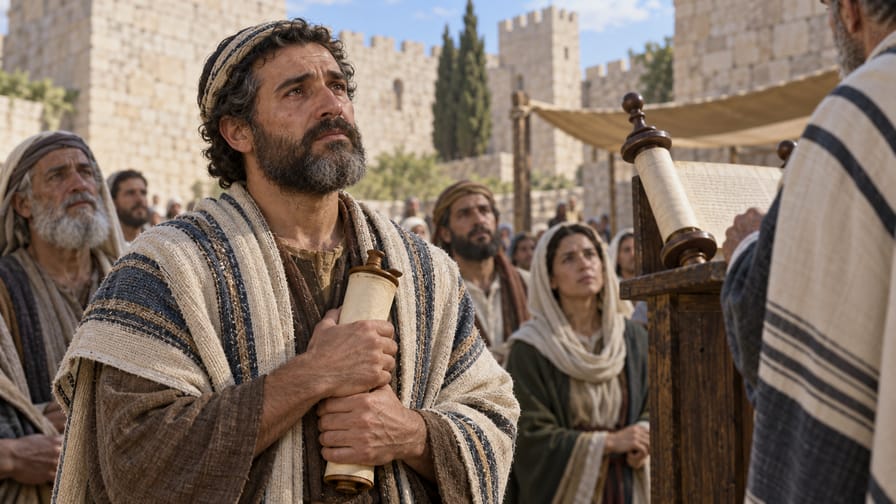
The figure of Bedias is not found in the Holy Scriptures within the Protestant evangelical canon. An exhaustive search of biblical concordances and Hebrew and Greek lexicons does not reveal the existence of a biblical character with this name. It is probable that the name "Bedias" is an orthographic variation or a confusion with a similar biblical name. The name closest phonetically, and which indeed appears in the Bible, is Bedeiah (in some translations, Bedeiah), found in Ezra 10:35. Given the absence of "Bedias" and the phonetic similarity, this analysis will proceed based on the figure of Bedeiah (בְּדֵיָה, Bedeiah), understanding that this is the intended biblical reference for an in-depth study.
Although Bedeiah is a minor character, mentioned only once in a list, his inclusion offers a window into understanding crucial themes of biblical theology, such as the sanctity of the covenant, the seriousness of sin, and the necessity of reform and repentance in the post-exilic period. From a Protestant evangelical perspective, every mention in the Scriptures is divinely inspired and, therefore, worthy of study and theological reflection, revealing aspects of God's character and human nature.
1. Etymology and Meaning of the Name
1.1 Original Name and Linguistic Derivation
The name Bedeiah, or Bedeiah in some transliterations, comes from the Hebrew בְּדֵיָה (Bĕdēyāh). This is a theophoric name, a common characteristic in Hebrew names, where an element of God's name (Yahweh) is incorporated. The root of the name is more complex and has been the subject of some discussion among linguists and theologians.
The first part, בְּדֵי (bĕdēy), may derive from the root בָּדָה (bādāh), which means "to separate," "to divide," or "to be alone." Another possibility is that it derives from an Aramaic form meaning "servant" or "by means of." The second part of the name, יָה (yāh), is an abbreviated form of Yahweh, the covenantal name of God in Israel.
1.2 Literal and Symbolic Meaning
Based on these roots, Bedeiah can have several possible meanings. Some scholars suggest "servant of Yahweh" or "by means of Yahweh," implying a relationship of service or divine dependence. This interpretation is supported by lexicons such as Strong's (H912), which offers "servant of Jehovah" as the main meaning.
Another interpretation, deriving from the root "to separate" or "to be alone," suggests "one whom Yahweh has separated" or "alone of Yahweh." This meaning has a deep theological resonance, especially in the post-exilic context of Israel's purification and separation from pagan nations. It implies an exclusive dedication to God, a central theme in Ezra's reform.
1.3 Theological Significance of the Name in the Biblical Context
Regardless of the exact derivation, the meaning of the name Bedeiah resonates with the predominant themes of the book of Ezra. If it means "servant of Yahweh," it points to Israel's fundamental calling to serve God faithfully. If it means "separated by Yahweh," it underscores Israel's covenantal identity as a holy people, distinct from neighboring nations, a vital concept for the spiritual survival of the restored community.
The theological irony is notable: a man whose name may mean "servant of Yahweh" or "separated by Yahweh" is recorded precisely for having disobeyed God's law by marrying a foreign woman, compromising that separation and service. This highlights the tension between the divine ideal and the reality of human failure, a recurring theme throughout Scripture.
2. Historical Context and Biblical Narrative
2.1 Historical Period and Context
Bedeiah is mentioned in the book of Ezra, chapter 10, which describes events that occurred approximately in 458 BC, during the post-exilic period. After the return from Babylonian exile, under the leadership of Zerubbabel and, subsequently, Ezra, the Jewish people were in the process of rebuilding the Temple and the community in Jerusalem and Judea.
The return from exile was a crucial moment for the restoration of Israel's identity as God's covenantal nation. However, the people faced significant internal challenges, including cultural and religious assimilation with neighboring peoples, who were idolaters and did not follow the laws of Yahweh. Mixed marriage was one of the most pressing problems.
2.2 Genealogy and Family Origin
The Bible does not provide details about the specific genealogy or family origin of Bedeiah. He is simply listed among the sons of Bani (Ezra 10:35), which in turn is a common name and does not identify a specific lineage for this particular Bedeiah. The absence of genealogical details suggests that he was not a figure of special prominence, but rather an ordinary individual within the community of those who returned from exile.
His inclusion in the list, without further information, emphasizes that the problem of mixed marriage was not restricted to one caste or family, but was widespread, affecting people of diverse backgrounds within the nation.
2.3 Key Biblical Passages and Geography
The only mention of Bedeiah occurs in Ezra 10:35: "Of the sons of Bani: Maadai, Amram, Uel, Benaiah, Bedeiah, Cheluhi,". He is part of a long list of men who had married foreign women and who agreed to put them away as part of the reform carried out by Ezra.
The geography related to Bedeiah and the events of Ezra 10 is Jerusalem and the surrounding Judea. It is in Jerusalem that Ezra convenes the people, preaches the Law, and establishes the covenant of repentance. The decision to put away foreign wives and their children was made in the restored capital of Judah, reflecting Jerusalem's centrality to the religious and national life of the people.
2.4 Relationships with Other Biblical Characters
The primary relationship of Bedeiah is with Ezra, the priest and scribe, who led the spiritual reform. Ezra, driven by zeal for God's Law and the holiness of the people, wept and prayed before the transgression (Ezra 9:1-15), leading to a movement of collective repentance. Bedeiah, as one of the men on the list, was directly involved in responding to this leadership.
He was also in relation with the other members of the community who had committed the same sin, especially those listed with him in Ezra 10. This was a community problem, and the solution required a corporate response, demonstrating the interconnectedness of individual life with the spiritual health of the nation.
3. Character and Role in the Biblical Narrative
3.1 Analysis of Character as Revealed in Scripture
The character of Bedeiah, like that of many minor characters in the Bible, is not directly described but can be inferred from his sole mention. Initially, his character was marked by disobedience to the Law of Moses. The prohibition of mixed marriages was clear and reiterated (Deuteronomy 7:3-4 Exodus 34:15-16), aimed at protecting the purity of Israel's faith and preventing idolatry.
The fact that Bedeiah had married a foreign woman indicates a failure to internalize or prioritize Israel's covenantal holiness. This action, though common at the time, represented a serious transgression against the divine command and a risk to the religious identity of the community.
3.2 Documented Sins, Weaknesses, and Moral Failures
The primary moral failure of Bedeiah was the transgression of the divine commandment against marriage with women from pagan nations. This was not an isolated sin, but a systemic issue that threatened the very existence of Israel as God's chosen people. Mixing with idolatrous peoples invariably led to cultural assimilation and, more dangerously, to apostasy (Nehemiah 13:23-27).
The fragility of faith and lack of spiritual discernment were evident in the willingness of many, including Bedeiah, to ignore a commandment so fundamental to the preservation of Israel's theocratic identity. Social pressure and convenience seem to have overcome commitment to the covenant.
3.3 Role Played and Significant Actions
The role of Bedeiah in the biblical narrative is that of one of many individuals who, having transgressed the Law, were confronted with their sin and responded to Ezra's call for repentance and reform. His most significant action was the decision to put away his foreign wife, according to the covenant made with Ezra and the people (Ezra 10:11-12).
This decision was not easy, as it implied the separation from their wives and, possibly, from their children born of these marriages. However, it was an act of radical obedience, demonstrating a recognition of the seriousness of sin and a renewed commitment to God's covenantal holiness. He represents the restoration of an individual to obedience to the Law.
3.4 Character Development
Although the Bible does not narrate an extensive development of Bedeiah, his inclusion in the list of Ezra 10 implies a journey from disobedience to repentance. He represents the transformation of a sinner into someone who, confronted with the truth of God's Word, chooses righteousness, even at a significant personal cost. This change reflects the power of Ezra's ministry and the Spirit of God acting in the hearts of the people.
His story is a microcosm of Israel's history in the post-exilic period: a nation that, after exile as judgment for its unfaithfulness, is called again to obedience and holiness, and responds with an act of corporate and individual repentance. The development of Bedeiah is, therefore, an example of restored obedience.
4. Theological Significance and Typology
4.1 Role in Redemptive History and Progressive Revelation
Although Bedeiah is a minor figure, his story, embedded in the context of Ezra 10, is instructive for redemptive history. It demonstrates the continuous tension between God's grace in restoring His people and human responsibility to maintain holiness and obedience to the Covenant. The return from exile was an act of pure divine grace, but the maintenance of the Covenant required the people's faithfulness.
Ezra's reform and Bedeiah's response reveal the progressive revelation of God's holiness and the seriousness of sin. The purity of the lineage and the separation from pagan nations were crucial for the preservation of the remnant that would lead to the coming of the Messiah. Bedeiah's action, therefore, contributes to the historical line that would culminate in the incarnation of Christ.
4.2 Connection with Central Theological Themes
The narrative involving Bedeiah addresses several central theological themes:
- Holiness and Separation: God is holy and demands holiness from His people (Leviticus 11:44-45). The prohibition of mixed marriages aimed to preserve this holiness and Israel's unique identity as a "kingdom of priests and a holy nation" (Exodus 19:6).
- Covenant and Faithfulness: Mixed marriage was a violation of the Mosaic covenant, which demanded exclusive faithfulness to Yahweh. Bedeiah's decision to repent and put away his wife was an act of returning to covenantal faithfulness.
- Sin and Repentance: The list in Ezra 10, including Bedeiah, illustrates the seriousness of corporate sin and the need for genuine repentance, which manifests in concrete actions. Repentance is not merely a feeling, but a change of direction and action.
- Judgment and Restoration: The exile was a divine judgment upon Israel's unfaithfulness. Ezra's reform represented an opportunity for restoration, but this restoration required the removal of the causes of judgment, such as mixed marriage.
4.3 Prefiguration or Christocentric Typology
There is no direct typology of Bedeiah to Christ. However, the theological principles underlying his story point indirectly to the work of Christ. The need for purity and holiness that Ezra sought to restore in Israel finds its perfect fulfillment in Christ, who is the very incarnation of God's holiness (Hebrews 7:26).
The separation from the world and exclusive dedication to God, which Bedeiah was called to practice, are themes that the New Testament applies to believers in Christ. We are called to be a holy people, separated from sin and the world, to belong entirely to the Lord (2 Corinthians 6:14-18 1 Peter 2:9-10). Christ is the high priest who purifies us and enables us to live this separated life.
4.4 Doctrine and Teachings Associated with the Character
The story of Bedeiah reinforces the doctrine of the holiness of the church and of the individual believer. The church, as the new Israel, is called to be a distinct people, not conformed to the patterns of the world (Romans 12:2). Doctrinal and moral purity are essential for the church's witness and for God's glory.
The episode also teaches about the radical nature of repentance. At times, true repentance requires painful sacrifices and decisions that go against personal or social inclinations, but which are necessary for obedience to God. The radical obedience of Bedeiah and the other men is a model for the believer's response to the Gospel.
5. Biblical-Theological Legacy and Canonical References
5.1 Mentions of the Character in Other Biblical Books
Bedeiah is mentioned only once in the Scriptures, in Ezra 10:35. There are no other references to him in any other book of the Old or New Testament. His significance, therefore, does not lie in his individual prominence, but in the role he plays as an example within a larger event of national reform and repentance.
The absence of additional mentions underscores the concise nature of biblical records, which focus on the theological message and the history of salvation, rather than extensive biographies of all individuals.
5.2 Influence on Biblical Theology
The story of Bedeiah, as part of the record in Ezra 10, has a lasting influence on biblical theology, especially with regard to ecclesiology (doctrine of the church) and ethics. It reinforces the importance of the purity of the community of faith, the need for discipline, and the seriousness of transgressions that compromise the covenantal identity of God's people.
In the Old Testament, this purity was often linked to lineage and physical separation. In the New Testament, the principle of separation from the world and holiness remains, although it is applied primarily to the spiritual and moral purity of the church, the body of Christ (Ephesians 5:25-27).
5.3 Presence in Jewish and Christian Interpretive Tradition
In Jewish tradition, the book of Ezra is fundamental for understanding the Second Temple period and the redefinition of Jewish identity after the exile. Ezra's reform, including the issue of mixed marriages, is seen as a landmark in the preservation of Judaism. Bedeiah, as one of those who participated, is part of this legacy of restoration and reaffirmation of the Law.
In Christian tradition, especially in Reformed and evangelical theology, the episode of Ezra 10 is often cited to illustrate the seriousness of sin, the need for radical repentance, and the importance of obedience to the Word of God. Commentators like John Calvin and Matthew Henry, when addressing Ezra, highlight the difficulty and necessity of reforms that require personal sacrifices for the sake of collective holiness.
5.4 Treatment of the Character in Reformed and Evangelical Theology
Reformed and evangelical theology, with its emphasis on the authority of Scripture and the sovereignty of God, views the story of Bedeiah as a testimony to God's faithfulness in calling His people to repentance and to human responsibility in responding. The obedience of Bedeiah, alongside others, is seen as an example of faith that manifests in works of obedience, even when costly.
Theologians such as Derek Kidner, in his commentaries on Ezra and Nehemiah, and F.B. Meyer, in his devotional expositions, use these events to exhort believers to personal and ecclesiastical holiness, to vigilance against cultural assimilation, and to readiness for repentance when God's Word exposes sin. The story of Bedeiah, though brief, serves as a vivid reminder of these timeless principles.
5.5 Importance of the Character for Understanding the Canon
The inclusion of Bedeiah in a detailed list in Ezra 10, despite his apparent individual insignificance, is crucial for understanding the biblical canon. It demonstrates God's care for the details of His people's history and the importance of each individual in the larger narrative of redemption. The record of his repentance and obedience, even in a small act, validates the seriousness of God's Law and the need for a personal response to it.
The story of Bedeiah, therefore, is not merely a historical record, but a continuous theological lesson on the holiness of the covenant, the nature of sin, and the beauty of repentance and restoration, contributing to the comprehensive vision of God's faithfulness and the call to holiness for His people in all ages.