


Aiah
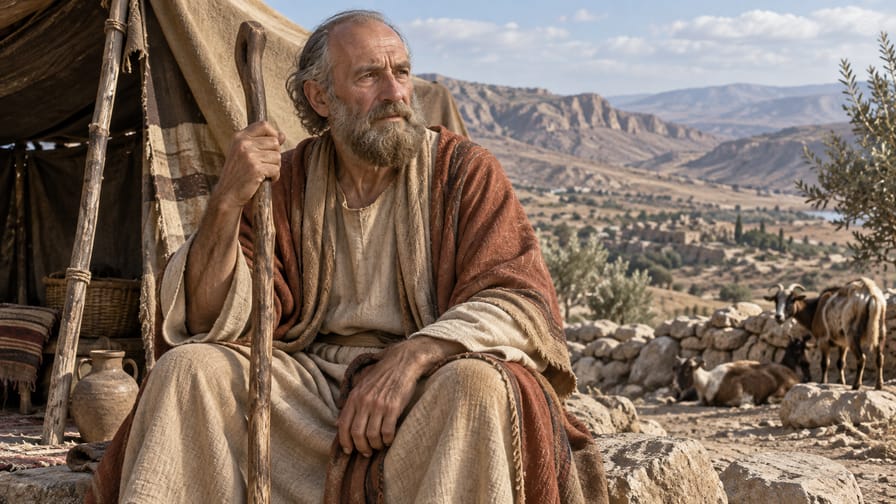
The figure of Aiã (in Hebrew, אַיָּה, 'Ayah) is mentioned in the Hebrew Scriptures in two distinct contexts, referring to different individuals. Although not a central character in the biblical narrative, the analysis of his name, historical context, and the passages in which he appears offers valuable insights for understanding the history of Israel, social relations, and divine sovereignty from an evangelical Protestant perspective.
The theological relevance of Aiã, in his distinct occurrences, emerges more from the context in which he is placed than from his direct actions. The exegetical and theological approach seeks to extract lessons on faithfulness, justice, the consequences of sin, and the providence of God, even through seemingly secondary characters.
1. Etymology and meaning of the name
The name Aiã, transliterated from Hebrew אַיָּה ('Ayah), is of Semitic origin and has a meaning that refers to the natural world. The most accepted etymological root for 'Ayah is associated with a bird of prey, specifically a "kite," "falcon," or "hawk."
This interpretation is corroborated by its occurrence in lists of unclean birds in the Mosaic Law, as in Leviticus 11:14 and Deuteronomy 14:13, where 'ayyah is classified among the birds forbidden for consumption. The literal meaning of "kite" or "falcon" suggests characteristics such as agility, sharp vision, and predation.
Symbolically, animal names, especially birds of prey, can evoke qualities such as strength, swiftness, or even a certain mystery or omen. In the biblical context, however, the association with unclean birds can have negative connotations or, at minimum, ritual distinction.
There are no significant variations of the name Aiã in biblical languages that alter its main etymological root. In the Greek Septuagint, the name is transliterated as Αια (Aia) or Αιαν (Aian), maintaining the sound and original meaning.
There are two distinct characters with the name Aiã in the Scriptures. One is mentioned as one of the Horite chiefs, son of Zibeon, in Genesis 36:24 and 1 Chronicles 1:40-41. The other is identified as the father of Rizpah, Saul's concubine, in 2 Samuel 3:7, 2 Samuel 21:8, and 2 Samuel 21:10-11.
The theological significance of the name, in itself, for these specific characters is limited, given that the biblical text does not explicitly explore a connection between the name "kite" and the character or destiny of Aiã. However, naming people after animals was common in the Ancient Near East, and may simply reflect a cultural practice or a parental wish.
From a broader perspective, the presence of the name Aiã, with its meaning of "kite," in lists of unclean animals, may subtly reinforce the idea of holiness and separation that God required of His people, contrasting with the natural world and its practices.
2. Historical context and biblical narrative
2.1. The Horite chief Aiã
The first Aiã mentioned in the Scriptures belongs to the genealogy of the Horites, original inhabitants of Seir, the land that would later be occupied by Edom. He is listed as the son of Zibeon and brother of Anah, in Genesis 36:24, in the section detailing the descendants of Esau and the chiefs of Edom.
This historical period corresponds to the patriarchal era, approximately between 2000 B.C. and 1800 B.C., before the exodus of Israel from Egypt. The political and social context was tribal, with clans and chiefs exercising authority over their respective family and territorial groups.
The mention of Aiã in this context primarily serves to trace the lineage of the Horites and, subsequently, the Edomites, as God fulfilled His promises to Abraham and his descendants, and also established the borders of neighboring nations.
The geography associated with this Aiã is the mountainous region of Seir, which would become the territory of Edom. His inclusion in the genealogy of Genesis 36 and 1 Chronicles 1 underlines the importance of lineages for understanding redemptive history and the formation of nations.
2.2. The father of Rizpah, Saul's concubine
The second Aiã, and the more prominent in biblical narratives, is the father of Rizpah, King Saul's concubine. He lived during the period of Israel's united monarchy, specifically during the reigns of Saul and David, around the 11th century B.C.
The political context was one of transition and conflict. After Saul's death, there was a dispute for the throne between the house of Saul, led by Ish-bosheth (his son), and the house of David. The kingdom of Israel was fragmented and rivalry was intense.
The first mention of Aiã, father of Rizpah, occurs in 2 Samuel 3:7, where Ish-bosheth accuses Abner, the commander of Saul's army, of having lain with Rizpah. This accusation, which implies a claim to the throne, triggers Abner's wrath and his subsequent desertion to David's side.
The second and more significant appearance of the name Aiã, through his daughter Rizpah, happens in 2 Samuel 21:8-11. Years later, during David's reign, a three-year famine strikes the land, and the Lord reveals that the cause is the bloodguilt on Saul and his house for having killed the Gibeonites.
To atone for this sin and restore divine blessing, David is instructed to hand over seven descendants of Saul to the Gibeonites to be executed. Among those handed over are the two sons of Rizpah and Saul, Armoni and Mephibosheth (not to be confused with Jonathan's son).
After the execution, Rizpah, the daughter of Aiã, demonstrates a remarkable act of mourning and devotion. She spreads sackcloth over a rock and guards the bodies of her sons and the other descendants of Saul, preventing birds of prey (ironically, the meaning of her father Aiã) and wild animals from devouring them, from the beginning of the harvest until the rain fell (2 Samuel 21:10).
This act of loyalty and compassion from Rizpah moved David, who then provided a worthy burial for the bones of Saul and Jonathan, along with the bodies of the seven executed men, in the tomb of Kish, Saul's father (2 Samuel 21:12-14). The rain then fell, indicating the end of divine wrath.
The main geography of this narrative is Gibeah of Saul, the burial place and where the bodies were exposed. The relationship of Aiã, father of Rizpah, with other characters is indirect but crucial, connecting him to the royal house of Saul and, by extension, to David and the Gibeonites, with whom Israel had an ancient covenant.
3. Character and role in biblical narrative
3.1. The Horite chief Aiã
Regarding the character of the Aiã Horite, the Scriptures provide no details. He is merely a name in a genealogical list. His role is that of a link in the chain of Horite descent, contributing to the historical record of the formation of nations in the region of Seir.
As a Horite "chief" ('allûph, אַלּוּף), he likely exercised tribal authority, administering his clan and participating in decisions that affected his people. His mention in Genesis 36:24 and 1 Chronicles 1:40-41 situates him as part of the pre-Edomite social and political structure.
The absence of details about his direct actions or character serves to focus the biblical narrative on its larger purposes, such as the lineage of Abraham and the sovereignty of God over all nations, even those not directly linked to the Abrahamic covenant.
3.2. The father of Rizpah
Similarly, Aiã, the father of Rizpah, does not have his character or actions directly described. His importance lies solely in being the father of Rizpah, whose actions are of great significance in the narrative of 2 Samuel 21.
There is no mention of virtues, spiritual qualities, sins, or moral failings attributed to him personally. His role is purely genealogical, establishing the identity of his daughter Rizpah as "daughter of Aiã," which may have been a form of social identification for the family.
The vocation or function of Aiã, father of Rizpah, is not specified. He is not described as a prophet, priest, king, or warrior. It can be inferred that he was an ordinary man of that time, perhaps a citizen of Gibeah or a nearby region, whose daughter became King Saul's concubine.
The development of Aiã's character is nonexistent, as he is not an active character in the story. However, the legacy of his daughter Rizpah, who stands out for her loyalty and courage in the face of adversity, reflects indirectly on the family from which she comes.
The key decision in the narrative is David's, inspired by Rizpah's act, to provide a worthy burial for the dead. Rizpah's loyalty to the house of Saul, even after the death of her sons and David's ascension, is a testament to the honor and respect she held for her family.
4. Theological significance and typology
4.1. The Horite chief Aiã and the sovereignty of God
The Aiã Horite, though a marginal figure, contributes to the progressive revelation of God's sovereignty over the history of nations. His inclusion in the genealogy of Genesis 36 shows that God not only deals with Abraham's lineage but also with neighboring peoples, establishing their territories and descendants.
This section emphasizes God's faithfulness in fulfilling His promises, both to Abraham (setting apart a people for Himself) and to Esau (guaranteeing him a nation, Edom). There is no direct Christocentric typology associated with this Aiã, but his existence points to God's comprehensive plan that includes all families of the earth (Genesis 12:3).
The mention of the Horites and Edomites connects with theological themes of election and nation. Although Israel is the covenant people, the Bible recognizes the existence and purpose of other nations under divine providence, even if they are not in the focus of Israel's salvation history.
4.2. The father of Rizpah and the consequences of sin
Aiã, the father of Rizpah, and the narrative in 2 Samuel 21, where his daughter plays a crucial role, offer rich theological significance from an evangelical Protestant perspective. The famine afflicting Israel is an explicit divine judgment, resulting from Saul's sin against the Gibeonites, violating a covenant made centuries earlier (Joshua 9:3-21).
This episode illustrates the seriousness of covenant violation and the persistence of divine justice. God does not forget covenants, and the sin of one generation can have consequences that affect future generations. This highlights the importance of obedience to the Law and to commitments made in the Lord's name.
David's action of handing over Saul's descendants to the Gibeonites for execution, though difficult to comprehend by modern standards, is presented as an act of atonement to appease God's wrath and restore blessing upon the land. This is not an arbitrary vengeance, but a response to a divine judgment on the breach of covenant.
The figure of Rizpah, the daughter of Aiã, emerges as a symbol of loyalty and compassion. Her act of guarding the bodies of the executed is a powerful testimony of love and honor, even in the face of disgrace. This attitude touches David's heart and, implicitly, pleases God, who sends the rain.
Although not a direct typology of Christ, the story of the atonement for Saul's sin through the death of his descendants points to the principle of substitution and the need for bloodshed for the remission of sin (Hebrews 9:22). In Christ, we have the perfect and final atonement for all sins, putting an end to the need for continuous sacrifices (Hebrews 10:11-14).
The narrative also emphasizes God's grace, which responds to intercession and repentance, even if manifested through an act of mourning. The falling of rain after the worthy burial is a sign of the restoration of blessing and divine favor, connecting obedience and justice to God's provision.
5. Biblical-theological legacy and canonical references
5.1. The legacy of the Horite chief Aiã
The Aiã Horite has his legacy restricted to his mention in the genealogies of Genesis 36:24 and 1 Chronicles 1:40-41. His inclusion in these passages is fundamental for understanding the ethnography of the Old Testament and Israel's relationship with its neighbors, especially Edom.
Although there are no direct literary contributions or mentions in the New Testament, the presence of figures like Aiã in the genealogical narrative reinforces the historical accuracy of the Bible and the view of God as the Lord of all nations, even before the formation of Israel as a people.
In Jewish and Christian interpretive tradition, the genealogy of the Horites and Edomites is studied to understand the context of prophecies and Israel's political relations. Reformed and evangelical theologians see in these lists God's sovereignty in human history, which sets the stage for the coming of the Messiah through the lineage of David and, ultimately, of Adam.
5.2. The legacy of Rizpah's father
The legacy of Aiã, father of Rizpah, is inseparable from his daughter's actions in 2 Samuel 21. Although he himself is a silent character, Rizpah's story is one of the most moving and theologically rich episodes in the Old Testament.
His influence on biblical theology lies in how Rizpah's story underscores the seriousness of the covenant, God's justice in the face of sin, and the importance of atonement. The narrative serves as a vivid reminder of God's holiness and the consequences of disobedience, even for a king like Saul.
The story is frequently cited in evangelical theology to illustrate the interconnection between sin, judgment, and the need for repentance and atonement. The devotion of Rizpah, the daughter of Aiã, is seen as an example of loyalty and compassion, which inspires King David's action and the restoration of divine blessing.
There are no direct references to Aiã or Rizpah in the New Testament, but the theological principles present in the narrative (sin, judgment, atonement, grace, and faithfulness) are central to Christian doctrine. The need for atonement, dramatically illustrated in 2 Samuel 21, finds its full and definitive fulfillment in the sacrificial death of Jesus Christ on the cross (Romans 5:8-11).
Reformed and evangelical theology emphasizes that, even in seemingly secondary narratives, God reveals His attributes and His plans. The story of Aiã's daughter serves to demonstrate that God is just in His judgments, faithful in His covenants, and merciful to those who seek His face, even through acts of mourning and honor.
The importance of the character Aiã, through his descendants, for understanding the biblical canon lies in how he contributes to the rich tapestry of Israel's history, revealing the complexity of human and divine relationships, and pointing to the need for redemption that culminates in Christ.