


Serug
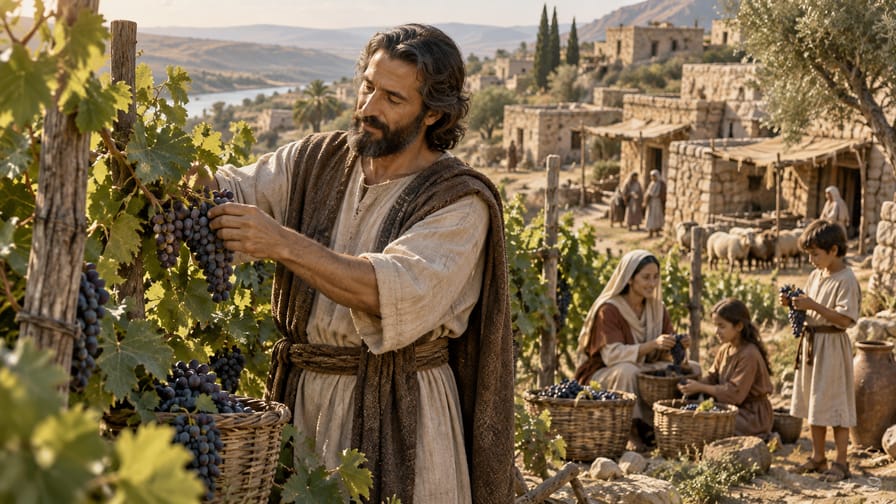
The figure of Serug, though briefly mentioned in the Scriptures, holds substantial theological and historical significance within the biblical narrative, especially in the messianic lineage. He is a vital link in the genealogical chain that connects the post-diluvian era to the patriarchal age, culminating in the coming of Abraham and, by extension, of Christ. His inclusion in the genealogies of Genesis and Luke underscores meticulous divine providence in the history of salvation.
The analysis of Serug from an evangelical Protestant perspective emphasizes the authority of the Scriptures, the historical accuracy of the genealogies, and the sovereignty of God in preserving the line of promise. Although there are no extensive narratives about his actions or character, his mere existence and descent reveal crucial aspects of the divine redemptive plan.
This study seeks to explore the onomastic, historical, theological, and typological dimensions associated with Serug, recognizing that even secondary figures contribute to a comprehensive understanding of biblical revelation and the work of Christ.
1. Etymology and meaning of the name
The name Serug, in Hebrew, is Serug (שְׂרוּג). The Septuagint transliterates it as Σερούχ (Serouch), and the Latin Vulgate as Serug. This consistency in transliteration across major versions indicates a standardization of the name in different linguistic contexts.
The etymological root of Serug (שְׂרוּג) is generally associated with the Hebrew verb sarag (שָׂרַג), which means "to interweave," "to braid," "to entangle," or "to branch out." This root suggests concepts such as "branch," "tendril," or "intertwined." The name, therefore, can be interpreted as "branch," "sprout," or "he who intertwines."
The literal meaning of the name Serug, "branch" or "intertwined," acquires a deep symbolic resonance in the biblical context, especially within a genealogy. It symbolizes the continuity of the lineage, the connection between generations, and the idea of a "family tree" that branches out and remains united. It is a name that, in itself, points to the importance of descent.
There are no other prominent biblical characters with the same name, which makes it distinctive. The uniqueness of Serug reinforces his identity as a specific and irreplaceable link in the line of Shem, which leads to Abraham.
The theological significance of the name lies in its etymology. As a "branch" or "intertwined," Serug represents the continuity of the divine promise through generations. He is one of the "links" that God carefully preserved so that the promised seed in Genesis 3:15 could, one day, be manifested in Christ.
The name Serug, in this sense, is a testament to God's faithfulness in upholding His covenant and His redemptive plan, even in times of increasing apostasy and dispersion. He is part of the divine "weaving" of salvation history, an essential thread connecting the events of the past with the hopes of the future.
2. Historical context and biblical narrative
Serug is presented in the post-diluvian genealogies of the book of Genesis and in the New Testament. He is the son of Reu and the father of Nahor, thus being the grandfather of Terah and the great-grandfather of Abraham. His life is situated in a crucial period of biblical history, centuries after the Flood and before the call of Abraham, as recorded in Genesis 11:20-23.
According to biblical chronology, Serug was born 130 years after the Flood and lived 230 years. He was born when his father, Reu, was 32 years old (Genesis 11:20). He begot Nahor when he was 30 years old (Genesis 11:22) and lived for another 200 years after Nahor's birth, totaling 230 years. This longevity, though less than that of the pre-diluvian patriarchs, is still significant, indicating a transition in human life expectancy after the Flood.
The historical and social context of Serug's time is that of ancient Mesopotamia, a region that was witnessing the rise of the first urban civilizations, such as Sumer and Akkad. It is a period marked by the dispersion of nations after the event of the Tower of Babel (Genesis 11:1-9), although Serug was born after this event.
Despite the dispersion and confusion of languages, the lineage of Shem, to which Serug belongs, maintained a connection with faith in the true God, even amidst the increasing idolatry that characterized the region. Ur of the Chaldeans, the hometown of Abraham and his family, was a center of pagan worship, which suggests that Serug's family and his descendants lived in a polytheistic environment.
Key biblical passages where Serug appears are: Genesis 11:20-23, which details his descent and longevity 1 Chronicles 1:26, which lists him in the genealogy of Noah's sons and Luke 3:35, which includes him in the genealogy of Jesus Christ. These references, though brief, are crucial for establishing his position in the history of salvation.
The geography related to Serug is, presumably, the region of Mesopotamia. Although the Bible does not specify his birthplace or residence, Jewish and Christian tradition associates him with the area of Ur of the Chaldeans, from where Terah and Abraham would later depart (Genesis 11:31). This connects him to the culture and spiritual challenges of that region.
His relations with other biblical characters are strictly genealogical: he is the son of Reu, the father of Nahor (the elder, Abraham's grandfather), and the grandfather of Terah. Through Terah, he connects directly to Abraham, the father of faith. This strategic position in Abraham's genealogy is his main narrative and historical relevance.
3. Character and role in the biblical narrative
The Bible offers no details about Serug's character or actions, beyond his genealogical function of begetting descendants and living for a certain number of years. There are no narratives describing his virtues, flaws, calling, or specific decisions. His relevance, therefore, must be inferred from his inclusion in the divinely inspired genealogies.
Serug's primary function in the biblical narrative is to serve as a vital link in the unbroken chain of Shem's lineage down to Abraham. He is proof of God's faithfulness in preserving a holy seed amidst an increasingly corrupted world. His existence ensures the continuity of the line of promise, which is fundamental to the history of redemption.
While we cannot attribute specific virtues to him based on his actions, his mere presence in the genealogy suggests implicit obedience to the divine command to "be fruitful and multiply" (Genesis 1:28). His life, even without notable events, contributed to God's greater plan to establish a nation through which blessing would come to all the families of the earth (Genesis 12:3).
There is no record of documented sins, weaknesses, or moral failures for Serug. The absence of such details does not imply perfection, but rather that his life contained no events requiring a specific moral record for the purpose of the biblical narrative. Scripture focuses on his function as a progenitor.
Serug's role is not that of a prophet, priest, king, or warrior. His calling is that of an ancestor, a part of the historical tapestry that God was weaving for the fulfillment of His promises. He is a reminder that God works through generations, using ordinary individuals for extraordinary purposes.
The significant actions attributed to Serug are his birth, the act of begetting Nahor at age 30, and his death at age 230 (Genesis 11:22-23). These are the only concrete pieces of information about his life. His existence is his greatest contribution, ensuring that Abraham's lineage was not broken.
There is no character development for Serug in the biblical narrative, as he is presented in a concise and functional manner. His significance lies in his static and essential position within the genealogy, serving as a bridge between the post-diluvian era and the patriarchal age, pointing to the coming of the Messiah.
4. Theological significance and typology
The theological significance of Serug lies primarily in his role in redemptive history and in the progressive revelation of God's plan. He is a crucial link in the genealogy that connects Shem to Abraham (Genesis 11) and, consequently, to Jesus Christ (Luke 3:35). His existence demonstrates God's unwavering faithfulness in preserving the messianic lineage through generations.
The inclusion of Serug in the biblical genealogies emphasizes the historicity of the Christian faith. Salvation is not an abstract concept but a plan that unfolds through real events and people in time and space. Serug is a silent witness to this historical reality and to divine sovereignty over human history.
While Serug is not a direct prefiguration or typology of Christ in the sense of an Old Testament person, event, or institution pointing to Jesus, his existence contributes to the larger typology of the lineage. The genealogy itself is Christ-centric, as its ultimate purpose is to trace the ancestry of the promised Messiah.
The covenants and promises related to Serug are those he inherited from his ancestors and those that would be fulfilled in his descendants. He lived under the Noahic covenant (Genesis 9), which promised the continuity of life on earth. More significantly, his life paved the way for the Abrahamic covenant (Genesis 12:1-3), which promised a great nation and blessing to all the families of the earth through a descendant of Abraham.
The reference to Serug in the New Testament, specifically in Luke 3:35, is of utmost importance. By including him in the genealogy of Jesus, Luke validates his historical existence and his fundamental role in the lineage of the Savior. This inclusion underscores the humanity of Christ and his connection to the history of Israel and humanity, as promised by God from Eden (Genesis 3:15).
Serug's life, though without recorded heroic deeds or great demonstrations of faith, connects to central theological themes such as divine faithfulness, the providence of God, and the history of salvation. He is a reminder that God works through ordinary people to accomplish His extraordinary purposes, ensuring that the seed of promise remains alive.
The prophetic fulfillment associated with Serug is not about him directly, but about the lineage he helped perpetuate. The promise of a "seed" who would crush the serpent's head (Genesis 3:15) depended on the preservation of a specific lineage, and Serug was a guardian of that continuity. His existence is, therefore, a step in the progressive fulfillment of that prophecy.
The doctrine and teachings associated with Serug, though indirect, reinforce the doctrine of God's sovereignty over history and the importance of genealogy as a divinely inspired record. He teaches us about God's patience in unfolding His redemptive plan through centuries and generations, culminating in the coming of Jesus Christ.
5. Biblical-theological legacy and canonical references
Serug's legacy in the biblical canon, though discreet, is undeniable. His mentions in Genesis 11:20-23, 1 Chronicles 1:26, and Luke 3:35 establish his importance as an uninterrupted genealogical link. These references, spread across different books and testaments, attest to the consistency of the biblical narrative and the seriousness with which genealogies were treated.
There are no literary contributions attributed to Serug he did not write books, psalms, or epistles. His contribution is existential: he was the father of Nahor, keeping the lineage alive. This is a form of contribution that, though not authorial, is fundamental to the structure of salvation history.
Serug's influence on biblical theology lies in how his existence underscores divine faithfulness and the providence of God. Genealogies, often seen as mere lists, are, in fact, powerful testimonies to God's sovereign control over history, ensuring that the promise of the messianic seed would not fail.
In Jewish and Christian interpretive tradition, Serug is generally not the object of extensive exegeses or midrashim, unlike more prominent figures. He is recognized primarily in his genealogical role, a piece in the grand tapestry of the history of Israel and the Church. His importance is more structural than narrative.
There are no known references to Serug in intertestamental literature that add significant details to his figure beyond what is found in the canon. This reinforces the idea that his function is primarily that of an ancestor, without an expanded active or symbolic role outside the genealogies.
In Reformed and evangelical theology, the inclusion of Serug in the genealogies is seen as evidence of the plenary and verbal inspiration of the Scriptures. Every name, even that of a seemingly secondary figure, is divinely ordered to demonstrate the precision and historicity of God's plan, which culminates in Christ.
Serug's importance for understanding the canon lies in his contribution to historical and theological continuity. He helps connect the era of the post-diluvian patriarchs with the era of Abraham, solidifying the historical basis for the messianic promises and the coming of Jesus Christ as the fulfillment of these promises. His presence in the canon, therefore, serves to reinforce the reliability of the Word of God and the certainty of salvation in Christ.