


Joel
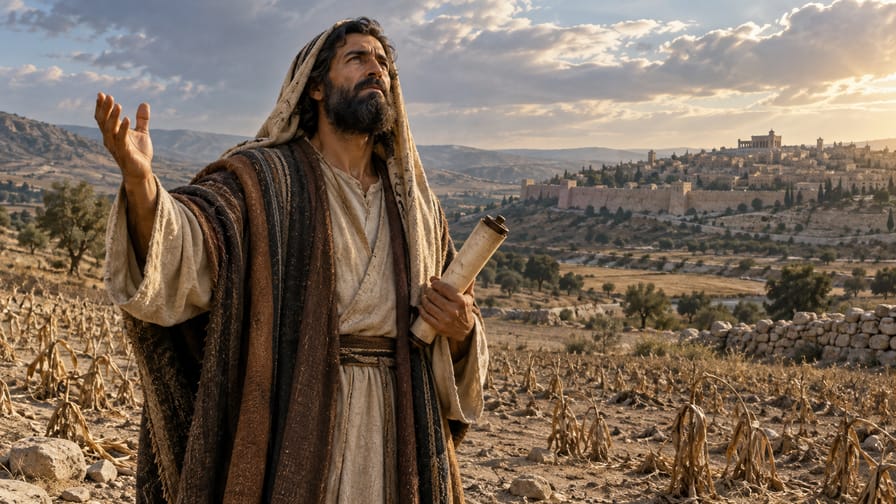
The figure of Joel, whose name adorns one of the prophetic books of the Old Testament, remains a crucial messenger of divine sovereignty and the human need for repentance. His message, though rooted in a specific context of crisis, resonates with universal themes of judgment, grace, restoration, and the promise of the Holy Spirit. This analysis explores the depth of Joel from a Protestant Evangelical perspective, highlighting his etymological meaning, historical context, prophetic character, and the enduring theological relevance of his message.
The book of Joel, though brief, is rich in symbolism and prophecy, offering valuable insights into the nature of God, the human condition, and the redemptive plan. Through vivid language and powerful imagery, the prophet calls his people to sincere lament and announces the coming of the "Day of the Lord," an event of judgment and hope that finds its climax in Christ.
1. Etymology and meaning of the name
The name Joel, in Hebrew Yo'el (יוֹאֵל), is composed of two theophoric roots that reveal a profound theological declaration. The first part, Yo (יוֹ), is an abbreviated form of the divine name Yahweh (YHWH, יהוה), God's covenant name with Israel. The second part, 'el (אֵל), is the common Hebrew word for "God" or "mighty one."
Thus, the name Joel literally means "Yahweh is God" or "The Lord is God." This is a powerful confession of faith and an affirmation of YHWH's exclusive sovereignty over all other deities. In the Old Testament context, where idolatry was a constant temptation, such a name served as a perennial reminder of divine identity and authority.
The theological significance of Joel's name is intrinsic to his message. The prophet proclaims that Yahweh is the only God who controls nature (the plague of locusts and the rain, Joel 1:4 2:23), who presides over judgment and who offers salvation. The prophet's name, therefore, is an echo of the central truth he was commissioned to communicate to the people of Judah.
There are other biblical figures with the same name, which requires care not to confuse them with the prophet author of the book. Among them, notably, is Joel, Samuel's firstborn (1 Samuel 8:2), who, along with his brother Abijah, was a corrupt judge in Beersheba. There is also a Joel, father of Shemaiah, from the tribe of Reuben (1 Chronicles 5:4, 8), and others mentioned in genealogies and priestly lists (1 Chronicles 6:33 15:7, 11 2 Chronicles 29:12 Ezra 10:43 Nehemiah 11:9).
However, the prominence of the prophet Joel lies in his authorship of the canonical book that bears his name. His identity is primarily defined by this prophetic work. The meaning of the name "Yahweh is God" resonates deeply with the prophet's call to repentance and the recognition of God's sovereignty over history and nature, amidst a devastating crisis.
This theophoric name serves as a preface to Joel's message, which insists on Yahweh's uniqueness and power to judge and restore. He challenges the people to recognize that, even amidst catastrophe, it is Yahweh who acts, and only He can bring deliverance and renewal.
2. Historical context and biblical narrative
2.1. Historical period and setting
The book of Joel offers no explicit dates or mentions contemporary kings, which has led to various proposals regarding its dating. The main theories place it in the pre-exilic period (9th century BC, perhaps during the reign of Joash), or in the post-exilic period (6th-5th century BC). The conservative evangelical perspective tends to favor a post-exilic dating, although there are significant arguments for both views.
Arguments for a post-exilic dating include the absence of a king and the prominence of priests and elders (Joel 1:13-14 2:17), the centrality of the temple and the re-established cult (Joel 1:13-14 2:15-17), and references to events such as the dispersion of Israel and slavery (Joel 3:2-3, 6-7), which fit well after the Babylonian exile.
The social and religious context of Judah, whether pre- or post-exilic, was that of a people who frequently strayed from God. The plague of locusts and the drought that Joel describes are not merely natural events, but are interpreted theologically as a divine judgment upon the nation for its infidelity. The land of Judah, with its capital Jerusalem, is the main stage of the prophetic message.
2.2. The narrative of the plague and the Day of the Lord
The narrative of the book of Joel begins with a vivid and terrifying description of an unprecedented plague of locusts, followed by a devastating drought (Joel 1:2-12). The prophet calls the people, the elders, and the priests to lament and repent, for the calamity is a harbinger of the imminent "Day of the Lord" (Joel 1:15).
This Day of the Lord is portrayed as a day of darkness, destruction, and divine judgment. Joel exhorts to genuine repentance, not merely outward, but from the heart, with fasting, weeping, and lamentation (Joel 2:12-17). He emphasizes God's mercy, who is "gracious and compassionate, slow to anger and abounding in lovingkindness" (Joel 2:13).
In response to the people's repentance, God promises to restore what the locusts devoured (Joel 2:25) and to pour out his Spirit on all flesh (Joel 2:28-29). This is one of the most significant prophecies of the Old Testament, pointing to the messianic era and the new covenant.
The message culminates with the description of the final judgment of the nations in the Valley of Jehoshaphat (which means "Yahweh judges"), and the glorious restoration of Judah and Jerusalem, where God will dwell with his people (Joel 3:1-21). The geography of Jerusalem and its surroundings, such as Mount Zion and the Valley of Jehoshaphat, are central to Joel's prophetic vision.
Although Joel does not directly interact with other prominent biblical figures outside his book, his message aligns with that of other prophets who called Israel to repentance and announced the Day of the Lord, such as Amos, Isaiah, and Zephaniah. He represents the prophetic voice that rises in times of crisis to call God's people back to faithfulness.
The absence of detailed genealogical information about Joel, beyond being "son of Pethuel" (Joel 1:1), suggests that his authority did not derive from his lineage, but directly from his divine calling. This reinforces the idea that the message is more important than the messenger, a common theme in biblical prophecy.
3. Character and role in biblical narrative
3.1. The prophet of judgment and hope
The character of Joel, as revealed in his book, is that of a fervent prophet, zealous for the glory of God and the well-being of his people. He does not hesitate to confront the nation with the gravity of its situation, interpreting the plague of locusts as an unequivocal sign of divine judgment. His language is vivid, dramatic, and charged with emotion, seeking to awaken the people from their spiritual lethargy.
One of the most evident spiritual qualities in Joel is his profound sensitivity to God's action in history. He sees beyond natural calamities, discerning the sovereign hand of Yahweh behind the events. His vocation is that of a theological interpreter of reality, a spokesman who connects earthly events to the divine will and God's redemptive purposes.
The prophet Joel demonstrates courage by calling religious and civil leaders – priests, elders, and all the people – to public and sincere repentance (Joel 1:13-14 2:15-17). He does not merely lament the misfortune, but points to the only solution: a wholehearted return to God, with fasting, weeping, and lamentation. His emphasis on inner repentance ("rend your heart and not your garments," Joel 2:13) reveals a profound understanding of the nature of true faith.
Joel's role in the biblical narrative is multifaceted. He acts as an announcer of imminent judgment, painting vivid pictures of the devastation and terror of the Day of the Lord. At the same time, he is a herald of hope, proclaiming promises of material restoration and, more significantly, the outpouring of the Holy Spirit.
His significant actions include the convocation of a solemn assembly for repentance (Joel 2:15-17) and the proclamation of God's words that offer forgiveness and renewal. He serves as a mediator between God and the people, conveying both divine warning and the promise of salvation.
There is no record of documented sins, weaknesses, or moral failures for Joel in the book that bears his name, which is common for most minor prophets, whose focus is on the message, not the messenger. He presents himself as a faithful servant, dedicated to communicating God's word with precision and passion.
The development of Joel's character throughout the narrative is not explicit, but his message evolves from a somber warning to a glorious promise. He begins with the imminent judgment of the plague, but concludes with the vision of ultimate restoration and the perpetual presence of God in Zion. This reflects the very nature of God, who is both righteous judge and merciful Savior.
In summary, Joel is the prophet who uses an immediate crisis to point to eternal truths about divine judgment and redemptive grace. His passion for God's justice and his unwavering hope in divine mercy make him an example of a faithful prophet and a powerful instrument in the hands of the Lord.
4. Theological significance and typology
4.1. The Day of the Lord and redemptive history
The book of Joel plays a crucial role in redemptive history, especially through the development of the concept of the "Day of the Lord" (Yom Yahweh, יוֹם יְהוָה). This central theme is interpreted in a multifaceted way by Joel: first, as a present judgment (the plague of locusts and the drought, Joel 1:15) second, as an eschatological judgment upon the nations (Joel 3:1-17) and, intrinsically linked to both, as a day of salvation and restoration for God's repenting people (Joel 2:32).
Joel's message demonstrates God's progressive revelation. He uses an immediate calamitous event to teach about eternal principles of judgment and mercy, and to point to a glorious future. The plague of locusts functions as a prefigurement of the final judgment, a microcosm of what will come on a larger scale on the Day of the Lord.
The Christocentric typology in Joel is not as explicit as in other prophets, but it is deeply significant. The "Day of the Lord" in its fullness points to the coming of Christ, both in his first advent (inaugurating the Kingdom and the age of the Spirit) and, more dramatically, in his second advent (consummating judgment and salvation). God's sovereignty over judgment and restoration, so emphasized by Joel, finds its apex in Christ's work as Judge and Redeemer.
4.2. The promise of the Spirit and its connection with Christ
The most notable passage for Christian theology is the promise of the outpouring of the Holy Spirit: "And afterward, I will pour out my Spirit on all people. Your sons and daughters will prophesy, your old men will dream dreams, your young men will see visions. Even on my servants, both men and women, I will pour out my Spirit in those days" (Joel 2:28-29). This prophecy is quoted and interpreted by Peter on the day of Pentecost (Acts 2:16-21), establishing a direct connection between Joel and the founding of the Christian Church.
Peter declares that the events of Pentecost – speaking in tongues, spiritual manifestations – are the fulfillment of Joel's prophecy. This means that the messianic era, inaugurated by Jesus Christ, is characterized by the presence and power of the Holy Spirit, available not only to prophets and kings, but to "all flesh" – men and women, young and old, male and female servants. This is a radical democratization of the Spirit's experience, a landmark of the New Covenant.
Joel's promise, fulfilled in Christ and at Pentecost, underscores the universality of salvation and direct access to God through the Spirit. The Holy Spirit, poured out by Christ, empowers believers for prophecy (witness), visions, and dreams, equipping the church for its mission. Salvation, as Joel proclaims, is for "everyone who calls on the name of the Lord" (Joel 2:32), a truth echoed in Romans 10:13.
Other central theological themes include God's sovereignty over nature and history, the need for genuine repentance, divine justice in judgment, God's faithfulness in restoring his people, and the eschatological hope of a glorious future. Joel's message concerning judgment and salvation is intrinsically linked to the work of Christ, who is the only one who can deliver from judgment and grant the life of the Spirit.
Reformed and evangelical theology emphasizes the authority of Scripture and the historical-grammatical interpretation of the text. Joel is seen as a prophet who announced both a literal judgment (locusts) and a future eschatological judgment, and whose prophecy of the Spirit had an initial and normative fulfillment at Pentecost, but continues to be manifested in the Church.
5. Biblical-theological legacy and canonical references
5.1. Canonical contribution and influence
Joel's primary literary contribution is the prophetic book that bears his name, part of the canon of the twelve minor prophets. Although it is one of the shortest books in the Old Testament, its theological impact is disproportionate to its size, especially due to its prophecy concerning the outpouring of the Holy Spirit and its development of the concept of the Day of the Lord.
Joel's influence on biblical theology is profound, particularly in the New Testament. Peter's quotation of Joel 2:28-32 in Acts 2:16-21 is one of the most significant bridges between the Old and New Testaments. It establishes the continuity of God's plan and the fulfillment of prophetic promises in Jesus Christ and in the age of the Church.
This connection with Pentecost makes Joel a fundamental source for Christian pneumatology (the doctrine of the Holy Spirit). He prophesied a new era of accessibility to the Spirit, which became reality with the ascension of Christ and the sending of the Comforter. This validates the spiritual experience of the early church and serves as a standard for the life of the church in all ages.
5.2. Treatment in evangelical tradition and theology
In the Jewish interpretive tradition, Joel is recognized as one of the Twelve Prophets, and his prophecies concerning the Day of the Lord and the restoration of Israel are awaited. In the Christian tradition, especially in Reformed and evangelical theology, Joel is valued for his clarity on divine judgment, the necessity of repentance, and, above all, the promise of the Spirit.
Evangelical theologians emphasize that Joel's message is a timeless call to holiness and dependence on God. The locust crisis is seen as a reminder that God uses adverse circumstances to call his people to repentance and the renewal of their faith. God's response, which promises restoration and the gift of the Spirit, demonstrates his unwavering grace and faithfulness.
The typology of the Day of the Lord is crucial in evangelical eschatology, which sees in Joel a prefiguration of events that will culminate in the second coming of Christ, the final judgment of the nations, and the full establishment of his kingdom. The promise that "everyone who calls on the name of the Lord will be saved" (Joel 2:32 Romans 10:13) is a pillar of the doctrine of salvation by faith.
Joel's legacy, therefore, is multifaceted. He teaches us about God's sovereignty, who controls nature and history about the seriousness of sin and the urgency of repentance and about God's abundant grace, which is manifested in material restoration and, more gloriously, in the outpouring of his Spirit. The figure of Joel and his message are indispensable for understanding God's redemptive plan, culminating in Christ and the Church.
His book continues to challenge believers to discern God's hand in the events of life, to respond with repentance and faith, and to live in the fullness of the promised Spirit. Joel, the prophet whose name means "Yahweh is God," serves as a perennial witness to the truth that humanity's ultimate hope resides solely in the sovereign Lord.