


Jeriel
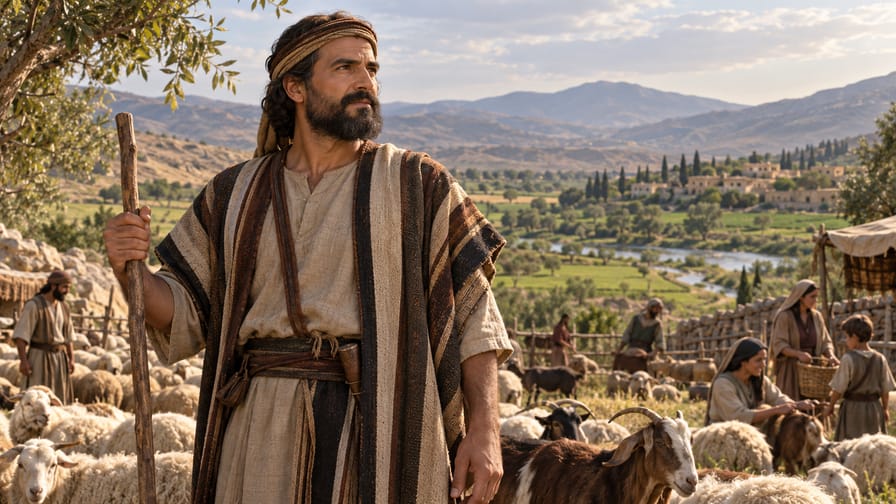
The biblical figure of Jeriel, though concisely mentioned in Scripture, offers a starting point for a deep theological analysis, especially from a Protestant evangelical perspective. His sole appearance occurs in a genealogical context, a literary and theological practice of great importance in the Old Testament. To understand the relevance of Jeriel, it is fundamental to examine not only the scant direct information but also the meaning of his name, the purpose of the genealogies in which he is embedded, and the broader theological implications that such records carry for the history of salvation and the progressive revelation of God.
The Protestant evangelical perspective emphasizes the authority and inerrancy of the Bible, considering that every detail, no matter how small, has a divine purpose and contributes to the complete panorama of revealed truth. Thus, even a name in a genealogical list is not random but is part of God's sovereign plan. The analysis of Jeriel, therefore, transcends mere nominal identification, seeking to unravel the layers of theological meaning hidden behind his brief mention.
This study will delve into the etymological roots of his name, the historical and literary context of Chronicles, and the theological relevance that, by inference, can be attributed to such an apparently secondary figure. We will see how the inclusion of names like Jeriel in genealogies is not just a historical record but an affirmation of God's faithfulness and the continuity of His people, ultimately pointing to the fulfillment of His promises in Jesus Christ.
1. Etymology and Meaning of the Name
The name Jeriel (in Hebrew: יְרִיאֵל, Yeri'el) appears only once in the Holy Scriptures, specifically in 1 Chronicles 7:2. Like many Hebrew names, Jeriel is a theophoric name, meaning it incorporates one of God's names or attributes. In this case, the ending -el (אֵל, El) refers to God, the abbreviated form of Elohim, one of the oldest and most common names for God in the Old Testament.
The first part of the name, יְרִיא (yeri'), is a subject of some discussion among scholars. One of the most accepted derivations connects it to the Hebrew root ירה (yara), which can mean "to cast," "to shoot," "to teach," or "to establish," "to found." If this is the correct root, the name Jeriel could mean "God casts," "God teaches," or, more appropriately in a genealogical context, "God founds" or "God establishes." This interpretation suggests the idea of God as the originator and sustainer of the family or lineage.
Another possible derivation, though less common for this specific name, would connect יְרִיא to a root related to sight, such as ראה (ra'ah), meaning "to see." In this case, Jeriel could be interpreted as "God sees" or "seen by God." Such a meaning would highlight divine providence and God's care for His people, a recurring theme in biblical theology. However, the connection with "to found" or "to establish" seems more consistent with the morphological formation and genealogical context.
The interpretation "God founds" or "God establishes" is particularly rich in theological significance. It underscores God's sovereignty over the existence and continuity of the families and tribes of Israel. In a genealogical context, where descent and inheritance are crucial, the name Jeriel serves as a reminder that the very existence and permanence of the lineage are an act of divine will and power. It is not man who establishes himself, but God who does so.
There are no other biblical characters explicitly named Jeriel in the Scriptures. This makes his mention even more singular, though not necessarily more prominent in narrative terms. The absence of variations of the name in other biblical languages, such as Greek, is also due to its sole appearance in the Hebrew text of the Old Testament.
The theological significance of the name Jeriel, "God founds" or "God establishes," in the biblical context, resonates with the doctrine of divine sovereignty. God is not only the Creator of all things but also the Sustainer and Director of human history, including the family lineages that would culminate in the coming of the Messiah. The name of Jeriel, in its simplicity, points to God's continuous activity in establishing and maintaining His people according to His eternal purpose, as we read in Psalm 127:1: "Unless the Lord builds the house, those who build it labor in vain."
2. Historical Context and Biblical Narrative
The sole mention of Jeriel is found in 1 Chronicles 7:2, within a long genealogical list detailing the families and descendants of the tribes of Israel. The text identifies him as one of the sons of Tola, who in turn was a son of Issachar, one of the twelve sons of Jacob. The genealogy in question is as follows: "The sons of Tola: Uzzi, Rephaiah, Jeriel, Jahmai, Ibsam, and Shemuel, heads of their fathers’ houses, namely, of Tola, mighty men of valor according to their genealogies, whose number in the days of David was twenty-two thousand six hundred." (1 Chronicles 7:2).
The historical period in which Jeriel would have lived, as a descendant of Tola (who is a son of Issachar), dates back to the early days of the nation of Israel. Issachar was one of Jacob's sons, and Tola is listed among the seventy who went down to Egypt with Jacob (Genesis 46:13). Thus, Jeriel would have been part of one of the first generations after the formation of the twelve tribes, probably during the period of sojourn in Egypt or shortly after the Exodus, before the conquest of Canaan, or perhaps during the period of the Judges, when the tribes were settling in the Promised Land. However, the exact dating is inferential, given the genealogical nature of the record.
It is important to note that the Book of Chronicles, where Jeriel is mentioned, was written in a post-exilic context, probably between 450 and 400 BC. The Chronicler had a specific theological purpose in compiling these genealogies: to reassure the identity, continuity, and hope of the people of Israel after the Babylonian exile. The lists served to connect the post-exilic community to their ancestral roots, reaffirming their heritage and their place in God's plan. For the Chronicler, the continuity of lineages was vital for understanding redemptive history and the messianic promise.
The political, social, and religious context of the Chronicler's time was one of reconstruction and reaffirmation of faith. The genealogies in Chronicles, therefore, are not merely dry historical records but documents laden with theological significance. They demonstrate God's faithfulness in preserving His people and His promises through generations, even amidst adversity and exile. The inclusion of names like Jeriel, even without an individual narrative, contributes to the solidity of this genealogical tapestry.
The tribe of Issachar, to which Jeriel belonged, was known for its shrewdness. In 1 Chronicles 12:32, it is stated: "Of Issachar, men who had understanding of the times, to know what Israel ought to do, 200 chiefs, and all their kinsmen were under their command." Although Jeriel is not directly associated with this characteristic, he is part of a tribe with a reputation for wisdom and discernment, which may indirectly reflect the quality of the leaders and families of that lineage. This reputation for the tribe of Issachar also aligns with Jacob's blessing in Genesis 49:14-15, which describes Issachar as a strong donkey, inclined to labor and the land.
The key biblical passages where the figure appears are strictly limited to 1 Chronicles 7:2. There are no other mentions or narratives about Jeriel. The geography related to the character is, therefore, that of the tribe of Issachar, which settled in the central-northern region of Canaan, with cities such as Jezreel and Aphek. His relationships with other important biblical characters are indirect, as a son of Tola and grandson of Issachar, and as a member of one of the families listed among the "mighty men of valor" (1 Chronicles 7:2) of Tola's descendants, in the time of David, although he himself lived in a much earlier era.
3. Character and Role in the Biblical Narrative
Analyzing the character of Jeriel, as revealed in Scripture, is a significant challenge due to his sole mention in a genealogy. The text offers no narrative details, dialogues, or actions that would allow us to infer his virtues, spiritual qualities, moral flaws, specific vocation, or personal development. Unlike figures such as Abraham, Moses, or David, Jeriel is not a character with an individual story delineated in Scripture.
However, the absence of a narrative does not mean the absence of theological significance or an implicit "role." Jeriel's role in the biblical narrative is, first and foremost, that of a name that contributes to the integrity and continuity of the genealogy of the tribe of Issachar. In a biblical-theological dictionary, even figures with little direct information deserve attention for their inclusion in the inspired canon.
His primary role is that of a link in the chain of descent. Genealogies were crucial for Israel's identity, the distribution of land, the validity of the priesthood, and, fundamentally, for tracing the messianic lineage. The inclusion of Jeriel, therefore, affirms the continuity of Tola's family and, consequently, of the tribe of Issachar. He is a silent witness to God's faithfulness in preserving the families of Israel.
While we cannot attribute individual qualities to Jeriel based on the text, his inclusion among the "heads of their fathers’ houses, namely, of Tola, mighty men of valor" (1 Chronicles 7:2) may suggest that he, or the family descended from him, was recognized for their strength and leadership. The Chronicler, in recording these lists, frequently highlighted "mighty men" (gibborim) and heads of families, indicating that these lineages were important for the social and military structure of the nation.
Thus, Jeriel's "character," in the sense of his contribution to the biblical narrative, is indirectly positive. He represents the stability and continuity of a lineage that, at a crucial moment in Israel's history (the post-exile), needed to be reaffirmed. His mere existence, recorded in Scripture, is a reminder of divine providence operating through generations, establishing families and maintaining the flow of redemptive history.
Significant actions or key decisions are not attributed to Jeriel. His "development" as a character is not traceable. Instead, his importance lies in the fact that he is a divinely recorded name, part of the history of a people God chose and with whom He made a covenant. For the Protestant evangelical reader, Jeriel's presence in the Bible, however minimal, attests to the accuracy and comprehensiveness of God's Word, where every part has its place and purpose.
Jeriel's role, therefore, is that of an essential supporting character in the grand biblical narrative. He is not a protagonist, but a name that fills a vital space in the genealogy, ensuring the completeness of the Chronicler's record. His existence, established by the meaning of his name ("God founds"), reinforces the idea that the founding and maintenance of Israel's families were not accidental, but part of God's sovereign plan for His people, as we read in Deuteronomy 7:6-8.
4. Theological Significance and Typology
Despite the absence of a personal narrative, the figure of Jeriel, through his name and genealogical context, carries relevant theological significance from a Protestant evangelical perspective. His inclusion in the genealogies of Chronicles positions him within the vast redemptive history, which is the progressive revelation of God's plan for the salvation of humanity.
The meaning of the name Jeriel, "God founds" or "God establishes," is central to his theological relevance. It points to the doctrine of divine sovereignty in the founding and maintenance of His people. God is the architect of history, who establishes nations and families according to His eternal purpose. This resonates with the truth that Israel's existence, and that of every individual within it, is not by chance but by divine design. As Isaiah 44:24 declares: "I am the Lord, who made all things, who alone stretched out the heavens, who spread out the earth by myself."
Although Jeriel is not directly a typological figure that explicitly prefigures Christ, the principle that his name and genealogical inclusion represent points to the Messiah. The insistence on genealogies in the Old Testament, and particularly in Chronicles, serves to establish the continuity of God's promise and the legitimacy of the lineage from which the Savior would come. God's faithfulness in "establishing" the families of Israel is a testament to His faithfulness in "establishing" the house of David, from which Christ would come (2 Samuel 7:12-16).
The founding of the lineage and the preservation of the people are essential elements for the fulfillment of divine covenants and promises. The Abrahamic Covenant (Genesis 12:1-3) and the Davidic Covenant (2 Samuel 7) depend on the continuity of generations. Jeriel, as a link in this chain, symbolizes the persistence of God's work through time, ensuring that the promises would be fulfilled in Christ, the ultimate "foundation" of the church and the Kingdom of God (1 Corinthians 3:11 Ephesians 2:20).
Reformed and evangelical theology emphasizes that all Scripture points to Christ. In this sense, even a name like Jeriel, which speaks of God as the Founder, can be seen as a thematic prefiguration. Christ is the cornerstone, the foundation upon which the church is built. He is the fulfillment of God's promise to "establish" an eternal kingdom. Jeriel's name, therefore, echoes the divine sovereignty that culminates in Jesus' redemptive work.
The inclusion of Jeriel in a genealogy of "mighty men of valor" (1 Chronicles 7:2) can also be connected to the theme of faith and obedience, even if inferentially. The continuity of the lineage depended on the faithfulness of the generations. While we have no details about Jeriel's individual faith, his existence is part of the history of a people called to faith and obedience. God's grace is evident in the preservation of these lineages, despite human failures, so that His redemptive plan could proceed.
There are no direct citations of Jeriel in the New Testament, as he is not a narrative figure. However, the New Testament validates the importance of Old Testament genealogies by presenting its own genealogies of Jesus (Matthew 1:1-17 Luke 3:23-38), demonstrating that lineage is crucial for messianic identity. The existence of figures like Jeriel in the Old Testament contributes to the solidity of these genealogical claims.
In summary, the theological significance of Jeriel lies not in his actions, but in his name and his position in Scripture. He is a testament to God's sovereignty in establishing His people, keeping His promises through generations, and directing history toward its culminating point in Christ. He reinforces the doctrine of divine providence, showing that even the "details" of a genealogy are part of God's plan for salvation.
5. Biblical-Theological Legacy and Canonical References
Jeriel's legacy, though not marked by great deeds or direct teachings, is fundamentally linked to his presence in the biblical canon. His mention in 1 Chronicles 7:2 grants him a place in salvation history and biblical theology, especially regarding the importance of genealogies and divine faithfulness. He left no literary contributions, nor was he a prophet, priest, or king, but his existence as a genealogical link is, in itself, a significant contribution.
The inclusion of Jeriel, and hundreds of other similar names, in the genealogical lists of Chronicles, demonstrates the Chronicler's meticulousness in recording Israel's history. This record was vital for the post-exilic community, which sought to reaffirm its identity and its connection to God's promises made to their ancestors. Jeriel's influence on biblical theology thus lies in the role he plays in sustaining the genealogical structure that, in turn, sustains the narrative of the covenant and the promise.
In Jewish and Christian interpretive tradition, genealogies have been a subject of study and debate. While figures like Jeriel rarely receive individual attention, their inclusion is seen as proof of the historicity and continuity of God's people. Commentators, like John Gill, for example, when addressing Chronicles, often emphasize the importance of these lists for tracing lineages and ensuring the legitimacy of the priesthood and royalty, which were crucial for messianic hope.
Reformed and evangelical theology, with its high view of the inspiration and inerrancy of Scripture, considers that every part of the canon, including the genealogical sections, has a divinely ordained purpose. Jeriel's presence in the Book of Chronicles is not an error or an unnecessary padding, but an intentional part of God's revelation. It demonstrates divine providence in preserving the records of His people, so that the history of redemption could be clearly traced.
Jeriel's importance for understanding the canon lies in his contribution to the completeness of Israel's history. Genealogies provide the structure and continuity that connect the patriarchs to the monarchy, to the exile, and, finally, to the coming of Christ. Without these links, the biblical narrative would lose some of its coherence and historical basis. Jeriel is a testament to God's faithfulness in keeping alive the descendants of Issachar, one of the twelve tribes, an integral part of the nation of Israel.
Although there are no references in intertestamental literature or other biblical books that mention Jeriel specifically, the value of genealogies as a whole is undeniable. They served as a vital record for the Jews of the Second Temple period and for early Christians, who used them to demonstrate the legitimacy of Jesus as the promised Messiah, descendant of David and Abraham (Matthew 1:1).
Ultimately, Jeriel's biblical-theological legacy is that of a name which, in its simplicity and scarcity of detail, reinforces deep theological truths: God's sovereignty over history, divine faithfulness in keeping His promises through generations, and the importance of every member in the great tapestry of God's redemptive plan. He is a reminder that, in God's eyes, no name is insignificant, and every person has a place in His story, even if their role is merely that of a link in the chain of life and faith that culminates in Jesus Christ, the Foundation of all things.