


Hermas
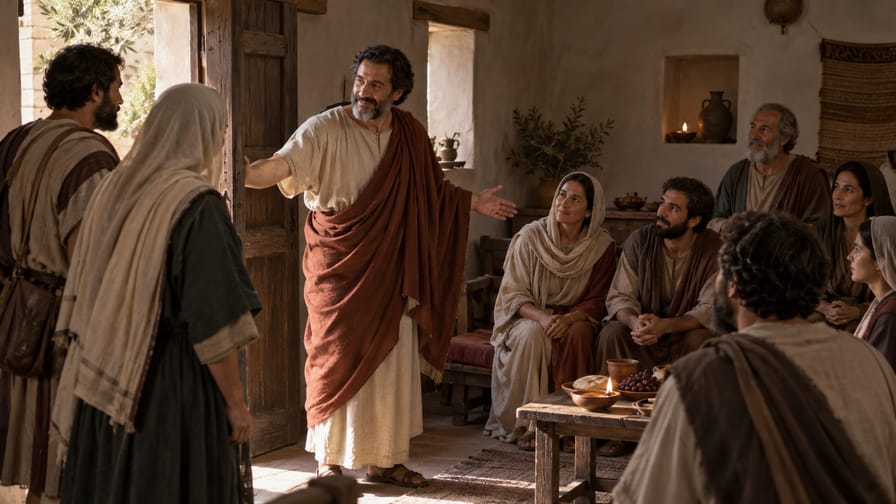
The figure of Hermas, though briefly mentioned in the Scriptures, offers a window into the life of the early church in Rome and the breadth of Christian fellowship in the first century. His mention in one of Paul's most theologically dense epistles, the Epistle to the Romans, invites careful analysis. From a Protestant evangelical perspective, every biblical character, no matter how minor their appearance, contributes to the tapestry of divine revelation.
This analysis seeks to explore the onomastic meaning of Hermas, his historical context, inferences about his character and role, his theological relevance, and his legacy within the biblical canon. We will do so with exegetical rigor and fidelity to the authority of Scripture, as befits a biblical-theological dictionary.
1. Etymology and meaning of the name
The name Hermas derives from ancient Greek Ἑρμᾶς (Hermas). It was a common name in the Greco-Roman world of that era, being a shortened or diminutive form of compound names that included the element Herm-, such as Hermodoros or Hermogenes.
The etymological root of the name Hermas is directly linked to the Greek god Hermes. Hermes was an Olympian deity, known as the messenger of the gods, patron of travelers, merchants, thieves, and athletes. He was also associated with eloquence, interpretation, and guiding souls to the underworld.
Although the name's origin is pagan, its adoption by a Christian was not uncommon in the first century. Many converts to Christianity kept their given names, even if they had roots in pagan cults or deities. The literal meaning of the name, "of Hermes" or "consecrated to Hermes," loses its pagan connotation when the individual becomes a follower of Christ.
There are no significant variations of the name Hermas in biblical languages that alter its essential spelling or pronunciation. It is always recognized as Ἑρμᾶς in New Testament Greek. The Bible does not record other characters with the same name relevant to this canonical analysis, distinguishing him from extrabiblical figures.
The theological significance of the name, in itself, is limited. However, the presence of a name of pagan origin among those greeted by Paul in the church in Rome demonstrates the universality of the gospel. Christ's call transcends cultural and onomastic barriers, transforming individuals from all backgrounds into members of His body, according to Galatians 3:28.
2. Historical context and biblical narrative
2.1. Period and environment
Hermas is mentioned in the final chapter of Paul's Epistle to the Romans (Romans 16:14). This epistle was written around 57-58 A.D., during Paul's third missionary journey, likely from Corinth. This period marks a crucial moment in the expansion of Christianity, with the faith already established in major centers of the Roman Empire, including the capital.
The political context was that of the Roman Empire under Nero's rule. The city of Rome was a melting pot of cultures, religions, and philosophies. The Christian community in Rome was diverse, composed of Jewish converts and, predominantly, Gentiles of various social and ethnic backgrounds, as evidenced by the lists of names in Romans 16.
Socially, the church in Rome was not homogeneous. There were slaves, freedmen, working-class members, and possibly some of higher status. The mention of Hermas in a group of five men (Asyncritus, Phlegon, Patrobas, Nereus, and himself) and "the brethren who are with them" suggests a house church or household group within the broader church, a common model in the early church (cf. Romans 16:5).
2.2. The biblical mention of Hermas
The only biblical passage that mentions Hermas is Romans 16:14: "Greet Asyncritus, Phlegon, Hermas, Patrobas, Hermes, and the brothers who are with them." The inclusion of Hermas in this list of Paul's greetings is the entirety of the canonical information about him. Paul, who planned to visit Rome, sent greetings to many individuals and families, demonstrating his pastoral connection with the community.
The geography related to Hermas is, therefore, the city of Rome. He was a member of the Christian church established there, likely a Gentile believer, given his Greek name. The church in Rome was not founded by Paul, but already existed and prospered, being a strategic point for the spread of the gospel to the West, as Paul expresses in Romans 1:13-15.
His relationships with other biblical characters are inferred from the context. He was part of the group of believers greeted in Romans 16:14, which indicates fellowship with Asyncritus, Phlegon, Patrobas, Nereus, and the "brothers" associated with them. This suggests that he was an active and recognized member of the Christian community in Rome, known to Paul or his contacts.
It is crucial to note that this biblical Hermas must be distinctly separated from the author of the extracanonical book The Shepherd of Hermas. Although The Shepherd of Hermas is an ancient Christian work of great historical and theological value, it is not part of the Protestant evangelical biblical canon. The Hermas of Romans is a distinct figure, whose identity and role are strictly limited to the Pauline mention.
3. Character and role in the biblical narrative
3.1. Analysis of character and qualities
Given the sparse biblical record, the analysis of Hermas's character must be made by inference from the context of Romans 16:14. The fact that Paul greets him, along with other believers, indicates that he was an individual of faith and a recognized member of the Christian community in Rome. Paul would not greet unknown individuals or those of dubious reputation in such an important epistle.
As part of a group of "brothers," Hermas likely shared the virtues expected of a faithful believer: faith in Jesus Christ, dedication to the community, and possibly some form of service. The mention of "the brothers who are with them" suggests that this group had a cohesive identity, perhaps a house church or a study and prayer group.
There is no mention of documented sins, weaknesses, or moral failings concerning Hermas in Scripture. The absence of such records is common for most secondary characters mentioned in apostolic greetings. The implication is that he was a believer who lived consistently with Christian teachings, worthy of an apostle's greeting.
3.2. Vocation and role in the church
The specific vocation of Hermas is not explicitly stated. He is not identified as an apostle, prophet, priest, or congregational leader. However, his inclusion in Paul's list of greetings places him among those who were considered "saints" (Romans 1:7) and an integral part of the body of Christ in Rome.
His role was that of a common believer, a member of the local church. From an evangelical perspective, every member of the body of Christ is vital, exercising their gifts for the growth and edification of the church (cf. 1 Corinthians 12:12-27). Although his role was not prominent, his faithfulness and participation were essential for the vitality of the Roman community.
The significant actions and key decisions of Hermas are not recorded. His greatest "action" for posterity is having been one of the many anonymous believers who, through faith, contributed to the formation and expansion of the church in the Roman Empire. His existence proves the diversity and breadth of the gospel's reach in the first century, reaching ordinary people in large cities.
4. Theological significance and typology
4.1. Role in redemptive history and revelation
The theological significance of Hermas, though not central, is relevant for understanding redemptive history. He represents the numerous anonymous believers who, by the grace of God, were reached by the gospel and became part of the early church. His inclusion in Paul's greetings demonstrates the reality of the communion of saints and the interconnectedness of the apostolic churches.
The mention of Hermas in Rome underscores the universality of the gospel message, which was not restricted to Jews or elites, but reached people from all walks of life and ethnic origins, according to Romans 1:16. He is a testament to the Holy Spirit's work in building the church through ordinary individuals.
There is no biblical basis to consider Hermas a prefiguration or Christocentric typology. Typological characters generally have a more prominent role and actions that mirror aspects of Christ's person or work (e.g., Adam, Melchizedek, David). Hermas, as a common believer, points to Christ not as a type, but as someone who was saved by Him.
4.2. Connection with theological themes
The figure of Hermas is connected to central New Testament theological themes, such as the communion of saints and the unity of the body of Christ. Paul greets a series of individuals and groups, emphasizing that, despite diversity, all are "brothers" in Christ (Romans 12:4-5).
His inclusion in the list of greetings illustrates the importance of personal faith and obedience to the Word of God. Although we do not know details of his life, the fact that he was recognized by Paul suggests that Hermas was an example of Christian living amidst Roman culture. He is a reminder that God's grace reaches and transforms individuals, empowering them to live a new life in Christ (cf. Ephesians 2:8-10).
The presence of Hermas and other believers in Rome demonstrates the power of the gospel to establish communities of faith in strategic urban centers. This is a fulfillment of the Great Commission (Matthew 28:19-20) and the promise that the gospel would be preached to all nations, beginning with the conversion of individuals like him.
The doctrine of election and the sovereignty of God can also be tangentially observed. God, in His wisdom, chooses and calls individuals, even those who will not have a prominent role in the biblical narrative, to be part of His redemptive plan. Every believer, including Hermas, is a testament to God's salvific work.
5. Biblical-theological legacy and canonical references
5.1. Mentions and contributions
The only canonical mention of Hermas is found in Romans 16:14. There are no other references to him in any other biblical book, whether in the Old or New Testament. Consequently, there are no literary contributions attributed to him within the canon, nor is he an author of Psalms, epistles, or other biblical texts.
His influence on biblical theology is, therefore, indirect but significant. He serves as one of many examples of the formation and constitution of the early church. The mention of his name validates the historicity of Paul's letter to the Romans and the reality of the Christian community in Rome, a crucial point for New Testament theology.
In Christian interpretive tradition, Hermas is often discussed only in the context of the greetings in Romans 16. The distinction between the biblical Hermas and the author of The Shepherd of Hermas is a recurring point to avoid anachronisms and extrabiblical speculations. This distinction is fundamental for Reformed and evangelical theology that prioritizes the canon.
5.2. Treatment in Reformed and evangelical theology
In Reformed and evangelical theology, the figure of Hermas, like that of other little-mentioned believers, is seen as part of the great cloud of witnesses (cf. Hebrews 12:1). Although he was not an apostolic leader or a prophet, he was a member of the body of Christ, whose faith and existence contributed to the expansion of the Kingdom of God.
Evangelical commentators, such as John Murray in his work on Romans, when addressing Romans 16, generally highlight Paul's personal and pastoral nature, who cared for the individual members of the churches. The mention of Hermas emphasizes that every believer is important to God and to the community of faith, regardless of their status or prominence.
Douglas Moo, in his commentary on Romans, also observes the diversity of names in Romans 16, which includes both Greek names (like Hermas) and Latin ones, and some of Jewish origin. This reinforces the thesis that the church in Rome was a microcosm of the universality of the gospel, welcoming people of all backgrounds into a new identity in Christ.
The importance of Hermas for understanding the canon lies in his contribution to the historical authenticity of the Epistle to the Romans. Paul's personalized greetings, including to Hermas, root the letter in a real and tangible context, confirming that the Christian faith was not an abstraction, but a reality lived by real people in real communities.
In summary, Hermas, though a marginal figure in the biblical narrative, represents the vast majority of believers throughout history: individuals whose faith and life, though not detailed in Scripture, are precious to God and essential for the edification and advancement of His church. He is a reminder of God's grace that calls and uses ordinary people for His extraordinary purposes.