


Patrobas
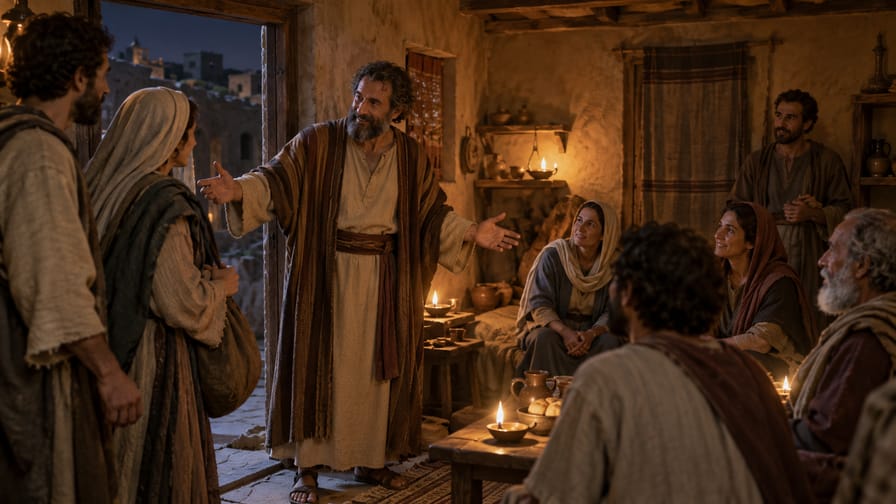
The figure of Patrobas is one of many that punctuate the final greetings of the Epistle to the Romans, offering a glimpse into the rich tapestry of individuals who comprised the early church. Although he is a character of unique and brief mention in the Scriptures, his inclusion in the biblical canon attests to the importance of every member in the community of faith, even those whose contributions are not extensively recorded. His presence reminds us that the work of God is built not only by prominent apostles but also by the faithfulness of ordinary believers in their local context.
The analysis of Patrobas, from a Protestant evangelical perspective, transcends the scarcity of direct biographical data to explore the theological implications of his existence and the relevance of his mention. He becomes a representative of the "anonymous heroes" of faith, whose lives and services, though not glorified by extensive narratives, were crucial for the advancement of the Gospel. This study will seek to extract the maximum possible exegetical and theological meaning from such a concise reference, contextualizing it within the life of the church in Rome and the Pauline ministry.
1. Etymology and meaning of the name
The name Patrobas (in Greek: Πατρόβας, Patróbas) is of Greek origin and is mentioned only once in the Holy Scriptures, specifically in Romans 16:14. Like many of the names found in the Pauline epistles, especially in the final greetings, it reflects the Hellenization of Roman society and the Mediterranean world in the first century A.D., where Greek language and culture were dominant.
The etymological root of the name Patrobas is generally derived from two Greek words: patēr (πατήρ), meaning "father," and possibly bios (βίος), meaning "life." Thus, the most probable meaning of the name is "father's life" or "paternal life." Some scholars also suggest a connection with basis (βάσις), "foundation" or "step," which could lead to "father's foundation," although the first interpretation is more widely accepted.
The interpretation of "father's life" for Patrobas, while not having a direct theological significance attributed to the individual himself in the biblical text, can be viewed symbolically. In the context of the early church, the paternal figure could evoke concepts of authority, provision, and care, characteristics that were valued in Christian communities, where leaders often assumed a paternal role in relation to new converts.
There are no other biblical characters with the exact name of Patrobas. However, Greek and Latin names were common among Jews and Gentiles converted to Christianity, reflecting the cultural diversity of the early church. The presence of names such as Patrobas, Hermas, Asyncritus, Phlegon, and Hermes in Romans 16:14 demonstrates this cultural fusion and the breadth of the Gospel's reach.
From a theological standpoint, the significance of Patrobas's name lies less in its literal meaning and more in its representation. He is a reminder of divine providence that gathers people of different origins and names to form a single body in Christ. God's choice to use individuals with common names, without distinction of status or ancestry, underscores the truth that in Christ "there is neither Jew nor Gentile, neither slave nor free, nor is there male and female" (Galatians 3:28).
2. Historical context and biblical narrative
The mention of Patrobas occurs in chapter 16 of the Epistle to the Romans, a section dedicated to Paul's greetings to various brothers and sisters in the faith in Rome. This epistle was written by Paul around 55-57 A.D., during his third missionary journey, probably from Corinth, before his planned journey to Jerusalem and, subsequently, to Rome and Spain (Romans 15:23-28).
The historical context of Rome in the first century A.D. was that of an imperial metropolis, a melting pot of cultures, religions, and philosophies. The Christian community in Rome was probably composed of a mixture of Jewish converts and Gentiles, many of whom were slaves or freedmen, and some of higher social standing. The church did not meet in a single large building but in various "house churches" (Romans 16:5).
There is no information about Patrobas's genealogy or family origin in the Scriptures. He is one of many names mentioned without any additional detail, which is common in greeting lists. His presence in a list of Greek names suggests that he was probably a Gentile or a Hellenized Jew, but this is an inference based on his name and not a direct biblical statement.
The only key biblical passage where Patrobas is mentioned is Romans 16:14: "Greet Asyncritus, Phlegon, Hermes, Patrobas, Hermas, and the brothers who are with them." This greeting is part of a longer list that includes about twenty-six individuals and two families or groups, showing the extent of Paul's network of relationships and the vitality of the Roman church.
The geography related to Patrobas is the city of Rome, the center of the Roman Empire. The church of Rome, though not founded by Paul, was of great strategic importance for the propagation of the Gospel. Paul had long desired to visit it and saw the community in Rome as a potential base for his evangelistic mission in Spain (Romans 15:24).
Patrobas's relationships with other biblical characters are limited to those mentioned alongside him in the same greeting: Asyncritus, Phlegon, Hermes, and Hermas. The phrase "and the brothers who are with them" suggests that this group of five men could have formed the core of a house church or a specific fellowship group within the broader Christian community of Rome. This highlights the relational and communal nature of early Christianity.
3. Character and role in the biblical narrative
Given the brevity of his mention in Romans 16:14, the Bible offers no explicit details about Patrobas's character or specific role. However, the very inclusion of his name in Paul's greetings allows for important inferences about his identity and his position in the Christian community of Rome. The nature of Paul's greeting to him, along with others, suggests a relationship of fellowship and recognition.
The analysis of Patrobas's character must, therefore, be built upon the broader context of the Pauline epistles and the nature of the early church. The fact that Paul greets him implies that Patrobas was a known believer, worthy of being remembered and recognized by the apostle. This suggests, at a minimum, that he was a faithful and active member of the Christian community in Rome, participating in the life of the church.
Among the virtues and spiritual qualities indirectly evidenced, we can infer that Patrobas possessed faith in Christ and a commitment to the community of believers. Paul's greeting to him, along with others, suggests that they were part of the body of Christ, living in accordance with the principles of the Gospel. Participation in the life of the church in Rome, a city with challenges and persecutions, required courage and perseverance in the faith (Romans 8:35-39).
There is no record of sins, weaknesses, or moral failings documented for Patrobas in the Scriptures. Like most characters mentioned in the greetings, he is presented in a positive light, as a member of the "household of faith" (Galatians 6:10). The absence of criticisms or warnings is an indication of his acceptable conduct within the Christian community.
Patrobas's specific vocation, calling, or function is not detailed. It is probable that he was a lay believer, an ordinary member of the church. However, the phrase "and the brothers who are with them" (Romans 16:14) may indicate that Patrobas, along with the other four names, was part of a more cohesive group, perhaps the leaders or prominent members of one of Rome's house churches. They could have been hosts, teachers, or simply pillars of faith in their respective circles.
The role played by Patrobas, therefore, was that of a member of the church of Christ in Rome. His existence and his faith were significant contributions to the growth and vitality of the community. In an era when Christianity was spreading and establishing itself, the faithfulness of every believer, however anonymous, was fundamental for the propagation of the Gospel and for the building up of the body of Christ (Ephesians 4:16).
Patrobas's significant actions and key decisions are not individually recorded. However, his decision to follow Christ and to associate with the Christian community in Rome, amidst a pagan empire, was a decision of great weight and spiritual significance. This choice placed him in a new covenant and made him part of God's redemptive work in the world.
4. Theological significance and typology
The figure of Patrobas, though sparsely detailed, holds deep theological significance in redemptive history and the progressive revelation of the Christian faith. He represents the common believer, the individual who, without occupying prominent apostolic or prophetic leadership positions, contributes to the building of the Kingdom of God through his faith and participation in the community.
There is no direct Christocentric prefiguration or typology associated with Patrobas. He is not a type of Christ in a prophetic or symbolic sense. Instead, his theological relevance lies in his representation of the collective nature of the body of Christ. He exemplifies the truth that every member, regardless of their visibility or role, is valuable and necessary for the healthy functioning of the church (1 Corinthians 12:12-27).
The mention of Patrobas and other believers in Romans 16 underscores the central theological theme of koinonia, Christian communion and fellowship. Paul, the apostle to the Gentiles, demonstrates his pastoral love and his connection with believers whom he may never have personally met, but with whom he was united by faith in Christ Jesus. This reflects the universality of the Gospel and the transcultural unity of the church (Ephesians 2:19-22).
The presence of Patrobas in the greeting list also reinforces the doctrine of God's grace, which extends to all who believe, without distinction. Salvation is not reserved for great leaders or for those who perform extraordinary feats, but is available to all who respond to the call of the Gospel by faith (Ephesians 2:8-9). Patrobas is a reminder of divine inclusion.
Although there are no quotes or references in the New Testament that speak directly about Patrobas beyond Romans 16:14, his inclusion in this foundational epistle for Christian theology is significant. Romans addresses themes such as justification by faith, sanctification, the sovereignty of God, and the practical life of the believer. Patrobas is one of the recipients of these profound truths, living them out in his daily life.
Patrobas's connection with central theological themes is undeniable. His existence as a believer in Rome is a testament to the expansion of the Gospel to the ends of the empire, a manifestation of obedience to the Great Commission (Matthew 28:19-20). He is part of the fulfillment of God's plan to gather a people for Himself from every nation, tribe, people, and language (Revelation 7:9).
In sum, Patrobas represents the theological truth that every believer is a chosen vessel of God, an integral part of His eternal plan. His life, even if not narrated in detail, was a life of faith and belonging to the body of Christ, contributing to the presence of the Gospel in the capital of the ancient world. He is a reminder of the importance of individual faithfulness in the grand narrative of redemption.
5. Biblical-theological legacy and canonical references
The legacy of Patrobas in the Scriptures is largely symbolic, given his sole canonical mention in Romans 16:14. He left no literary contributions, did not lead prophetic or apostolic movements, and his life is not described in detail in any other biblical book. However, his presence in the canon is, in itself, a theological contribution.
Patrobas's influence on biblical theology lies in the reaffirmation of fundamental principles of the Christian faith. His mention serves as a vivid reminder of the diversity and unity of the early church. He is one of many names that attest to the reality of a global community of believers, united in Christ, regardless of their ethnic, social, or cultural origin (Colossians 3:11).
In Christian interpretive tradition, Patrobas, along with other minor figures from Romans 16, has been the subject of some speculation. Some church fathers and commentators, such as Origen and John Chrysostom, mentioned these names, but generally without adding substantial biographical information, focusing more on the importance of communion and apostolic greetings. Roman Catholic tradition, for example, recognizes him as one of the Seventy Disciples and, at times, one of the early bishops, but these are extrabiblical traditions without scriptural basis.
In Reformed and evangelical theology, the figure of Patrobas is often used to illustrate the doctrine of the priesthood of all believers (1 Peter 2:9). Although he was not an apostle, prophet, or priest in the Levitical sense, he was a member of the church of Christ, with direct access to God through Jesus. His life, like that of every believer, was an act of worship and service.
Patrobas's importance for understanding the canon lies in his function of contextualizing the Pauline message. The greetings in Romans 16 are not mere appendages they reveal the relational nature of Paul's ministry and the reality of a church composed of real people in real places. They humanize abstract theology, showing that faith is lived in community and in interpersonal relationships (Philippians 2:1-4).
Patrobas, therefore, represents the vastness of the body of Christ, where every part, no matter how small, is essential. He reminds us that God uses ordinary people to accomplish extraordinary purposes. His inclusion in the sacred text is a testimony to God's sovereignty in valuing and remembering each of His children, even those whose complete stories remain unknown to us, but who are fully known by Him (Psalm 139:1-4).
In a biblical-theological dictionary, Patrobas serves as a reminder that the history of salvation is not only the story of great leaders and monumental events but also the story of thousands of faithful individuals who lived their lives in obedience and service to Christ. His life, though a brief flash in the pages of the Bible, is an eternal testimony to God's grace and the inclusive nature of His church.