


Enoch
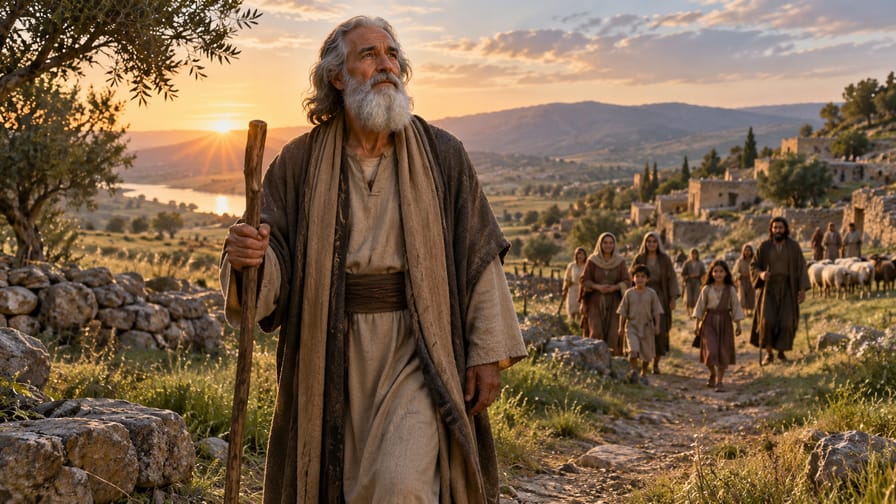
The figure of Hanoch (Enoch, in its most common Portuguese form) is one of the most enigmatic and theologically rich in the Old Testament, emerging in the antediluvian period. His brief mention in the book of Genesis, complemented by references in the New Testament, establishes him as a patriarch of exemplary faith and a prophet of divine righteousness. This analysis will explore the etymology of his name, his historical context, his character, his profound theological relevance, and his legacy, from an evangelical Protestant perspective.
The life of Hanoch, though concise in the Scriptures, offers crucial insights into the nature of faith, communion with God, and eschatological hope. He stands out as a beacon of piety in an era of increasing depravity, a testament to God's sovereign grace, and a precursor of redemptive truths that would be fully revealed in Christ Jesus.
1. Etymology and Meaning of the Name
1.1 Original Name and Linguistic Derivation
The name Hanoch derives from the Hebrew Ḥănōḵ (חֲנוֹךְ). The underlying etymological root is חנך (ḥānak), which means "to dedicate," "to train," "to initiate," or "to instruct." This root is used in various biblical contexts, such as in the dedication of a house (Deuteronomy 20:5) or the training of a child (Proverbs 22:6).
The most common transliteration in Portuguese is Enoch, following the Greek (Henoch) and Latin tradition. However, the Hebrew form Hanoch is more precise for reflecting the original sound and the connection to the Semitic root. The choice of a name in the biblical context often carries a prophetic or descriptive meaning, and the name of Hanoch is no exception.
1.2 Literal and Symbolic Meaning
Literally, Hanoch can be interpreted as "dedicated," "initiated," or "trained." This meaning is profoundly resonant with the biblical narrative of his life. He was someone who, in fact, dedicated his life to walking with God, being "initiated" into such intimate communion that it resulted in his miraculous translation.
Symbolically, the name points to the idea of consecration and a path of discipleship. The life of Hanoch is an example of how dedication to God shapes an individual's character and destiny. He represents the person who was trained and perfected by the divine presence, becoming a vessel for the glory of God.
1.3 Variations and Other Biblical Characters
The name Hanoch is not exclusive to this antediluvian patriarch. There are other figures in the Scriptures who share the same name, which requires attention to avoid confusion. A Hanoch is mentioned as the son of Cain (Genesis 4:17), and Cain even named a city after him. This is a different Hanoch and not associated with the piety of the patriarch from Seth's line.
Other Hanochs include a son of Midian, grandson of Abraham by Keturah (Genesis 25:4), and a son of Reuben, grandson of Jacob (Genesis 46:9 Exodus 6:14 Numbers 26:5). The distinction is crucial, and the Hanoch of Genesis 5 is the only one who "walked with God" and was translated.
1.4 Theological Significance of the Name
The theological significance of the name "dedicated" for the Hanoch of Genesis 5 is profound. He is the epitome of a life consecrated to the Lord amidst a generation that was turning away from God (Genesis 6:5). His name prefigures the necessity of a life dedicated to righteousness, a central theme in biblical theology.
For the evangelical Protestant perspective, the name of Hanoch highlights the importance of sanctification and obedience as fruits of genuine faith. He is a reminder that true dedication to God is not merely a ritualistic act, but a continuous and transformative way of life, culminating in intimate communion with the Creator.
2. Historical Context and Biblical Narrative
2.1 Historical Period and Context
Hanoch lived in the antediluvian period, an era extending from the Fall of man to the universal Flood. This was a time characterized by extraordinary human longevity and, regrettably, by increasing moral and spiritual depravity, culminating in the necessity of divine judgment. He is the seventh in the genealogical line from Adam through Seth (Genesis 5:21).
The world of Hanoch was a place where violence and wickedness proliferated (Genesis 6:5, 11-12). However, amidst this darkness, the lineage of Seth maintained a remnant of faith, calling upon the name of the Lord (Genesis 4:26). Hanoch stands out as the pinnacle of this pre-diluvian piety.
2.2 Genealogy and Family Origin
The genealogy of Hanoch is provided in Genesis 5, which traces the messianic line through Seth. He was the son of Jared, who lived 962 years. Hanoch was born when Jared was 162 years old (Genesis 5:18). His offspring are equally notable: he was the father of Methuselah, the oldest man in the Bible, who lived 969 years (Genesis 5:27).
Methuselah, in turn, was the father of Lamech, who was the father of Noah, the patriarch who would survive the Flood. Thus, Hanoch is directly linked to the lineage that would preserve humanity and the messianic promise through Noah, demonstrating God's faithfulness in maintaining His plan of redemption.
2.3 Main Life Events and Key Biblical Passages
The biblical narrative of Hanoch's life is surprisingly brief, consisting of only four verses in Genesis 5:21-24. These verses, however, contain one of the most extraordinary revelations in the Old Testament. At 65 years old, Hanoch fathered Methuselah.
After the birth of Methuselah, Hanoch "walked with God" for 300 years and fathered other sons and daughters (Genesis 5:22). The climax of his story is found in Genesis 5:24: "And Enoch walked with God and he was not, for God took him." This is a unique description, contrasting with the repeated formula "and he died" for the other patriarchs.
2.4 Relationships with Other Characters
Hanoch, as the seventh in Seth's line, would have lived concurrently with Adam for about 308 years, according to calculations based on the ages in Genesis 5. This means he had the opportunity to learn directly from Adam about creation, the Fall, and God's initial promises. This connection with Adam may have influenced his profound devotion.
His relationship with Methuselah, his son, is significant. The name Methuselah (in Hebrew, Məṯûšelaḥ), is often interpreted as "man of the spear" or "when he dies, it shall come." Jewish tradition and some Christian commentators see his name as a prophecy of the Flood, which came in the year of Methuselah's death. This suggests that Hanoch, in naming his son, already possessed a prophetic awareness.
3. Character and Role in the Biblical Narrative
3.1 Character Analysis: "Walked with God"
The most distinctive trait of Hanoch's character is the repeated declaration: "and Enoch walked with God" (Genesis 5:22, 24). This phrase, in the Hebrew context, denotes an intimate communion, a life of constant obedience, and a relationship of friendship and mutual trust. It is more than just a physical walk it is a spiritual journey in alignment with the divine will.
The phrase "walked with God" is also used for Noah (Genesis 6:9), indicating exceptional piety in contrast to widespread corruption. For Hanoch, this implied a life of practical faith, where his actions and spirit were in harmony with the character of God, a powerful testimony in a world of moral decline.
3.2 Virtues and Spiritual Qualities
The main virtue of Hanoch was his faith. The author of Hebrews explicitly states: "By faith Enoch was translated that he should not see death and was not found, because God had translated him: for before his translation he had this testimony, that he pleased God." (Hebrews 11:5). His faith was not passive, but active, manifested in his continuous "walk" with God.
Other qualities include obedience, righteousness, and holiness. To please God implies living according to His precepts. In a time of great ungodliness, Hanoch was a beacon of morality and devotion, demonstrating that it is possible to live a godly life even in the most challenging times. His perseverance for 300 years is remarkable.
3.3 Absence of Moral Flaws
It is notable that the Scriptures record no sins or moral weaknesses of Hanoch. He is one of the few biblical characters, along with Melchizedek, about whom no flaw is explicitly documented. This does not mean he was without sin by nature, but that his life of faith and obedience was so exemplary that no transgression is worthy of record in the biblical narrative, which is usually brutally honest about the failures of its heroes.
This omission underscores the uniqueness of his communion with God and the depth of his dedication. His life serves as an ideal of piety and a challenge for believers of all ages to seek an uninterrupted walk with the Lord.
3.4 Prophetic Role and Significant Actions
In addition to his pious life, Hanoch also played a prophetic role. The Epistle of Jude cites one of his prophecies: "And Enoch also, the seventh from Adam, prophesied of these, saying, Behold, the Lord cometh with ten thousands of his saints, To execute judgment upon all, and to convince all that are ungodly among them of all their ungodly deeds which they have ungodly committed, and of all their hard speeches which ungodly sinners have spoken against him." (Jude 1:14-15).
This prophecy demonstrates that Hanoch not only lived righteously but also warned his generation about the coming judgment of God. His translation, in turn, was a significant action that served as a sign. It was a visible testimony to God's power over death and a reward for Hanoch's faith, offering hope of eternal life in a condemned world.
4. Theological Significance and Typology
4.1 Role in Redemptive History and Progressive Revelation
Hanoch plays a crucial role in redemptive history, serving as a link between the promise of the seed of the woman (Genesis 3:15) and the arrival of the Flood. He represents the continuity of faith and communion with God in a post-Fall world, demonstrating that God's grace was present and active even before the Mosaic Law.
His life and translation are a progressive revelation of God's sovereignty over death and the promise of eternal life for those who walk in faith. He is a testimony that death is not the end for the righteous, and that there is a divine reward for piety. Hanoch's experience anticipates Christ's victory over death and the power of the resurrection.
4.2 Prefiguration or Christocentric Typology
The translation of Hanoch is often seen as a powerful Christocentric typology, prefiguring aspects of Christ's work and the Christian experience. Firstly, his translation without seeing death can be seen as a type of Christ's resurrection and His ascension to heaven. Christ was also "taken" by God, not experiencing the corruption of the grave.
Furthermore, the translation of Hanoch is a type of the future resurrection and rapture of faithful believers at the end of times. Just as Hanoch was taken away, believers will be transformed and caught up to meet the Lord in the air (1 Thessalonians 4:17). He is a "firstfruit" of victory over death for those who believe.
4.3 Connection with Central Theological Themes
The life of Hanoch is intrinsically linked to several central theological themes from an evangelical Protestant perspective. Faith is, undoubtedly, the most prominent, as highlighted in Hebrews 11:5-6. His faith was the basis for his communion with God and the means by which he pleased Him.
He also illustrates the doctrine of obedience and sanctification. His "walk with God" for 300 years is a model of perseverance in righteousness and consecration. His story also addresses God's sovereignty over life and death, and His ability to reward those who diligently seek Him. The theme of judgment is also evident in his prophecy.
4.4 Doctrine and Associated Teachings
The doctrine of immortality and eternal life is strongly associated with Hanoch. His experience demonstrates that death is not the final destiny for those who have an intimate relationship with God. He offers a hope that there is life beyond the grave and that God has the power to preserve His servants.
Additionally, Hanoch reinforces the teaching about divine reward for faith and piety. His translation was not just an isolated event, but an act of God in response to his dedicated life, serving as an encouragement for all believers to live lives that please the Lord (Hebrews 11:6).
5. Biblical-Theological Legacy and Canonical References
5.1 Mentions of the Character in Other Biblical Books
Besides Genesis 5, Hanoch is mentioned in two New Testament books, solidifying his canonical legacy and his importance to the Christian faith. In Hebrews 11:5-6, he is listed among the heroes of faith, being an example of faith that pleases God and results in divine reward. This passage is crucial for understanding the nature of his "walk" with God.
The Epistle of Jude (Jude 1:14-15) is the only canonical passage that cites a prophecy attributed to Hanoch. This citation is notable because, although the prophecy is not in Genesis, it is validated by the Holy Spirit through the apostle Jude. This demonstrates that Hanoch was recognized as a divinely inspired prophet, and his words carried authority.
5.2 Literary Contributions and Intertestamental Literature
Within the biblical canon, there are no books or Psalms attributed to Hanoch. However, outside the canon, there is a collection of writings known as the "Book of Enoch" (or 1 Enoch), a Jewish apocalyptic work popular in the 2nd and 1st centuries BC. Although this book is not considered canonical by most Christian traditions (with the exception of the Ethiopian Orthodox Tewahedo Church), its existence and the citation in Jude indicate the prominence of Hanoch in Jewish and intertestamental tradition.
The citation in Jude raises questions about the relationship between the canon and extra-canonical literature. The conservative evangelical perspective holds that, although Jude may have quoted a contemporary source (such as the Book of Enoch), the Holy Spirit inspired this quotation to ratify the truth of the prophecy, not to endorse the entirety of the apocryphal book as divinely inspired Scripture. The authority resides in the inspired citation, not in the external source itself.
5.3 Influence on Biblical Theology and Interpretive Tradition
The figure of Hanoch has exerted considerable influence on biblical theology and interpretive tradition, both Jewish and Christian. For Jewish theology, he is one of only two individuals (the other being Elijah) who were translated without experiencing death, becoming a symbol of piety and a precursor to the idea of immortality.
In Christian tradition, Hanoch is a powerful symbol of faith, communion with God, and eschatological hope. The Church Fathers and medieval theologians saw him as a type of Christ and of the raptured saints. His story reinforces the belief in life after death and in divine reward for the faithful, serving as comfort and encouragement.
5.4 Treatment in Reformed and Evangelical Theology
In Reformed and evangelical theology, Hanoch is consistently celebrated as a model of pre-Mosaic faith and obedience. Theologians such as John Calvin and Matthew Henry highlight his faith as the essence of his "walk with God," emphasizing that his translation was a sovereign act of God in response to his piety, not human merit.
The evangelical perspective emphasizes the authority of the Scriptures and views the mentions of Hanoch in Genesis, Hebrews, and Jude as trustworthy divine revelation. The typology of Hanoch is frequently used to teach about the rapture of the church and the hope of resurrection, pointing to God's faithfulness in fulfilling His eschatological promises.
5.5 Importance for Understanding the Canon
The presence of Hanoch in the biblical canon is fundamental for understanding the continuity of God's plan throughout the ages. He demonstrates that saving faith and communion with God are not restricted to specific dispensations, but are eternal principles that govern the relationship between the Creator and the creature. His story validates the idea that God has always had a faithful people, even in times of great apostasy.
The inclusion of Hanoch in the "hall of faith" of Hebrews 11 and the citation of his prophecy in Jude underscore the unity and coherence of the canon, showing how the truths revealed in the Old Testament are confirmed and deepened in the New. He is a reminder that God acts in mysterious and wonderful ways to honor those who honor Him, and that His sovereignty encompasses life, death, and eternity.