


Balaam
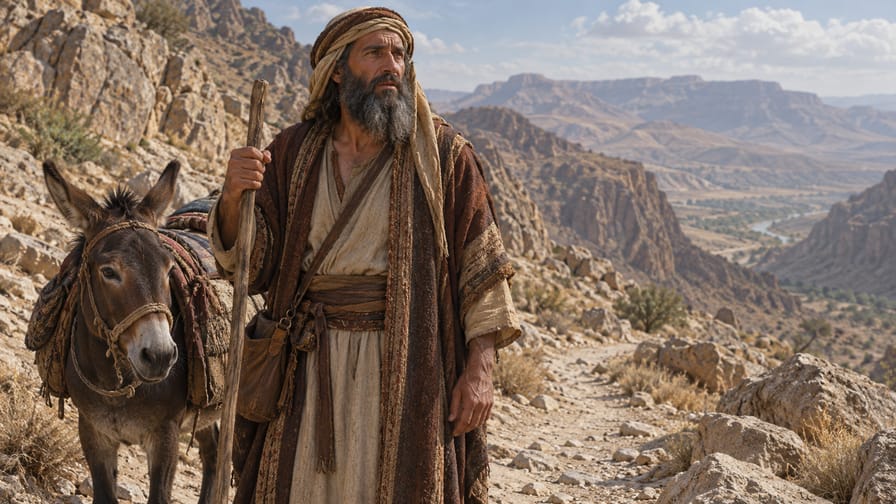
The figure of Bilã (or Balaam, in some translations), a non-Israelite prophet from Mesopotamia, is one of the most intriguing and complex in the Old Testament. His story, recorded primarily in the book of Numbers, offers profound theological lessons on God's sovereignty, the nature of prophecy, the danger of greed, and the resilience of the divine covenant with Israel. From an evangelical Protestant perspective, Bilã serves as a forceful example of how spiritual gifts can be perverted and how truth can be manipulated for selfish ends, even as his mouth is used to utter crucial messianic prophecies.
His narrative challenges linear understanding, presenting a man who hears the voice of God, utters blessings and curses with divine authority, but who, paradoxically, succumbs to corruption and malice, becoming a symbol of false doctrine and apostasy in the New Testament epistles. The analysis of Bilã, therefore, is multifaceted, requiring a careful exploration of his name, context, character, theological significance, and canonical legacy to unravel the rich layers of his biblical relevance.
1. Etymology and meaning of the name
The Hebrew name for Bilã is בִּלְעָם (Bilʿām). Although the most common transliteration in Portuguese is Balaam, the form Bilã is used here for consistency. The exact etymology of the name is a subject of debate among scholars. Some of the proposed derivations suggest meanings that reflect the complexity of the character and his reputation.
One of the most accepted hypotheses is that Bilʿām derives from the Hebrew root בָּלַע (balac), which means "to swallow," "to consume," or "to destroy." If this derivation is correct, the name could mean "devourer of people" or "one who consumes the people." This interpretation resonates with the role that Bilã eventually played in advising Balak to induce the Israelites to sin, leading to the death of many of them (Numbers 31:16).
Another etymological suggestion links the name to the Aramaic root meaning "lord of the people" or "foreigner" (bĕlāʿam). This interpretation would emphasize his non-Israelite origin and his authority as a seer among pagan peoples. However, this connection is less consensual. The etymological ambiguity of the name is, in itself, a reflection of Bilã's ambivalent character, a seer who, although he recognized the God of Israel, acted with dubious motives.
There are no other prominent biblical characters with the same name. The uniqueness of the name Bilã in the biblical narrative contributes to its memorability and the impact of his story. The theological significance of the name, if interpreted as "devourer," underscores the pernicious nature of his influence, even when his words were divinely inspired, and foreshadows his destiny as an enemy of Israel.
The ambivalence of the name and its possible negative connotation anticipate Bilã's tragic end. He is a reminder that the ability to utter divine truth is no guarantee of moral rectitude or personal salvation. His story is a prophetic warning about the corruption of the human heart and the danger of seeking personal gain through spiritual gifts, a lesson that strongly echoes in evangelical theology.
2. Historical context and biblical narrative
The story of Bilã unfolds around the 13th century BC, during Israel's wanderings in the wilderness, shortly before their entry into the Promised Land. Specifically, the events narrated in Numbers 22-24 occur when the Israelites encamp in the plains of Moab, by the Jordan River, opposite Jericho (Numbers 22:1). This is a crucial moment in Israel's history, as they are about to conclude their forty-year journey and inherit the land promised by God.
The political and social context of the time was one of great tension. The Israelites, after significant victories over Sihon, king of the Amorites, and Og, king of Bashan (Numbers 21:21-35), posed an imminent threat to neighboring kingdoms. Balak, king of Moab, was terrified by the vast and powerful nation of Israel. He feared that the Israelites "would lick up everything around us, as an ox licks up the grass of the field" (Numbers 22:4).
To combat this perceived threat, Balak did not resort to direct military battle, but to a spiritual strategy: he sought the services of Bilã, a renowned seer or prophet from the city of Pethor, in Mesopotamia, "in the land of the sons of his people" (Numbers 22:5). Pethor, located near the Euphrates River, was a center of divination and oracular practices, which attests to Bilã's reputation as someone with supernatural powers, recognized by Balak.
The central narrative in Numbers 22-24 describes Balak's attempts to persuade Bilã to curse Israel. Bilã, initially, consults God and is forbidden to go with Balak's envoys and to curse the people, for "this people is blessed" (Numbers 22:12). However, Balak's persistence and the promise of great financial rewards appeal to Bilã's greed.
God allows Bilã to go, but on the condition that he would speak only the words that God put in his mouth (Numbers 22:20). The famous episode of the talking donkey (Numbers 22:22-35) demonstrates God's anger against Bilã for his stubbornness and greed, and serves as a sign that the seer was on the wrong path, even if God was using his mouth. This miraculous event underscores divine sovereignty over human will, even that of a prophet.
Three times, Balak takes Bilã to different heights, hoping that he would curse Israel, but each time Bilã, under the compulsion of the Spirit of God, pronounces blessings and prophecies favorable to Israel (Numbers 23:7-10, 18-24 24:3-9). In his fourth and final prophecy, Bilã utters a messianic vision about "a star that shall come out of Jacob" and "a scepter that shall rise out of Israel" (Numbers 24:17), which will crush Moab and the sons of Seth. This is one of the high points of Old Testament prophecy.
Despite his divinely inspired prophecies, Bilã does not repent of his greed. He is later revealed as the author of the perverse counsel that led Israel to engage in idolatry and sexual immorality with the Moabite and Midianite women in the incident of Baal-Peor (Numbers 31:16 25:1-9). Because of this transgression, a plague struck Israel, killing 24,000 people. Bilã is finally killed by the sword of the Israelites during a campaign of retribution against the Midianites (Numbers 31:8), sealing his fate as a false prophet and enemy of God's people.
3. Character and role in the biblical narrative
The character of Bilã is a complex study of contradictions and paradoxes. He is presented as a seer with a considerable reputation, whose blessings and curses were considered effective (Numbers 22:6). He had direct access to divine revelation, claiming to "have his eyes open" (Numbers 24:3-4) and "to hear the words of God" (Numbers 23:5). Initially, he seems to demonstrate an attempt at obedience to God, refusing to go with Balak's messengers without divine permission and declaring that he could not "transgress the command of the Lord" (Numbers 22:18).
However, the narrative quickly reveals his moral flaws. The main one is greed (2 Peter 2:15 Jude 1:11). Despite divine prohibitions and clear warnings, including the miracle of the talking donkey, Bilã persists in his desire for gain. He is attracted by the "honors" and "rewards" promised by Balak (Numbers 22:17). His willingness to negotiate with God and to seek a loophole to satisfy his desire for riches is evident in his second consultation with God, even after an explicit prohibition.
His vocation was that of a prophet or seer, someone who mediated knowledge of the divine. However, he used this gift for personal and lucrative purposes, which distinguishes him from the prophets of Israel, who spoke for God without seeking reward. His role in the narrative is paradoxical: he is the instrument through which God pronounces blessings on Israel and reveals future glories, including the coming of the Messiah, even though his heart was far from true worship and obedience.
Bilã's significant actions include his four prophecies, which are notable for their poetic beauty and theological clarity. He declares Israel's separation as a holy people (Numbers 23:9), God's faithfulness to His promises (Numbers 23:19), Israel's invincibility under divine protection (Numbers 24:8-9), and the coming of a messianic king (Numbers 24:17-19). These declarations, uttered against his own will and intention, underscore God's absolute sovereignty over the words and actions of even His adversaries.
The development of Bilã's character, or the lack thereof, is tragic. He does not repent of his greed nor his willingness to disobey God. After being prevented from cursing Israel directly, he offers perverse counsel to Balak: to induce the Israelites to sin through the seduction of the Moabite and Midianite women and participation in idolatry to Baal-Peor (Numbers 31:16 Revelation 2:14). This strategy aimed to break Israel's covenant with God, knowing that this would bring divine judgment upon them.
Instead of positive development, Bilã degrades morally. His failure was not an inability to hear God, but a refusal to obey with a pure and disinterested heart. He represents the corruption of the prophetic gift when it is separated from holiness and obedience. His final death at the hands of the Israelites (Numbers 31:8) is God's just judgment on his perversity and his evil counsel, which caused great harm to the chosen people.
4. Theological significance and typology
The theological significance of Bilã is multifaceted and profound, encompassing themes such as God's sovereignty, the nature of prophecy, the danger of apostasy, and messianic prefiguration. His story is a vivid testimony to divine sovereignty, demonstrating that God can use even those who oppose Him to fulfill His purposes. Bilã, despite his intention to curse, is forced to bless Israel, confirming the inviolability of God's covenant with His people (Numbers 23:19-20).
The narrative of Bilã illustrates the progressive revelation of God. Through a pagan prophet, God reveals aspects of His faithfulness, His blessing on Israel, and, crucially, His redemptive plan. Bilã's prophecies about Israel's invincibility and the coming of a "Lion" and a "King" (Numbers 23:24 24:7-8) reinforce the Abrahamic promise of a great nation and a royal descendant.
The most significant prophetic contribution of Bilã is the prefiguration or Christocentric typology found in Numbers 24:17: "I see him, but not now I behold him, but not near a star shall come out of Jacob, and a scepter shall rise out of Israel it shall crush the temples of Moab and destroy all the sons of Seth." This is one of the clearest messianic prophecies in the Old Testament, pointing to the coming of Christ as the "Morning Star" (Revelation 22:16) and the King who will rule with a scepter of righteousness.
This prophecy of Bilã finds its fulfillment in Jesus Christ, the true King and Lord who emerged from the lineage of Jacob. He is the fulfillment of the promise of a divine ruler who would establish an eternal kingdom. The mention of "crushing the temples of Moab" and "destroying all the sons of Seth" can be interpreted as Christ's final victory over all His enemies and the subjugation of all earthly kingdoms under His dominion.
In the New Testament, Bilã is often cited as a negative example, serving as a warning to believers. Peter warns about those who "have followed the way of Bilã, the son of Beor, who loved the wages of wickedness" (2 Peter 2:15-16). Jude, similarly, denounces false teachers who "have rushed on in Bilã's error for profit" (Jude 1:11). These references highlight the greed and corruption of false prophets who distort the truth for personal gain.
In Revelation 2:14, the church in Pergamum is rebuked for having among them "those who hold the teaching of Bilã, who taught Balak to put a stumbling block before the sons of Israel, so that they might eat food sacrificed to idols and practice sexual immorality." This passage reveals Bilã's perverse counsel that led Israel to sin, connecting his story with the central theological themes of idolatry, immorality, and false doctrine. The "doctrine of Bilã" became an expression for teaching that encourages God's people to compromise their faith and holiness for convenience or material gain.
The story of Bilã, therefore, not only prefigures Christ in its prophecies but also serves as an antitype, a dark contrast, to the purity and truth of the Messiah. He is a vivid reminder of the need for a transformed heart and radical obedience to God, even for those who possess spiritual gifts. His failure underscores the importance of integrity and holiness in the lives of those who minister, a crucial theme in evangelical Protestant theology.
5. Biblical-theological legacy and canonical references
The legacy of Bilã in biblical theology is ambivalent, marking him as an instrument of divine prophecy and, at the same time, as an archetype of spiritual corruption. In addition to the main narratives in Numbers 22-24 and 31:8, 16, Bilã is mentioned in other Old Testament books, cementing his importance in Israel's history. In Deuteronomy 23:4-5, Moses recalls how God "would not listen to Bilã, but the Lord your God turned the curse into a blessing for you, because the Lord your God loved you." This reaffirms God's sovereignty over Bilã's evil intentions.
Joshua also refers to Bilã in his farewell speech, reminding the Israelites: "Then Balak the son of Zippor, king of Moab, arose and fought against Israel, and he sent and invited Bilã the son of Beor to curse you, but I would not listen to Bilã indeed, he blessed you continually, and I delivered you out of his hand" (Joshua 24:9-10). This mention highlights divine intervention and the protection of Israel against Bilã's attempts. In Nehemiah 13:2, the story of Bilã is used to justify the prohibition of Moabites and Ammonites from entering the congregation of God, due to their hostility and the hiring of Bilã.
In the New Testament, the figure of Bilã becomes a powerful symbol of false doctrine and apostasy. As mentioned, 2 Peter 2:15-16, Jude 1:11, and Revelation 2:14 refer to him. These passages not only validate Bilã's historicity but also elevate his story to a level of universal warning for the Church. He is the prototype of the false teacher who, although he may have gifts or knowledge, perverts the truth for love of gain and leads God's people to compromise with sin.
The presence of Bilã in Jewish and Christian interpretive tradition is significant. In rabbinic literature, Bilã is often portrayed as an arch-enemy of Israel, a paradigm of wickedness and disobedience. He is seen as a pagan prophet of great power, but whose gifts were used for evil. This view aligns with the New Testament's condemnation.
In Reformed and evangelical theology, Bilã is studied through various lenses. Firstly, he is an example of the unwavering sovereignty of God. Even a pagan and corrupt prophet cannot frustrate God's plans or curse those whom God has blessed. This reinforces the doctrine of election and God's faithfulness to His covenant.
Secondly, Bilã serves as a warning against greed and moral compromise in spiritual leadership. His story is a somber reminder that spiritual gifts do not guarantee salvation or holiness of heart. The "doctrine of Bilã" is interpreted as any teaching that leads believers to compromise with the world, whether through idolatry, immorality, or the pursuit of riches at the expense of God's truth.
Finally, Bilã's messianic prophecies, especially that of the "Star of Jacob" and the "Scepter of Israel," are of immense importance for understanding the biblical canon and the progressive revelation of Christ. They demonstrate that God's plan of salvation was revealed from the earliest times, even through unexpected sources, and that the Old Testament consistently points to the coming of the Messiah. The figure of Bilã, with his contradictions and tragic end, is essential for illustrating both God's faithfulness and the depths of human depravity, even amidst spiritual gifts.