


Cappadocia
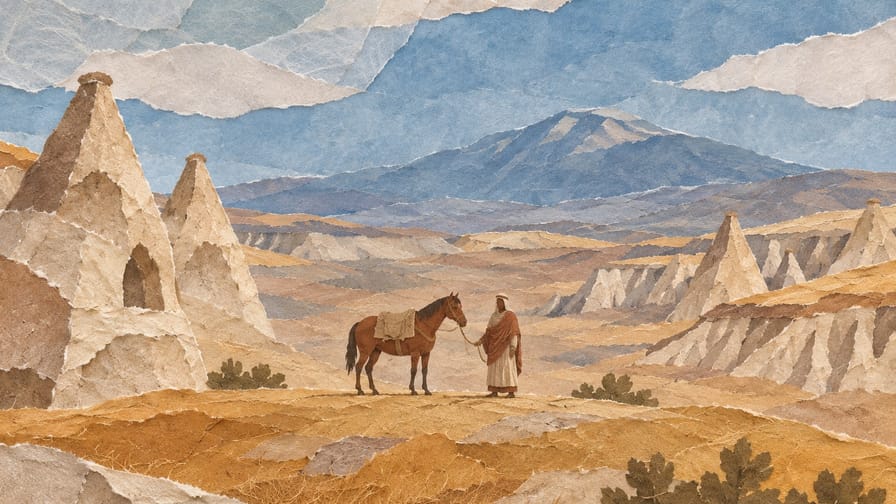
Cappadocia was a region and Roman province of eastern Asia Minor, in central Anatolia, a high plateau known for breeding horses. It appears twice in the New Testament: Jews from Cappadocia heard the apostles in their own language at Pentecost (Acts 2:9), and Peter addressed his first letter to the elect exiles scattered there (1 Peter 1:1).
Those two mentions show the gospel moving from Jerusalem into the Gentile world, as Jesus had promised when He sent His witnesses “to the end of the earth” (Acts 1:8).
1. Etymology and meaning of the name
The name Cappadocia derives from the Greek Kappadokia (Καππαδοκία), not having a direct Semitic origin in the Hebrew or Aramaic languages. The most accepted etymology for the term dates back to Old Persian Katpatuka, the exact meaning of which is debated among scholars. Some theories suggest it could mean "land of beautiful horses" or "land of well-bred horses," reflecting the region's ancient reputation for breeding high-quality horses.
Other linguistic interpretations propose derivations from roots meaning "lowland" or "land of plains," although this theory is less popular due to the region's mountainous topography. The Greek form Kappadokia was the most used during the Hellenistic and Roman periods, becoming the standard name for the province. This denomination was consolidated in the Roman Empire, under which the region prospered and interacted with other cultures.
The absence of a Hebrew or Aramaic name for Cappadocia in the Old Testament Scriptures indicates that the region did not play a direct or prominent role in the early history of Israel. Its biblical visibility begins with the Jewish diaspora and, more significantly, with the advent of Christianity. The name, therefore, reflects a Persian and Greek heritage, marking Cappadocia as part of the Gentile world that would come to be reached by the Gospel.
The significance of the name in the cultural and religious context lies in its representation of a distant, yet accessible, Gentile province to the Jewish center. The mention of Cappadocians in Acts 2:9, on the day of Pentecost, is the first and most impactful appearance of the name in Scripture, underscoring the diversity of peoples gathered in Jerusalem. This demonstrates that the Gospel would break through cultural and geographical barriers, reaching even the "lands of horses."
2. Geographical location and physical characteristics
2.1 Geography and topography of the region
Historical and biblical Cappadocia was located in the eastern part of Asia Minor, in central Anatolia, corresponding approximately to the modern provinces of Nevşehir, Kayseri, Aksaray, and Niğde, in present-day Turkey. It was a vast Roman province, bounded to the north by Pontus, to the east by Lesser Armenia, to the south by Cilicia, and to the west by Galatia and Lycaonia.
Geographically, Cappadocia is characterized by a high and arid plateau, with altitudes ranging between 1,000 and 1,500 meters above sea level. The landscape is dominated by unique geological formations, known as "fairy chimneys," which are rock cones and pillars sculpted by the erosion of volcanic ash (tuff) and basalt. These formations are the result of ancient eruptions of volcanoes such as Mount Erciyes (Argaeus, the highest peak in central Anatolia) and Mount Hasan.
The region has deep valleys and rivers like the Halys (Kızılırmak), which winds through the plateau. The climate is continental, with hot, dry summers and harsh, snowy winters. Natural features, including the soft volcanic rock, facilitated the excavation of numerous dwellings, churches, and underground cities, such as Derinkuyu and Kaymaklı, which served as refuges in times of persecution.
2.2 Proximity and trade routes
Cappadocia was strategically located in relation to important trade routes connecting the East to the West. The famous Persian Royal Road passed nearby, connecting the heart of Anatolia with Mesopotamia and Syria. This made it a vital transit point for goods, cultures, and ideas, including nascent Christianity.
Major cities in the region, such as Mazaca (later Caesarea of Cappadocia, modern-day Kayseri), Melitene, and Tyana, were important centers of commerce and administration. Proximity to other Roman provinces, such as Galatia, Pontus, and Cilicia, facilitated interaction and the spread of cultural and religious influences. This explains the inclusion of Cappadocia in Peter's letters, which covered a vast area of Asia Minor.
2.3 Natural resources and archaeology
The natural resources of Cappadocia included fertile soils in some valleys, suitable for agriculture, and mineral deposits. Horse breeding, as suggested by the etymology, was a prominent economic activity. The volcanic rock, though soft, was used for construction and excavation, giving rise to the remarkable troglodytic structures that still characterize the landscape today.
Archaeology in Cappadocia has revealed evidence of settlements since the Bronze Age, with Hittite, Phrygian, Persian, and Hellenistic remnants. The underground cities and rock-cut churches, with their well-preserved frescoes, provide a vivid testimony to the life and faith of the early Christians and the subsequent history of the church in the region. These discoveries corroborate the importance of Cappadocia as a center of human and religious activity throughout the centuries.
3. History and biblical context
3.1 Pre-biblical and Roman periods
The history of Cappadocia is rich and predates the biblical period of the New Testament. The region was inhabited by various peoples, including the Hittites, who established a powerful empire in Anatolia. Subsequently, it was dominated by the Phrygians and, in the 6th century B.C., became a Persian satrapy, a period from which the name Katpatuka likely originated. After Alexander the Great's conquest, Cappadocia maintained a certain autonomy under its own kings, until it was finally incorporated as a Roman province in 17 A.D., under Emperor Tiberius.
During the Roman period, Cappadocia was a strategic province, serving as a frontier against the Parthian and, later, Sasanian Empires. The provincial capital, Caesarea of Cappadocia (formerly Mazaca), became a significant administrative, military, and cultural center. The Roman presence brought stability, infrastructure, and greater integration of the region with the Mediterranean world, facilitating the movement of people and ideas, including those of Christianity.
3.2 Biblical events and associated figures
Cappadocia is explicitly mentioned in two crucial New Testament passages, both related to the dissemination of the Gospel. The first mention occurs on the day of Pentecost, as recorded in Acts 2:9. Among the multitude of Jews and proselytes who were in Jerusalem, coming from various nations, were the "Cappadocians."
This event is of utmost importance, as it marks the outpouring of the Holy Spirit and the beginning of the proclamation of the Gospel in various languages. People from Cappadocia were among the hearers in Acts 2:9. Acts 2:41 reports about three thousand baptisms without specifying their regions of origin. The suggestion that returning hearers brought the gospel to Cappadocia is a hypothesis, not an account given by Acts.
The second biblical mention of Cappadocia is found in the opening salutation of the First Epistle of Peter. The apostle Peter addresses his letter "to God's elect, foreigners of the Dispersion in Pontus, Galatia, Cappadocia, Asia and Bithynia" (1 Peter 1:1). This passage indicates that, at the time the epistle was written (likely between 60 and 64 A.D.), Christian communities already existed in Cappadocia, facing challenges and persecutions.
Although no specific biblical figure is named as originating from or active in Cappadocia, Peter's letter shows the apostle's pastoral care for these churches. The inclusion of Cappadocia in the list of regions addressed by an apostolic epistle reinforces its importance on the map of early Christianity. The letter confirms the presence of believers in these regions, but does not identify who founded the churches in Cappadocia.
3.3 Historical development and the Jewish diaspora
The presence of Jews in Cappadocia, as evidenced by the mention in Acts 2:9, reflects the vast Jewish diaspora that spread throughout the Roman Empire and beyond. The passage places these hearers within the diaspora but does not describe their participation in civic life or establish that they founded the region’s first churches. Their presence at Pentecost and the believers later addressed in 1 Peter 1:1 are distinct pieces of evidence; the texts do not narrate the connection between them.
The historical development of Cappadocia in the biblical period is, therefore, that of a region which, from a geographical and ethnic standpoint distant from Jerusalem, became a home for believers in Jesus Christ. Evangelization was not limited to the large coastal cities but extended into the interior of Asia Minor, reaching regions like Cappadocia, which attests to the dynamic and missionary power of the early church.
4. Theological significance and redemptive events
4.1 Role in redemptive history and progressive revelation
Cappadocia, although not a main stage for the great events of Old Testament redemptive history or Jesus' earthly ministry, plays a crucial role in the progressive revelation of God's plan for the salvation of humanity. Its appearance in the New Testament symbolizes the universality of the Gospel and the breaking down of ethnic and geographical barriers that previously divided humanity. People from Cappadocia were among the hearers in Jerusalem at Pentecost (Acts 2:9). Acts 2:5,11 describes the gathering in terms of Jews and proselytes; their regions of origin do not by themselves establish that these hearers were Gentiles.
Pentecost belongs to the unfolding mission that would also reach the Gentiles. Cappadocia, as a Gentile province, represents the "ends of the earth" that the Gospel was to reach (Acts 1:8). The presence of believers in Cappadocia attested in 1 Peter 1:1 demonstrates God's sovereignty in calling people from all backgrounds to Himself, fulfilling the messianic promises of a new covenant that would encompass all peoples.
4.2 Salvific and apostolic events in the location
People from Cappadocia were among those who heard the "wonders of God" in their own languages at Pentecost (Acts 2:11; see Acts 2:9). Acts 2:41 records about three thousand converts but does not identify how many came from Cappadocia or describe their founding churches there. First Peter 1:1 confirms the presence of believers in the region without explaining how those communities began.
Subsequently, the inclusion of Cappadocia in the list of recipients of the First Epistle of Peter (1 Peter 1:1) highlights the continuous apostolic work in the region. Peter, as one of the pillars of the early church, addressed these "elect who are foreigners of the Dispersion," offering encouragement, exhortation, and theological teaching. This demonstrates the pastoral care of the apostles for the scattered church and the importance of doctrines such as election, sanctification, and eschatological hope for believers living in an often hostile environment.
4.3 Theological symbolism and relevance in the early church
Theologically, Cappadocia symbolizes the expansion of the Kingdom of God beyond the cultural and geographical boundaries of Israel. The presence of believers in this remote region is a manifestation of Christ's promise that the church would be built and the gates of hell would not prevail against it (Matthew 16:18). Cappadocia, therefore, represents the inclusion of Gentiles in the people of God and the formation of a new transnational community united by faith in Jesus Christ.
Peter's reference to believers as "foreigners of the Dispersion" (1 Peter 1:1) has profound theological significance. It evokes the idea that Christians, though living in the world, do not belong to it their true citizenship is in heaven (Philippians 3:20). This identity of pilgrims and foreigners, which resonates with Israel's experience in the Old Testament, is a fundamental truth for understanding the Christian vocation to live in holiness and witness amidst a foreign culture.
Cappadocia, in this context, is not merely a geographical location, but a symbol of the universal church, composed of people from "every tribe, tongue, people, and nation" (Revelation 5:9). Its history in Scripture, though brief, is a powerful testimony to God's faithfulness in fulfilling His promises of salvation and to the dynamic of the Holy Spirit in carrying the Gospel to all corners of the earth.
5. Biblical-theological legacy and canonical references
5.1 Canonical mentions and their context
The canonical references to Cappadocia are limited to two passages in the New Testament, but each of them carries considerable theological weight. The first mention, in Acts 2:9, inserts Cappadocia into the foundational event of the Christian church: the outpouring of the Holy Spirit on the day of Pentecost. This context highlights the ethnic and geographical diversity of the first converts, underscoring the universal nature of the Gospel message from its inception. The presence of Cappadocians in Jerusalem that day is proof of the reach of the Jewish diaspora and the Spirit's ability to transcend linguistic and cultural barriers.
The second mention, and perhaps the most significant for understanding the life and faith of Christians in the region, is found in 1 Peter 1:1. Here, Cappadocia is listed among the provinces of Asia Minor where scattered Christian communities existed. This reference not only confirms the existence of churches in Cappadocia but also places them under the aegis of Peter's apostolic care. The epistle, with its exhortations to perseverance, holiness, and hope amidst persecution, offers a window into the reality and challenges faced by Cappadocian believers.
5.2 Development of the role in the canon and extra-biblical literature
Throughout the biblical canon, the role of Cappadocia develops from a mere geographical indication in Acts to a community of faith in 1 Peter, which receives apostolic instruction. This demonstrates the progression of the early church, from an initial event in Jerusalem to the establishment of congregations in distant regions. The scarcity of direct mentions, however, suggests that Cappadocia was not a nerve center of apostolic events like Antioch or Ephesus, but rather a province that received the Gospel through dispersion and witness.
In intertestamental and extra-biblical literature, Cappadocia is mentioned in historical and geographical contexts, but without the theological focus that the New Testament confers upon it. Flavius Josephus, for example, makes references to the region in his historical works. However, it is in the post-apostolic period that Cappadocia gains significant prominence in church history. The region became a vital center for Christianity, especially in the 4th and 5th centuries, with the emergence of the so-called "Cappadocian Fathers" – Basil of Caesarea, Gregory of Nazianzus, and Gregory of Nyssa.
5.3 Importance in early church history and theology
The importance of Cappadocia in early church history is immense, especially through the legacy of the Cappadocian Fathers. Although living after the canonical period, their contributions to Christian theology, particularly in the formulation of the doctrine of the Trinity and Christology, are fundamental to orthodoxy. They developed the theological language that allowed the church to articulate the divinity of the Holy Spirit and the distinction between the Persons of the Trinity, preserving the unity of God. For those who value the continuity of historical faith, the Cappadocian Fathers represent a crucial testimony to biblical truth defended against heresies.
Cappadocia is an example of God's faithfulness in establishing His church in all nations. The mention of Cappadocian believers in 1 Peter 1:1 resonates with the doctrine of election and the universal calling of God's people. The identity of "foreigners of the Dispersion" is a powerful metaphor for the Christian's condition in the world, called to live according to the values of the Kingdom of God while awaiting Christ's return. Cappadocia, thus, represents not merely a point on the map, but a symbol of the cross-cultural, persevering, and theologically rich church that spread throughout the ancient world and continues to expand today.