


Mehujael
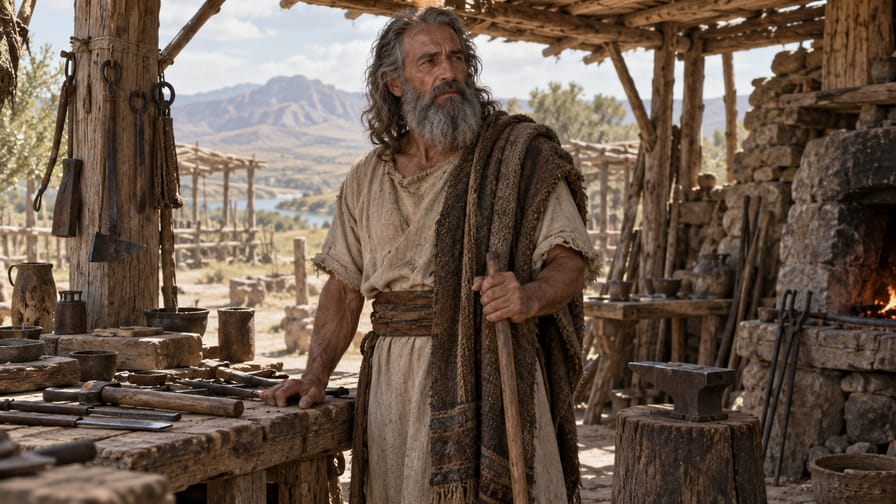
The figure of Mehujael, though briefly mentioned in the Scriptures, plays a significant role within the genealogy of Cain, offering crucial insights into the development of antediluvian humanity and the consequences of sin. His inclusion in the sacred text, even if only as a name in a list, is fundamental for understanding the narrative of Genesis and the biblical theology of human depravity and the history of redemption. This analysis will explore the etymology of his name, the historical and narrative context in which he appears, the absence of details about his character, his theological significance, and his legacy in the evangelical Christian tradition.
As part of Cain's lineage, Mehujael serves as a point of contrast with the lineage of Seth, highlighting the bifurcation of post-Fall humanity into two distinct paths: one that distances itself from God and another that calls upon the name of the Lord. His existence, therefore, is not merely a genealogical record, but an element that contributes to the progressive revelation of the need for salvation and divine sovereignty over human history.
1. Etymology and Meaning of the Name
The name Mehujael (Hebrew: מְחוּיָאֵל, Meḥuyāʾēl) appears only once in the Hebrew Bible, in Genesis 4:18. The etymological analysis of this name is complex and has been the subject of various interpretations among biblical scholars and linguists.
The first part of the name, Meḥuyāʾēl, can be derived from two main Hebrew roots. One possibility is the root חָוָה (ḥāwāh), which means "to live" or "to declare/show." If this is the root, the name could mean "God lives" or "declared by God," suggesting a connection with life or a divine designation.
However, a more common and theologically resonant interpretation, given Cain's lineage, derives the first part from מָחָה (māḥāh), which means "to wipe out," "to destroy," or "to strike/wound." In this case, the name Mehujael would mean "wounded by God," "struck by God," or "wiped out by God."
The second part of the name, אֵל (ʾĒl), is a common theophoric suffix that means "God." This part indicates a direct reference to the divine, a frequent element in ancient Semitic names, reflecting the belief in divine intervention or relationship with God.
Considering the context of Cain's lineage, which is marked by estrangement from God and progressive depravity, the interpretation of "wounded by God" or "struck by God" seems more theologically coherent. It could symbolize the mark of divine judgment upon Cain's descendants, or the spiritual condition of a lineage that distanced itself from the presence of the Lord.
There are no significant variations of the name Mehujael in other biblical languages or manuscripts. He remains a singular figure, without other biblical characters sharing the exact same name. The theological significance of the name, therefore, is intrinsically linked to his position in Cain's genealogy and to the theology of sin and divine judgment.
The name, whether interpreted as "God lives" or "wounded by God," underscores God's sovereignty even over those who turn away from Him. If "God lives," it may be an involuntary testimony to God's existence, despite the impiety of the lineage. If "wounded by God," it serves as a reminder of the cost of sin and divine justice, even amid the apparent earthly prosperity of Cain's descendants.
2. Historical and Biblical Narrative Context
The mention of Mehujael is embedded in the context of antediluvian history, in the initial chapters of the book of Genesis (specifically Genesis 4:18). This period is characterized by the rapid expansion of humanity after the Fall and the flood, as well as the progressive increase of wickedness on earth, culminating in the divine judgment of the flood.
The temporal context of Mehujael dates back to the first centuries of human existence, after Adam and Eve were expelled from the Garden of Eden and after Cain killed his brother Abel. He is part of the third generation of Cain's lineage, being the son of Irad and the father of Methushael, and the great-grandfather of Lamech, the notorious polygamist and murderer.
Politically and socially, the era is depicted as the beginning of human civilization, with the development of cities (Cain built one, Genesis 4:17) and the emergence of various crafts and arts (Genesis 4:20-22). However, this cultural and technological development is presented in Genesis as occurring in a context of growing estrangement from God and increasing violence and impiety.
Cain's genealogy, where Mehujael is found, is a record of the descendants of the one who was cursed by God and banished from His presence (Genesis 4:11-16). This lineage contrasts sharply with the lineage of Seth, which is presented as the one that "began to call upon the name of the Lord" (Genesis 4:26), marking a crucial distinction between the seed of the woman and the seed of the serpent.
The main biblical passage where Mehujael appears is Genesis 4:18, which states: "To Irad was born Mehujael to Mehujael was born Methushael and to Methushael was born Lamech." This is the only direct mention of him in all of Scripture, meaning there are no narratives about his deeds, words, or character.
The geography related to Mehujael is inferred from Cain's location. After his banishment, Cain went to the land of Nod, "east of Eden" (Genesis 4:16), where he built a city. Although the Bible does not specify where Mehujael lived, it is reasonable to assume that he and his descendants were associated with that region or with other cities and settlements that emerged in the pre-diluvian era.
His relations with other biblical characters are purely genealogical: he is the son of Irad, grandson of Cain, father of Methushael, and grandfather of Lamech. Cain's lineage culminates in Lamech, who is notable for his polygamy and for a song of vengeance that exceeds in brutality Cain's own curse (Genesis 4:23-24), demonstrating the escalation of violence and sin in that lineage.
3. Character and Role in the Biblical Narrative
The Bible offers no information about Mehujael's character, actions, or decisions. He is merely a name in a genealogical list, without any narrative associated with him. Therefore, any analysis of his character or role must be made from inferences and the broader context of Cain's lineage.
Unlike characters such as Abraham, David, or Peter, of whom we have detailed records of their virtues and flaws, Mehujael is a silent figure. The absence of any mention of piety, faith, or obedience to God in Cain's lineage, in contrast to Seth's lineage (where people "began to call upon the name of the Lord," Genesis 4:26), is in itself a form of implicit characterization.
From an evangelical Protestant perspective, the omission of any positive trait for Mehujael and his ancestors and descendants in Cain's lineage suggests that they were not on the path of faith in God. The Genesis narrative emphasizes the separation between the promised seed of the woman (which would come through Seth and, subsequently, Noah, Abraham, etc.) and the seed of the serpent, represented by Cain's lineage.
Mehujael's role in the biblical narrative is, therefore, that of a link in the genealogical chain that illustrates the progression of sin and estrangement from God in the antediluvian world. He is a piece in the puzzle that shows humanity, outside the direct presence of God, developing a culture that, although technologically advanced, was morally corrupt and spiritually dead.
His existence in the lineage that culminates in Lamech, a man who boasts of his own vengeance and violence (Genesis 4:23-24), serves to underscore the escalation of human depravity before the flood. Mehujael, though not an active agent in this escalation, is part of the context that makes it comprehensible.
There is no specific vocation, calling, or function attributed to Mehujael. He is not a prophet, priest, king, or leader. His contribution is purely existential: he existed, had a son, and thus perpetuated Cain's lineage, fulfilling the divine mandate to "be fruitful and multiply" (Genesis 1:28), but outside the covenant of grace.
The silence of the Scriptures concerning Mehujael is eloquent. He represents the vast majority of antediluvian humanity that lived and died without a record of faith or a relationship with God, and whose lives were engulfed by the increasing wickedness that brought the judgment of the flood (Genesis 6:5-7). In his absence of detail, he is a reminder of the seriousness of sin and the need for redemption.
4. Theological Significance and Typology
The theological significance of Mehujael lies not in his actions, but in his position within Cain's lineage. He is a crucial element in redemptive history, illustrating the rapid moral and spiritual deterioration of humanity after the Fall and the murder of Abel, setting the stage for the flood.
His presence in the genealogy of Genesis 4 serves to contrast with the genealogy of Genesis 5 (the lineage of Seth). This distinction is fundamental to the biblical theology of the "two seeds" or "two paths," where the seed of the woman (through Seth) is the lineage of faith and promise, while the seed of the serpent (through Cain) is the lineage of rebellion and impiety.
Mehujael does not prefigure or serve as a type of Christ. On the contrary, his inclusion in Cain's lineage is a reminder of the depth of human depravity and the desperate need for a Savior. The story of Mehujael and his lineage points to the darkness of sin that can only be dispelled by the light of Christ.
Cain's lineage, in which Mehujael is a link, is characterized by the absence of calling upon the name of the Lord, a direct contrast with Seth's lineage. This underscores the doctrine of total depravity, which teaches that sin has affected all aspects of the human being, resulting in an innate inability to seek God on one's own (Romans 3:10-12).
The history of Mehujael and his ancestors and descendants connects with central theological themes such as divine judgment, grace, and God's sovereignty. The judgment upon Cain and his lineage, though not explicitly detailed for Mehujael, is a foreshadowing of the greater judgment of the flood, which God would bring upon all sinful humanity (Genesis 6:5-7).
The inclusion of Mehujael in the genealogy shows that, even in the lineage that turned away from God, life continued, and God, in His sovereignty, allowed humanity to multiply, even if for a later judgment. This demonstrates that God is the Lord of history, governing all things, including the actions of the wicked.
There are no citations or references to Mehujael in the New Testament, nor is he directly associated with specific covenants, promises, or prophecies. However, the context of his existence contributes to the understanding of salvation history, as it establishes the basis for the need for redemption and God's choice of a specific lineage to fulfill His promises, culminating in Christ.
In summary, Mehujael, as part of Cain's lineage, serves as a silent testimony to the reality of sin, God's justice, and the need for a Redeemer. He is a somber reminder of the fallen human condition, emphasizing the importance of divine grace manifested in Jesus Christ.
5. Biblical-Theological Legacy and Canonical References
Mehujael's legacy in biblical theology is paradoxically significant, despite his singular mention and the absence of narrative details. He is not mentioned in any other biblical book apart from Genesis 4:18, nor are there any literary contributions attributed to him.
Nevertheless, Mehujael's importance lies in his function as a link in Cain's genealogy, which is fundamental for understanding Old Testament theology. This genealogy, in contrast to that of Seth, helps to establish the theme of the "two seeds" (Genesis 3:15) – the seed of the woman (which points to Christ) and the seed of the serpent (which represents fallen and rebellious humanity).
The presence of Mehujael in Cain's lineage serves to illustrate the extent and depth of human depravity before the flood. Reformed and evangelical theologians frequently use this genealogy to discuss the doctrine of original sin and total depravity, showing how sin quickly spread and corrupted humanity from its beginnings.
In Jewish and Christian interpretive tradition, Mehujael is generally treated as part of the collective of Cain's lineage, which is seen as an example of estrangement from God. While there are no specific Midrashic or Patristic elaborations on Mehujael individually, the fate of Cain's lineage is frequently discussed in terms of judgment and departure from divine grace.
The absence of Mehujael in intertestamental literature or other extra-biblical traditions is consistent with his brief mention in the canon. He did not become a prominent figure in apocryphal or legendary narratives, which reinforces his primary function as a genealogical marker.
For Reformed and evangelical theology, the inclusion of Mehujael in the biblical canon is important for understanding the Genesis narrative as a whole. It demonstrates that the Bible is an accurate historical record, which does not hesitate to document the reality of human life, including those who did not play a direct role in the history of redemption, but whose context is vital for understanding it.
Mehujael's importance for understanding the canon lies in his contribution to the background that justifies the flood. He is part of the biblical evidence that demonstrates the magnitude of sin that led God to purify the earth, paving the way for a new covenant with Noah and, eventually, the Abrahamic covenant, which would culminate in the coming of the Messiah, Jesus Christ.