


Was Jonah really swallowed by a whale?
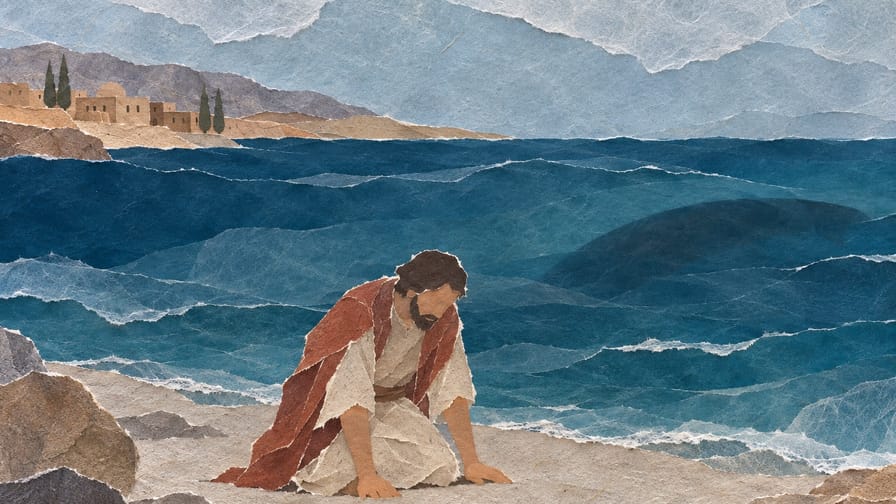
Yes: Jonah was really swallowed by a great fish that the Lord appointed, and he spent three days and three nights inside it (Jonah 1:17). The word “whale” comes from older translations and popular usage, not from the Hebrew of Jonah. As for whether it actually happened, everything indicates that Jesus treated the episode as real, not as legend (Matthew 12:40-41).
Does the text say whale or fish?
The book of Jonah says the Lord appointed a great fish to swallow the prophet (Jonah 1:17). The Hebrew phrase is dag gadol (דָּג גָּדוֹל), literally “big fish.” Dag is the ordinary word for fish. Hebrew had other terms for enormous sea creatures, such as tanninim (“sea creatures”) in Genesis 1:21, but the author of Jonah used none of them. Nothing in the text names the species, so claims like “it was a sperm whale” or “it was a blue whale” go beyond what is written.
The word “whale” enters the conversation through the New Testament. In Matthew 12:40, Jesus speaks of the belly of Jonah’s animal with the Greek word kētos (κῆτος), the same word the Greek translation of the Old Testament, the Septuagint, uses in Jonah. Kētos means a large sea creature in general, and ancient Greek usage covered animals we now sort into whales, sharks and huge fish. The King James Version, in English, and the Almeida Corrigida, in Portuguese, rendered it “whale” in that verse, while many modern translations prefer “great fish.” What Jonah and Matthew both affirm is that an enormous sea creature, species unnamed, swallowed the prophet.
Did Jesus treat Jonah’s story as history?
Everything points that way. When scribes and Pharisees asked for a sign, Jesus answered that no sign would be given to an evil generation except the sign of Jonah: just as Jonah was three days and three nights in the belly of the great fish, the Son of Man would be three days and three nights in the heart of the earth (Matthew 12:38-40). Luke records the sign of Jonah (Luke 11:29-30), without mentioning the three days, and Matthew repeats it on another occasion (Matthew 16:1-4). How to count Jesus’ three days has its own articles on this site; for this question, the parallel is what matters.
Jesus then adds that the men of Nineveh will rise at the judgment with that generation and condemn it, because they repented at the preaching of Jonah (Matthew 12:41). Here comes an inference, and a strong one: Jesus sets his own death and resurrection, which are facts, beside Jonah’s time in the fish, and he places the Ninevites before God’s court as real people who really repented. A comparison like that loses its force if one side is fiction. Anyone who trusts Christ as Lord, and receives the Scriptures as inspired and without error in the original writings, has good reason to read Jonah as history rather than fable.
How could a man survive inside a fish?
The text does not present this as a natural event but as the work of God. The Hebrew verb manah (to appoint, to provide) appears in Jonah 1:17 for the fish and returns for the plant, the worm and the scorching east wind in Jonah 4:6-8. In every case the Lord directs creation to carry out his purpose. Asking whether an animal could, on its own, swallow a man and return him alive is asking a question the book never asks. The account claims a miracle, and anyone who believes in a God who made the sea and everything in it does not need a natural mechanism to accept that he can direct a fish.
Here is what the account actually says. After Jonah was thrown into the sea (Jonah 1:15), the fish swallowed him and he prayed to the Lord from inside it (Jonah 2:1). His prayer borrows the language of the deep: from the belly of Sheol, the realm of the dead, he cried for help, and God heard him (Jonah 2:2). He says God brought his life up from the pit (Jonah 2:6) and promises to offer sacrifice with a voice of thanksgiving (Jonah 2:9). In the end the Lord spoke to the fish, and it vomited Jonah onto dry land (Jonah 2:10). Notice the tone of the narrative: the fish appears as a place of prayer and rescue, not of punishment.
What about those who read Jonah as a parable?
Some who affirm the inspiration of Scripture read the book as a teaching narrative, comparable to the parables of Jesus. They are brothers and sisters in the faith, and the disagreement is no reason for contempt. Still, several things weigh in favor of the historical reading. Jonah is not a nameless character like the good Samaritan: the book introduces him as the son of Amittai (Jonah 1:1), and 2 Kings 14:25 speaks of Jonah son of Amittai, the prophet from Gath-hepher, who announced the restoration of Israel’s border in the reign of Jeroboam II. The book names places people knew, such as Joppa and Nineveh. And the heaviest weight comes from how Jesus used the account, as we saw.
It is true that the narrative has irony and striking touches, such as the king of Nineveh ordering even the animals to be covered in sackcloth (Jonah 3:8). But skilled storytelling is not the same as invention. An account can carry rhythm, irony and theological emphasis and still tell what happened.
What does Jonah’s fish teach about God and about Jesus?
The story is not there to satisfy curiosity about the animal. Jonah ran from the mission God gave him (Jonah 1:1-3), and the Lord did not give up on him: he sent a great wind over the sea, appointed the fish, and gave the prophet a second command to go to Nineveh (Jonah 3:1-2). The same God cares about the people of that city (Jonah 4:11). Anyone who feels far from God finds in this account a Lord who hears those who cry out from the depths, as Jonah did (Jonah 2:2), without any promise that the consequences of our choices will disappear.
Above all, the fish points to Christ. Jonah came out after three days and went to preach. Jesus himself tied the fish to his own death and resurrection (Matthew 12:40) and said that someone greater than Jonah was there (Matthew 12:41). The right response to the sign of Jonah is the same as Nineveh’s: to hear the word of God and turn to him (Jonah 3:5).
Key Bible references
Jonah 1:17 · Jonah 2:1-10 · Matt 12:38-41 · Luke 11:29-32 · 2 Kgs 14:25 · Jonah 3:5-10 · Jonah 4:11 · Eph 2:8-9