


Michael
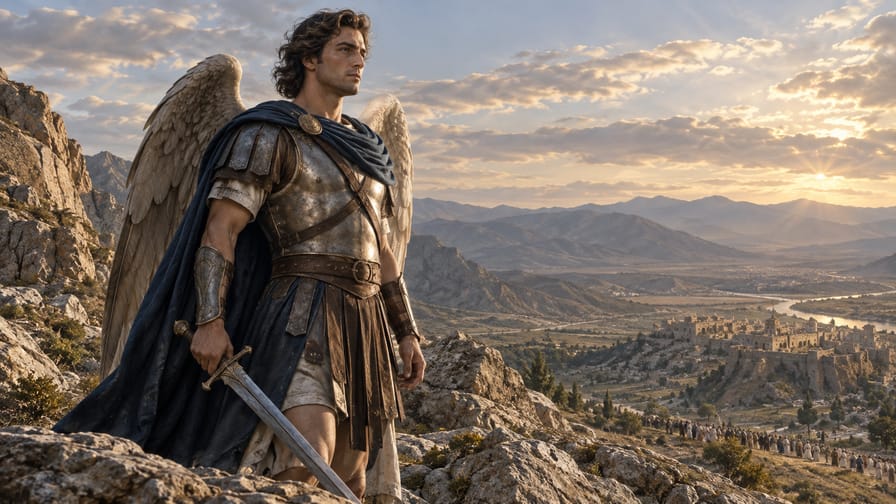
The figure of Michael is one of the most prominent and enigmatic in the angelic panorama of the Sacred Scriptures. Recognized as one of the chief angels, or "princes," his role extends from the defense of the people of Israel in the Old Testament to the leadership of the heavenly hosts in the eschatological battle against evil.
From an evangelical Protestant perspective, the analysis of Michael emphasizes his created nature, his subservience to God, and his active service in the history of redemption. He is not merely a secondary character, but a divine agent who illustrates God's sovereignty over spiritual forces and His providential protection towards His elect.
This study seeks to explore the etymology of his name, the biblical contexts of his appearances, the characteristics of his character and function, his theological significance, and the legacy he represents for the Christian faith. We will delve into the canonical passages, seeking an exegetical and doctrinal understanding that is aligned with the principles of Reformed and evangelical theology.
The relevance of Michael resides not only in his strength and authority, but in how he points to the incomparable majesty of God, whose power he reflects and defends. His story is a constant reminder of the reality of spiritual warfare and the certainty of God's final victory over all forms of iniquity.
Throughout this analysis, we will make an effort to distinguish Michael from other messianic or divine figures, maintaining the theological clarity that identifies him as an angelic being, distinct from and subservient to the Triune God. His presence in the Scriptures is a testament to the complexity of the spiritual cosmos and the divine providence that operates in both the visible and the invisible.
1. Etymology and meaning of the name
The name Michael, in Hebrew Mikha'el (מִיכָאֵל), is composed of three elements. The first, mî (מִי), means "who" the second, kâ (כָּ), is a preposition meaning "like" or "as" and the third, ’ēl (אֵל), is the Hebrew term for "God".
Thus, the literal meaning of the name Michael is "Who is like God?". This is a rhetorical question that implies an emphatic answer: "No one is like God!". The name, therefore, not only identifies the angel but also serves as a hymn to the uniqueness and supremacy of God.
The theological depth of the name is significant. It positions Michael as a defender of divine sovereignty and incomparability, a champion of the truth that there is no one equal to the Creator. This meaning resonates with the role he plays in the Scriptures, confronting those who oppose God's plan.
Although the name Michael may have been common in Israel, the most prominent biblical character with this name is the archangel. Scripture does not present other individuals with this name who hold comparable prominence to that of the angelic leader, making him almost synonymous with the archangel in theological discussions.
The divine choice of this name for one of His chief angels is not accidental. It underscores Michael's fundamental mission: to exalt and vindicate the glory of God. His very identity proclaims the central truth of biblical monotheism, that God is unique and incomparable in His power and majesty.
In other words, Michael is a living reminder that any attempt to usurp God's glory or to equate oneself with Him is doomed to failure. The name is a perennial theological declaration about the incomparability of the Lord, echoing the message of prophets like Isaiah (Isaiah 40:18, 25).
The transliteration of the name into Greek in the New Testament is Michaēl (Μιχαήλ), retaining the same meaning and theological force. This demonstrates the consistency of the divine message across different languages and periods of the biblical canon.
2. Historical context and biblical narrative
The figure of Michael does not possess an earthly genealogy or a human historical-social context, as he is an angelic being. His "history" is traced through his strategic appearances in the canonical narratives, which reveal him at different moments in salvation history.
2.1. Appearances in the Book of Daniel
The first explicit mentions of Michael occur in the Book of Daniel, which is set during the Babylonian and Persian exile (6th-5th centuries BC). Daniel 10 presents him as "one of the chief princes" (Daniel 10:13), coming to the aid of another angel who was in spiritual conflict with the "prince of the kingdom of Persia."
In this context, Michael is revealed as a high-ranking spiritual warrior, engaged in an invisible battle that directly affects political events and the destiny of nations. He is the designated defender of God's people, Israel, as attested in Daniel 10:21, where he is called "your prince."
The passage of Daniel 12:1 reinforces this function, describing him as "the great prince who stands guard over the sons of your people." Here, Michael is associated with a time of great tribulation and the final deliverance of God's elect, indicating a crucial eschatological role in the protection of Israel.
These mentions in Daniel establish Michael as an angelic guardian of Israel, operating on the spiritual plane to influence earthly events and ensure the execution of divine purposes for His covenant with His people. His actions are vital for understanding God's providence over the nations.
2.2. Appearance in the Epistle of Jude
In the New Testament, Michael is mentioned in the Epistle of Jude, in Jude 9. Here, he is explicitly called "Michael the archangel," which confirms his position as one of the highest among the angels. The passage describes a dispute with the devil over the body of Moses.
This event is not narrated in any other canonical book, but it is possible that Jude was referring to a Jewish tradition (perhaps from the apocryphal book The Assumption of Moses). Regardless of the source, the Bible incorporates it as a canonical record of Michael's authority and character.
The importance of this passage lies in demonstrating Michael's humility and delegated authority. Even before Satan himself, he did not utter a railing judgment, but said, "The Lord rebuke you!" (Jude 9). This underscores his obedience and recognition of supreme divine authority to judge.
2.3. Appearance in the Book of Revelation
The last and most dramatic appearance of Michael occurs in the Book of Revelation, in Revelation 12:7-9. He is seen leading the heavenly armies in a cosmic battle against the "dragon" (Satan) and his angels. This battle results in the definitive expulsion of the devil from heaven to earth.
This event is eschatological in nature, placing Michael at the center of the climax of the conflict between God and Satan. His victory over the dragon is a premonition of the final defeat of evil and the full establishment of the Kingdom of God, solidifying his role as a divine warrior in the consummation of the ages.
Michael's appearances, though scarce, are strategically positioned to reveal crucial aspects of spiritual warfare and divine providence. They span from the post-exilic period to the final events of salvation history, demonstrating his continuous relevance in God's plan.
3. Character and role in the biblical narrative
Michael's character is revealed through his actions and titles in the Scriptures, which paint him as an angelic being of great power, loyalty, and humility. He is consistently presented as a faithful servant of God, a protector of the chosen people, and a relentless warrior against the forces of evil.
3.1. An archangel and angelic leader
The title "archangel" (archangelos, ἀρχάγγελος) in Jude 9 designates Michael as the "chief of the angels" or "principal angel." This title indicates a position of leadership and authority within the angelic hierarchy. He is not merely an angel, but a recognized leader among celestial beings, possessing a superior rank.
In Daniel 10:13, he is called "one of the chief princes," which also suggests his prominence and authority over other angels. His ability to intervene and assist other angels in spiritual combat reinforces the idea of his leadership and power within the heavenly army.
3.2. Protector of God's people
One of Michael's most distinctive roles is that of protector of Israel. In Daniel 10:21, he is identified as the "prince" who stands with Daniel's people, and in Daniel 12:1, as "the great prince who stands guard over the sons of your people." This establishes him as a specific angelic guardian for the nation of Israel.
This role underscores God's providence over His covenant people, even amidst persecutions and conflicts. Michael's presence ensures that, despite spiritual and earthly machinations against Israel, God's purposes for His chosen nation will be fulfilled.
3.3. Warrior and spiritual combatant
Michael is fundamentally a warrior. His appearances show him engaged in direct spiritual combat. In Daniel, he fights against the demonic "princes" of Persia and Greece (Daniel 10:13, 20), who represent the spiritual forces behind the earthly empires that oppose God and Israel.
In Revelation, he leads God's angels in battle against Satan and his hosts. "And there was war in heaven Michael and his angels fought against the dragon" (Revelation 12:7). This is the most vivid image of Michael as a celestial military commander, demonstrating his strength and skill in combat.
3.4. Humility and recognition of divine authority
Despite his immense power and leadership position, Michael demonstrates remarkable humility and recognition of God's supreme authority. In the dispute with the devil over the body of Moses, he "did not dare to bring a railing judgment, but said, 'The Lord rebuke you!'" (Jude 9).
This attitude reveals that Michael understands that the authority to judge belongs exclusively to God. He does not act on his own accord, but under divine delegation and authority, serving as a model of submission and reverence even for God's most powerful creatures.
In summary, Michael is characterized by his incomparable strength among angels, his unwavering loyalty to God, his role as guardian of Israel, and his humility in recognizing divine sovereignty. He is a powerful agent in the execution of God's plans, both in history and in eschatology.
4. Theological significance and typology
The figure of Michael holds deep theological significance from an evangelical Protestant perspective, although it is crucial to distinguish him clearly from Christ. He is not a direct prefiguration or a typology of Jesus, but rather a powerful instrument in the execution of the divine will, revealing aspects of God's sovereignty, spiritual warfare, and divine protection.
4.1. God's sovereignty and spiritual warfare
The existence and actions of Michael underscore the doctrine of God's sovereignty over all spheres of reality, including the spiritual realm. Michael's battles against the demonic "princes" in Daniel and against the dragon in Revelation reveal that an intense spiritual war is taking place behind earthly events (Ephesians 6:12).
In this war, God is not absent or passive He uses His angels, led by Michael, to combat the forces of evil and protect His purposes. This demonstrates that, although Satan and his demons are powerful, they are under God's ultimate control and can be defeated by His celestial agents.
Michael's presence in the Scriptures serves as a vivid reminder that God's plan for redemption is not merely earthly, but cosmic, involving a spiritual dimension of conflict and victory. Michael's actions are a manifestation of divine providence that operates to ensure the triumph of good over evil.
4.2. Divine protection for the people of God
Michael's role as "prince" and protector of Israel (Daniel 10:21 12:1) is a powerful illustration of God's faithfulness to His covenant and His care for His people. Even in the face of massive spiritual and political opposition, God provides heavenly defenders to ensure the survival and fulfillment of the promises made to Israel.
This angelic protection is a testament to God's grace, who does not abandon His people but intervenes on their behalf through His messengers and celestial warriors. For New Testament believers, although Michael is specifically the prince of Israel, his action reflects the broader principle that God sends angels to serve those who are to inherit salvation (Hebrews 1:14).
4.3. Distinction from Christ and rejection of identity
It is crucial, from an evangelical Protestant perspective, to distinguish Michael from Jesus Christ. Some sects and groups (such as Jehovah's Witnesses and some Seventh-day Adventists) identify Michael with the pre-incarnate Christ or the resurrected Christ. This view is vehemently rejected by conservative evangelical theology.
The Bible consistently presents Michael as an angel, a created being (Jude 9), while Jesus Christ is the only begotten Son of God, the Creator, co-eternal and co-equal with the Father and the Holy Spirit (John 1:1-3 Colossians 1:16 Hebrews 1:5-14). The Epistle to the Hebrews, in particular, argues for Christ's superiority over angels in all respects.
Michael's humility in Jude 9, where he did not dare to bring a railing judgment against the devil, contrasts sharply with the authority of Christ, who rebuked demons with His own authority (Mark 1:27) and who holds all judgment (John 5:22). Identifying Michael with Christ diminishes the deity and uniqueness of Jesus, which is unacceptable to Christian orthodoxy.
Therefore, Michael is not a typology of Christ in the sense of prefiguring Him. He is a powerful servant of God, who reflects the glory and authority of his Creator, but never intrinsically possesses it as Christ does. His loyalty and power point to the greatness of God, not to an identity with Him.
4.4. Eschatological aspects
Michael's role in Revelation 12:7-9, leading the expulsion of the dragon from heaven, is a pivotal event in biblical eschatology. It marks a turning point in spiritual warfare, where Satan is permanently banished from heavenly access and confined to the earthly sphere, intensifying his fury against believers.
This event, which occurs in a time of tribulation, demonstrates God's final victory over evil. Michael's action is a sign of Satan's imminent total defeat, which will be completed with the return of Christ and the final judgment. He is a herald of God's victory and cosmic restoration.
5. Biblical-theological legacy and canonical references
Michael's legacy in biblical theology is significant, despite his few canonical mentions. He solidifies the understanding of angelic hierarchy, the reality of spiritual warfare, and God's active providence in protecting His people. His references are concentrated in three books of the Protestant canon: Daniel, Jude, and Revelation.
5.1. Contribution to angelology and eschatology
Michael is the central figure in biblical angelology concerning archangels and warrior angels. His description as "archangel" and "one of the chief princes" establishes a hierarchy among angels, suggesting different orders and levels of authority in the celestial realm. He is the highest-ranking angel named in the Scriptures.
His participation in the events of Daniel and Revelation places him at the center of the doctrines of eschatology and spiritual warfare. He is not just a historical character but an active participant in the events culminating in the consummation of salvation history, demonstrating the cosmic and spiritual dimension of the last days.
5.2. Presence in Jewish and Christian tradition
Outside the canon, Michael is a prominent figure in intertestamental literature and in later Jewish and Christian traditions. In works such as the Book of Enoch and the Dead Sea Scrolls, he is often listed as one of the four or seven chief archangels, with roles as guardian, intercessor, and military leader.
These extrabiblical traditions, though not normative for Protestant doctrine, attest to Michael's enduring importance in religious imagination and popular understanding of the angelic realm. Jude's reference to a dispute over the body of Moses (Jude 9) may even have roots in such traditions, though Scripture canonizes them due to its divine inspiration.
5.3. Treatment in Reformed and evangelical theology
In Reformed and evangelical theology, Michael is consistently treated as a created angelic being, distinct from God and Jesus Christ. Evangelical theologians emphasize his servant nature and his subordination to the divine will, rejecting any attempt to attribute divine attributes or identity to him.
Commentators like John Calvin, while not extensively delving into Michael, recognize his function as an instrument of divine providence. The emphasis is always on the glory of God, who uses His powerful angels to fulfill His plans, rather than focusing on the glory of the angels themselves.
Michael's importance for understanding the canon lies in his ability to illustrate the reality of spiritual warfare, the existence of an angelic hierarchy, and God's active providence over His people. He reminds us that the Christian faith is not lived in a spiritual vacuum, but on a battlefield where God, through His agents, ensures final victory.
In summary, Michael, the archangel whose name proclaims "Who is like God?", is a powerful testament to divine incomparability and God's faithfulness in protecting His elect. His presence in the Scriptures, though limited, is strategically placed to reveal essential truths about the spiritual cosmos and the unfolding of God's redemptive plan.