


Erastus
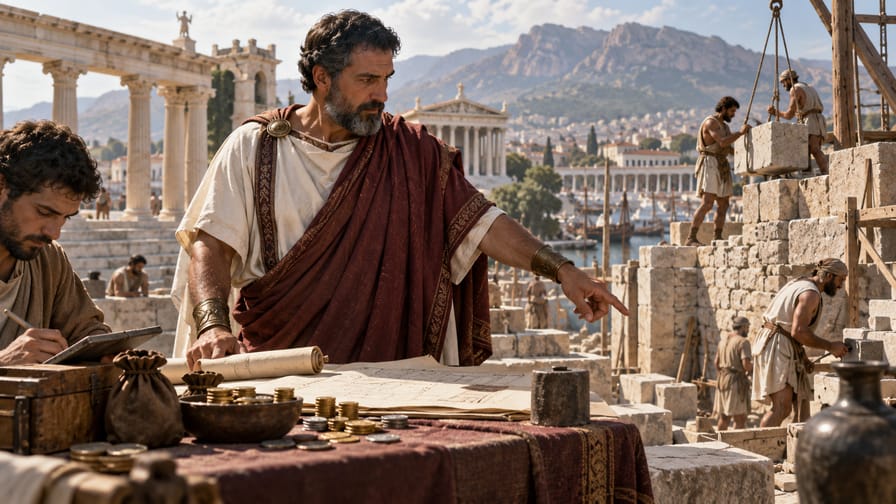
The figure of Erastus, though briefly mentioned in the New Testament, offers valuable insights into the nature of the early church, the diversity of its members, and the interaction between Christian faith and the secular world. His presence in the Pauline epistles illustrates how the Gospel penetrated different social strata, reaching individuals with varied responsibilities and talents.
This study will deepen the understanding of Erastus, examining his name, historical context, actions, and the theological significance of his life and service. The analysis will be conducted from an evangelical Protestant perspective, emphasizing biblical authority and the relevance of his story for contemporary faith.
1. Etymology and Meaning of the Name
The name Erastus derives from the ancient Greek Erastos (Ἔραστος). This name is a verbal adjective meaning "beloved," "desired," or "gracious." It comes from the root of the Greek verb eraō (ἐράω), which means "to love," especially in the sense of passionate or intense love, although in the context of a proper name, it acquires a more general sense of being cherished or appreciated.
The connotation of "beloved" or "desired" may suggest something about Erastus's personality or his reception among his contemporaries. In a culture where names often carried predictive or descriptive meanings, being called "beloved" could reflect a pleasant disposition or a position of esteem within his community, both secular and ecclesiastical.
There are no other biblical characters with the same name who are distinctly identified in the Scriptures. This makes the analysis of Erastus focused exclusively on the three New Testament passages where he is mentioned. The uniqueness of his name in the biblical canon contributes to the specificity of his identity and role.
From a theological point of view, the meaning of the name "beloved" can be subtly connected to the idea of God's love, which reaches and transforms individuals from all walks of life. Although there is no direct theological or typological significance in the name itself, its connotation of being "cherished" or "appreciated" highlights the inclusion and value God attributes to each of His servants, even those with seemingly minor roles.
The choice or attribution of such a name may have been providential, given Erastus's role as a reliable collaborator and respected administrator. To be "beloved" or "desired" for service is a virtue in Christian ministry, as exhorted by Paul in 1 Timothy 3:1, where the aspiration to the episcopate is a "noble task."
2. Historical Context and Biblical Narrative
Erastus's life unfolds in the vibrant and challenging period of the first century of the Christian era, amidst the missionary expansion of the apostle Paul. His mentions in the Scriptures place him geographically in important urban centers of the Roman Empire, such as Ephesus and Corinth, strategic cities for the dissemination of the Gospel.
The political and social context of the time was that of the Pax Romana, which, despite its oppressions, provided a certain stability and infrastructure (roads, communication) that facilitated missionary journeys. Religiously, the world was in transition, with Greco-Roman syncretism and Hellenistic Judaism being challenged by the monotheistic and Christ-centered message.
The first mention of Erastus occurs in Acts 19:22, where Luke records that Paul, while in Ephesus, sent Timothy and Erastus to Macedonia. They are described as "two of those who ministered to him." This event took place during Paul's long stay in Ephesus, a period of intense ministry and confrontation with paganism, as evidenced by the riot of the silversmiths.
The fact that Erastus was sent on a mission with Timothy, one of Paul's closest and most trusted collaborators, suggests that Erastus also enjoyed the apostle's confidence. Macedonia was a region where Paul had already established churches, such as Philippi and Thessalonica, and the visit of Timothy and Erastus likely aimed to strengthen these communities and prepare the way for Paul's own arrival.
The second and perhaps most significant reference to Erastus is found in Romans 16:23, in the final greeting of the Epistle to the Romans. Paul writes: "Gaius, host to me and to the whole church, greets you. Erastus, the city treasurer, and our brother Quartus, greet you." This epistle was written from Corinth, around A.D. 57-58, which indicates that Erastus was in Corinth at that time.
The designation "the city treasurer" (in Greek, oikonomos tēs poleōs) is crucial. This title identifies Erastus as a high-ranking public official in the municipal administration of Corinth. An oikonomos was responsible for the financial and administrative management of a household, property, or, in this case, a city. This implies that Erastus possessed considerable influence, education, and resources.
The third and final mention of Erastus appears in 2 Timothy 4:20, one of Paul's last epistles, written from Rome, possibly shortly before his martyrdom (around A.D. 64-67). Paul informs Timothy: "Erastus remained in Corinth, and I left Trophimus sick at Miletus." This brief note confirms Erastus's continuous association with Corinth, and suggests that he remained there even when other collaborators were traveling with Paul.
Erastus's relationships with other biblical characters are primarily with Paul and Timothy. He was part of Paul's circle of collaborators, a diverse group of individuals who assisted the apostle in his mission to preach the Gospel and establish churches. His presence in Corinth and his civic function indicate the Gospel's ability to attract and transform people from all walks of life, including those in positions of power and influence.
3. Character and Role in the Biblical Narrative
Although the Scriptures offer little detailed information about Erastus's personal life, the mentions of him allow us to infer significant aspects of his character and the role he played in the early church. His inclusion in the Pauline epistles is not accidental but serves to illustrate the diversity and depth of the Gospel's impact.
The sending of Erastus with Timothy to Macedonia (Acts 19:22) demonstrates that he was a trustworthy and capable individual. Paul did not send insignificant or inexperienced people on such important missions. This suggests that Erastus possessed the spiritual maturity and practical skills necessary to assist in organizing and strengthening the churches in the region.
The designation "the city treasurer" (Romans 16:23) is the most revealing information about Erastus. This title not only indicates his social and professional position but also implies virtues such as integrity, responsibility, and administrative ability. A municipal treasurer was entrusted with large sums of money and the management of important public resources, requiring an irreproachable character and leadership skills.
His conversion to Christianity and his subsequent collaboration with Paul, while maintaining such a prominent position in secular government, are notable. This attests to the depth of his faith and his commitment to the Gospel, which led him to integrate his professional and public life with his Christian values. He did not abandon his secular calling but sanctified it through his faith.
There is no record of documented sins, weaknesses, or moral failures for Erastus in the Scriptures, which is common for characters with such brief mentions. The absence of such records, in contrast to the documentation of his functions and associations with Paul, tends to reinforce an image of a faithful and competent servant.
Erastus's role in the biblical narrative is multifaceted. He acted as an "assistant" or "collaborator" to Paul (Acts 19:22), actively participating in the propagation of the Gospel. His function as treasurer of Corinth also positioned him as a bridge between the Christian community and the city's power structures, potentially facilitating the acceptance and influence of the church in a pagan environment.
Erastus's significant actions include his missionary journey to Macedonia and his stay in Corinth, where he likely continued to serve both the city and the church. His ability to balance his civic responsibilities with his commitment to Christ makes him a practical example of how Christians can constructively engage in the secular world without compromising their faith.
In summary, Erastus emerges as a man of exemplary character, endowed with administrative skills and a deep faith. His service to Paul and the church in Corinth, while occupying a prominent position in society, establishes him as a model of stewardship and integration of faith into public life, a theme of great theological relevance.
4. Theological Significance and Typology
The figure of Erastus, though not central to the biblical narrative, holds deep theological significance, especially from an evangelical Protestant perspective. He serves as a practical example of how Christian faith manifests and operates in all spheres of life, not being restricted only to religious or ecclesiastical realms.
Erastus demonstrates the transformative power of the Gospel that reaches and redeems individuals in all social classes, including those in positions of influence. His presence as "the city treasurer" in Corinth (Romans 16:23) is a testimony to Christianity's ability to penetrate and impact the structures of power and governance of first-century Roman society.
There is no direct Christocentric typology associated with Erastus in the sense that he prefigures Christ, as occurs with Old Testament figures. However, his life illustrates Christian principles that reflect the character of Christ and the values of the Kingdom of God. He is an example of stewardship (oikonomia), not only of financial resources but also of talents and time, dedicated to the service of God and neighbor.
Erastus's life underscores the doctrine of Christian vocation, which teaches that all honest work, performed with integrity and for the glory of God, is a sacred calling. He did not need to abandon his secular position to be a faithful Christian instead, he sanctified it. This counters the sacred/secular dichotomy, advocating that the believer's entire life should be worship to God (Colossians 3:17, 23-24).
He represents the truth that God uses people of all backgrounds and professions to advance His kingdom. Erastus's faith in Jesus Christ did not isolate him from society but empowered him to be a light and salt in his civic and social environment (Matthew 5:13-16). His ability to serve Paul and the church while maintaining a public position is a testament to his ability to integrate faith and life.
Erastus's connection with the apostle Paul in missions (Acts 19:22) and in final greetings (Romans 16:23 2 Timothy 4:20) also highlights the theme of partnership in the Gospel. He was a "co-worker" (synergos), contributing his gifts and resources to the missionary cause. This emphasizes the importance of community and collaboration in God's work (Philippians 4:3).
In a broader sense, Erastus embodies the principle that Christians are called to be citizens of heaven, but also to be good citizens of Earth (Philippians 3:20). He shows that obedience to Christ can coexist with civic responsibility, and that public service can be a form of Christian witness, honoring God and serving the community (Romans 13:1-7).
The inclusion of Erastus in the Scriptures, though brief, is a divine reminder that faithfulness is not measured solely by prominence in ecclesiastical ministry but by dedication in any sphere of life. He is a testament to God's sovereignty that raises up and uses individuals from all vocations for His redemptive purposes.
5. Biblical-Theological Legacy and Canonical References
Erastus's legacy in biblical theology and Christian tradition, though not as vast as that of central figures, is significant for his representation of a particular type of service and witness. He is a character who appears exclusively in the New Testament, in the Pauline letters and in Acts, without mentions in other biblical books or direct literary contributions.
His main contribution to biblical theology lies in his exemplification of the integration of faith and public life. At a time when Christianity was often marginalized or persecuted, the existence of a Christian in a high-ranking position like "the city treasurer" (oikonomos tēs poleōs) in Corinth (Romans 16:23) is noteworthy. He serves as a model for the theology of vocation and cultural engagement.
In the Christian interpretive tradition, especially in Reformed and evangelical theology, Erastus is often cited as an example of the "cultural mandate" and the importance for Christians to influence all spheres of society. Theologians like Abraham Kuyper and Herman Bavinck, who emphasized Christ's sovereignty over every square inch of existence, would see in Erastus a prototype of their vision.
Erastus's presence in the Pauline epistles also reinforces the historicity and granularity of the New Testament record. The mention of specific names of collaborators, with details about their functions or locations, lends authenticity to the apostolic narratives and letters, showing that the Gospel was propagated by real people in concrete historical contexts.
A point of academic and archaeological interest often connected to Erastus is the so-called "Erastus Inscription" found in Corinth. This inscription, dated to the 1st century A.D., reads: "Erastus, in return for his aedileship, paved the pavement at his own expense." An aedile was a Roman official responsible for public works and festivals, a position that aligns with that of a treasurer or municipal administrator.
While it is not possible to conclusively prove that the Erastus of the inscription is the same biblical Erastus, the coincidence of the name, the city, and the historical period, along with the public office, makes the identification highly plausible. If it is the same, the inscription would provide rare extrabiblical evidence of a New Testament character, further validating his position and civic service.
Erastus's relevance for understanding the biblical canon lies in the fact that he illustrates the vast network of people who contributed to the dissemination of the Gospel. His story reminds us that, in addition to apostles and prominent figures, countless faithful individuals, many of whom are briefly mentioned or remain anonymous, were instrumental in God's work (1 Corinthians 3:6-9).
In summary, Erastus remains a lasting testimony that Christian faith is not a refuge from the world but a transformative force within it. His legacy invites believers to embrace their vocations with diligence and integrity, serving God in all aspects of their lives, and contributing to the advancement of the Kingdom in their respective spheres of influence.