


Carmi
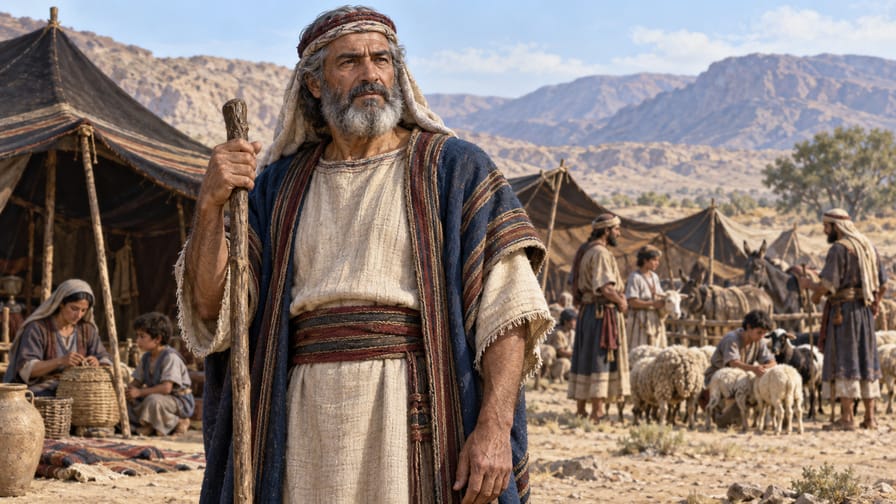
The figure of Carmi, although not one of the most prominent characters in the Scriptures, possesses significant theological and historical relevance, especially when analyzed in light of its two main biblical mentions. This name appears in crucial contexts in Israel's history, first as one of the founders of a tribe and, subsequently, as part of a lineage marked by a serious transgression that affected the entire community. From a Protestant evangelical perspective, the analysis of Carmi offers insights into genealogy, corporate responsibility, divine holiness, and the consequences of sin, contributing to a deeper understanding of the redemptive narrative.
The exegesis of the name and the contextualization of its appearances reveal perennial theological principles, such as God's faithfulness in fulfilling His promises, even amidst human failure, and the seriousness of obedience to His Word. The duality of Carmi's mentions – one as a blessed progenitor and the other as an ancestor of a notorious sinner – underscores the complexity of Israel's history and the constant tension between the divine covenant and human conduct. This study will delve into the Scriptures to uncover the meaning and legacy of Carmi within the biblical canon.
1. Etymology and Meaning of the Name
The name Carmi (in Hebrew: כַּרְמִי, Karmi) is derived from the Hebrew root כֶּרֶם (kerem), which means "vineyard" or "vine". The suffix ִי (-i) is a first-person possessive pronoun, giving the name the meaning of "my vineyard" or "my vine". This etymology is rich in symbolism, as the vineyard is a recurrent and powerful metaphor in the Scriptures to represent the people of Israel and their relationship with God.
The image of the vineyard is employed to describe the nation of Israel as a special planting of God, cultivated and cared for by Him, with the expectation of producing fruits of justice and righteousness. Isaiah 5:1-7 presents the "song of the vineyard", where Israel is the vineyard of the Lord of Hosts, which, despite all divine care, produced wild grapes instead of good ones. Similarly, Psalm 80:8-19 describes Israel as a vine that God brought out of Egypt and planted.
The meaning of "my vineyard" can, therefore, carry a connotation of divine ownership and expectation of fruitfulness. For individuals bearing this name, it could evoke a direct connection to Israel's national and spiritual identity as God's chosen people. Variations of the name are limited, but the root kerem appears in place names like Carmel (כַּרְמֶל), which means "garden" or "fruitful field", reinforcing the association with fertility and agriculture.
There are two main figures named Carmi mentioned in the Hebrew Bible, each with a distinct context and theological implication. The first mention is of Carmi, son of Reuben, Jacob's firstborn (Genesis 46:9 Exodus 6:14 Numbers 26:6 1 Chronicles 5:3). He is the founder of the clan of the Carmites (Numbers 26:6), one of the families of the tribe of Reuben. His importance is primarily genealogical, establishing a line of descent within the twelve tribes of Israel.
The second and more theologically significant mention is of Carmi, grandfather of Achan, from the tribe of Judah (Joshua 7:1 1 Chronicles 2:7). In this case, the name is inseparably linked to one of the most dramatic and instructive events of the period of the conquest of Canaan. The theological significance of the name, "my vineyard", is ironically contrasted in the case of Achan's grandfather, as the action of his descendant brought spiritual barrenness and judgment upon God's "vineyard", Israel, for a period.
2. Historical Context and Biblical Narrative
The two figures of Carmi are situated in distinct and crucial historical periods for the formation and consolidation of the nation of Israel. The first Carmi, son of Reuben, lived during the patriarchal era and the subsequent migration to Egypt, as narrated in Genesis 46:9. His mention extends to the genealogical records of Exodus (Exodus 6:14) and the book of Numbers (Numbers 26:6), which detail the tribal organization of Israel before and during the wilderness wandering. He is one of the 70 members of Jacob's household who went down to Egypt, and his descendants, the Carmites, would be counted among the families of Reuben in the wilderness census.
This Carmi represents the continuity of God's promise to Abraham that his offspring would be numerous and form a great nation (Genesis 12:2 15:5). His inclusion in the genealogical lists of 1 Chronicles 5:3 reinforces the importance of maintaining tribal records for Israel's identity and heritage. The political and social context of the time was that of a people in formation, living under divine providence, initially as a family and then as an enslaved people in Egypt, until liberation and the journey toward the Promised Land.
The second figure, Carmi, the grandfather of Achan, is contextualized in the period of the conquest of Canaan, around the 15th or 13th century BC, depending on the chronology adopted for the Exodus. This was a time of intense military activity and the establishment of the nation of Israel in the land promised by God. The religious context was one of strict obedience to God's laws, especially concerning holy war and the herem (things devoted or consecrated to destruction), as Joshua 6:17-19 establishes for the city of Jericho.
Carmi is mentioned in Achan's genealogy in Joshua 7:1, which states: "But the children of Israel committed a transgression concerning the devoted things for Achan, the son of Carmi, the son of Zabdi, the son of Zerach, of the tribe of Judah, took some of the devoted things and the anger of the Lord burned against the children of Israel." This passage identifies Achan as the transgressor and places Carmi as his grandfather, connecting him to a specific lineage within the powerful tribe of Judah. The same genealogy is repeated in 1 Chronicles 2:7, confirming its relevance.
The main event associated with this lineage is Achan's sin after the fall of Jericho and Israel's subsequent defeat at Ai (Joshua 7). Although Carmi is not the perpetrator of the transgression, his identity as Achan's grandfather is crucial to the narrative, as Achan's sin is described as affecting the entire community of Israel. The geography involved includes Jericho, Ai, and the Valley of Achor, where Achan and his family were judged (Joshua 7:24-26). The mention of Achan's complete lineage (Zerach, Zabdi, Carmi) serves to identify the individual and his family, who corporately bore the consequences of the sin.
3. Character and Role in the Biblical Narrative
The analysis of Carmi's character requires a distinction between the two eponymous figures in the Scriptures. In the case of Carmi, son of Reuben, the Bible offers no specific details about his character, virtues, or flaws. His function in the narrative is fundamentally genealogical, acting as a link in Jacob's chain of descent and as a progenitor of one of the Reubenite clans. His role is that of an ancestor, contributing to the formation and identity of the twelve tribes of Israel, fulfilling God's promise to multiply Abraham's descendants (Genesis 12:2).
His existence and the mention of his offspring in census lists (Numbers 26:6) and genealogical lists (1 Chronicles 5:3) attest to God's faithfulness in preserving and expanding His people. There are no significant actions or key decisions attributed to him personally, but his presence in the lists is vital for understanding the social and tribal structure of Israel, which was the basis for the distribution of the land and the organization of worship.
Regarding Carmi, the grandfather of Achan, the situation is more complex and theologically charged. Like his namesake, the Bible does not directly describe Carmi's character or his actions. He is mentioned exclusively in relation to his son Zabdi and his grandson Achan, the transgressor. His role is that of an ancestor in the lineage of Judah, who, unfortunately, became part of the identification of the man who "brought trouble upon Israel" (Joshua 7:25).
Although Carmi is not the sinner, his mention in Achan's genealogy in Joshua 7:1 and 1 Chronicles 2:7 serves to contextualize the transgression within a family and tribal structure. This underscores the concept of corporate solidarity, a prominent theme in the Old Testament, where the actions of an individual could have ramifications for his entire family and, in some cases, for the whole nation. Achan's sin was not an isolated act, but an act that contaminated God's "vineyard", Israel, and brought divine wrath upon the entire congregation.
The absence of details about the character of Carmi, Achan's grandfather, can be interpreted in a few ways. Firstly, the biblical narrative is selective, focusing on points that serve the author's theological purposes. In this case, the focus is on the seriousness of Achan's sin and its consequences for Israel. Secondly, the inclusion of his lineage (Zerach, Zabdi, Carmi, Achan) reinforces the idea that the transgression had roots and identity within the community, not being an act of a foreigner or an anonymous person. This intensifies the lesson of responsibility and vigilance within the covenant people. Carmi's role, therefore, is to be part of the identification of the sinner, a reminder that sin can arise from within the elected community itself.
4. Theological Significance and Typology
The theological significance of Carmi unfolds distinctly for each of the biblical figures. Carmi, son of Reuben, plays a role in the redemptive history as one of the progenitors of the nation of Israel. His existence and the formation of the clan of the Carmites are evidence of the fulfillment of God's promise to Abraham to multiply his descendants (Genesis 12:2 15:5). He represents the continuity of the patriarchal covenant and the formation of the chosen people through family lineages, demonstrating God's faithfulness in building His nation.
This Carmi does not possess a direct Christocentric typology, but his life as part of Israel's genealogy points to the importance of lineage in God's plan, culminating in the lineage of David and, finally, of Jesus Christ (Matthew 1:1-17 Luke 3:23-38). The preservation of genealogies, where Carmi is mentioned, ensures the historical and theological validity of the coming of the Messiah from a specific lineage.
The Carmi, grandfather of Achan, offers a much more fertile ground for theological reflection, though not by his own actions. The story of his grandson Achan is one of the clearest and most forceful examples in the Old Testament of corporate solidarity and the consequences of sin. Achan's sin was not a private act he "committed a transgression concerning the devoted things" (Joshua 7:1), and the anger of the Lord "burned against the children of Israel". This means that the transgression of an individual from Carmi's lineage affected the entire nation, resulting in military defeat and the withdrawal of divine blessing.
This event underscores God's absolute holiness and the seriousness of obedience to His Word, especially in the context of the herem (devoted to destruction), which symbolized the purification of the land and the exclusivity of worship to God. The lesson is clear: sin is not merely an individual matter, but has profound communal ramifications. The punishment of Achan and his family (including possessions, Joshua 7:24-25) demonstrates the radicalness of divine justice and the necessity of removing the "leaven" of sin so that the community may be holy and blessed.
Although Carmi is not a prefiguration of Christ, the narrative of his grandson Achan points to the need for a Savior who can deal with corporate sin. The curse brought by Achan is a reminder of the destructive power of sin and human inability to redeem oneself. In contrast, Christ became a curse for us on the cross (Galatians 3:13), removing the herem of sin and its consequences for those who believe in Him. The Valley of Achor, where Achan was judged, is later prophesied to become a "door of hope" (Hosea 2:15), a symbol of restoration and God's grace, which points to the new covenant in Christ.
The story of Carmi's lineage serves as a doctrinal teaching on the nature of sin, the justice of God, the importance of obedience, and the interconnectedness of the covenant community. It highlights the truth that holiness is a prerequisite for blessing and the presence of God among His people. For evangelical theology, the story of Achan, and the mention of Carmi in his genealogy, serves as a powerful warning against covetousness (1 Timothy 6:10) and disobedience, and a reminder of the continuous need for repentance and purification in the church.
5. Biblical-Theological Legacy and Canonical References
The legacy of Carmi, in its two manifestations, is a testimony to the richness and interconnectedness of the biblical narrative. Carmi, son of Reuben, contributes to the genealogical and tribal legacy of Israel. His mentions in Genesis 46:9, Exodus 6:14, Numbers 26:6, and 1 Chronicles 5:3 are crucial for establishing the continuity of the nation from its beginnings to the formation of the twelve tribes. He is part of the historical and sociopolitical foundation of the covenant people, and his inclusion in the biblical canon validates God's faithfulness in fulfilling His promises of multiplication and the formation of a people for Himself.
This figure of Carmi is important for biblical theology by demonstrating the importance of genealogies for understanding the history of salvation and for proving messianic descent. In Reformed and evangelical theology, genealogical precision is valued as part of the inerrancy and authority of the Scriptures, confirming the historicity of biblical events and characters.
The legacy of Carmi, the grandfather of Achan, is more complex and theologically impactful. His mention in Joshua 7:1 and 1 Chronicles 2:7 links his name to one of the most serious and instructive incidents of the conquest of Canaan. The story of Achan, with Carmi's inclusion in his genealogy, became a paradigm of the seriousness of sin and its corporate consequences. This event is a canonical reference for understanding God's holiness and the need for purity within the covenant community.
The influence of this narrative in biblical theology is profound, illustrating the concept of "the sin that dwells in me" (Romans 7:17) and the capacity of an individual's sin to defile the entire body. In the Jewish and Christian interpretive tradition, the story of Achan is frequently cited as a warning against covetousness and disobedience. Evangelical theologians, such as John Calvin and Matthew Henry, emphasize the moral and theological lesson of Achan's story, underscoring God's justice and collective responsibility.
The story of Carmi's lineage, through Achan, reinforces the doctrine of God's sovereignty over history and His judgment on sin. It contributes to the understanding of the canon by demonstrating that God requires obedience and holiness from His people, and that the violation of these requirements has serious ramifications. Although Carmi did not write any biblical book, his presence in the Scriptures, especially as part of Achan's lineage, ensures that the lessons of judgment and redemption contained in the story of Joshua 7 remain relevant for all generations of believers.
Reformed theology, in particular, emphasizes the importance of the church's purity and the seriousness of sin, seeing in Achan's story a prefiguration of the need for discipline and repentance in the congregation. The figure of Carmi, therefore, even in his relative obscurity, offers a starting point for deep reflections on the nature of God, of sin, of the community, and of the redemptive grace that culminates in Christ.