


Timon
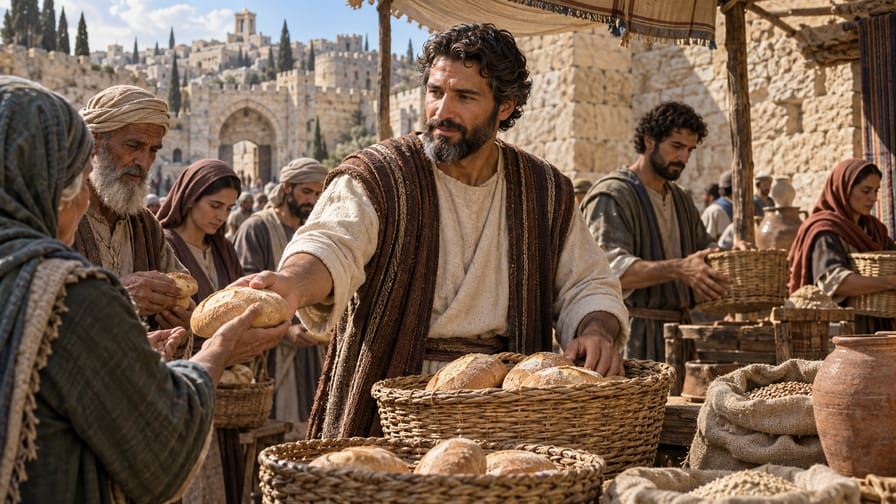
The figure of Timon, though briefly mentioned in the Scriptures, possesses significant theological and ecclesiastical relevance, especially when examined from a Protestant evangelical perspective. He is one of the seven men chosen by the early church in Jerusalem for a crucial task of service and administration, as recorded in the book of Acts of the Apostles. His inclusion in the list of the "seven" underscores the importance of diakonia and ecclesiastical organization from the very beginnings of Christianity.
This in-depth study will seek to explore the name of Timon, his historical context, inferences about his character and role, his theological significance, and the legacy that his brief mention left for the understanding of the church and its ministries. We will analyze the implications of his choice, the requirements for his service, and how his life, though sparsely documented, reflects eternal principles of the Christian faith, always with a keen eye on biblical authority and exegetical precision.
1. Etymology and meaning of the name
1.1 Original name and linguistic derivation
The name Timon has its origin in ancient Greek, being transliterated as Timōn (Τίμων). It derives from the Greek verb τιμάω (timaō), which means "to honor," "to esteem," "to value," or "precious." This verbal root is linked to the noun τιμή (timē), which translates as "honor," "esteem," "price," or "value."
The structure of the name Timon, with the suffix -on, is common in Greek masculine names and reinforces the idea of a characteristic or quality associated with the root. Therefore, the name intrinsically carries the connotation of something or someone who is worthy of honor, valued, or esteemed. Its etymology is clear and directly related to the concepts of honor and value.
1.2 Literal and symbolic meaning of the name
Literally, the name Timon can be interpreted as "the honored one," "the esteemed one," or "the one who has value." This meaning is particularly relevant in the context of his selection for service in the early church. The apostles required the seven men to be of "good reputation" (μαρτυρουμένους, martyroumenous), which implies that they already possessed the esteem and honor of the community.
Symbolically, the name of Timon can prefigure or reflect the qualities expected of him and the other six. To be "honored" was not merely a matter of popularity, but of an upright moral and spiritual character, recognized by the community. The honor here is a public testimony to his life and faith, essential for trust in the performance of his ministry.
1.3 Variations of the name and other biblical characters
There are no significant variations of the name Timon in the original biblical languages that alter its fundamental meaning. He appears consistently as Timōn in the Greek New Testament. It is important to note that there are no other biblical characters with this same name in the Hebrew or Greek Scriptures, which makes Timon a unique figure in his mention.
This uniqueness, though not in itself theologically profound, helps to identify him specifically within the context of Acts 6. The absence of biblical homonyms avoids confusion and allows focus on his precise identity and function within the narrative of the apostolic church. His identity is strictly linked to his role among the "seven."
1.4 Theological significance of the name in the biblical context
The theological significance of the name Timon lies in its perfect suitability to the requirements of his ministry. The apostles, when instructing the church to choose men for service, specified that they should be "of good reputation, full of the Spirit and of wisdom" (Acts 6:3). The name "honored" or "esteemed" resonates directly with the requirement of "good reputation."
This suggests that God, in His providence, often aligns the names of individuals with His purposes or with the characteristics He desires them to manifest. Although there is no explicit statement that his name was prophetic, the consonance between his name and his qualifications for service underscores divine providence in the selection of the church's servants. The name of Timon, therefore, serves as a reminder of the importance of public testimony and integrity for those who serve God.
2. Historical context and biblical narrative
2.1 Historical period and context of the early church
Timon lived and ministered in the early period of the Christian church, shortly after the ascension of Jesus Christ and the outpouring of the Holy Spirit at Pentecost. This period, documented in the book of Acts of the Apostles, is characterized by an explosive growth of the community of believers in Jerusalem (Acts 2:41, 47 4:4 5:14). The church was experiencing unprecedented expansion, attracting thousands of converts.
The context was one of great spiritual fervor, with the apostles dedicated to teaching and prayer, and the community living in fellowship and sharing their possessions (Acts 2:42-47 4:32-35). However, with growth, practical challenges and internal tensions also arose. The narrative in Acts 6:1 describes a grumbling that emerged in the community, a sign of the logistical and social difficulties of a rapidly expanding church.
2.2 Political, social, and religious context of the time
Jerusalem, in the 1st century A.D., was a city under Roman occupation, but with a strong Jewish identity. The Temple was the center of religious and social life. The early Christian community, though composed of Jews, was beginning to develop a distinct identity, centered on Jesus as the Messiah. This period was marked by tensions between believing and non-believing Jews, and also within the Christian community itself.
The specific problem that led to the selection of Timon and the other six was a dispute between the Hellenistic Jews and the Hebrews (Acts 6:1). The Hellenists were Greek-speaking Jews, many of them from the Diaspora, who had returned to Jerusalem. The Hebrews were Aramaic-speaking Jews, natives of Judea. The complaint was that the Hellenistic widows were being neglected in the daily distribution of food, a social problem with religious and cultural implications.
2.3 Genealogy and family origin
The Scriptures do not provide details about Timon's genealogy or family origin. He is simply listed as one of the seven men chosen by the church. The absence of genealogical information is common for many secondary biblical characters, and it does not diminish his importance in the divine plan. The focus is on his service and not on his lineage.
It is reasonable to infer, given the context of the dispute between Hellenists and Hebrews, that Timon, like most of the "seven" (with the possible exception of Nicolaus, the proselyte from Antioch), was probably a Hellenistic Jew. His selection, along with that of other Greek names, would have been a measure to ensure the confidence of the Hellenistic faction in the fairness of the distribution and to resolve the existing tension in the community.
2.4 Key life events and biblical passages
The life of Timon is documented in a single key biblical passage: Acts 6:1-7. In this text, he is named as one of the seven men "full of the Spirit and of wisdom" chosen by the congregation to oversee the distribution of food to the widows. The events are as follows:
- A grumbling arose among the Hellenists against the Hebrews (Acts 6:1).
- The twelve apostles summoned the multitude of the disciples (Acts 6:2).
- The apostles proposed that the church choose seven men of good reputation, full of the Spirit and of wisdom (Acts 6:3).
- The proposal pleased everyone, and Stephen, Philip, Prochorus, Nicanor, Timon, Parmenas, and Nicolaus were chosen (Acts 6:5).
- The seven were presented to the apostles, who prayed and laid their hands on them (Acts 6:6).
- The result was the continued growth of the Word of God and the increase in the number of disciples (Acts 6:7).
After this appointment, Scripture records no further specific action by Timon. His story is embedded in the collective history of the "seven," of whom Stephen and Philip stand out for their later ministries, but all were fundamental in solving the initial problem and organizing the church.
2.5 Geography related to the character and relationships with others
The only geography directly related to Timon is Jerusalem, where the events of Acts 6 occurred. This city was the epicenter of the early church and the location of his ministry. His work was, therefore, confined to the local Christian community in Jerusalem, in the period immediately following Pentecost.
Timon's most important relationships were with the other six men chosen for the same service: Stephen, Philip, Prochorus, Nicanor, Parmenas, and Nicolaus. He was also in a relationship of service and subordination to the twelve apostles, who appointed him and laid their hands on him. His function was to serve the community of believers, especially the Hellenistic widows, and therefore he had a service relationship with the entire church of Jerusalem.
3. Character and role in the biblical narrative
3.1 Analysis of character as revealed in the Scriptures
Although the Scriptures do not provide a detailed description of Timon's individual character, they give us crucial information through the requirements for his selection. He was chosen because he was a man "of good reputation, full of the Spirit and of wisdom" (Acts 6:3). These are qualities that reveal an exemplary and mature character.
A "good reputation" indicates that Timon was known for his moral integrity and ethical conduct within the community. To be "full of the Spirit" points to a life of deep spirituality, dependence on the Holy Spirit, and manifestation of His fruits. "Wisdom" suggests discernment, good judgment, and the ability to make fair and practical decisions, essential for resource administration and conflict resolution.
3.2 Virtues and spiritual qualities evidenced
Timon's virtues are inferred from the qualities required for his office. He possessed a living faith, which made him "full of the Spirit," implying a life of prayer, holiness, and sensitivity to divine guidance. His wisdom was not merely intellectual, but a practical and spiritual wisdom, given by God for service.
Furthermore, Timon's willingness to serve in a practical and sometimes challenging role demonstrates humility and a spirit of service. He did not seek apostolic prominence, but accepted a task that, though vital, was administrative and social care-oriented. This humility and willingness to serve are essential Christian virtues.
3.3 Documented sins, weaknesses, and moral failings
The Scriptures do not record any sins, weaknesses, or moral failings of Timon. His mention is purely positive, within the context of his selection and consecration for service. The absence of such records is consistent with the concise nature of the account, which focuses on solving a problem and organizing the church, rather than on detailed biographies of individuals.
The expectation is that, having been chosen for his "good reputation" and for being "full of the Spirit and of wisdom," he would maintain a standard of life consistent with these qualities. The Bible, by not recording his failings, presents him as an example of a faithful servant, worthy of imitation in his commitment to ministry.
3.4 Vocation, calling, or specific function
Timon's vocation was clear and specific: he was called to serve at tables, that is, to oversee the daily distribution of food to the widows of the church (Acts 6:2). This function, though practical, was of paramount importance for the unity and well-being of the community. The apostles recognized that they could not neglect prayer and the ministry of the Word to dedicate themselves to this administrative task (Acts 6:4).
Therefore, Timon and the other six were the first to exercise an organized ministry of service in the early church, often considered the prototype of the diaconate. Their function was to relieve the apostles of administrative burdens, allowing them to focus on their primary responsibilities of teaching and spiritual leadership. This was a distinct and essential calling for the functioning of the church.
3.5 Significant actions and key decisions
The most significant action of Timon recorded in the Bible was his acceptance of the call to serve. He, along with the other six, demonstrated willingness to take on a practical and crucial responsibility. His decision to submit to the congregation's election and the apostles' laying on of hands marked the beginning of his formal ministry in the church.
Although we have no details about his specific day-to-day ministry decisions, the resolution of the widows' problem (Acts 6:7) attests to the effectiveness of the work of the group to which Timon belonged. His active participation in this ministry contributed directly to the peace and growth of the church in Jerusalem, allowing the Word of God to spread even further.
3.6 Character development throughout the narrative
The biblical narrative does not offer an explicit development of Timon's character over time, as he is mentioned only in this episode in Acts 6. His appearance is specific and focused on his role in the organization of the church.
However, the implication of his choice is that he already possessed the necessary qualities for service. His consecration by the apostles and the success of the "seven's" ministry suggest that he continued to serve faithfully. Although there are no further references to Timon, the history of the diaconate and the model of service established by him and his companions continued to develop in the early church and throughout Christian history.
4. Theological significance and typology
4.1 Role in redemptive history and progressive revelation
Timon's role in redemptive history, though not central like that of a prophet or apostle, is significant within the context of the formation and organization of the church, which is the body of Christ and an instrument of redemption in the world. The appointment of the "seven," including Timon, marks a crucial moment in the progressive revelation of ecclesiastical structure.
This event shows how the Holy Spirit guided the early church to develop ministry structures that allowed for both the proclamation of the Word and practical care for its members. Timon represents the dignity and necessity of practical service in the church, a fundamental aspect of the life and mission of God's redeemed people.
4.2 Christocentric prefiguration or typology
There is no direct or explicit Christocentric typology associated with Timon in the sense that he prefigures Christ in a specific event or office. However, the ministry of service that Timon and the other six undertook reflects a fundamental aspect of the very character and ministry of Jesus Christ.
Jesus came "not to be served, but to serve, and to give His life as a ransom for many" (Mark 10:45). He is the suffering servant (Isaiah 53) and the supreme example of humility and service (Philippians 2:5-8). In this sense, Timon's ministry, focused on humble service and attention to the needs of others, is a reverberation and an application of Christ's model of servanthood in the life of the church. He points to the ethic of service that Christ embodied and commanded His followers.
4.3 Covenants, promises, and prophecies related to the figure
There are no specific covenants, promises, or prophecies directly related to the figure of Timon in the Scriptures. His mention is purely descriptive of a historical event in the early church. However, the event in which he is embedded – the selection of the "seven" – is aligned with God's promises to build His church and empower it through the Holy Spirit to fulfill His mission.
The expansion of the Word of God and the growth in the number of disciples that followed the appointment of the "seven" (Acts 6:7) demonstrate the fulfillment of divine promises that the gospel would prevail and that the church would be strengthened to face its internal and external challenges. Timon contributed to this fulfillment through his faithful service.
4.4 Quotations and references in the New Testament
Apart from the sole mention in Acts 6:5, Timon is not quoted or referred to in any other passage of the New Testament. He is neither an author of epistles nor a central character in other biblical accounts. His importance lies exclusively in his role as one of the "seven" and in what his selection represents for ecclesiology and ministerial practice.
The brevity of his mention does not diminish its significance, but directs it to the function he represented. His presence in the list serves to remind us that God uses many servants, some prominent and others less known, to fulfill His purposes in redemptive history. Each, in their place, is vital to the body of Christ.
4.5 Connection with central theological themes
The figure of Timon and the episode in which he appears are intrinsically connected to various central theological themes from a Protestant evangelical perspective:
- Diakonia and Service: Timon's role exemplifies the importance of practical service (διακονία, diakonia) in the life of the church. Service is no less spiritual than preaching, but is a vital expression of Christian love and faith.
- Unity of the Church: The resolution of the conflict between Hellenists and Hebrews through the appointment of the "seven" demonstrates the value of unity and peace in the community of believers (Ephesians 4:3). Timon's ministry contributed to reconciliation and harmony.
- Empowerment by the Holy Spirit: The requirement that the men be "full of the Spirit" underscores the evangelical belief in the necessity of supernatural empowerment for all Christian ministry (Acts 1:8). The Holy Spirit grants wisdom and power for service.
- Order and Government of the Church: The event in Acts 6 establishes a precedent for the organization and government of the church, with the distinction of ministries and the delegation of responsibilities. This is fundamental for Reformed ecclesiology, which values biblical ecclesiastical order and structure.
- Dignity of Lay Ministry: Although the apostles were leaders, the selection of men like Timon from the congregation for a specific ministry highlights the dignity of service by all believers, not just the clergy.
4.6 Prophetic fulfillment or prefiguration fulfilled in Christ
There is no direct prophetic fulfillment or prefiguration fulfilled in Christ specifically linked to Timon. His theological relevance lies more in establishing a model of ministry and demonstrating ecclesiastical principles that unfold in church history. He is not a prophetic figure in the sense of pointing to a future event or to the coming of the Messiah.
However, as mentioned, his service reflects the serving nature of Christ and the church's mission to follow in His footsteps. In this broader sense, the type of ministry he represented was fulfilled and exemplified by Christ, and continues to be fulfilled by those who serve Him.
4.7 Doctrine and teachings associated with the character
The main doctrine associated with Timon is the doctrine of ecclesiastical ministry, specifically that of the diaconate. Although the term "deacon" is not used in Acts 6 to describe the "seven," the function they performed is widely recognized as the prototype of the diaconal office (cf. 1 Timothy 3:8-13). The conservative evangelical church values this office as a ministry of service and practical care.
The teachings drawn from this episode include the importance of collaboration between different ministries (apóstles and deacons), the need for spiritual and moral qualities for service, and the primacy of the Word and prayer. Timon, through his role, teaches about the dignity of humble service and the importance of unity in the church for the advancement of the gospel.
5. Biblical-theological legacy and canonical references
5.1 Mentions of the character in other biblical books
As already noted, Timon is mentioned exclusively in Acts 6:5. There are no other references to him in any other book of the Old or New Testament. This singularity of mention makes the study of Timon particularly challenging, requiring careful exegesis of the sole context in which he appears to extract his theological meaning.
Despite the brevity, his inclusion in the canon is a testament to the importance of his role at the crucial moment of the early church's formation. Every name listed in Acts 6:5, including Timon, represents an individual who was divinely chosen and empowered for a specific purpose, contributing to the history of redemption.
5.2 Literary contributions
There is no biblical or historical evidence to suggest that Timon made any literary contributions, such as the authorship of books, psalms, or epistles. He is not known as a writer within the biblical canon. His legacy lies in his practical service and the model he and the other six established for the ministry of diakonia.
His contribution was practical and administrative in nature, not literary. This reinforces the idea that God uses a diversity of gifts and ministries in His church, and not all are called to preaching or writing. Faithfulness in service, whatever it may be, is what matters for the Kingdom of God.
5.3 Influence on biblical theology
Timon's influence on biblical theology, though indirect, is significant. He is an integral part of the narrative that establishes the precedent for the ministry of service in the church, often identified as the diaconate. This ministry is crucial for understanding New Testament ecclesiology and the distribution of responsibilities within the faith community.
Biblical theology extracts from Acts 6 principles about the need for spiritual and practical leaders, the importance of resolving internal conflicts for the advancement of the gospel, and the empowerment of the Spirit for all service. Timon's presence in the list reinforces the idea that practical service is a spiritual ministry and essential for the well-being and growth of the church.
5.4 Presence in Jewish and Christian interpretive tradition
In Jewish interpretive tradition, Timon has no relevance, as he is an exclusively Christian figure of the New Testament. However, in Christian tradition, he is generally recognized as one of the "seven" who served as proto-deacons. The Church Fathers and patristic commentators frequently discuss the role of the "seven" as the precursors of the diaconal office.
For example, Irenaeus of Lyons (2nd century) and other early Christian writers made this connection. Although Timon does not receive individualized attention like Stephen or Philip, he is an integral part of the group that established a lasting model of ecclesiastical service. His presence in the list is a reminder of the importance of all members of the body of Christ.
5.5 References in intertestamental literature
There are no references to Timon in intertestamental literature. This literature precedes the New Testament period and, therefore, would not include figures from the early church. His story begins with the formation of the Christian church, as narrated in the Acts of the Apostles, making him an exclusive figure of the New Covenant.
The focus of intertestamental literature is Jewish history between the Old and New Testaments, and its characters are distinct from those who emerged with the advent of Christianity. Timon is, therefore, a figure of the "new creation" in Christ.
5.6 Treatment of the character in Reformed and evangelical theology
In Reformed and evangelical theology, the character of Timon is treated as an example of a faithful servant and a member of the group that inaugurated the diaconal ministry. Emphasis is placed on the integrity of his character ("good reputation, full of the Spirit and of wisdom") and the importance of practical ministry in the church.
Evangelical commentators such as F. F. Bruce and John Stott highlight the episode in Acts 6 as a model for church organization and the distinction between the ministry of the Word (of the apostles) and the ministry of service (of the deacons). The brief mention of Timon serves to illustrate the dignity of all Christian service and the need for qualified men for all functions in the church. He represents dedication to the call to serve, fundamental for the health and growth of the body of Christ.
5.7 Importance of the character for understanding the canon
The importance of Timon for understanding the canon lies in his contribution to the narrative of the early church's formation, which is a vital part of God's redemptive plan. Acts of the Apostles, as a canonical book, documents not only the preaching of the gospel but also the development of the community of believers and its structures.
The inclusion of Timon, even if brief, in the canon, underscores the truth that every part of the body of Christ is essential (1 Corinthians 12:12-27). His story, though limited, serves as a perennial reminder of the dignity of humble service, the need for men and women full of the Spirit for all tasks in the church, and God's providence in organizing His people for mission and mutual care. The story of Timon, therefore, enriches our understanding of biblical ecclesiology and ministerial practice.