


Dishan
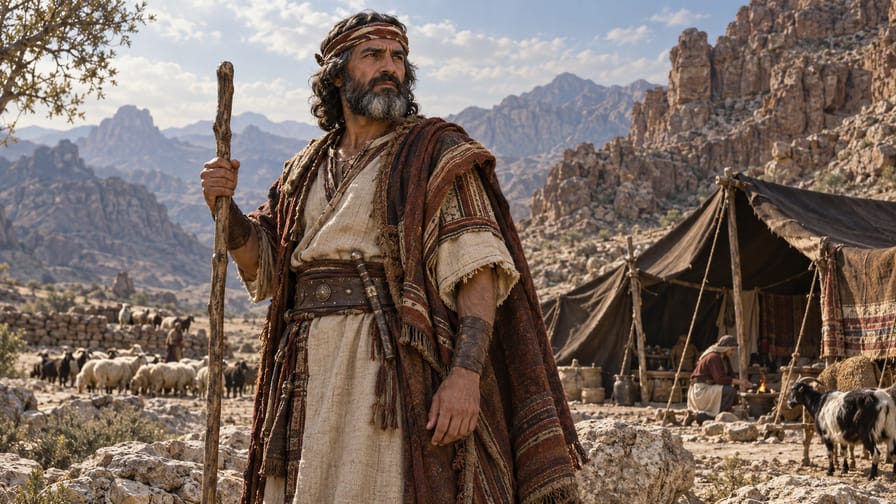
The biblical figure of Dishan (or Dishan) emerges from the pages of the Old Testament as a relatively obscure character, but his inclusion in the sacred genealogies offers valuable insights for a profound biblical and theological analysis. Although there is no extensive narrative about his life, the mention of his name and his lineage provides a crucial link in understanding the origins of the peoples who surrounded Israel, especially the Horites and the Edomites, and reflects God's meticulous divine providence in the history of nations.
From an evangelical Protestant perspective, the analysis of Dishan underscores the authority and inspiration of Scripture, where every detail, however small, holds a purpose in God's redemptive plan. The historical and genealogical accuracy of the Bible is affirmed, and the existence of figures like Dishan contributes to the complete tapestry of salvation history, which culminates in Christ Jesus, the promised Messiah.
1. Etymology and meaning of the name
The name Dishan (דִּישָׁן) is found in the Hebrew Old Testament, transliterated as Dîshān. Its etymological root is subject to some discussion, but the most accepted interpretation connects it to the Hebrew verb dûsh (דוּשׁ), which means "to thresh" or "to trample." This root is often associated with the agricultural work of separating grain from chaff, a process that involves effort and discernment.
Thus, the literal meaning of the name Dishan can be "thresher" or "one who threshes." Symbolically, this can evoke the idea of hard work, productivity or, in a more figurative sense, separation and judgment. In the biblical context, the act of threshing is sometimes used as a metaphor for divine judgment or purification, as seen in Isaiah 28:27-28, where God is described as the thresher of His people.
It is important to note the distinction between Dishan (דִּישָׁן) and his brother, Dishon (דִּישׁוֹן), although the names are etymologically close and sometimes cause confusion. While Dishan is the name of the character in question, Dishon also appears in the Horite genealogies, being a son of Seir and father of Uz and Aram. However, in Genesis 36:25, a second Dishon is mentioned as a son of Anah, which demonstrates the complexity of genealogies and the recurrence of similar names.
The theological significance of the name, although not directly explored in the Scriptures in relation to Dishan, can be inferred from its meaning. The idea of "threshing" can subtly point to God's sovereignty over nations and individuals, who are like grains in His hand, subject to His process of separation and purpose. Even in figures not belonging to the covenant lineage, the name can carry a resonance of the divine order and the work that God performs in history.
2. Historical context and biblical narrative
Dishan is a figure belonging to the patriarchal period, specifically associated with the origins of the Horite and Edomite peoples, before the formation of the nation of Israel and the Exodus. He is listed in the genealogies of Genesis 36 and 1 Chronicles 1, which detail the descendants of Esau and the Horite chiefs who inhabited the land of Seir.
Dishan's historical context is that of the land of Edom, in the mountainous region of Seir. The Horites were the original inhabitants of this land before the arrival of Esau's descendants. The Scriptures record that the sons of Esau "drove out the Horites from Seir and destroyed them before them, and settled in their place" (Deuteronomy 2:22). However, the genealogies of Genesis 36 show an interrelationship and even an eventual fusion between the Edomites and the Horites, with many Horites becoming "chiefs" or "dukes" within the Edomite structure.
The key genealogy for Dishan is found in Genesis 36:20-21 and 1 Chronicles 1:38, where he is listed as one of the sons of Seir, the Horite: "These are the sons of Seir the Horite, the inhabitants of the land: Lotan, Shobal, Zibeon, Anah, Dishon, Ezer, and Dishan." He, therefore, is a progenitor of the Horite tribes, which were integrated or assimilated by the Edomites.
Further on, Genesis 36:28 and 1 Chronicles 1:41 record the direct descent of Dishan: "The sons of Dishan were Uz and Aram." This mention is significant, as Uz is a name that appears in other parts of the Bible (for example, the land of Job), although it cannot be stated with certainty that the Uz son of Dishan is the same. Nevertheless, it demonstrates the continuity and branching of the Horite lineages.
The biblical passages that mention Dishan are strictly genealogical: Genesis 36:20-21, 28-30 and 1 Chronicles 1:38, 41. There are no specific narratives about his actions, decisions, or significant events in his life. His existence is documented to establish the lineages of the peoples who inhabited the land of Seir before and during the establishment of Edom.
The geography associated with Dishan is primarily Mount Seir, the mountainous region southeast of the Dead Sea, which became the territory of Edom. This area was strategic, located on trade and migration routes, and its possession was crucial for the identity and security of the peoples who lived there. Dishan's presence in these lists highlights the importance of the Horites as an established people in the region before the Edomite ascent.
3. Character and role in the biblical narrative
Due to the absence of any narrative about Dishan, it is impossible to directly infer his character, virtues, flaws, or specific actions. The Scriptures present him exclusively in genealogical lists, which compels us to focus on his role as an ancestral link and on the theological function of his inclusion in the biblical canon. He is a progenitor, and his importance lies in his existence and the descendants he generated.
Dishan's primary role in the biblical narrative is that of a genealogical figure. He serves as a marker in the lineage of the Horites, the original inhabitants of Seir, who later mingled with the Edomites, descendants of Esau. The inclusion of Dishan and other Horite chiefs in Genesis 36 is not merely a historical record it has a fundamental theological purpose.
Firstly, Dishan's presence demonstrates the meticulousness of divine revelation. The Bible is not limited to recording only the lineage of Israel but also offers details about neighboring nations. This underscores God's sovereignty over all peoples and the precision of His Word, which is concerned even with the backgrounds of non-Israelite peoples.
Secondly, Dishan represents the social and political structure of the Horites before and during their interaction with the Edomites. By being listed as one of the "sons" of Seir and father of his own "sons" (Uz and Aram), he symbolizes the continuity of the families and clans that formed the basis of Horite society. This tribal structure was essential for the organization of these ancient peoples.
While we cannot speak of "character development" for Dishan, his inclusion in the Scriptures reveals the importance of genealogies for understanding salvation history. They establish the identity, origin, and relationship between peoples, providing the necessary background to understand future interactions between Israel and Edom, and God's providence in the rise and fall of nations.
The fact that Dishan is a Horite and not a direct descendant of Esau, yet is listed in the Edomite genealogies (which absorbed the Horites), illustrates a historical process of conquest and assimilation. God, in His sovereignty, allowed the Edomites to settle in the land of the Horites, just as He would later establish Israel in the land of Canaan (Deuteronomy 2:12, 22). Dishan, therefore, is a silent testimony to the dynamics of history and God's hand in it.
4. Theological significance and typology
The figure of Dishan, though discreet, plays an indirect but significant role in redemptive history and the progressive revelation of God. His inclusion in the non-Israelite genealogies of Genesis 36 serves to expand the understanding of divine providence over all nations, not just over the Abrahamic covenant lineage. He reminds us that God is the Lord of all creation and all human history.
There is no direct Christocentric prefiguration or typology evident in the figure of Dishan, given his purely genealogical nature. However, the context in which he appears can be interpreted from a broader typological perspective. Genealogies in general, including those of non-Israelite peoples, serve to document the march of human history under God's sovereignty, setting the stage for the coming of the Messiah.
The existence of Dishan and his Horite lineage, which was absorbed by the Edomites (descendants of Esau), illustrates the dynamic of God's sovereignty over nations. God establishes and disestablishes peoples according to His purposes, as clearly expressed in Deuteronomy 2:12, 22. This sovereignty is a central theme that points to Christ's ultimate authority over all kingdoms and dominions (Philippians 2:9-11).
Dishan's inclusion in a detailed record also reinforces the universality of God's plan. Even if the biblical narrative focuses on the lineage of Israel, the attention given to peoples like the Horites and Edomites demonstrates that the Creator has an interest in and control over all families of the earth. This prefigures the future inclusion of the Gentiles in the plan of salvation through Christ, as promised to Abraham (Genesis 12:3).
In terms of connection with central theological themes, Dishan, by his mere existence in the Scriptures, reinforces the doctrine of God's sovereignty over history and nations. He is part of the order created and providentially maintained by God. The mention of his descendants also underscores the importance of genealogy in the Bible, which is not just a historical record but a theological affirmation of identity and continuity, essential for tracing the messianic lineage.
Although there are no mentions of Dishan in the New Testament, his presence in the Old Testament genealogies contributes to the robustness of the historical record that supports the narrative of redemption. He is a reminder that God works through all circumstances and all peoples to fulfill His eternal purposes, culminating in the incarnation, death, and resurrection of Jesus Christ, who will reign over all nations (Revelation 11:15).
5. Biblical-theological legacy and canonical references
Dishan's legacy in biblical theology does not lie in his direct actions or teachings, as the Bible records none. His legacy is, instead, found in his contribution to the historical reliability and theological breadth of the canon. The only canonical references to Dishan are found in the books of Genesis (36:20-21, 28-30) and 1 Chronicles (1:38, 41), both fundamental for the genealogies of the Old Testament.
Dishan's inclusion in the genealogies of Genesis and 1 Chronicles demonstrates the comprehensive nature of divine revelation. The Bible is not limited to presenting only the direct covenant lineage but also offers a detailed context of neighboring nations, recognizing the existence and history of peoples like the Horites and Edomites. This is vital for understanding Israel's interaction with the world around it.
In the Jewish interpretive tradition, figures like Dishan are generally seen as part of the historical record that establishes the origins of Edom, a people often adversarial to Israel. The accuracy of these genealogical lists was crucial for national and religious identity. In Christian interpretation, especially in Reformed and evangelical theology, Dishan's presence is valued for his contribution to the historicity of Scripture and the demonstration of God's universal providence.
Evangelical commentators, such as John Calvin and Matthew Henry, when addressing genealogies, frequently emphasize that God records even the details of non-Israelite peoples to show His sovereignty over all humanity and to provide the context for the history of redemption. Dishan's existence reinforces the idea that every name in the biblical record has a purpose, even if that purpose is primarily genealogical and contextual.
Dishan's importance for understanding the canon lies in his function of testifying to the completeness of God's Word. He is one of many names that fill historical gaps, connecting clans and tribes and solidifying the factual basis upon which the grand narrative of salvation is built. Genealogical precision is a pillar of evangelical faith, as the lineage of the Messiah, Jesus Christ, depends on reliable historical records (Matthew 1:1-17 Luke 3:23-38).
In summary, although Dishan is a figure of few words in the Bible, his presence in the genealogies of the Horites and Edomites is a silent testimony to God's sovereignty over all nations, to the faithfulness of Scripture in recording historical details, and to the interconnectedness of all peoples in the great divine plan that culminates in Christ. He is a reminder that every piece of history, however insignificant it may seem, is part of the larger tapestry of redemption.