


Abacuc
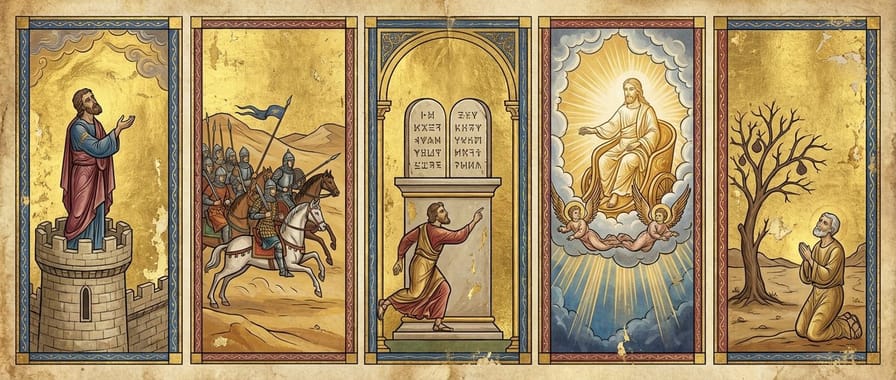
Illustration of the Book of Habakkuk, one of the 39 books of the Old Testament (Nano Banana Pro).
The book of the prophet Habakkuk, an often underestimated theological jewel in the vast treasure of the Old Testament, represents a profound and existential dialogue between a perplexed prophet and the sovereign God. Far from being a mere collection of condemnatory oracles, like many prophetic books, Habakkuk offers a unique glimpse into an individual's struggle of faith amidst turmoil and apparent divine injustice. It is a book that resonates with the most pressing questions of the human soul: Why does evil prosper? Why does God seem inactive or, worse, use more wicked instruments to fulfill His purposes? Through a structure of lament and response, followed by a song of unwavering faith, Habakkuk guides us on a journey that culminates in the affirmation of God's sovereignty, justice, and faithfulness, culminating in the timeless declaration that "the righteous shall live by his faith" (Habakkuk 2:4).
This introduction aims to unravel the layers of meaning of the book of Habakkuk, offering a comprehensive and scholarly analysis from a conservative evangelical Protestant perspective. Our approach will be guided by the conviction of biblical inerrancy and the divine authority of Scripture, seeking to extract not only its original meaning but also its continuing relevance for the contemporary church. We will establish an analytical model that can be applied to any book of the Bible, examining the historical context, literary structure, central theological themes, canonical connections, and hermeneutical challenges. In the end, we hope that the reader will be equipped to delve deeper into the study of Habakkuk with a richer understanding and a more robust faith, finding, like the prophet, peace and joy in the presence of the God who governs all things, even the darkest.
1. Historical Context, Dating, and Authorship
1.1 Traditional Authorship and the Prophet Habakkuk
The authorship of the book of Habakkuk is traditionally attributed to the prophet Habakkuk, whose name (חֲבַקּוּק, Ḥăḇaqqūq) possibly means "embrace" or "one who embraces," perhaps alluding to his role as one who "embraces" or "clings" to God in his complaint and search for answers, or even to his role of comforting his people. The text itself offers few biographical details about the prophet, other than identifying him as "the prophet" (Habakkuk 1:1 and 3:1), which suggests he was a recognized figure in his time. The absence of a detailed genealogy, common in other prophets like Isaiah or Jeremiah, does not diminish his credibility, but focuses attention on the message. Jewish tradition, though sparse, generally accepts Habakkuk as the sole author of the book. The conservative evangelical perspective upholds this view, based on the internal evidence of the text itself and the absence of any substantive evidence contradicting it. The stylistic and thematic unity of the book firmly supports the authorship by a single person.
1.2 Dating the Book in the Ancient Near East Setting
The dating of the book of Habakkuk is crucial for understanding its context and purpose. Most conservative scholars place the writing of the book in the late 7th century BC, specifically between 609 and 605 BC, during the reign of Jehoiakim in Judah. This dating is inferred by internal references to the rise of the Chaldeans (Babylonians) as a dominant and threatening military force (Habakkuk 1:6). The prophet laments the violence and injustice in Judah (Habakkuk 1:2-4) and receives the revelation that God will use the Babylonians to judge His own people. Subsequently, he questions God's justice in using an even more wicked nation to punish Judah, and God responds by promising the judgment of the Babylonians themselves (Habakkuk 2:5-20). This scenario fits perfectly into the period after the Battle of Carchemish (605 BC), when Assyrian power had declined and Babylon emerged as the superpower, beginning its incursions against Judah, which would culminate in the exile.
1.3 Political, Social, and Cultural Context of Judah
Habakkuk's period was one of extreme turbulence for the kingdom of Judah. After the brief revival under King Josiah (640-609 BC), who sought to restore purity of worship and obedience to the Law, Judah rapidly declined spiritually and morally under his successors, especially Jehoiakim (609-598 BC). Jehoiakim reversed many of his father Josiah's reforms and reintroduced idolatry, injustice, and oppression. The book of Habakkuk reflects this dark reality by describing the proliferation of violence, strife, iniquity, and the perversion of justice (Habakkuk 1:2-4). Socially, there was a clear division between the rich and the poor, with the powerful oppressing the vulnerable, and the law becoming ineffective. Politically, Judah was caught between rising and falling empires. Assyria, once dominant, was on its deathbed, and Egypt tried to assert its influence, but Babylon was on a meteoric rise, representing an imminent and unprecedented threat. Habakkuk, therefore, prophesies in a time of internal despair and external threat, which gives urgency and depth to his questions to God.
1.4 Responses to Higher Criticism
Modern higher criticism, in some sectors, has questioned the unity of the book, suggesting that chapter 3 (Habakkuk's psalm) may be a later addition, or that parts of the book were compiled from different sources. However, the conservative evangelical perspective defends Habakkuk's unity and traditional authorship. The alleged "disjunctions" are, in fact, intentional literary and theological movements. Chapter 3, though stylistically a psalm, is a logical and theological response to the laments and divine answers of chapters 1 and 2. It represents the climax of the prophet's faith, who, after receiving God's revelations, moves from lament to worship and unwavering trust. The language and themes are consistent with the previous chapters, and the transition from dialogue to psalm is a natural unfolding of the prophet's journey of faith. Furthermore, the absence of external evidence for multiple authorships or late compilations, combined with internal cohesion, strengthens the traditional position. Critics often underestimate the capacity of a single author to employ different literary genres to express a unified message.
1.5 Internal and External Evidence Supporting Authorship
The internal evidence supporting Habakkuk's authorship is robust. The book presents thematic unity and a cohesive narrative flow, progressing from the prophet's complaint to God's response, followed by the second complaint and the second divine response, culminating in the prayer of faith. The poetic language and theological depth are consistent throughout the three chapters. The phrase "the burden which Habakkuk the prophet did see" (Habakkuk 1:1) and "A prayer of Habakkuk the prophet" (Habakkuk 3:1) clearly indicate the prophet as the author. The vivid description of the Babylonians (Habakkuk 1:6-11) reflects a contemporary knowledge of the ferocity and swiftness of their military campaigns, which is consistent with a pre-exilic dating. Although external evidence is limited, the book's inclusion in the Hebrew canon and its unquestionable acceptance in ancient Jewish tradition (evidenced by the Dead Sea Scrolls, which contain a commentary on Habakkuk) serve as a testament to its authenticity and original authorship. The absence of controversy in ancient sources regarding Habakkuk's authorship is, in itself, strong evidence of traditional acceptance.
2. Structure, Division, and Main Content
2.1 Literary Organization: A Prophetic Dialogue and a Psalm
The book of Habakkuk is distinguished by its unique literary organization, which sets it apart from the typical structure of many prophetic books. Instead of a unilateral series of divine oracles, Habakkuk unfolds as a dramatic dialogue between the prophet and God, interspersed with divine responses. This "complaint-and-response" structure is a miniature theodicy, where the prophet expresses the perplexities of the people and of humanity in the face of evil and God's apparent inaction, and God responds by revealing His sovereign and just plans. The first part of the book (chapters 1 and 2) is predominantly a lament and a dialogue, while the third part (chapter 3) takes the form of a psalm or prayer of praise and trust. This transition from anguished questioning to confident worship is the backbone of the book's message and demonstrates the prophet's journey of faith, which represents the journey of faith for every believer.
2.2 Main Divisions and Their Characteristics
The book can be divided into three main sections, each with distinct but theologically interconnected characteristics:
2.2.1 Habakkuk's First Complaint and God's First Answer (Habakkuk 1:1-11)
In this initial section, Habakkuk expresses his deep suffering and perplexity in the face of the injustice and violence rampant in Judah. He sees the law paralyzed, justice perverted, and oppression unbridled (Habakkuk 1:2-4). His complaint is a sincere lament, a "How long, O Lord?" that resonates with many psalms of lament. God responds in a surprising way, announcing that He will raise up the Chaldeans (Babylonians), a "fierce and impetuous" nation, to judge Judah (Habakkuk 1:5-11). This response, instead of comforting, deepens the prophet's perplexity.
2.2.2 Habakkuk's Second Complaint and God's Second Answer (Habakkuk 1:12-2:20)
The revelation of the first divine response leads Habakkuk to an even deeper complaint. He questions God's justice: how can a holy God use an even more wicked and idolatrous nation, the Babylonians, to punish His own people? (Habakkuk 1:12-17). The prophet anxiously awaits God's answer, going up to his watchtower (Habakkuk 2:1). God responds with a crucial revelation: the Babylonians will also be judged for their arrogance and violence, and the vision must be written so that it may be read clearly. It is in this section that we find the central verse of the book: "the righteous shall live by his faith" (Habakkuk 2:4). The divine response proceeds with a series of five woes (Habakkuk 2:6-20) against Babylon, condemning their greed, exploitation, violence, and idolatry, reaffirming God's retributive justice.
2.2.3 Habakkuk's Prayer-Song (Habakkuk 3:1-19)
After receiving God's answers, Habakkuk does not end in despair, but in a magnificent prayer of faith and praise. This chapter is a poetic theophany, describing God's glorious coming to judge and save. The prophet recalls God's past deeds in Israel's history (the Exodus, the conquest), which strengthens his trust in God's future intervention. Despite the imminence of calamity (the Babylonian invasion and the devastation of Judah), Habakkuk declares his intention to rejoice in the Lord and to exult in the God of his salvation (Habakkuk 3:17-19). This psalm is a powerful testimony to the capacity of faith to transcend the most adverse circumstances and find joy in God's sovereignty.
2.3 Narrative Flow and Synthetic Outline of Content
The narrative flow of Habakkuk is a theological arc that moves from doubt to certainty, from lament to praise. It begins with the prophet's anguished observation of evil in Judah. God's first response introduces an even greater external threat, intensifying the prophet's ethical dilemma. Habakkuk's second complaint expresses the tension between God's holiness and His apparent tolerance of evil. The second divine response is the turning point, revealing that God is just in His judgments and that faith is the only appropriate response. The "woes" against Babylon demonstrate the certainty of divine judgment upon all injustice. Finally, the book culminates in Habakkuk's prayer, which demonstrates a mature and unwavering faith, not based on a total understanding of God's ways, but on trust in His character. The prophet embraces God's will, even if it includes suffering, and finds his strength in the Lord.
Synthetic Outline:
- I. The Prophet's Dialogue with God (Habakkuk 1:1-2:20)
- A. Title and Habakkuk's First Complaint (1:1-4)
- B. God's First Answer: The Rise of the Chaldeans (1:5-11)
- C. Habakkuk's Second Complaint: God's Justice Questioned (1:12-2:1)
- D. God's Second Answer: The Vision and Life by Faith (2:2-4)
- E. The Five Woes Against the Babylonians (2:5-20)
- II. Habakkuk's Prayer-Song (Habakkuk 3:1-19)
- A. Title and Petition (3:1-2)
- B. The Theophany of God in Judgment and Salvation (3:3-15)
- C. The Prophet's Response: Awe, but Faith and Joy (3:16-19)
3. Central Theological Themes and Purpose
3.1 God's Sovereignty Over History and Evil
One of the most prominent theological themes in Habakkuk is God's sovereignty over all events, including the rise and fall of nations and the presence of evil. Habakkuk questions God about the injustice in Judah, but God reveals that He is actively working behind the scenes, raising up the Babylonians as His instrument of judgment (Habakkuk 1:5-6). This demonstrates that God is not a passive observer of history, but the Lord who orchestrates events to fulfill His purposes. The prophet's perplexity deepens when he realizes that God will use an even more wicked nation. However, the divine response assures that Babylon, despite being used by God, will not escape His final judgment (Habakkuk 2:5-20). This reinforces the idea that God's sovereignty does not compromise His holiness or justice. He is the supreme ruler, and His plan will unfold perfectly, even if the details are incomprehensible to the human mind.
3.2 Divine Justice and the Problem of Theodicy
The book of Habakkuk is, in its essence, an exercise in theodicy – the attempt to justify God's ways in the face of the existence of evil and suffering. The prophet struggles with the paradox of a just God who permits injustice among His own people and, worse, uses more wicked agents to correct them. Habakkuk's central question is divine justice: How can a God "too pure to behold evil" (Habakkuk 1:13) tolerate wickedness? God's answer is not an exhaustive philosophical explanation, but an exhortation to faith and a promise of future judgment. God assures that evil will not go unpunished, neither in Judah nor in Babylon. He is the judge of all the earth, and in due time, His justice will prevail. This theme is crucial for Reformed theology, which emphasizes God's intrinsic justice and His inability to tolerate sin indefinitely, while also affirming His mercy and longsuffering.
3.3 Faith as a Principle of Life: "The Righteous Shall Live by His Faith"
Undoubtedly, Habakkuk's most celebrated theme is the declaration in Habakkuk 2:4: "Behold, his soul is puffed up; it is not upright within him, but the righteous shall live by his faith." This affirmation is the heart of God's answer to the prophet's dilemma. In the face of incomprehensible divine providence and the imminence of judgment, the only adequate response for God's people is faith. Not a blind faith, but an active and patient trust in God's character and promises, even when reality seems to contradict them. "Faith" (אֱמוּנָה, ’ĕmûnāh) here denotes not just intellectual belief, but faithfulness, constancy, and persevering trust. It is the attitude of living in dependence on God, patiently waiting for His intervention. This principle is fundamental to evangelical theology, especially Reformed theology, which sees here a forerunner of the doctrine of justification by faith, as it will be fully revealed in the New Testament.
3.4 The Primary Purpose of the Book
The primary purpose of the book of Habakkuk for its original audience was twofold: first, to confront the perplexity and despair of a pious people who witnessed the moral degeneration of their nation and God's apparent inactivity. The prophet articulates the complaints of many, showing that it is legitimate to question God with sincerity, but always with reverence. Second, and more importantly, the book aimed to instill confidence and patience in God's people, assuring them that God is in control, that He is just, and that He will act in due time. The book offers no easy answers, but invites to radical trust in God's sovereign wisdom. The climax of the book, the prayer in chapter 3, serves as a model of how faith can triumph over fear and uncertainty, leading to worship and joy, even in the face of imminent calamity. The book is a call to perseverance in faith, reminding us that God's vision "still awaits its appointed time" (Habakkuk 2:3).
3.5 Connection with Reformed Systematic Theology
The themes of Habakkuk align deeply with Reformed systematic theology. God's sovereignty, for example, is a pillar of the Reformed faith, and Habakkuk demonstrates that God governs not only cosmic events but also complex human and political interactions, using even wicked nations for His purposes, without compromising His holiness. Divine justice and the necessity of judgment are also central, reinforcing the doctrine of total human depravity and man's inability to justify himself. God's response to Habakkuk's complaint about the impunity of evil underscores the certainty of final judgment. Most significantly, Habakkuk 2:4 is a foundation for the doctrine of justification by faith alone (sola fide), one of the pillars of the Protestant Reformation. Although in the Old Testament faith was understood as faithfulness and trust in God's promises, it already pointed to the principle that salvation is not by works, but by a total dependence on God. Habakkuk's faith in chapter 3, which rejoices in God despite ruin, is a vivid example of the patience and perseverance of the saints, another Reformed concept. The book, therefore, serves as a powerful biblical illustration of doctrinal principles that would later be systematically articulated.
4. Relevance and Canonical Connections
4.1 Importance of the Book Within the Complete Canon
Although it is one of the "Minor Prophets," the book of Habakkuk holds a disproportionate importance within the biblical canon. It offers one of the deepest explorations of the problem of evil and theodicy in the Old Testament, resonating with the existential questions that afflict humanity in all ages. Its dialogical structure allows the reader to identify with the prophet's doubts and anxieties, while the divine responses offer a path to faith and trust. Furthermore, the affirmation of Habakkuk 2:4 ("the righteous shall live by his faith") is a crucial link between the Old and New Testaments, serving as a theological bridge to the full revelation of the doctrine of justification. Its inclusion in the canon attests to its divine inspiration and its indispensable contribution to understanding God's character and the nature of faith.
4.2 Typological Connections with Christ and Christ-Centered Reading
Although Habakkuk does not contain direct messianic prophecies in the sense of biographical details about Jesus, a Christ-centered reading of the book reveals profound typological and thematic connections. Habakkuk's own dilemma, struggling to understand God's justice in the face of suffering and evil, finds its definitive answer in Christ. The cross of Christ is the apex of divine justice, where sin was fully judged, and of divine mercy, where salvation was provided. The faith that Habakkuk exhorts, a patient trust in the sovereign God, finds its supreme object and fulfillment in Jesus Christ. The life of the righteous by faith is not merely an abstract belief, but a total dependence on Christ for salvation and for daily life. The "woes" against Babylon prefigure God's final judgment upon all ungodliness, a judgment that will be executed by Christ at His second coming. God's sovereignty over history, so evident in Habakkuk, is fully manifested in Christ, who is the Lord of history and the fulfillment of all divine purposes. Habakkuk's prayer, which finds joy in God despite calamity, is an echo of the joy that the believer in Christ has, even amidst trials, knowing that their salvation is secure in Him.
4.3 Fulfillment in the New Testament and Quotations
The most notable and significant canonical connection of Habakkuk with the New Testament lies in the quotation of Habakkuk 2:4. This verse is cited three times in the New Testament, making it one of the most influential Old Testament passages for Christian theology, especially Pauline theology:
- Romans 1:17: "For in it the righteousness of God is revealed from faith for faith, as it is written, 'The righteous shall live by faith.'" Paul uses this quotation to introduce his exposition on the doctrine of justification by faith, emphasizing that God's righteousness is revealed in the gospel and received through faith in Christ.
- Galatians 3:11: "Now it is evident that no one is justified before God by the law, for 'The righteous shall live by faith.'" Here, Paul contrasts faith with the works of the law, arguing that salvation is exclusively by faith, not by legalistic observance.
- Hebrews 10:38: "But my righteous one shall live by faith, and if he shrinks back, my soul has no pleasure in him." The author of Hebrews uses the quotation to encourage perseverance in faith amidst persecutions, warning against abandoning trust in God.
These quotations demonstrate the theological continuity between the testaments. What Habakkuk understood as faithfulness and persevering trust in the God who keeps His promises, the New Testament reveals as saving faith in Jesus Christ, who is the fulfillment of these promises. Faith, which was already the principle of life for the righteous in the Old Testament, is now explicitly linked to the person and work of Christ as the means of justification and salvation.
4.4 Allusions in Other Biblical Books and Contemporary Relevance
In addition to direct quotations, there are allusions and thematic echoes of Habakkuk in other parts of the Bible. Habakkuk's laments about injustice and violence in Judah resonate with contemporary prophets like Jeremiah and Zephaniah, who also cried out for repentance and announced imminent judgment. The theme of God's sovereignty over wicked nations is a thread running through the entire prophetic canon, culminating in the apocalyptic vision of Revelation, where Christ, the Lamb, executes final judgment on all earthly empires. The psalm in chapter 3, with its description of God's theophany, has parallels with other songs of praise and exaltation of divine power, such as the song of Moses in Exodus 15 or Psalm 77. For the contemporary church, Habakkuk is immensely relevant. It validates the legitimacy of our doubts and questions to God in times of crisis, injustice, and suffering. It teaches us that faith is not the absence of questioning, but trust in God even when the answers are not clear or when His ways seem inscrutable. The book calls us to live by faith in a world that frequently rejects God, to persevere amidst adversity, and to find our joy and strength in the Lord, regardless of external circumstances. In a time of global and moral uncertainty, Habakkuk's message about God's faithfulness and the necessity of living by faith is a balm and a challenge for believers.
5. Hermeneutical Challenges and Critical Issues
5.1 Specific Interpretational Difficulties of the Book
The interpretation of Habakkuk presents some intrinsic difficulties. The first lies in understanding the exact time and chronology of events. Although the dating is generally accepted, the fluidity of the political landscape of the late 7th century BC requires careful attention to situate God's complaints and responses. Another difficulty is the nature of the dialogue between Habakkuk and God. The prophet does not receive a formal theological explanation for the problem of evil, but rather a revelation of God's sovereignty and plan, which will unfold in time. The challenge is to interpret this "response" from God not as an intellectual solution, but as an exhortation to faith and trust. The abrupt transition from lament to worship in chapter 3 can also be a challenge if it is not seen as the natural climax of the prophet's journey of faith, who, upon hearing God's word, chooses to trust and rejoice. The exact understanding of the "five woes" and their implications for Babylon and other empires also requires careful hermeneutics, recognizing their prophetic character and their universal application to human arrogance.
5.2 Issues of Literary Genre and Cultural Context
Habakkuk's literary genre is multifaceted, combining elements of a prophetic book (oracles of judgment and salvation), a lament (the prophet's complaints, similar to the Psalms of lament), and a psalm or liturgical hymn (chapter 3). The correct identification of these genres is crucial for proper interpretation. For example, the poetic and imagery language of chapter 3 must be interpreted according to the conventions of Hebrew poetry, and not as literal prose. The cultural context of the Ancient Near East is also vital. Understanding the rise and fall of empires, the practices of war and oppression by the Babylonians, and the cultural expectations of a "warrior God" (as described in chapter 3) help contextualize the message. The idea that God could use a pagan nation as His instrument of judgment, though shocking to Habakkuk, was a concept present in Old Testament prophecy (e.g., Isaiah and Jeremiah regarding Assyria and Babylon as the "rod" of God's wrath), but always with the caveat that the instrument would also be judged for its own wickedness. Ignoring the cultural and literary context can lead to anachronistic or erroneous interpretations.
5.3 Apparent Ethical or Theological Problems and Evangelical Response
The main ethical-theological problem raised by Habakkuk is the question of theodicy: How can a just and holy God allow evil and injustice among His own people and, even more paradoxically, use a more wicked nation to punish them? This question challenges human understanding of divine justice. The evangelical response to this criticism is multifaceted. First, we affirm God's sovereignty. God is in control of all things, and His ways are higher than ours (Isaiah 55:8-9). He is free to use any instrument to fulfill His purposes, without compromising His holiness. Second, we affirm God's intrinsic justice. He will not tolerate evil indefinitely. Babylon, though used by God, would not escape His judgment for its own wickedness. Third, we emphasize the necessity of faith. God's response to Habakkuk is not a complete rational explanation, but a call to patient trust. The problem of theodicy is not solved by an exhaustive understanding of all the details of divine providence, but by faith in God's character. The evangelical perspective recognizes that, on the cross of Christ, God resolved the problem of evil and justice in a way that transcends our understanding, offering salvation and guaranteeing final judgment. The apparent contradiction is an invitation to humility and trust in divine wisdom.
5.4 Faithful Evangelical Response to Skeptical Critiques
Skeptical critiques, whether from higher criticism questioning authorship and unity, or from philosophical approaches rejecting Habakkuk's theodicy, are answered by the evangelical perspective based on the inerrancy and authority of Scripture. The defense of traditional authorship and the unity of the book is made based on the internal cohesion of the text, canonical evidence, and the absence of substantial counter-evidence. Claims of multiple authors or interpolations are often speculative and based on methodological presuppositions that prioritize textual deconstruction over tradition. As for the theological challenge, the evangelical response does not seek to minimize the mystery of God's providence, but to embrace it with faith. The Bible does not promise that we will understand all of God's "whys," but that we can trust in His "Who." God is the Lord, and His justice and love are unwavering, even when we do not fully discern them in circumstances. The faithfulness of the prophet Habakkuk, who rejoices in the Lord despite impending ruin, is a testament to the capacity of faith to transcend skepticism and find rest in divine truth.
5.5 Hermeneutical Principles for Correct Interpretation
For a correct interpretation of Habakkuk, some hermeneutical principles are essential:
- Grammatical-Historical Hermeneutics: To understand the original meaning of the text in its linguistic (Hebrew), historical (late 7th century BC, rise of Babylon), and cultural (Ancient Near East) context. This includes analyzing the literary structure as a dialogue and a psalm.
- Theological Hermeneutics: To interpret Habakkuk in light of comprehensive biblical theology. To recognize that the book contributes to larger themes such as God's sovereignty, divine justice, the nature of evil, and the necessity of faith. Faith here is viewed in its Old Testament sense of faithfulness and patient trust, but also as a forerunner of New Testament justification by faith.
- Christ-Centered Hermeneutics: Although there are no direct messianic prophecies, Habakkuk's message finds its fulfillment and ultimate meaning in Jesus Christ. The resolution of the problem of evil and God's justice is fully revealed in the cross and resurrection. The faith that saves is faith in Christ.
- Recognition of Progressive Revelation: To understand that Habakkuk is part of progressive revelation. The truths presented are valid, but they are expanded and deepened in the New Testament.
- Pastoral and Existential Application: Habakkuk speaks directly to the existential struggles of faith. Interpretation should seek practical application for the life of the believer and the church, encouraging trust in God amidst adversities and injustice, and cultivating a faith that rejoices in the Lord, regardless of external circumstances.
By applying these principles, the reader can extract the theological richness of Habakkuk, allowing the prophet's voice to resonate with power and relevance for contemporary faith.