


Irad
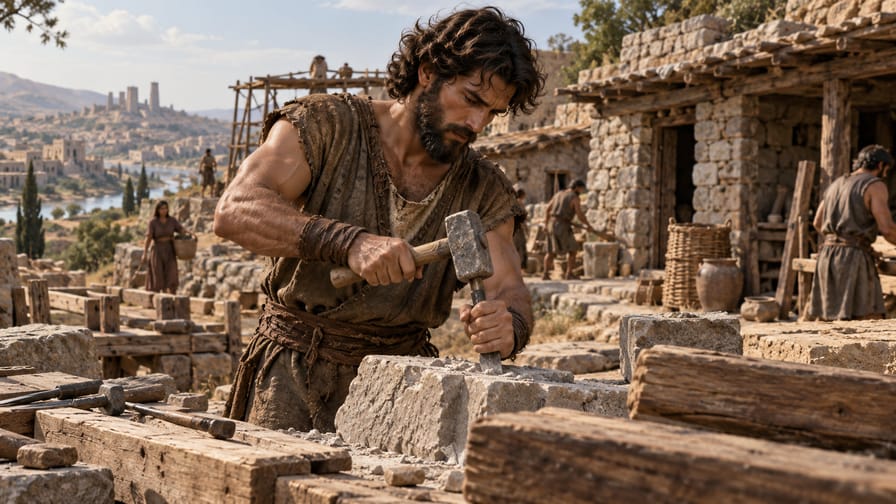
The figure of Irad, though briefly mentioned in the Holy Scriptures, occupies a notable position within the antediluvian genealogy, being one of Cain's early descendants. His appearance is restricted to a single passage in the book of Genesis, but, as part of the Cainite lineage, he contributes to the complex tapestry of post-Fall human history.
The analysis of Irad, from an evangelical Protestant perspective, requires a careful examination of his genealogical, etymological, and theological context. His significance does not lie in recorded actions or speeches, but in his role as a link in the chain of generations that demonstrates the progression of sin and the development of human culture outside the sphere of direct communion with God, contrasting with the godly lineage of Seth.
This study seeks to explore the implications of Irad's existence for understanding human depravity, divine grace, and God's redemptive plan. By situating him in the biblical narrative, it is possible to extract profound lessons about God's sovereignty and the history of salvation, even from characters who seem marginal at first glance.
The mention of Irad is a reminder that every name and every lineage in the Bible serves a greater purpose in the progressive revelation of God's will and character. Even in his obscurity, Irad invites us to reflect on human choices and the consequences of sin in the history of redemption.
1. Etymology and meaning of the name
The name Irad (עִירָד, ‘Irad) appears in the Septuagint as Gairad (Γαιραδ). Its etymological root is subject to some discussion among Hebraists, but interpretations generally gravitate around concepts related to urbanization or speed. The mention of his grandfather Cain building a city for his son Enoch (Enoch) in Genesis 4:17 makes the association with "city" particularly relevant for the lineage.
One of the most accepted derivations suggests that Irad may mean "city of witness" or "city of testimony," combining the roots for "city" (עִיר, ‘ir) and possibly "witness" (עֵד, ‘ed). This interpretation is proposed by some lexicons and commentators, such as Gesenius, who point to the possibility of the name symbolizing the foundation and growth of the first post-Fall urban communities.
Another etymological interpretation, though less common, relates Irad to a root meaning "fugitive" or "wild ass," implying characteristics of speed or wildness. This connotation could symbolize the wandering and unruly nature of Cain's descendants, who lived separated from the divine presence, as described in Genesis 4:16.
Despite the nuances, the theological significance of the name Irad, from the perspective of "city of witness," is profound. The city built by Cain and his descendants may have served as a "testimony" to human capacity to create culture and civilization independently of God, or, ironically, as a testimony to the growing depravity and estrangement from God that characterized the Cainite lineage.
There are no other biblical characters named Irad in the Scriptures. This makes his mention even more exclusive and focused on his particular position in the antediluvian genealogy. His nominal uniqueness underscores the importance of his brief appearance as a crucial genealogical link.
In a broader sense, names in the Bible often carry a prophetic or descriptive meaning, reflecting the character or destiny of the individual. Irad's name, being associated with "city" or "testimony," may therefore point to the urbanization and cultural development that would become distinctive marks of Cain's lineage, in contrast to the more pastoral and godly life of Seth's lineage.
2. Historical context and biblical narrative
Irad is situated in the antediluvian period, an era that spans the first chapters of the book of Genesis, from chapter 4 to 6. This period is characterized by the rapid expansion of the human population after the Fall, the development of various forms of culture and civilization, and a growing moral deterioration that would culminate in the judgment of the Flood.
The political, social, and religious context of Irad's time is marked by the absence of formal governmental structures, but by the emergence of clans and families as primary social units. Cain's lineage, to which Irad belongs, is notable for its cultural innovations, including the building of cities (Genesis 4:17), the development of animal husbandry, music, and metallurgy (Genesis 4:20-22).
However, this cultural prosperity is accompanied by profound apostasy and violence. Religion, in the Cainite lineage, appears to have quickly deviated from the worship of God, culminating in the figure of Lamech, who boasts of his vengeance and polygamy (Genesis 4:23-24). Irad's life, though not detailed, is set within this scenario of material progress and spiritual decline.
Irad's genealogy is clear: he is the son of Enoch (Cain's son), grandson of Cain, and great-grandson of Adam. This lineage is recorded in Genesis 4:18: "To Enoch was born Irad Irad begot Mehujael Mehujael begot Methushael Methushael begot Lamech." He is a crucial link in the transmission of the Cainite lineage from Cain to Lamech, the seventh in Cain's line.
There are no specific events recorded in Irad's life. His existence is documented solely through genealogy, which is common for many characters in biblical genealogical lists. His importance lies, therefore, in his role as a connector between the generations of Cain's lineage, illustrating the continuity and development of this line.
The geography related to Irad is the "land of Nod" (Nod), east of Eden, where Cain settled after being driven from the Lord's presence (Genesis 4:16). This location symbolizes exile and separation from God, a central theme for understanding the Cainite lineage. The city built by Enoch, Cain's son, was likely the center of this new society.
Irad's relationships are strictly familial, as a member of Cain's lineage. He is part of a family that, from the beginning, was marked by sin, by fratricide (Cain and Abel, Genesis 4:8) and by the rejection of divine will. His descendants, especially Lamech, exemplify the escalation of violence and polygamy, which filled the earth before the Flood.
3. Character and role in the biblical narrative
The Bible offers no direct descriptions of Irad's character, nor does it record any of his actions or decisions. His figure is purely genealogical, serving as a link in Cain's descent. In contrast to characters like Enoch of Seth (Genesis 5:24), who "walked with God", Scripture remains silent about Irad's spiritual or moral life.
The absence of information about Irad's character is, in itself, theologically significant. The biblical narrative, especially in Genesis, frequently contrasts Cain's lineage with Seth's lineage. While Seth's lineage is marked by names that invoke God and by figures who "began to call upon the name of the Lord" (Genesis 4:26), the Cainite lineage is notable for its cultural achievements and its growing ungodliness.
Therefore, Irad's role in the biblical narrative is fundamentally structural. He is one of the links connecting Cain to his descendant Lamech, the epitome of Cainite depravity before the Flood. Irad's existence contributes to the demonstration of the continuity of sin and separation from God through the generations of the cursed lineage.
Irad's specific vocation or function is not mentioned. There is no indication that he played a prophetic, priestly, royal, or any other leadership role. He is simply a name in the genealogy, but a name that keeps Cain's lineage intact for the purpose of the biblical narrative in Genesis.
Significant actions and key decisions by Irad are not recorded. Unlike his grandfather Cain, who murdered his brother, or his descendant Lamech, who took two wives and boasted of his violence, Irad remains a silent figure. This lack of detail underscores Scripture's focus on Seth's lineage as the bearer of God's promise.
The development of Irad's character cannot be analyzed, as there is no narrative of his life. He is static, a name that serves to fill a genealogical gap, allowing the author of Genesis to trace the progression of fallen humanity and the rise of iniquity that led to the Flood. He is a testament to the universality of sin inherited from Adam, as per Romans 5:12.
In summary, Irad's character and role are defined by his position in Cain's lineage. He is a marker in the chronology of human depravity, a silent reminder of the trajectory of a family that drifted away from God and plunged increasingly into sin, despite its cultural and material achievements. His relevance lies in his contribution to the theological backdrop of the impending judgment.
4. Theological significance and typology
The figure of Irad, although not an active agent in biblical history, holds considerable theological significance as part of the Cainite lineage. He represents a link in redemptive history by illustrating the progression of sin and the urgent need for redemption. His existence underscores the fundamental contrast between the "seed of the woman" (Genesis 3:15), represented by Seth's lineage, and the "seed of the serpent," to which Irad belongs.
There is no direct Christocentric typology for Irad, as he is part of a lineage that symbolizes fallen humanity estranged from God. However, his lineage serves an indirect theological purpose by highlighting the gravity of sin and the need for a Savior. The moral degeneration of Cain's line, culminating in Lamech, demonstrates humanity's inability to redeem itself by its own means, setting the stage for divine intervention.
The existence of Irad and his lineage are connected to central theological themes such as the total depravity of humanity, divine judgment, and the sovereign grace of God. The proliferation of sin and violence in the Cainite lineage, which included Irad, is a testimony to the truth of Romans 3:23, that all have sinned and fall short of the glory of God, and to the description of human wickedness in Genesis 6:5.
The story of Irad and his family serves as a dark backdrop to God's promise of a Redeemer. It shows the inevitability of judgment when humanity fully surrenders to its own will. Cain's lineage, with Irad as one of its members, prefigures the need for a new beginning, which would come through the Flood and the family of Noah, a descendant of the godly lineage of Seth.
Instead of prefiguring Christ, Irad and his lineage prefigure the condition of humanity without Christ. They illustrate the consequences of Adam's Fall, where sin spreads and deepens through generations. This theology of the fall and depravity is essential for understanding the salvific work of Christ, who came to rescue humanity from this condition.
The doctrine associated with Irad and his lineage is that of the universality of sin and separation from God. Even if there are no direct New Testament citations about Irad, the narrative of Cain's lineage, to which he belongs, is echoed in passages that speak of the iniquity of the antediluvian world (Matthew 24:37-39 Luke 17:26-27 1 Peter 3:20 2 Peter 2:5), and of Cain's nature as being "of the evil one" (1 John 3:12).
Therefore, Irad, in his silent existence, contributes to the grand narrative of redemption, providing an early example of the need for salvation. He is a reminder that, even in seemingly mundane genealogies, God is revealing the human condition and preparing the ground for the manifestation of His grace.
5. Biblical-theological legacy and canonical references
Irad's legacy in biblical theology is subtle yet significant, derived from his unique position as a link in Cain's lineage. He is not mentioned in any other biblical book apart from Genesis 4:18, nor are any literary contributions attributed to him. His importance lies, therefore, in his function within the genealogical and theological structure of Genesis.
Irad's influence on biblical theology lies in how his mention contributes to the contrast between the two main lineages of post-Fall humanity: Cain's lineage and Seth's lineage. This distinction is crucial for Old Testament theology, as it sets the stage for the history of redemption, showing how God preserves a godly lineage (Seth) amidst increasing iniquity (Cain).
In Jewish and Christian interpretive tradition, Irad is generally discussed within the broader context of the Cainite lineage. Ancient and modern commentators, such as John Calvin and Matthew Henry, frequently use Cain's genealogy to illustrate human depravity and the development of a civilization without God. They view this lineage as an example of man's natural inclination towards sin and self-sufficiency.
Reformed and evangelical theology, in particular, emphasizes the doctrine of total depravity and the distinction between the "kingdom of God" and the "kingdom of the world," which finds its roots in these two lineages. Cain's lineage, including Irad, is seen as representative of the kingdom of the world, which builds its own glory and culture, but does so independently of God and often in opposition to Him.
Irad's importance for understanding the biblical canon lies in how he fills an essential gap in Genesis' genealogical narrative. Without him, the connection between Cain and Lamech, the seventh in Cain's line, who represents the peak of antediluvian ungodliness, would be incomplete. He is a testament to the faithfulness of the biblical record in tracing human history, even in its darkest aspects.
Although Irad is not a prominent character, his presence in the sacred records serves as a reminder that every detail of Scripture has its purpose in God's great plan. He compels us to look beyond central figures and consider how secondary characters and genealogies contribute to the revelation of divine truth and the progression of salvation history, from the dawn of humanity to its consummation in Christ.
In summary, Irad's legacy is that of a silent marker in the history of fallen humanity, whose brief mention invites us to deepen our understanding of sin, judgment, and God's sovereignty in guiding His redemptive plan through the ages.