


Asareel
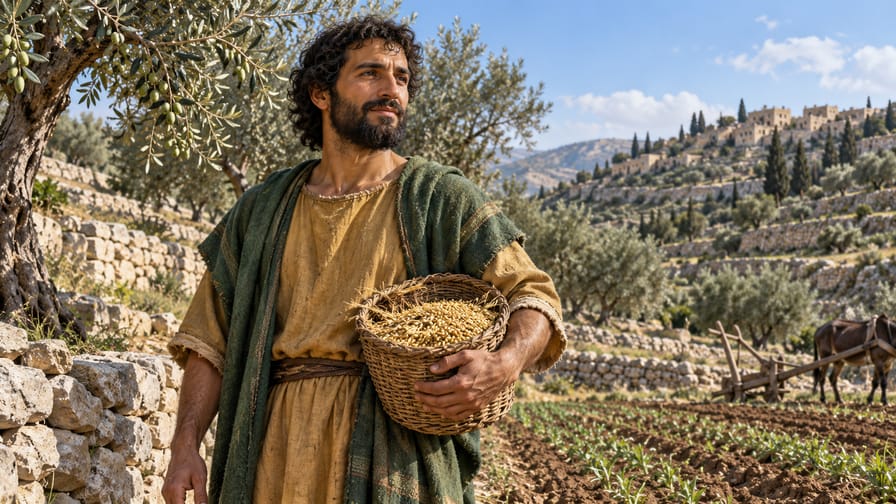
The figure of Asareel, though briefly mentioned in Scripture, offers a rich opportunity for deep biblical and theological analysis, especially from a Protestant evangelical perspective. His sole appearance in 1 Chronicles 4:16, as one of the sons of Jehaleleel from the tribe of Judah, positions him within the vast genealogical tapestry that the Chronicler weaves for the post-exilic community. While the narrative about his life is non-existent, his name and his inclusion in the biblical canon carry meanings that resonate with central themes of the Christian faith, such as divine sovereignty, God's faithfulness to His covenant, and the meticulousness of His redemptive plan.
The analysis of Asareel transcends the mere identification of a character, inviting us to reflect on the purpose of biblical genealogies and the importance of each link in the chain of salvation history. The conservative evangelical perspective emphasizes the inerrancy and inspiration of all Scripture, which means that even the most concise details, like the mention of Asareel, possess an intentional meaning and theological relevance. Thus, we will explore its onomastic meaning, the context of its mention, the implications of its inclusion in the sacred record, and its theological legacy, connecting it to the great Christocentric narrative of the Bible.
1. Etymology and Meaning of the Name
The name Asareel, transliterated from Hebrew עֲשַׂרְאֵל (‘Asar’el), is a theophoric name, a common practice in ancient Israel where the name of God (‘el) is incorporated into personal names. The primary root of the name is עָשַׂר (‘asar), which can have multiple meanings. A common interpretation of the root ‘asar is "to bind," "to unite," or "to tie," which would lead to the meaning "God has bound" or "God has united."
Another possibility for the root ‘asar is linked to "to help" or "to strengthen," resulting in "God has helped" or "God has strengthened." Some scholars also connect the root to "tenth" (as in tithe), but this interpretation is less probable in the context of personal names that seek to express a divine action or attribute. The combination with ‘el (אֵל), which means "God," reinforces the idea of a divine intervention or attribute.
Considering the most probable interpretations, the meaning "God has bound" or "God has united" for Asareel carries a particular theological resonance. It evokes the image of God as the One who establishes bonds, whether in the context of a family, a community, or, more profoundly, a covenant. This meaning can be seen as a declaration of faith and recognition of divine sovereignty in the formation of human and divine relationships.
There are no significant variations of the name Asareel in other biblical languages or manuscripts that substantially alter its meaning. The form in 1 Chronicles 4:16 is consistent. Furthermore, Asareel is not a common name in the biblical canon there are no other prominent characters who share this name, making the analysis focused exclusively on this single mention.
The theological significance of the name Asareel, regardless of the exact nuance of the root, lies in its theophoric nature. It serves as a reminder that God is actively involved in the life of His people. Names like this were often given to express gratitude for a received blessing, a prayer, or a declaration of faith in divine providence, as C. F. Keil observes in his commentary on Chronicles.
Thus, the name "God has bound" or "God has united" can symbolize God's faithfulness in keeping His people united, in preserving the covenant lineage, or in establishing a lasting relationship with His own. For the post-exilic community of Israel, for whom the Chronicler wrote, such a name could have been an encouragement of God's continuing work in restoring and uniting His people.
2. Historical Context and Biblical Narrative
Asareel is mentioned only in 1 Chronicles 4:16, within an extensive genealogy of the tribe of Judah: "The sons of Jehaleleel: Ziph, Ziphah, Tiria, and Asareel." This mention places him in a genealogical context which, though compiled in the post-exilic period (c. 450-400 BC), refers to individuals who lived in much earlier eras, likely during the period of the Judges or the early monarchy of Israel.
The book of 1 Chronicles, and particularly its first nine chapters, is notable for its emphasis on genealogies. The Chronicler had a clear theological purpose: to reaffirm Israel's identity after the Babylonian exile, connecting them to their covenantal heritage, the Davidic lineage, and the temple worship. The genealogies served to legitimize land possession, priestly and Levitical rights, and the continuity of the messianic promise.
The genealogy of the tribe of Judah, where Asareel is listed, is of particular importance. Judah was the tribe from which kingship in Israel would come, culminating in the lineage of David and, prophetically, in the Messiah. Asareel's inclusion in this lineage, even as a minor link, underscores God's meticulousness in preserving the path for the fulfillment of His covenant promises.
The political, social, and religious context of the era to which these genealogies refer would have been that of a tribal Israel, often decentralized, striving for its identity and security amidst neighboring nations. Religion centered on the worship of Yahweh, though often contaminated by idolatrous practices, which led to cycles of apostasy, judgment, and repentance, as narrated in the book of Judges.
The geography associated with Asareel would, therefore, be the territory of the tribe of Judah, in the southern part of Canaan. This region included important cities such as Hebron, Jerusalem (which later became the capital), Bethlehem, and others. The Chronicler, in listing these families, was, in part, establishing the historical and divine right of the families of Judah to their inherited land, a vital theme for the people returning from exile.
There are no specific events recorded in the life of Asareel, nor is he described in relation to other biblical characters besides his father, Jehaleleel, and his brothers Ziph, Ziphah, and Tiria. He is a name on the list, which emphasizes that his importance does not lie in his recorded individual actions, but in his existence as part of God's larger plan. As Raymond B. Dillard observes, the genealogies in Chronicles are not mere lists, but theological documents with specific purposes for the post-exilic community.
3. Character and Role in the Biblical Narrative
The absence of any narrative about Asareel's life precludes a direct analysis of his character, his virtues, or his faults. He is not a prophet, a king, a priest, or a warrior whose actions are detailed. Instead, his "character" and "role" must be inferred from his mere existence and inclusion in the sacred genealogical record. His importance lies in being a link, an integral part of the lineage of God's people.
From a theological standpoint, Asareel's inclusion in the biblical canon, even if minimal, attests to God's sovereignty and faithfulness in preserving the lineage of Judah. His existence, like that of many other names in the genealogies, is a silent testimony to divine providence. He represents the truth that God knows and values every individual in His plan, even those whose personal history is not extensively detailed.
Asareel's "calling," in this sense, was to exist within God's covenant, to be part of the chosen people. His "role" was to contribute to the continuity of the lineage that would lead to the Messiah, even if anonymously for later history. He is an example of how God uses ordinary individuals, without great recorded deeds, to fulfill His grand purposes.
We cannot attribute specific virtues or spiritual qualities to Asareel, nor documented sins or moral failures, as Scripture is silent on these aspects. However, his inclusion in the genealogy of Judah, the royal and messianic tribe, places him in a position of divinely ordained dignity and purpose. He is a reminder of the truth that God's faithfulness does not depend on human prominence, but on His own sovereign determination.
Asareel's "significant actions" and "key decisions" are not narrated. Instead, his greatest "action" for the Christian faith is his inclusion in the sacred record, confirming the validity and integrity of Judah's genealogy. He is a "character" who develops not in a life narrative, but in the progression of divine revelation, demonstrating the constancy of God's plan throughout the generations.
In summary, Asareel represents the myriad individuals whose lives, though not highlighted by great deeds, were essential for the fulfillment of God's redemptive plan. His presence in the Bible teaches us about the value of every life in God's eyes and about the importance of divine faithfulness in preserving the lineage of promise, as Gordon Wenham explains in his discussion on the theology of Chronicles.
4. Theological Significance and Typology
The theological relevance of Asareel, like that of many names in the genealogies, lies in his role in redemptive history and in the progressive revelation of God's plan. His inclusion in the lineage of Judah is crucial for understanding God's faithfulness to His covenants, particularly the Abrahamic covenant (Genesis 12:1-3, 15:1-21) and the Davidic covenant (2 Samuel 7:12-16).
These covenants promised a descendant who would bring blessing to all nations and establish an eternal kingdom. The genealogies, including that of Asareel, serve as a meticulous record of how God preserved this lineage through the generations, ensuring that the Messiah would come from the promised tribe and family. The accuracy of these lists reinforces the truthfulness of divine promises.
While Asareel is not a prefiguration or a direct type of Christ, his existence within the messianic lineage underscores the certainty and meticulousness of the divine plan. Each name in the genealogies is an indispensable link in the chain that leads to Jesus Christ, the ultimate descendant of Judah and David. He is a silent testimony that God orchestrates the details of history to fulfill His redemptive purposes.
The New Testament, in its own genealogies of Jesus (Matthew 1:1-17 Luke 3:23-38), validates the importance of the Old Testament genealogical records. These lists are not mere appendices, but fundamental evidence of Jesus' identity as the promised Messiah, fulfilling prophecies that required Him to come from the house of David and the tribe of Judah (Isaiah 11:1 Romans 1:3).
Asareel's life, however briefly mentioned, connects to central theological themes. It illustrates the sovereignty of God, who governs over all generations and events, ensuring the progression of His covenant. It demonstrates the faithfulness of God in fulfilling His promises over time, even through periods of obscurity or apparent inactivity.
Furthermore, Asareel's inclusion speaks of the grace of God in choosing and using individuals, regardless of their fame or power, for His purposes. He is part of the grand narrative that culminates in salvation through Christ, confirming that God's plan for redemption is meticulous, intentional, and infallible, as advocated by theologians such as John Murray in his work on redemption.
In a broader sense, Asareel represents the doctrine of divine providence, where God, in His wisdom and power, governs all things for the fulfillment of His purposes. His inclusion in the Scriptures, therefore, is not accidental, but part of the inspired testimony of God's work in salvation history, culminating in the prophetic fulfillment in Jesus Christ.
5. Biblical-Theological Legacy and Canonical References
Asareel's legacy in biblical theology is subtle yet profound. His sole mention in 1 Chronicles 4:16, as part of a genealogy, reinforces the importance that Scripture attributes to the continuity of lineage and to God's faithfulness in preserving the covenant people. He has no direct literary contributions, nor is he mentioned in other biblical books, whether in the Old or New Testament.
Nevertheless, his presence in the biblical canon serves as a powerful reminder of the doctrine of the full and verbal inspiration of Scripture. Every word, every name, every minimal detail is considered divinely inspired and useful for teaching, reproof, correction, and training in righteousness (2 Timothy 3:16). Asareel's existence in the Bible testifies that no part of God's Word is superfluous.
In Jewish and Christian interpretive tradition, Asareel is rarely an object of individual analysis due to the lack of information. Nevertheless, he is implicitly included in broader discussions about the purpose of the genealogies in Chronicles and their function for the post-exilic community, which needed its identity and heritage reaffirmed. Commentators like Matthew Henry, in their exposition, frequently highlight God's providence in preserving families and lineages.
In Reformed and evangelical theology, the inclusion of figures like Asareel is seen as a testimony to God's sovereignty over history and His faithfulness in fulfilling His promises, especially concerning the messianic lineage. Reformed theology emphasizes that God is the Lord of all history, and even seemingly insignificant details are part of His eternal plan.
Asareel's importance for understanding the canon lies in his contribution to the historicity and reliability of the biblical record. The genealogies provide a historical framework that connects narratives and covenants, demonstrating that God's plan unfolds in time and space. They attest to the reality that salvation history is not a myth, but a series of concrete events and real people.
Ultimately, Asareel, as a name in the long list of Judah's lineage, symbolizes the truth that God's faithfulness transcends human prominence. He reminds us that God's glory is manifested not only through heroes of faith but also through those whose lives are simply part of the great divine purpose, culminating in the coming of our Lord Jesus Christ.