


Ben-Deker
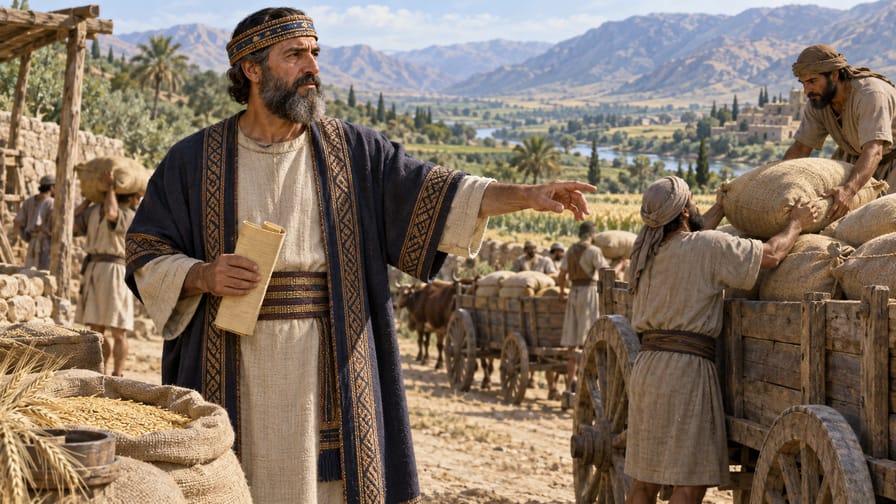
The figure of Ben-Dequer, though mentioned concisely in the Hebrew Scriptures, offers an opportunity for biblical and theological analysis that transcends the brevity of his appearance. Within the context of the Protestant evangelical perspective, every name and detail in the Bible is considered divinely inspired and significant, contributing to the tapestry of God's progressive revelation and His redemptive plan. The brevity of Ben-Dequer's mention does not diminish his place in salvation history but invites careful exegesis of the context in which he appears.
This study will seek to explore the onomastic meaning of Ben-Dequer, his place in the historical setting of Solomon's Kingdom, inferences about his character and role, his theological relevance within the larger framework of redemptive history, and his legacy, however subtle, for the understanding of the biblical canon. Such an approach aims to deepen the appreciation of God's faithfulness in preserving even the smallest details of His divine narrative.
1. Etymology and Meaning of the Name
The name Ben-Dequer (in Hebrew: בֶּן־דֶּקֶר, Ben-Deqer) is composed of two distinct parts. The first part, Ben (בֶּן), is a common Hebrew term meaning "son of." This particle is often used to indicate filiation, descent, or sometimes a characteristic associated with the father or origin.
The second part of the name, Dequer (דֶּקֶר), derives from the Hebrew verbal root דָּקַר (daqar), which means "to pierce," "to thrust through," "to stab," or "to wound." This root is found in various biblical contexts, describing acts of violence, such as piercing a body with a sword or spear, or even the act of piercing a ritual sacrifice.
Thus, the literal meaning of the name Ben-Dequer can be interpreted as "Son of Piercing" or "Son of the One Who Pierces." This etymology suggests a possible association with characteristics such as sharpness, penetration, or even a connection to warfare or the execution of judgments, although the Bible does not provide explicit details about Ben-Dequer's own character.
The nature of the name Dequer as a noun or a proper name is relevant. While not common as a personal name in other passages, its derivation from the root daqar is clear. There are no significant variations of the name Ben-Dequer in known biblical languages or manuscripts, and it appears only once in the Old Testament, in 1 Kings 4:9.
There are no other biblical characters named Ben-Dequer. However, the particle Ben is ubiquitous, appearing in names such as Ben-Hadad (1 Kings 15:18) or Ben-Hur (1 Kings 4:8), indicating a common structure for patronymic names in Hebrew culture. The uniqueness of Dequer, however, makes it distinctive.
The theological significance of the name, though not directly explored in the Scriptures for this individual, can be inferred contextually. In an era of kingdom consolidation, a name associated with "piercing" or "penetration" could, speculatively, reflect the ability to "penetrate" or "resolve" administrative or military issues, qualities valued in times of governance and expansion.
Alternatively, the root daqar is prophetically used to describe the piercing of the Messiah (Zechariah 12:10, quoted in John 19:37). While this is not a direct typological leap for Ben-Dequer, the mention of a name with this root in the canon underscores divine providence in how names and their etymologies, even of minor figures, can resonate with larger themes of redemptive history.
2. Historical Context and Biblical Narrative
Ben-Dequer is mentioned exclusively in 1 Kings 4:9, within the context of the description of the administrative organization of Solomon's Kingdom. This historical period corresponds to the zenith of Israel's power and prosperity, approximately between 970 and 931 B.C., during the united monarchy. After the consolidation of the kingdom by David, Solomon inherited a vast and relatively stable empire.
The political, social, and religious context of the time was one of centralization and expansion. Solomon established a complex and efficient government to manage his vast territory and the resources needed for his ambitious projects, such as the construction of the Temple and his own palace in Jerusalem (1 Kings 5-7). This required sophisticated administration and the appointment of trustworthy officials throughout the kingdom.
Ben-Dequer's genealogy is sparse he is identified only as the father of Geber (גֶּבֶר, Gever), one of the twelve district governors or commissaries whom Solomon appointed to supervise the collection of provisions for the king's household and court (1 Kings 4:7). Each governor was responsible for providing food for the king and his household for one month of the year.
The key passage for Ben-Dequer is 1 Kings 4:9: "The son of Deqer, in Makaz, Shaalbim, Beth-Shemesh, and Elon-Beth-hanan." This phrase, although grammatically it could be read as "the son of Deqer" (i.e., Geber) or "Ben-Dequer," most translations and commentaries understand "Ben-Dequer" as the name of the father of the commissary Geber. Geber was responsible for a specific district.
The geography related to Ben-Dequer's son, Geber, encompasses the cities of Makaz, Shaalbim, Beth-Shemesh, and Elon-Beth-hanan. These localities were situated in the central region of Judah, in the Shephelah, and on the border with Dan and Benjamin, indicating a strategically important and economically productive area. Geber's jurisdiction suggests that Ben-Dequer, or his family, had significant roots or influence in this region, allowing his son to ascend to a position of such responsibility.
Ben-Dequer's relationships with other biblical characters are indirect, primarily through his son Geber, who served King Solomon directly. Although Ben-Dequer had no direct recorded contact with Solomon or other leaders, his existence and his son's position attest to the vast administrative network that Solomon built, involving families and individuals from various regions of Israel.
This administrative structure is a testament to Solomon's practical wisdom (1 Kings 4:29-30) and his ability to govern a prosperous kingdom, even though it also marked the beginning of tensions due to the heavy tax burden and labor imposed on the people (1 Kings 12:4), which would eventually lead to the division of the kingdom after his death.
3. Character and Role in the Biblical Narrative
The Bible does not offer explicit details about Ben-Dequer's character, as he is mentioned only as the father of one of Solomon's governors. However, we can infer certain qualities or the social status of his family from the context. For his son Geber to be appointed to such a position of responsibility, Ben-Dequer likely belonged to a family of some prominence or influence.
In ancient society, the appointment of a son to such a high administrative office often reflected the family's status, reputation, or connections. This suggests that Ben-Dequer, or his ancestors, were likely respectable citizens, perhaps with some experience in local leadership or administration, or possessors of land and resources.
There are no virtues or spiritual qualities directly attributed to Ben-Dequer, nor any documented sins, weaknesses, or moral failings. His brief mention places him in a category of characters who contribute to the background of biblical history without having an active role in the main narrative of faith, obedience, or judgment.
Ben-Dequer's specific vocation or function is not recorded. His primary role in the biblical narrative is genealogical: to be the father of Geber. This function, though seemingly minor, is crucial for contextualizing Solomon's administration. The list of governors with their respective fathers and regions attributes authenticity and historicity to the biblical records.
Ben-Dequer's significant actions and key decisions are not mentioned. His importance lies in his existence as a link in the chain of people who made up the kingdom of Israel. He represents the myriad of individuals whose lives and families formed the social and political structure upon which sacred history unfolded.
There is no character development for Ben-Dequer throughout the narrative, as he appears in only one verse. His mention serves to identify Geber, solidifying the credibility of the 1 Kings account of the organization of Solomon's kingdom. He is a reminder that biblical history is composed of great figures and a vast network of anonymous or little-mentioned people, all under the sovereignty of God.
4. Theological Significance and Typology
Although Ben-Dequer is an obscure figure, his inclusion in the biblical narrative has theological significance from the Protestant evangelical perspective, which upholds the inspiration and inerrancy of all Scripture (2 Timothy 3:16-17). His mention, even brief, contributes to redemptive history and the progressive revelation of God.
Ben-Dequer's existence, as the father of one of Solomon's officials, validates the biblical description of the kingdom's organization and extent. This reinforces the historicity and reliability of the 1 Kings records, which detail Solomon's glory and wisdom, as well as the administrative challenges of his reign. God, in His providence, recorded these details for our instruction.
Solomon's administration, in which Ben-Dequer's son served, is seen as a partial and imperfect type of the coming messianic kingdom. Solomon, with his wisdom and peace, prefigured the Messiah, Jesus Christ, the true King who would establish a kingdom of endless justice and peace (Isaiah 9:6-7). Administrative efficiency, though imperfect, was a reflection of divine order.
Thus, Ben-Dequer's contribution, through his lineage and his son's position, is integrated into the divine providence that sustained Solomon's kingdom, pointing to the Kingdom of Christ. The service of Geber and other governors ensured the stability and sustenance of the government, creating an environment for the worship of God and the continuity of the Davidic lineage, from which the Messiah would come.
There are no direct citations of Ben-Dequer in the New Testament, nor is he directly linked to covenants, promises, or prophecies. However, he connects to central theological themes such as God's sovereignty over human history, the importance of order and good governance (even in an imperfect context), and the way God uses ordinary individuals for His greater purposes.
His mention underscores the doctrine of divine providence, where God orchestrates the details of history, including the rise of families and the appointment of officials, to fulfill His designs. Ben-Dequer's life, though not narrated, is part of the larger history of Israel, which is the history of preparation for the coming of Christ.
Reformed and evangelical theology emphasizes that all the "small" details of Scripture are important. Ben-Dequer's inclusion validates the accuracy of God's Word and the depth of His attention to detail. He is part of the backdrop that helps us understand the "fullness of time" (Galatians 4:4), when Christ would come, after centuries of preparation and development of the people of Israel.
5. Biblical-Theological Legacy and Canonical References
Ben-Dequer's legacy is, in large part, a legacy of silence and inference. He is not mentioned in other biblical books beyond 1 Kings 4:9, nor are any literary contributions attributed to him. His direct influence on biblical theology is, therefore, indirect, manifesting primarily through the confirmation of the historicity and details of Solomon's administration.
His presence in the canon, however brief, serves as a reminder of the comprehensiveness of divine inspiration. The inclusion of names and genealogical or administrative lists, such as that in 1 Kings 4, demonstrates God's commitment to providing a factual and detailed record of His people's history, a foundation for faith and the understanding of His redemptive acts.
In Jewish and Christian interpretive tradition, Ben-Dequer rarely receives individualized attention. He is usually discussed in the context of studies on Solomonic administration or as part of a broader exegesis of 1 Kings 4. His obscurity, paradoxically, highlights the importance of every fragment of Scripture.
Intertestamental literature makes no reference to Ben-Dequer, reflecting the concise nature of his biblical appearance. However, the conservative Protestant evangelical perspective sees in his mention a validation of the principle that the Bible is "profitable for teaching, for reproof, for correction, and for training in righteousness" (2 Timothy 3:16), even in its most minute details.
The treatment of Ben-Dequer in Reformed and evangelical theology aligns with the doctrine of progressive revelation and the sovereignty of God. He is an example of how individuals, even without a prominent role, are an integral part of the divine plan, contributing to the social and political structure that prepared the way for the Messiah. His mention reinforces the belief in God's providence over all aspects of life and history.
Ben-Dequer's importance for understanding the canon lies in his contribution to the authenticity and richness of the biblical record. He reminds us that salvation history is not just about the great heroes of faith, but also about the countless people whose lives were intertwined in the divine narrative, each with their place and purpose in God's eternal plan. He is a silent testament to God's faithfulness in preserving the details of His history for future generations.