


Is It a Sin to Doubt God?
Doubting God is not a sin in itself: the Bible shows people of faith who doubted, asked questions and were received with grace. What Scripture condemns is unbelief, the refusal to trust that turns away from the living God, and the difference between the two lies in the direction of the heart, not in whether questions exist.
The Bible is full of people who doubted and were welcomed
The Psalms hold more questions than answers in places. Psalm 13:1-2 asks “how long?” four times, and the psalmist says it straight to God. The psalm does not end there: in verses 5-6 he says he trusts God’s steadfast love and promises to sing to the Lord. Complaint and trust sit in the same prayer. Asaph, in Psalm 73:2-14, admits he nearly stumbled when he saw the wicked prosper and wondered whether keeping his heart pure was worth it. He was not rebuked: the turn came when he entered God’s sanctuary and began to see the end of the wicked (Psalm 73:16-17). His doubt drove him closer to God, not further away.
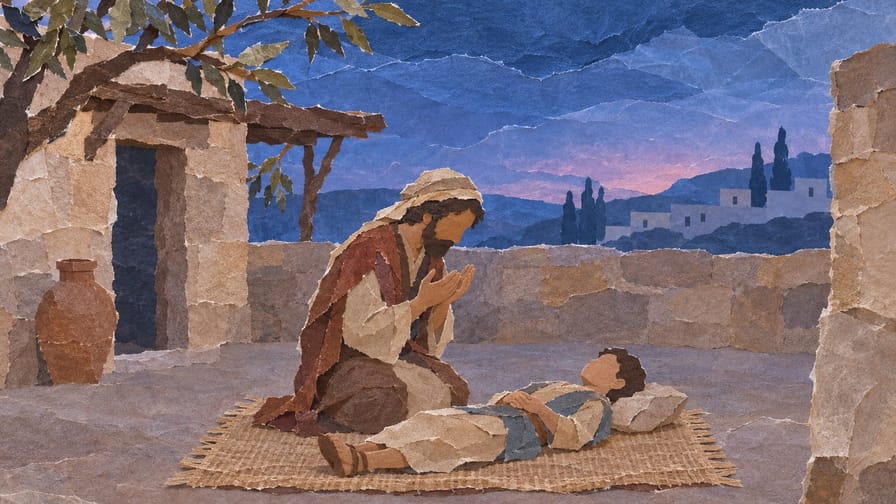
In the New Testament, the father of the afflicted boy prays one of the most honest prayers in the Bible: I believe; help my unbelief (Mark 9:24). Jesus does not send him away for mixing faith and doubt; he answers the request and heals the son. Thomas demanded to see the wounds before believing in the resurrection, and Jesus appeared and offered exactly that, inviting him to stop doubting and believe (John 20:24-29). Even John the Baptist, in prison, sent word to ask whether Jesus really was the one who was to come (Matthew 11:2-6). Jesus answered by pointing to his works, and right afterward praised John before the crowd (Matthew 11:7-11).
Honest doubt and rejecting unbelief
Greek vocabulary helps, but it does not settle the matter on its own. There are words for wavering and for not believing, and they overlap. Diakrinomai (“to hesitate, to waver”) appears in James 1:6 and Jude 22, and distazō (“to doubt”) is in Matthew 14:31, where Jesus asks sinking Peter why he doubted. Notice that Jesus takes hold of him before he speaks. Apistia (“unbelief”) appears in the father’s prayer in Mark 9:24, and there it lives alongside faith: he says, at the same time, that he believes and that he needs help to believe. The word alone, then, does not separate honest doubt from rejection; context and the direction of the heart decide that.
A useful question to ask is: where is my doubt taking me? If it makes me pray, open the Bible, talk with a pastor or a mature friend and stay in God’s presence, it is faith in struggle. If it is used to keep me away, to quiet my conscience and justify a life without God, it comes close to what Scripture calls a hardened heart.
When the Bible speaks sternly about doubting
Two texts often frighten people who doubt, and they deserve to be read in context. Hebrews 3:12 warns against an evil, unbelieving heart that turns away from the living God. Notice who is addressed: the “brothers,” that is, Christian readers. The wilderness generation serves as an example of what hardening the heart looks like, rebelling even after seeing God’s works (Hebrews 3:7-19). It is not about someone who feels hard questions, but about someone who refuses to hear God’s voice and walks away. How this warning relates to the perseverance of believers is a matter of disagreement among Christians, and this site takes no side on that point.
James 1:6-8 says that whoever asks for wisdom must ask in faith, without wavering, because the wavering person is like a wave of the sea driven by the wind. The context is a person who asks God while not really being settled on trusting and following him; James calls that person double-minded. The verse just before shows God’s generosity: he gives wisdom to all without reproach (James 1:5). The text calls for whole-hearted faith; it does not threaten someone wrestling with questions.
There is also a contrast people often point to. Zechariah heard from the angel that he would have a son and asked for a sign; Gabriel answered that he would be silent “because you did not believe my words,” until John’s birth (Luke 1:18-20). Mary asked how it could be and received an explanation, without rebuke (Luke 1:34-35). Many readers see here the difference between asking for proof and asking for understanding, but that is a common reading: Luke does not explain why the responses differed, and it cannot be reduced to a formula.
How to handle doubt in the life of faith
- Bring your doubt to God in prayer. The Psalms give you vocabulary for it, and praying the question is different from keeping it in silence.
- Let others help. Jude 1:22 tells believers to have mercy on those who doubt. Doubt is not meant to be carried alone, and the church should be a safe place for questions.
- Return to what has already been shown. A pastoral suggestion: when faith is shaken, it helps to revisit what God has already done. Rereading the Gospels, the story of how God has acted in your life and the testimony of others helps faith breathe.
- Look for answers, not shortcuts. Some questions have good answers and some mysteries stay open; Psalm 73 shows you can live well without having explained everything.
- Distinguish feeling from decision. Faith is not the absence of doubt; it is trusting Christ even when emotions waver.
Doubting does not mean losing salvation
Someone afraid of having lost salvation because of a season of doubt can remember that, in Scripture, salvation is tied to God’s grace in Christ and not to the absence of hard thoughts. Two texts are often cited here, each more by one side of the debate. Jesus said that whoever comes to him he will never cast out (John 6:37), a verse much used by those who hold the eternal security of the believer. Paul writes that if we are faithless, he remains faithful, for he cannot deny himself (2 Timothy 2:13), but the verse before says that if we deny him, he also will deny us (2 Timothy 2:12), and both verses are key texts for both traditions. Faithful Christians differ on whether a believer can abandon the faith altogether; that debate has its own answer in “Can a Christian lose salvation?”. Christians of both traditions commonly agree that a person who cries out to Christ in the middle of doubt is doing what faith does.
If the doubt is heavy, talk to a pastor or a trusted friend. If it comes with deep distress, exhaustion or depression, seek professional help too: caring for your health is not a lack of faith. The Bible’s message to the doubter is, in the end, an invitation: come, ask, stay close, and pray as that father did: I believe; help my unbelief.
Key Bible references
Mark 9:24 · John 20:24-29 · Psalm 73:2-17 · Psalm 13:1-6 · Matthew 11:2-6 · Jude 1:22 · Hebrews 3:12 · James 1:5-8