


Abel
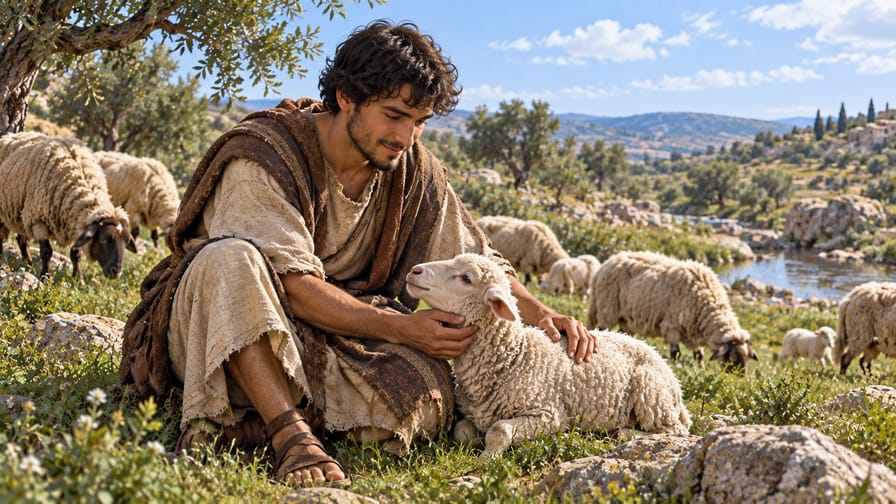
The figure of Abel, though briefly presented in the biblical canon, possesses a theological depth and enduring significance that transcend his concise narrative in Genesis. He is the second son of Adam and Eve, and his name resonates throughout the Scriptures as an archetype of faith, righteousness, and martyrdom. His story, centered on an act of worship and a subsequent murder, establishes crucial themes for understanding the history of redemption, the nature of genuine faith, and the conflict between good and evil.
From an evangelical Protestant perspective, the life and death of Abel are seen not merely as a historical event, but as a turning point that prefigures divine truths and ultimately points to the salvific work of Jesus Christ. His narrative is a microcosm of the tension between grace and works, faith and unbelief, acceptable and unacceptable sacrifice, and the reality of the suffering of the righteous.
This analysis will seek to explore the richness of Abel's legacy, from the meaning of his name to his influence on biblical theology, encompassing his character, the context of his story, and the profound typological implications that his life and death carry for the Christian faith.
1. Etymology and Meaning of the Name
1.1 Original Name and Linguistic Derivation
The name Abel derives from the Hebrew Hevel (הֶבֶל), which is a word commonly translated as "breath," "vapor," "exhalation," or "vanity." The etymological root suggests something ephemeral, transient, that appears and disappears quickly. It is the same word used repeatedly in the book of Ecclesiastes to describe the futility or transitoriness of life and earthly pursuits "under the sun."
The choice or attribution of this name, whether by his parents or by divine inspiration, is remarkably prophetic in retrospect. Abel's life was, in fact, brief and abruptly cut short, like a breath that dissipates. The brevity of his existence serves as a vivid reminder of the fragility of human life and the transitoriness of earthly existence.
1.2 Literal and Symbolic Meaning of the Name
Literally, Hevel denotes something without lasting substance. Symbolically, in the context of Abel's narrative, the name can be interpreted in various ways. It may reflect the pain and disillusionment of Adam and Eve after the Fall, naming their son with a term that evokes the fragility of life in a fallen world. Alternatively, it could be a divine premonition of his tragic destiny.
Theologically, the meaning of the name Hevel for Abel highlights God's sovereignty over life and death, and the reality that even the most righteous life can be ephemeral on earth. However, Scripture elevates Abel as an example of enduring faith, suggesting that, although his physical life was a "breath," his spiritual legacy is eternal, as attested in Hebrews 11:4.
1.3 Other Biblical Characters with the Same Name
There are no other prominent biblical characters with the same name Abel in its original Hebrew form Hevel. However, the word abel (אֵבֶל) also appears in toponyms such as "Abel-Maim" (2 Chronicles 16:4) or "Abel-Beth-Maacah" (2 Samuel 20:14), where it means "meadow" or "verdant field," a homonym without direct etymological connection to the name of Adam's son. This prevents any confusion between the patriarch and other individuals or places in the Bible.
2. Historical Context and Biblical Narrative
2.1 Historical Period and Family Origin
Abel lived in the earliest days of human history, shortly after the expulsion of Adam and Eve from the Garden of Eden, as narrated in Genesis 3. No exact dates are provided, but the account places him in the first generation born outside paradise, in a world already affected by the curse of sin. His birth, along with Cain's, represents the continuity of humanity and the beginning of family life in a post-Fall context.
He was the second son of Adam and Eve, with Cain being the firstborn. His family represented the entire human population at that time. The social and religious context was rudimentary, but already marked by the need for worship of God and an awareness of sin and its consequences, such as toil and death (Genesis 3:16-19).
2.2 Main Events of His Life and Biblical Passages
Abel's life is concisely described in Genesis 4:1-16. He is introduced as a shepherd, while his brother Cain was a tiller of the ground (Genesis 4:2). The central narrative revolves around their offerings to God.
Cain brought some of the fruit of the ground as an offering to the Lord, while Abel brought of the firstborn of his flock and of their fat portions (Genesis 4:3-4). The Scripture states that "the Lord had regard for Abel and for his offering, but for Cain and for his offering he had no regard" (Genesis 4:4-5). This distinction in divine acceptance is the crucial point of the narrative.
The rejection of Cain's offering led him to anger and envy, culminating in fratricide. While they were in the field, Cain attacked his brother Abel and killed him (Genesis 4:8). This is the first recorded murder in human history, an event that underscores the gravity of sin and its devastating consequences. Abel's blood cried out from the ground to God, who confronted Cain and imposed a curse upon him (Genesis 4:10-12).
2.3 Geography and Relationships with Other Characters
The Bible does not specify an exact geographical location for Abel's life, other than being "outside of Eden." The murder occurred "in the field" (Genesis 4:8), a generic location that offers no specific details. The narrative focuses more on family and spiritual relationships than on precise geographical coordinates. His life was exclusively intertwined with that of his parents, Adam and Eve, and his brother Cain, forming the core of the first human family and the first examples of faith and disobedience.
3. Character and Role in the Biblical Narrative
3.1 Analysis of Character as Revealed in the Scriptures
Although the Bible does not provide a detailed description of Abel's personality, his actions and subsequent references in the Scriptures paint a clear picture of his character. He is portrayed as a man of faith and righteousness. The acceptance of his offering by God, in contrast to Cain's, is the primary evidence of his rectitude.
The New Testament confirms and expands this perception. Hebrews 11:4 declares that "By faith Abel offered to God a more acceptable sacrifice than Cain, through which he was commended as righteous, God testifying by accepting his gifts. And through his faith, though he died, he still speaks." This passage is crucial for understanding the essence of Abel's character: his faith.
3.2 Virtues and Spiritual Qualities Evidenced
Abel's primary virtue is his faith, which was manifested in his worship. His offering was not merely a ritualistic act, but an expression of trust and obedience to God. The mention that he offered "the firstborn of his flock and of their fat portions" (Genesis 4:4) suggests that his offering was made with the best he possessed, indicating a generous and reverent heart.
In addition to faith, Abel is implicitly characterized by obedience and righteousness. Jesus calls him "righteous Abel" (Matthew 23:35), and 1 John 3:12 contrasts his righteousness with the evil of Cain. His life, though short, is a testimony to the possibility of living in righteousness and faith before God, even in a fallen and sinful world.
3.3 Role Played and Significant Actions
Abel's role in the biblical narrative is fundamentally that of a faithful worshiper and the first victim of human violence. His most significant action is the presentation of his offering to God, which establishes a standard for acceptable worship. God's acceptance of his offering demonstrates that faith, obedience, and the attitude of the heart are more important than mere external observance.
His death, in turn, serves as a powerful reminder of the consequences of sin and envy. Abel becomes the first martyr, one who suffers and dies for his righteousness. His blood, crying out from the ground, is a symbol of justice that demands satisfaction and a foreshadowing of the shedding of innocent blood throughout history, culminating in the cross of Christ.
4. Theological Significance and Typology
4.1 Role in Redemptive History and Progressive Revelation
Abel plays a crucial role in redemptive history by introducing the theme of acceptable sacrifice to God and the distinction between genuine faith and empty religiosity. His story marks the beginning of the conflict between the "seed of the woman" and the "seed of the serpent" (Genesis 3:15), a recurrent theme that would unfold throughout biblical history.
The acceptance of Abel's offering, which included the shedding of blood, is seen by many evangelical theologians as the first indication of the need for atonement by blood for the forgiveness of sins. Although the Mosaic Law did not yet exist, the divine response to Abel's offering suggests that God had already revealed, in some way, the type of sacrifice that was pleasing to Him, a sacrifice that pointed to the future provision of Christ.
4.2 Prefiguration or Christocentric Typology
The figure of Abel is rich in Christocentric typology. He is frequently seen as a type of Christ in various aspects. Just as Abel was a righteous and innocent shepherd who offered an acceptable sacrifice and was murdered by his own brother due to envy and evil, Jesus is the Good Shepherd (John 10:11), the Righteous One (1 Peter 3:18) who offered the perfect sacrifice and was rejected and killed by "his brothers" (the Jewish people), motivated by envy and spiritual blindness.
The "blood of Abel that cries out from the ground" (Genesis 4:10) is contrasted with the "sprinkled blood that speaks a better word than the blood of Abel" in Hebrews 12:24. Abel's blood cries for justice and vengeance Christ's blood cries for forgiveness, reconciliation, and grace. This is one of the most powerful typological connections, showing the superiority of Christ's sacrifice.
4.3 Connection with Central Theological Themes
The story of Abel is intrinsically linked to central theological themes such as faith, obedience, sacrifice, righteousness, sin, judgment, and grace. His faith is the model for justification by faith, a pillar of Protestant theology (Romans 3:28). The acceptance of his offering by faith demonstrates that salvation is not by works, but by grace through faith (Ephesians 2:8-9).
The contrast between Abel and Cain illustrates the dichotomy between the "children of God" and the "children of the devil" (1 John 3:10-12), prefiguring the separation between believers and unbelievers. Abel's death also underscores the reality of the suffering of the righteous in this world and the promise that God sees and repays wickedness, as exemplified in the judgment upon Cain.
4.4 Doctrine and Teachings Associated with the Character
The story of Abel teaches about the nature of true worship: it must come from a heart of faith and obedience, offering what is best and in accordance with divine revelation. It also teaches about the gravity of sin, especially envy and hatred, which can lead to extreme violence. Furthermore, the reference in Hebrews 11:4 establishes Abel as the first of a long line of heroes of faith, whose testimony transcends death.
5. Biblical-Theological Legacy and Canonical References
5.1 Mentions of the Character in Other Biblical Books
Beyond Genesis 4, Abel is referenced in three New Testament books, which attests to his continuing importance in Christian theology. In Matthew 23:35, Jesus refers to him as "the blood of righteous Abel," placing him as the first martyr in the line of all the righteous who were persecuted and killed, from the beginning of history until His time.
In Luke 11:50-51, a parallel passage, Jesus also mentions the "blood of all the prophets, shed from the foundation of the world, from the blood of Abel to the blood of Zechariah." This solidifies his position as the prototype of the righteous sufferer and faithful martyr. The Epistle to the Hebrews, in Hebrews 11:4, highlights Abel's faith, including him in the "hall of faith" as a prime example of trust in God.
Finally, 1 John 3:12 uses the story of Cain and Abel to illustrate the contrast between brotherly love and murderous hatred. John writes: "not like Cain, who was of the evil one and murdered his brother. And why did he murder him? Because his own deeds were evil and his brother's righteous." This passage emphasizes Abel's righteousness and Cain's evil as a paradigm for spiritual conflict.
5.2 Influence on Biblical Theology and Interpretive Tradition
The figure of Abel has an influence disproportionate to the brevity of his narrative. He is fundamental to biblical theology by establishing the basis for the understanding of acceptable sacrifice, justification by faith, and the nature of sin. His story is a starting point for the discussion about the need for a mediator and the shedding of blood for atonement, which culminates in the cross of Christ.
In the Jewish interpretive tradition, Abel is often seen as a model of righteousness, although his story also serves as a warning about the fragility of life and the prevalence of evil. In the Christian tradition, especially in Reformed and evangelical theology, Abel is a pillar in the doctrine of justification by faith, being the first explicit example of someone justified by his faith, not by his works or the nature of his offering itself, but by the attitude of his heart.
5.3 Treatment of the Character in Reformed and Evangelical Theology
In Reformed and evangelical theology, Abel is consistently celebrated as a model of faith and a type of Christ. Theologians emphasize that the acceptance of Abel's offering was not due to the intrinsic quality of the sacrifice (though it was of the firstfruits), but to the faith that motivated him. John Calvin, for example, in his commentaries on Genesis, highlighted Abel's faith as the key to divine acceptance, contrasting it with Cain's unbelief and hypocrisy.
Abel's death is seen as the first martyr of the church, a forerunner of all who would suffer persecution for righteousness' sake. His story is used to illustrate the principle that, even before the Mosaic Law and the coming of Christ, God already operated through faith, and that blood sacrifice was a divinely established element for approaching Him, pointing to the supreme sacrifice of Jesus.
5.4 Importance of the Character for Understanding the Canon
The story of Abel is essential for understanding the biblical canon because it establishes themes that resonate throughout all Scripture: the conflict between good and evil, the need for faith to please God, the reality of sin and its consequences, and the promise of redemption through a sacrifice. He is the first link in the chain of the righteous who testified to God's truth, culminating in Christ.
His narrative in Genesis, though brief, is amplified by the references in the New Testament, demonstrating the unity of Scripture and the continuity of God's redemptive plan. Abel, with his name that evokes the transitoriness of life and his legacy that proclaims the eternity of faith, remains a seminal figure in the history of salvation and a perennial example for the church.