


Gaius
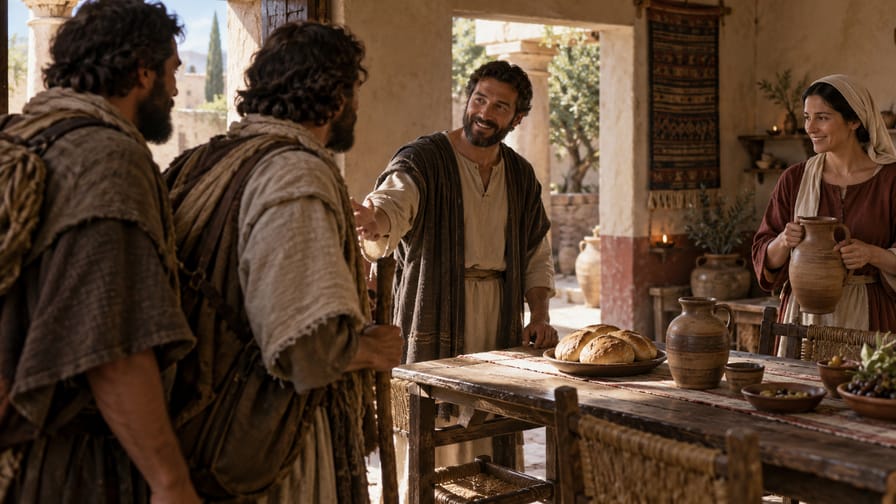
The figure of Gaius is notable in the New Testament not for a single extensive biography, but for the presence of multiple individuals bearing this name, each contributing distinctly to the landscape of the early church. This name, of Roman origin, was quite common at the time, which necessitates careful exegetical work to discern the identities and contributions of each Gaius mentioned in the Scriptures.
Despite the brevity of the mentions, an analysis of Gaius reveals crucial principles concerning the life and mission of the apostolic church, the importance of Christian hospitality, and doctrinal integrity. From an evangelical Protestant perspective, the lives of these individuals underscore God's sovereignty in using ordinary people in significant roles for the advancement of His kingdom, demonstrating the relevance of practical faith and loyalty to the truth.
1. Etymology and meaning of the name
The name Gaius derives from the Latin Gaius, one of the oldest and most common Roman praenomina (personal names). In the Greek of the New Testament, it is transliterated as Gaios (Γάϊος). It does not possess a Hebrew or Aramaic root, being intrinsically a gentile name, reflecting the Hellenization and Romanization of first-century society.
The literal meaning of Gaius is uncertain, but some etymologies suggest connections with joy or rejoicing, although this is a less consensual interpretation among linguists. More probably, the name was simply a common proper name, without a deep symbolic meaning inherent to its origin, unlike many Hebrew names.
The popularity of the name Gaius is attested not only in the Bible but also in Roman inscriptions and documents of the era. This ubiquity suggests that the biblical individuals bearing this name were likely of Gentile origin or, at the very least, lived in a cultural context strongly influenced by Rome.
In the New Testament, there are at least three, and possibly four, distinct individuals named Gaius, which requires careful distinction for accurate analysis. This multiplicity of individuals with the same name underscores the diversity of the early church, composed of people from different backgrounds and social contexts.
The theological significance of the name itself is limited, as it does not carry a prophetic or covenantal symbolism like Hebrew names. However, the presence of such a common Roman name among the first Christians is a testament to the universality of the gospel, which transcends ethnic and cultural barriers to reach "every tribe and language and people and nation" (Revelation 7:9).
2. Historical context and biblical narrative
The various Gaiuses mentioned in the Bible lived in the 1st century AD, during the apostolic era, a period of intense expansion of Christianity under the dominion of the Roman Empire. This was a time of great challenges and opportunities for the nascent church, characterized by persecution, but also by remarkable growth and organization.
The political context was that of the Pax Romana, which, despite its oppressions, facilitated the dissemination of the gospel through safe roads and a lingua franca (Koine Greek). Socially, the church was a melting pot of Jews and Gentiles, rich and poor, free and enslaved, all united in Christ, challenging existing social hierarchies.
2.1 The Different Gaiuses in the New Testament
Identifying the various Gaiuses is crucial. We can distinguish three main figures, with the possibility of a fourth:
The first Gaius is mentioned as a companion of Paul from Macedonia (Acts 19:29). He and Aristarchus were dragged into the theater in Ephesus during the riot provoked by the silversmiths, led by Demetrius, who opposed Paul's preaching. This incident occurred around AD 55-57, during Paul's third missionary journey, highlighting the hostility the Christian message faced in pagan centers.
A second Gaius is from Derbe, in Lycaonia, and is also a companion of Paul. He is listed among those who accompanied the apostle on his return journey from Corinth to Jerusalem, carrying the offerings for the saints (Acts 20:4). This mention occurs around AD 57. It is possible that this Gaius of Derbe is the same as the Gaius of Corinth, but the geographical distinction suggests they could be different individuals, or that the one from Derbe became a Corinthian. Many commentators, such as F. F. Bruce, consider them distinct due to the different geographical origins indicated.
The third Gaius is mentioned by Paul in his Epistle to the Romans as his host and the host of the entire church in Corinth (Romans 16:23). He was also baptized by Paul personally (1 Corinthians 1:14). This reference, written around AD 57-58, indicates that Gaius was a prominent and hospitable Christian in Corinth. There is an academic debate about whether this Gaius of Corinth is the same as the Gaius from Macedonia or the one from Derbe. Most scholars suggest that the Gaius of Corinth is distinct from the Macedonian one, but could be the same as the one from Derbe, if he had settled in Corinth. However, the mention of "Macedonia" and "Derbe" as their primary origins in Acts suggests that they are different individuals from the Gaius who hosted the church in Corinth.
The fourth and most detailed Gaius is the recipient of the Third Epistle of John (3 John 1:1). This epistle was written by John, the apostle, likely from Ephesus, to this Gaius, who is praised for his faithfulness and hospitality toward itinerant missionaries. The letter was probably written in the late 1st century AD, making this Gaius a later contemporary of Paul's companions.
The key biblical passages are, therefore: Acts 19:29 (Gaius of Macedonia), Acts 20:4 (Gaius of Derbe), Romans 16:23 and 1 Corinthians 1:14 (Gaius of Corinth), and 3 John 1:1-15 (Gaius, John's friend). The geography related to these characters includes Ephesus, Corinth, Derbe, and the province of Macedonia. Their relationships with other important characters include the Apostle Paul, the Apostle John, Aristarchus, Demetrius (the silversmith), Demetrius (the commended in 3 John), and Diotrephes.
3. Character and role in the biblical narrative
The character of the various Gaiuses, although briefly delineated, is consistently positive, revealing individuals of faith and service dedicated to the cause of the gospel. The scarcity of information does not prevent the perception of notable spiritual qualities.
The Gaiuses who were companions of Paul demonstrate remarkable loyalty and courage. The Gaius from Macedonia, upon being dragged into the tumult in Ephesus (Acts 19:29), shows his willingness to stand by Paul, even in imminent danger. His presence there, along with Aristarchus, indicates that he was a close and trustworthy collaborator of the apostle, sharing the risks of the ministry.
The Gaius of Corinth, who hosted Paul and the entire church (Romans 16:23), stands out for his hospitality. Hospitality was a fundamental Christian virtue in the early church, especially important for supporting itinerant missionaries and for conducting congregational meetings in homes. This generosity was not merely a social act, but a practical expression of love and service to God, as taught by Jesus (Matthew 25:35) and the apostles (Romans 12:13).
The fact that Gaius was baptized by Paul (1 Corinthians 1:14) suggests that he was one of the first converts in Corinth and a committed member of the Christian community. His position as host of the church also implies a certain prominence and influence within the congregation, likely combined with material resources that he was willing to use for the advancement of the gospel.
The Gaius of the Third Epistle of John is, without a doubt, the character most richly described in terms of character. John praises him for walking "in the truth" (3 John 1:3-4), indicating his faithfulness to apostolic doctrine and his life in accordance with gospel principles. This expression, "walking in the truth," is a metaphor for a life of obedience and spiritual integrity, a testimony to a character transformed by the Holy Spirit.
His hospitality is the central point of John's commendation (3 John 1:5-8). He graciously welcomed itinerant brothers, even those who were strangers to him, and assisted them on their journeys. This hospitality was vital for missionary ministry at the time, as preachers relied on the support of local believers. By doing this, Gaius was "cooperating with the truth" (3 John 1:8), actively participating in the missionary work.
In contrast to Diotrephes, who refused to welcome the brothers and excommunicated those who did so (3 John 1:9-10), Gaius represented the ideal of Christian leadership and service. His conduct is a model of how believers should support and welcome those who preach the gospel, discerning between true ministry and selfish ambitions, like those of Diotrephes.
There is no mention of sins, weaknesses, or moral failings for any of the Gaiuses in Scripture. They are presented as positive examples of faith, service, and loyalty. The role they played is one of vital support to the apostolic ministry, whether as travel companions, hosts of the church, or collaborators in the propagation of the truth.
4. Theological significance and typology
The figure of Gaius, in its multiple manifestations, offers profound theological significance, especially from an evangelical Protestant perspective, which values the praxis of faith and the active involvement of every believer in the mission. Although Gaius is not a direct typological figure of Christ in the prophetic sense, his life and actions prefigure and exemplify the principles of the Kingdom of God and authentic Christian life.
The Gaiuses of the New Testament illustrate the essential role of ordinary believers in redemptive history. They were not apostles, prophets, or prominent charismatic leaders, but faithful individuals who, through their loyalty, hospitality, and support, enabled the gospel message to spread. This reinforces the Protestant doctrine of the priesthood of all believers (1 Peter 2:9), where each member of the body of Christ has a vital and valued role.
The hospitality of Gaius (Romans 16:23 3 John 1:5-8) is a central theological theme. It is a practical expression of Christian love (John 13:34-35) and a biblical commandment (Hebrews 13:2). Welcoming missionaries and itinerant brothers was, in essence, welcoming Christ and His message. Gaius, by hosting "strangers," was serving God and cooperating in the work of truth, a tangible demonstration of faith and obedience.
The "truth" in which Gaius walked (3 John 1:3-4) is a fundamental theological concept. It refers to divine revelation in Christ, the apostolic gospel, and the life lived in conformity with that truth. The evangelical perspective emphasizes that truth is not merely a body of doctrines to be believed, but a path to be followed, reflecting the holiness and character of God (John 14:6 John 17:17).
The distinction between Gaius and Diotrephes in 3 John offers crucial lessons on church leadership and spiritual discernment. While Diotrephes sought prominence and controlled the church autocratically, refusing to welcome John's messengers and excommunicating those who did so (3 John 1:9-10), Gaius demonstrated humility and service. This highlights the importance of servant leadership, a Christ-centric principle (Mark 10:45), in contrast to worldly ambition.
The life of Gaius, therefore, is connected to central theological themes such as salvation (confirmed by his baptism), faith (evidenced by his obedience and hospitality), obedience (by "walking in the truth"), grace (which empowered him to serve), and mission (by supporting the preachers of the gospel). He embodies Paul's exhortation for believers to "show hospitality to one another without grumbling" (1 Peter 4:9).
In summary, Gaius, though not a typological figure of Christ in the classical sense, is a type of faithful and dedicated believer whose practical and loving service sustains the expansion of the gospel. His life demonstrates that evangelical faith is manifested not only in correct beliefs but also in actions that glorify God and build His Kingdom.
5. Biblical-theological legacy and canonical references
The legacy of Gaius in the biblical-theological tradition, though not associated with the authorship of canonical books, is significant for his representation of the exemplary believer and the vital role each member of the church plays. The mentions of Gaius in Acts, Romans, 1 Corinthians, and 3 John solidify his presence in the New Testament canon, offering insights into the life and challenges of the early church.
In Reformed and evangelical theology, Gaius is often cited as a model of Christian hospitality and missionary support. His willingness to open his home and resources to itinerant preachers is seen as a practical manifestation of faith and an example of how believers should "welcome one another, just as Christ has welcomed you, for the glory of God" (Romans 15:7). John Calvin, in his commentaries on 3 John, praises the virtue of Gaius and condemns the attitude of Diotrephes, emphasizing the importance of true fellowship and service.
The Third Epistle of John, in particular, elevates Gaius to a paradigm of righteousness and faithfulness. His life of "walking in the truth" and his generosity toward missionaries are contrasted with the behavior of Diotrephes, who sought preeminence and slandered the apostles. This contrast serves as a manual for the church in all ages on how to discern true ministry and how to cultivate an environment of love and support for God's work.
The legacy of Gaius is also important for understanding ecclesiology. The fact that the church met in his home (Romans 16:23) illustrates the model of "house churches" that was prevalent in early Christianity. This highlights the simplicity and intimacy of the first Christian communities, where a believer's home became a center for worship, teaching, and fellowship.
His importance for understanding the canon lies in how he exemplifies apostolic exhortations. The brief mentions of Gaius in different contexts reinforce the consistency of Christian virtues valued by the apostles Paul and John: loyalty, courage, hospitality, and a life of truth. He is a reminder that the gospel is lived in daily practice, not just in grand acts.
The Christian interpretive tradition, since the Church Fathers, has viewed Gaius as an example to be imitated. The emphasis on hospitality and support for gospel workers has been a constant in Christian theology, especially in movements that value evangelism and mission. The life of Gaius serves as an inspiration for believers today to actively engage in sustaining and propagating the faith, using their gifts and resources for the glory of God.
In summary, Gaius, though not a central character in narrative terms, is central in terms of theological exemplary value. He represents the faithful foundation of the church, whose lives of service and obedience made the expansion of Christianity possible. His legacy is an enduring testament to the importance of every believer in God's redemptive plan and a challenge for the contemporary church to live out the truth with love and hospitality.